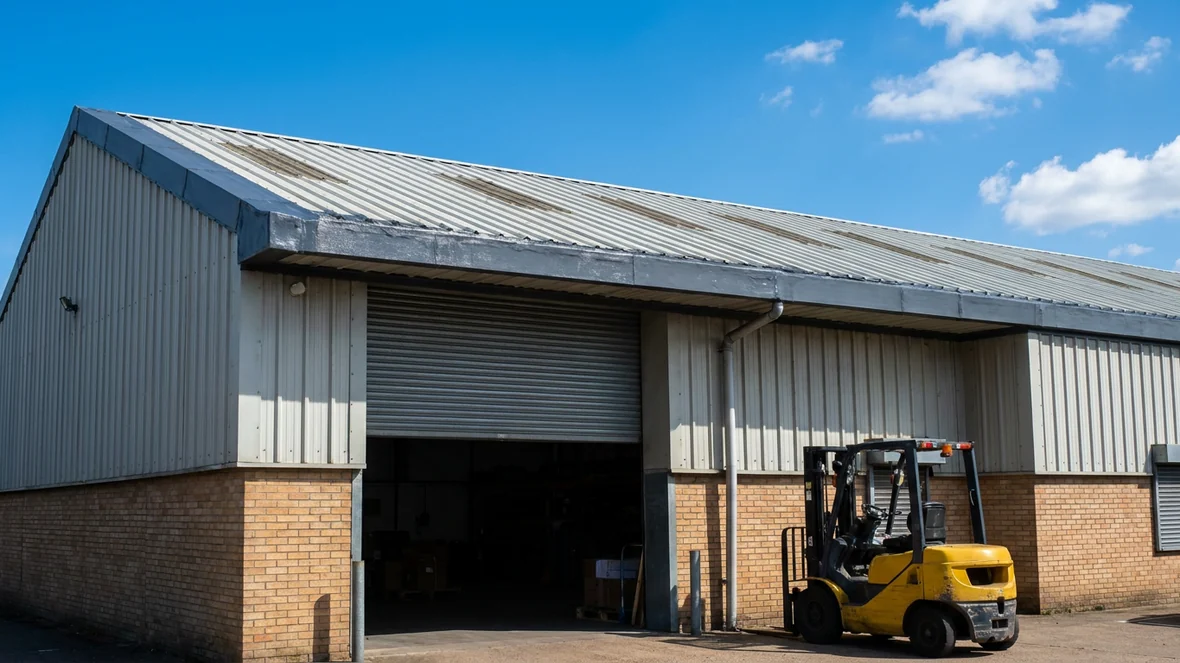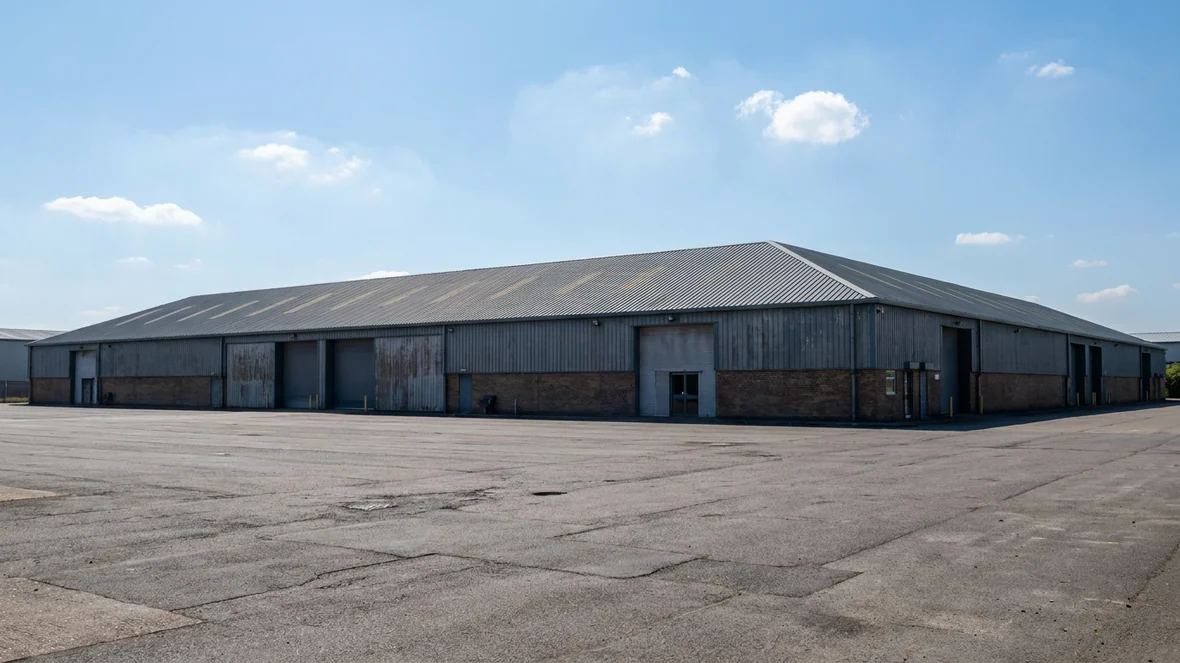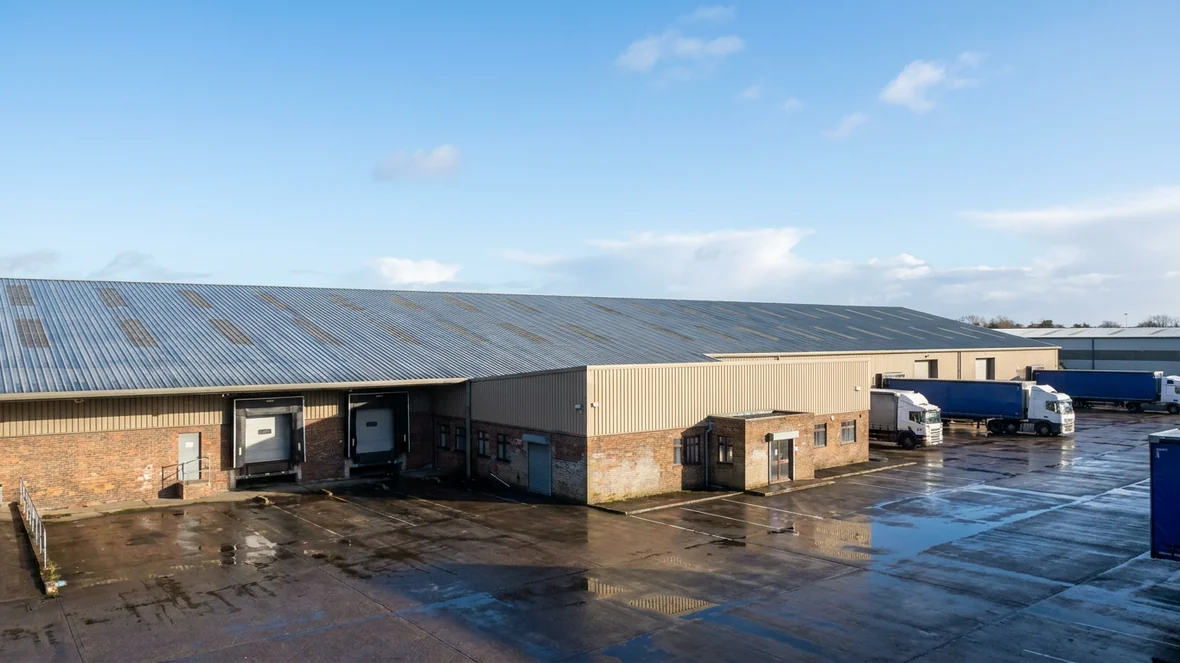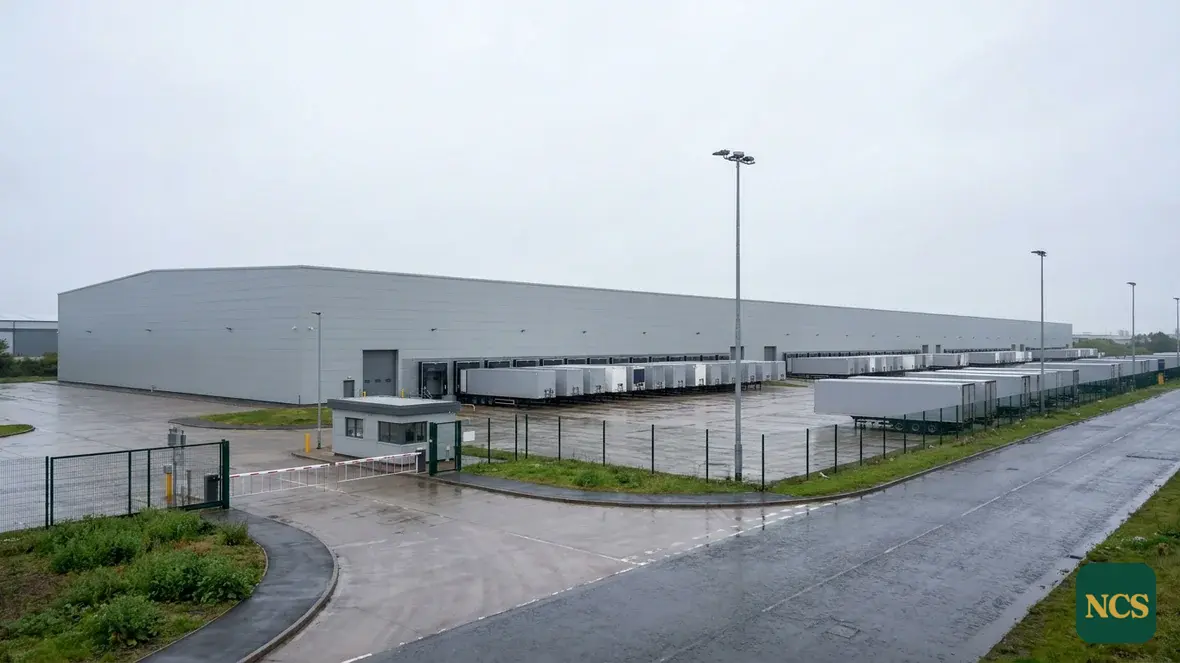










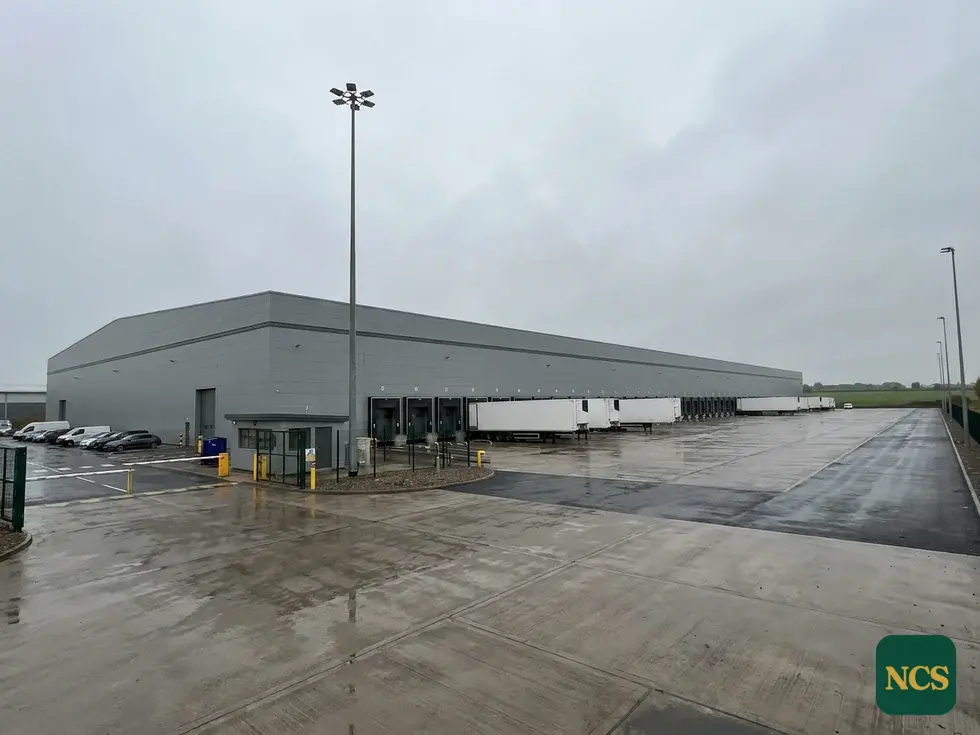
Most cut edge corrosion in Coventry is found one of two ways: a tenant reports drips along a wall line after heavy rain, or a surveyor spots rust at the sheet ends during a planned maintenance inspection. The first route is more common and more expensive. This page explains what is happening at the edges of a profiled metal roof, why it accelerates, and where the honest line sits between treating the sheets and replacing them.
The first sign is usually a leak
By the time water shows inside the building, corrosion at the sheet ends has normally been working for years. Coventry’s commercial stock leans heavily on profiled steel: mid-century manufacturing and engineering units from the city’s motor industry era, plus newer logistics and trade-counter sheds around the ring road and beyond. Most of those roofs were laid with plastisol-coated sheets, and every one of those sheets has cut edges sitting in the wettest positions on the roof.
The pattern of the leak is the giveaway. Drips appearing in lines, following the laps or the eaves rather than one random spot, point to corroded sheet ends rather than a single failed fixing or flashing. If that matches what you are seeing in your building, assume the corrosion is well established and get the roof surveyed before the next run of wet weather.
How corrosion takes hold at a cut edge
The coating on a plastisol sheet protects the faces, not the cut. Where sheets are cut to length, bare steel is exposed at end laps and gutter edges. Water sits in those positions, the steel oxidises, and rust creeps back under the coating, a process called underfilm corrosion. The coating peels away from the edge, more steel is exposed, and the cycle feeds itself.
Laps make it worse. Moisture drawn between overlapping sheets cannot evaporate, so the steel inside the lap corrodes out of sight. A roof can look acceptable from the ridge while the lap zones are quietly thinning.
Treat the edges now, or replace sheets later
The economics are simple. Edge treatment while the steel is still sound means cleaning back the corrosion, priming with the right corrosion-inhibiting products and sealing the laps and edges with a flexible system. It is a repair measured in days, carried out from the outside, with the building in use throughout.
Delay changes the arithmetic. Once sheet ends perforate, you are into strip-and-replace, with access costs, internal protection and disruption to whatever the building does. Few maintenance decisions on a metal roof have a clearer early-action payoff than this one.
The honest cases where we say no
Some roofs are too far gone, and we will tell you when yours is one of them. Holes through the sheet ends, lap corrosion across most of the roof area, or steel so thinned it flexes underfoot are not candidates for treatment; coating over that is a short-lived cosmetic fix and we do not offer it. In those cases the survey report will say replacement or over-roofing, with our reasoning and photographs, so you can make the decision with the facts in front of you.
What we record before quoting
We are survey-led, so nothing is priced from the ground or from photographs alone. On the roof we record:
- The extent of edge corrosion at gutters, end laps and side laps
- Whether the steel at the worst points is still sound or perforated
- The condition of the factory coating across the sheet faces
- Gutter condition, since failed gutters drive edge corrosion
- Fixings, flashings and rooflights that affect the same scope of work
Where the wider coating is chalking or fading, we will tell you whether a full roof coating alongside the edge work makes better sense than two separate visits years apart. We are based in the South East and work across England; Coventry is a straightforward area for us to survey. Get in touch with the building address and a description of what you are seeing.