Cut Edge Corrosion Treatment for Metal Roofs and Cladding
Cut edge corrosion treatment protects the exposed steel edges of metal roof and cladding sheets on commercial, industrial and agricultural buildings across the UK, halting the rust creep that causes streaking, sheet failure and costly leaks before full roof replacement becomes the only option.
Extend Roof LifespanArresting corrosion at sheet edges and overlaps can prevent the need for costly full roof replacement.
Prevent Leaks and DamageTreatment maintains the watertight integrity of your building, protecting stock, equipment, and insulation from water ingress.
Cost-Effective Asset ManagementRepairing the affected areas is significantly more affordable than complete roof or cladding replacement, preserving your asset's value.
Satisfy Dilapidation SurveysOur treatment restores roof condition to satisfy surveyor obligations at the end of a lease, protecting tenants from liability.
What this service is for
Metal roof sheets, cladding panels, laps and exposed edges
Preparation before coating or respray scopes
Useful for industrial estates, warehouses and agricultural buildings
Cut edge corrosion problems this page covers
Exposed sheet edgesMetal roof and cladding sheet edges where factory coating has broken down.
Lap corrosionCorrosion forming around overlaps, fixings and vulnerable joints.
Early roof failureIsolated corrosion that can become a wider water ingress issue if ignored.
Preparation before coatingEdge treatment needed before roof coating or cladding spraying can be specified properly.
Survey checks before specification
Extent and severity of corrosion
Condition of laps, fixings, gutters and panel edges
Whether isolated treatment or wider coating is justified
Access and weather constraints for preparation work
Specification
How cut edge corrosion treatment is specified
Cut edge corrosion treatment is a technical preparation page, not a decorative service. The survey needs to identify whether corrosion is isolated, spreading or a sign of wider sheet failure.
A proper specification can include cleaning, mechanical preparation, primers, reinforcement where required and compatible coating systems to protect vulnerable edges.
Specification
Coating systems and approach
Specialist Coating SystemsWe select the most appropriate manufacturer-approved system for your roof's specific condition following a thorough site survey.
Silicone and Hybrid TechnologiesModern treatments like Giromax or silicone-based systems are designed to be flexible and accommodate sheet movement while providing a durable, weatherproof seal.
Liquid-Applied CoatingsLiquid systems allow for a continuous and targeted application to encapsulate and protect the vulnerable sheet laps and edges from further corrosion.
Gallery
Coating work in detail
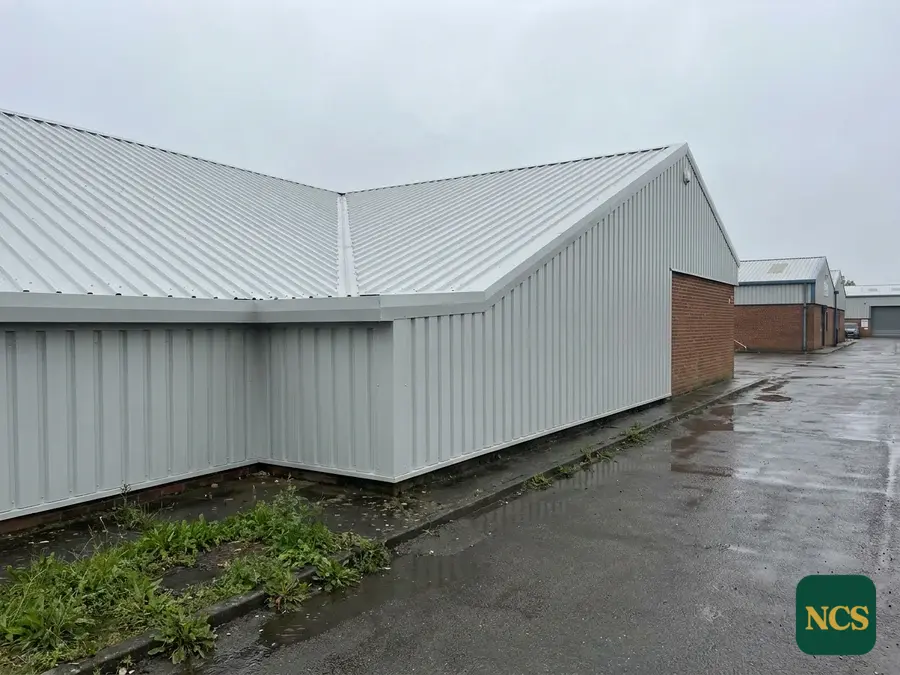
The prepared lap joint on this warehouse roof, cleaned of all corrosion and ready for primer application.Application of the top coat to the prepared and primed cut edges, ensuring a complete seal.The completed cut edge corrosion treatment on a commercial unit, with a clean, protected finish.
How it works
Our survey-led process
1SurveySubstrate, access, exposure, corrosion and repairs are inspected first.
2ReportA written condition report on what the building actually needs.
3SpecifyCoat, repair and replace options separated clearly.
4PlanWorks shaped around safety, weather and site continuity.
5ProtectThe right system applied to extend life and restore the finish.
Accredited, insured & manufacturer-approved
Where we work
Sectors and buildings we coat
Survey-led coating, spraying and exterior refurbishment across commercial, industrial and agricultural property in England.
Survey-Led QuotationsWe provide a free, detailed site survey to assess the extent of corrosion before recommending a specific, honest course of action.
Repair, Don't ReplaceWe will always provide an honest assessment and recommend a targeted repair to save you money if a full replacement is not necessary.
Manufacturer-Backed SystemsOur use of recognised industrial coating systems allows us to offer meaningful, long-term manufacturer warranties for your project.
Common mistakes owners make with cut edge corrosion
Cut edge corrosion is often handled badly before a specialist ever sees the roof, and the wrong fix can end up costing more than doing nothing at all. These are the mistakes we most often find at survey.
Painting over rusted edges with standard paint and no preparation, which traps moisture and hides the problem while it spreads
Bridging laps and gutter joints with mastic or sealant alone, a short-lived patch that fails as the metal keeps corroding beneath it
Replacing the odd leaking sheet without treating the surrounding edges, so the same failure reappears along the rest of the roof
Asking a general painting contractor to take on what is a specialist preparation and coating task
Waiting until water shows inside the building, by which point the corrosion has usually travelled well beyond the visible edge
None of these mistakes are unusual, and none of them are fatal if caught in time. A proper edge treatment deals with the corrosion itself rather than its appearance, which is the difference between a lasting repair and a patch that soon needs doing again.
Timing the work around UK weather
Edge treatments and roof coatings are weather-dependent. The substrate must be dry, temperatures need to sit within the range the coating manufacturer specifies, and rain too soon after application can spoil the cure. In practice that makes spring to autumn the most reliable period for this work in the UK, although dry, settled spells outside those months can still be used.
The practical advice is simple: do not wait for winter to find the leaks for you. Roof edges that look marginal in September will have been through months of rain, frost and thermal movement by March, and emergency repairs in bad weather are harder to do well and harder to schedule. Booking a survey in late summer or early autumn leaves time to treat problem edges before the worst of the weather arrives.
We plan applications around the forecast and build sensible weather allowances into the programme, and we will tell you plainly if conditions on a given day are not good enough to coat. A day lost to rain is cheaper than a coating applied to a damp edge.
Common questions
Cut Edge Corrosion Treatment for Metal Roofs and Cladding FAQs
How much does cut edge corrosion treatment cost?
Cost depends on the length of corroded edge, how advanced the corrosion is, roof access and the coating system specified, so we do not quote a fixed figure online. The only accurate way to price the work is a site survey. We measure the affected areas, check the condition of the sheets and give you a clear written quote with no obligation.
What is the process for treating cut edge corrosion?
We inspect and survey the roof, then mechanically remove loose rust and failed coating from the cut edges. Bare steel is treated with a rust-inhibiting primer to stop the corrosion advancing. Heavier areas can be reinforced with tape or membrane at the overlaps, and a weatherproof top coat is applied to seal the edge and match the existing roof finish.
Is cut edge corrosion covered by warranty?
Warranty cover varies by the coating system used and the condition of the roof, and it is confirmed in your written quote rather than assumed. We will set out exactly what guarantee applies before any work starts. We will also be honest if a roof is too far gone to coat reliably, because a warranty only means something on a surface that is sound enough to treat.
Do you provide a free survey?
Yes. A survey-first process helps identify the right coating, repair or spraying route before any quotation is issued.
Do you work on live commercial sites?
Yes. The site is built around commercial, industrial and agricultural premises where access, safety, programme and business continuity matter.
Can coatings avoid full replacement?
Sometimes. Coatings can be a strong refurbishment route where the substrate is suitable, but the survey decides whether repair, coating or replacement is appropriate.
Do you publish fixed prices?
No. Access, substrate condition, preparation, repairs and specification change the cost too much for responsible fixed-price claims without a survey.
A real surveyor inspects the building, photographs the condition and quotes only what it needs. Send the details and we will come back with a clear, practical route forward.