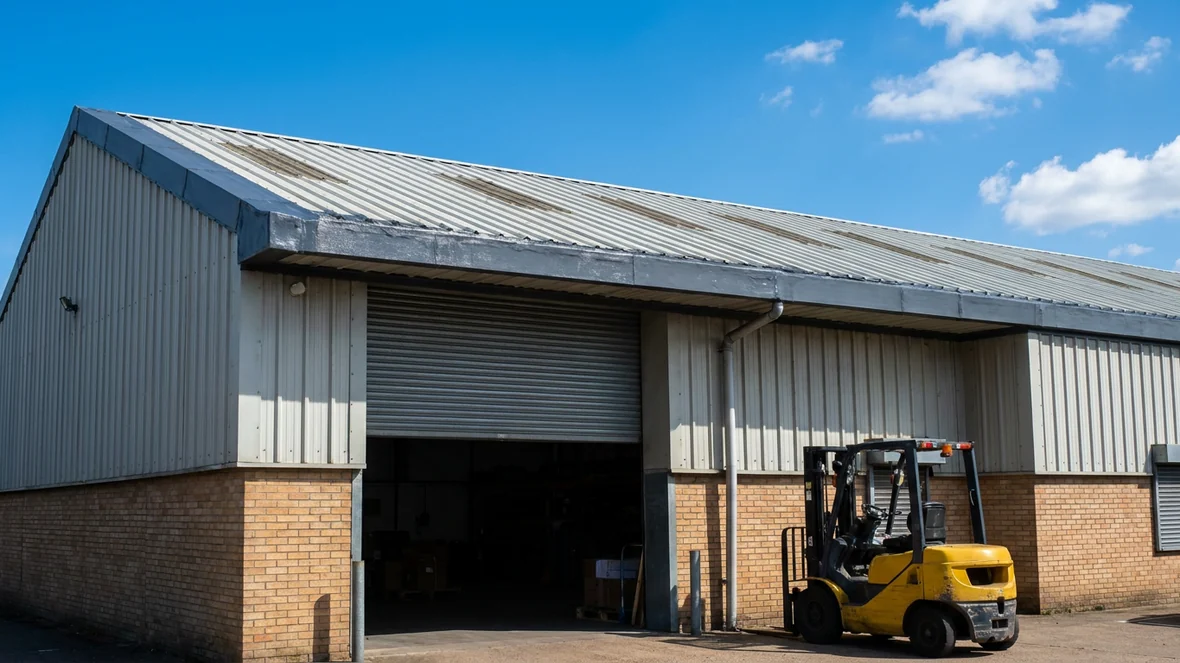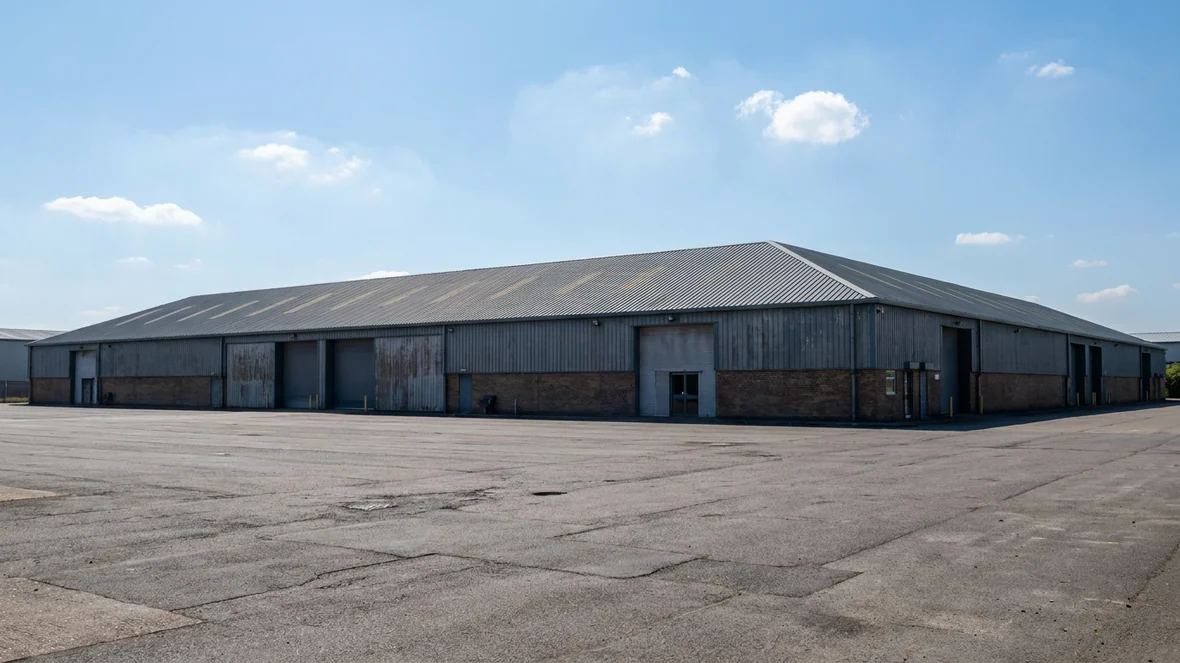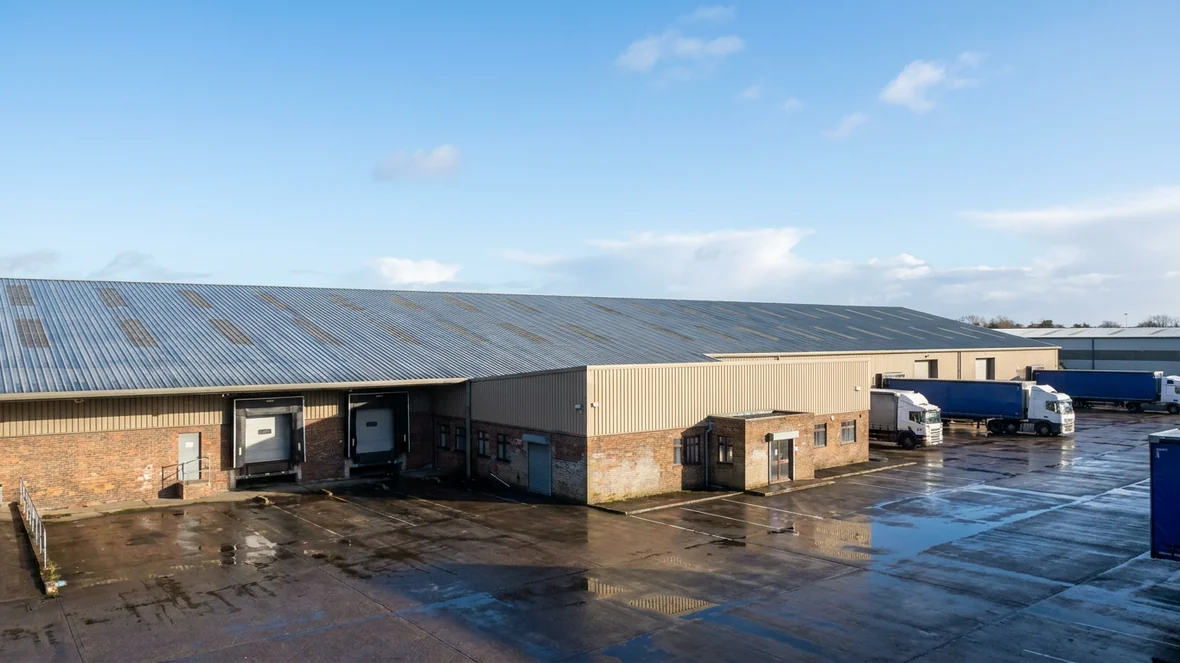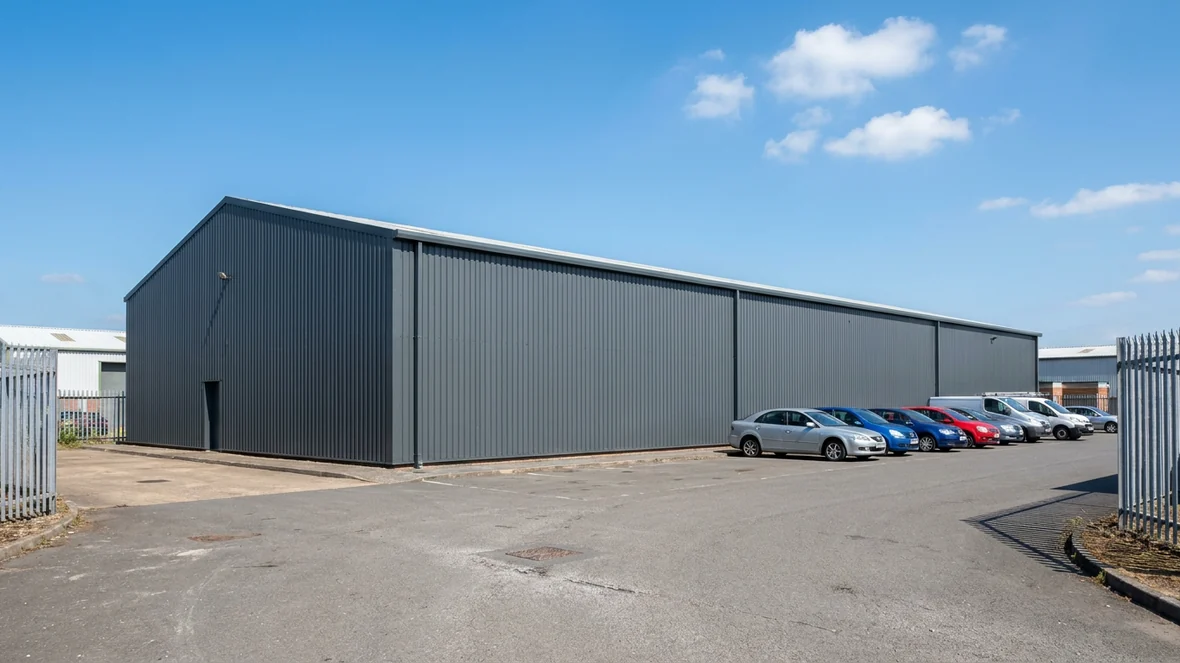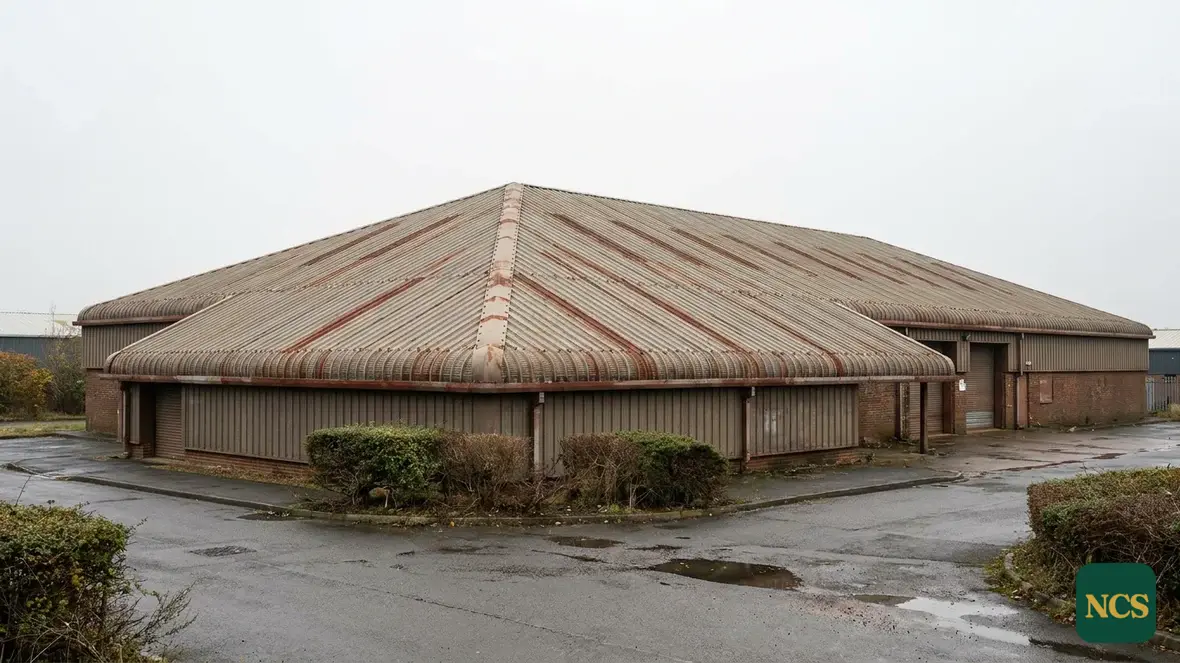









Derby earned its living from engineering, and a lot of its commercial buildings still look the part: steel portal frames, profiled metal roofs, decades of honest service. Those roofs have one predictable failure point, the cut edges of the sheets, and the corrosion that starts there is the most common reason a serviceable metal roof in Derby ends up leaking before its time. The useful part is that it announces itself early, with staining and lifting coating at the sheet ends, and at that stage it can be dealt with for a fraction of the cost of new sheets.
Why profiled metal roofs rust from the edges in
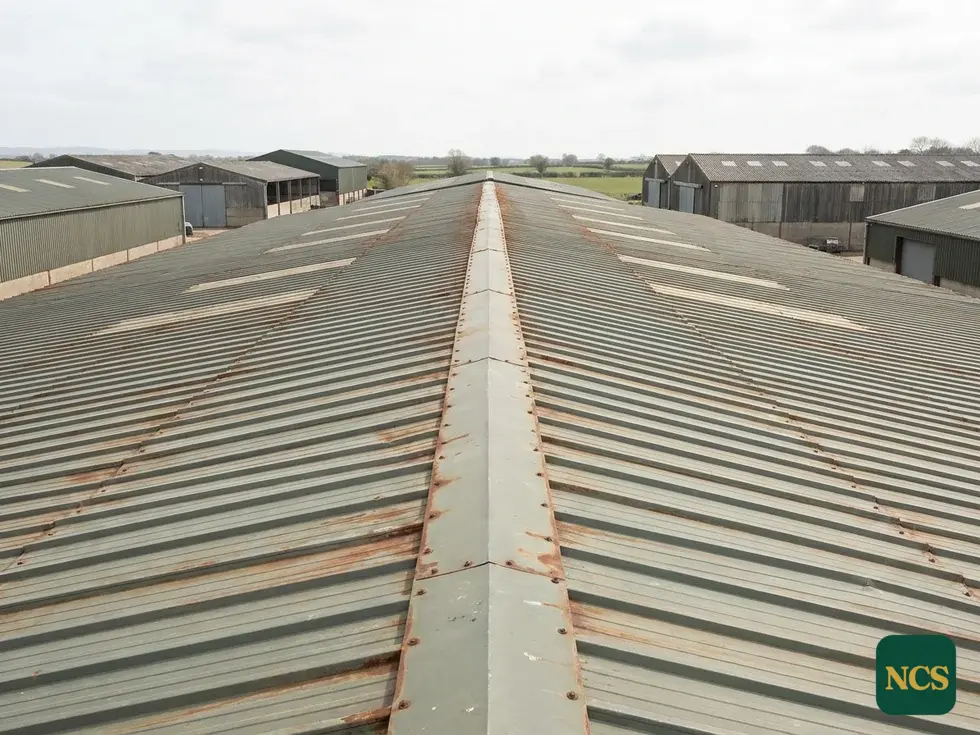
Plastisol and similar coated sheets are protected across their faces but bare along the cut. Those cuts sit at every end lap and along the gutter line, which means the only unprotected steel on the roof spends its life in the wettest places on the roof. Rust starts at the edge, then works back beneath the coating, lifting it as it goes. Inside the laps the process is worse, because trapped moisture never dries out.
None of this reflects on the original build quality. It is simply what cut steel does after twenty or thirty years of weather, and a great deal of the region’s industrial stock is now well inside that window.
What early treatment involves
Treating cut edge corrosion at the right stage is a preparation job as much as a coating job. The corroded edges are cleaned back to sound steel, loose and lifted coating is removed, the metal is primed with corrosion-inhibiting products, and the laps, edges and gutter lines are sealed with a flexible coating system built to handle the thermal movement of a metal roof. Done properly, it stops the corrosion where it stands and returns the roof to a maintainable condition.
The economics favour acting early by a wide margin. Edge treatment keeps the existing sheets in service; delay converts the same roof into a replacement project, with the cost, lead time and disruption that brings.
Treat or replace: how we decide
The decision is made on the roof, not in a brochure. The factors that settle it:
- Whether the steel at the sheet ends is still continuous or has perforated
- How far corrosion has travelled into the laps
- The condition of the coating across the sheet faces, not just the edges
- Gutter condition and how water is being held against the edges
- The remaining life the owner actually needs from the building
That last point matters. A roof carrying a building through its final five years justifies a different answer from one expected to serve another twenty five.
The honest limit of edge treatment
Some roofs we survey are beyond treatment, and we say so plainly. Perforated ends, laps corroded through, or sheets thinned enough to be a safety concern cannot be rescued by any coating, and quoting for it would waste your money and our name. In those cases the report recommends resheeting or over-roofing instead, with photographs showing exactly why. Our job is to tell you which side of the line your roof sits on, then do the right work, not the work that suits us.
Edge treatment and full roof coating together
Cut edge corrosion is often the first visible symptom of a coating reaching the end of its life everywhere. If the survey shows the finish across the whole roof chalking, fading or losing adhesion, it usually makes sense to treat the edges and recoat the full roof in one visit: one set of access, one weather window, one finished result. We are based in the South East and work across England, and Derby’s industrial parks and engineering estates are familiar territory for this kind of work. Send us the details and we will book the survey.