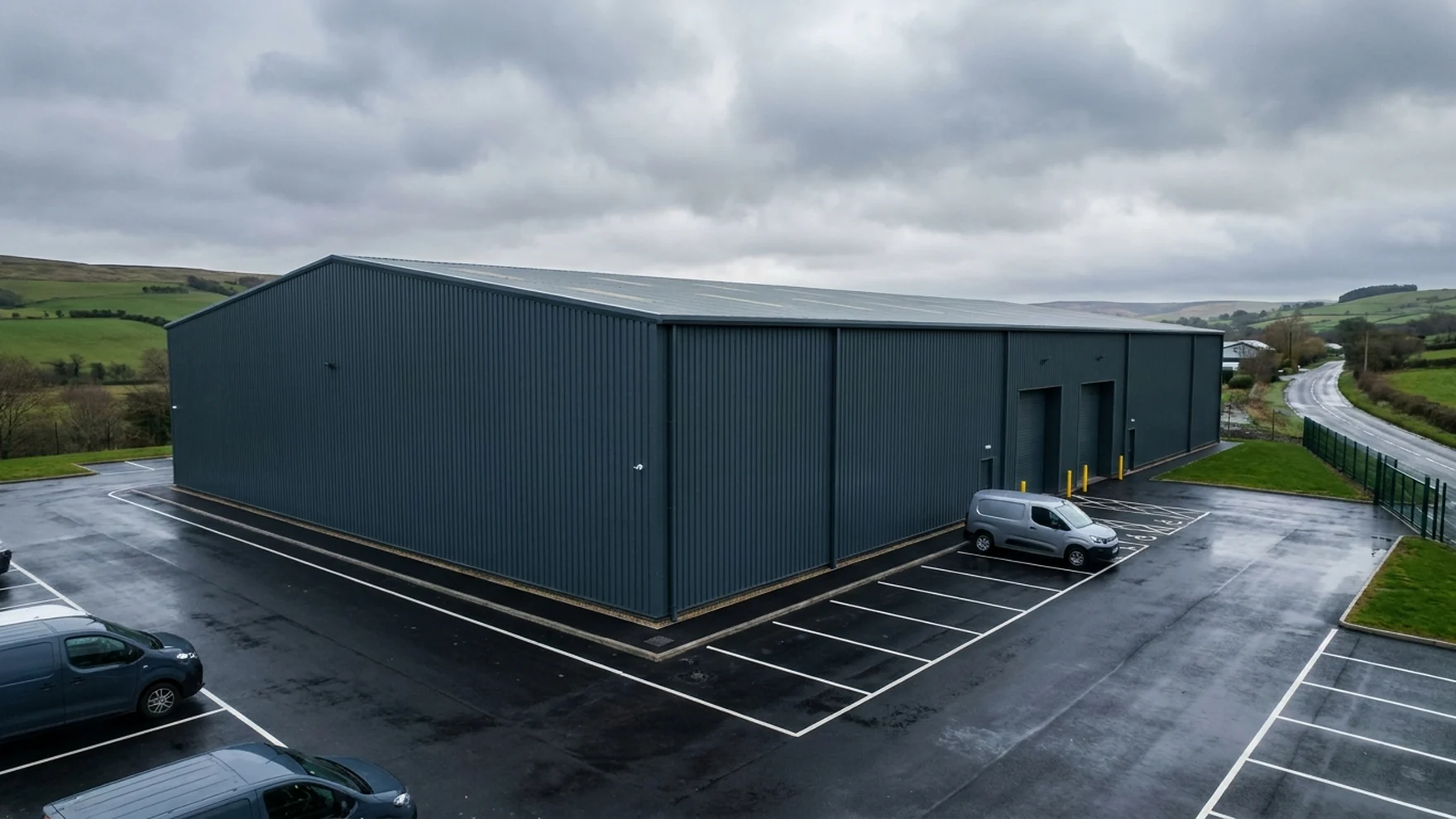
Guide
Cut-Edge Corrosion Explained: Why Metal Roof Edges Rust First
On a profiled metal roof, rust rarely appears first in the middle of a sheet. It almost always begins at the cut edges and overlapping laps, where the original factory coating is thinnest and rainwater lingers longest. Effective cut edge corrosion treatment starts with understanding why those exposed edges fail long before the rest of the roof does.
What cut-edge corrosion actually is
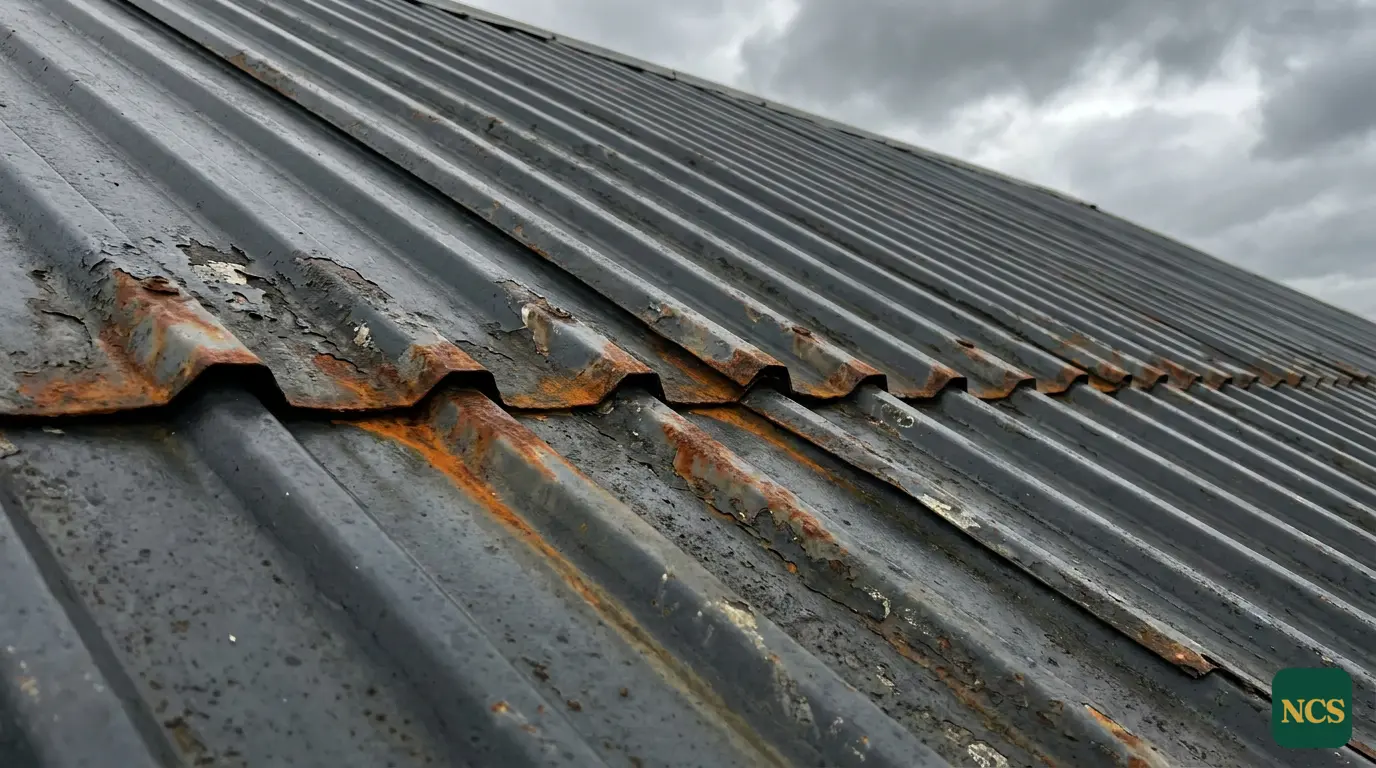
Most commercial, industrial and agricultural roofs built since the 1970s use factory-coated steel sheets, often plastisol or PVF2 coated. That coating is applied to the flat sheet, then the sheet is cut to length. Wherever a sheet is cut, the bare steel core is exposed at the edge. Over the laps at the eaves and at sheet overlaps, two thin edges sit together and trap moisture by capillary action. That trapped damp, combined with exposed steel, creates the perfect condition for rust. The orange staining you see creeping back from a sheet edge, or weeping down the elevation below, is corrosion working its way inward from that cut line.
Why metal roof edges and laps rust first
Several factors combine at the edge. First, the protective coating cannot wrap fully around a freshly cut edge, so the steel is unprotected exactly where water collects. Second, laps create a tight gap that holds moisture long after the open roof has dried, slowing evaporation and feeding ongoing corrosion. Third, edges take the brunt of thermal movement, wind-driven rain and debris, all of which wear the remaining coating. Older fixings and dissimilar metals can accelerate the process further. The middle of the sheet, fully coated and quick to dry, simply does not face the same assault, which is why a roof can look sound from the ground while the laps are quietly failing.
How to spot cut-edge corrosion early
Early corrosion is far easier and less disruptive to deal with than advanced rust that has eaten into the steel. From safe access, or during a survey, these are the signs worth checking for:
- Orange or brown rust staining at sheet edges, eaves and lap lines
- Streaks of rust-coloured run-off down the cladding or gutters below
- Lifting, flaking or peeling coating along the cut edges
- Rough, blistered or swollen edges where rust is expanding under the coating
- Perforation or pinholing at the lap, sometimes with daylight visible from inside
- Blocked or stained gutters collecting corrosion debris
The survey-led cut edge corrosion treatment process
There is no single product that fixes every roof, which is why we lead with a survey rather than a quote. A proper inspection establishes how far the corrosion has progressed, whether the steel is still sound or perforated, the condition of the surrounding coating, and whether the laps or fixings also need attention. Only then can the right treatment be specified. In broad terms, sound but corroding edges are mechanically cleaned back to a stable surface, treated with a primer suited to the substrate, and sealed with a flexible edge coating that bridges the lap and keeps water out. Where corrosion is widespread, edge treatment may be combined with a full roof coating system so the whole surface is protected and the finish is consistent. Where the steel has perforated badly, treatment alone is no longer enough and over-roofing or sheet replacement is the honest answer.
Comparing the main treatment routes
The right route depends entirely on the survey findings. The table below sets out the common options and when each tends to apply.
| Approach | What it involves | Typically suits | Key considerations |
|---|---|---|---|
| Monitor only | Documented inspections at intervals, no treatment yet | Very early surface staining on otherwise sound edges | Defers action but corrosion continues; needs revisiting |
| Localised cut-edge treatment | Clean back, prime and seal affected edges and laps | Active edge corrosion with the steel still sound | Targeted and less disruptive; surrounding coating must be stable |
| Edge treatment plus full roof coating | Treat the edges, then coat the whole roof surface | Edge corrosion alongside a generally tired coating | Protects the entire roof and extends its serviceable life |
| Over-roofing or over-cladding | New outer sheet installed over the existing roof | Extensive corrosion or perforation but a sound structure | Larger project; avoids a full strip-out and internal disruption |
| Sheet replacement | Remove and replace failed roof sheets | Perforated or structurally compromised sheets | Most disruptive and costly; sometimes unavoidable |
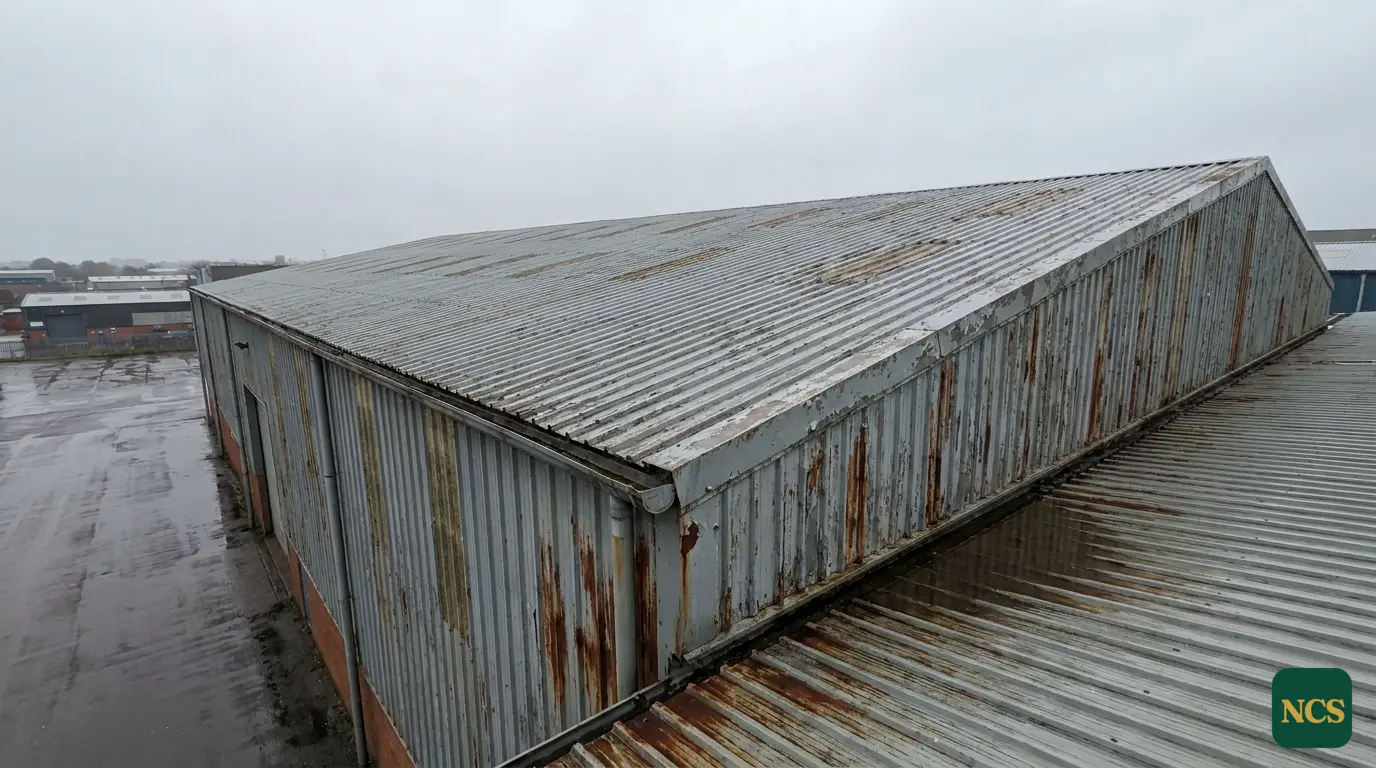
- Rust starts at cut edges and laps because the steel is exposed and water lingers there
- Streaky rust run-off and flaking edges are early warning signs worth acting on
- The correct treatment depends on a survey, not a one-size product
- Acting early keeps the job to localised edge treatment rather than re-sheeting
Frequently asked questions
Can cut-edge corrosion be treated, or does the roof need replacing? In most cases where the steel is still sound, the edges can be cleaned, primed and sealed without replacing sheets. Replacement only becomes necessary once corrosion has perforated the steel, which a survey will confirm.
How long does cut-edge treatment last? That depends on the system specified, the condition at the time of treatment and the roof environment. A well-prepared and correctly coated edge can give many years of protection, but ongoing performance relies on sound preparation, which is why surface condition is assessed first.
Why can you not give a price over the phone? Every roof differs in size, pitch, access, coating condition and the extent of corrosion. The factors that drive cost only become clear on inspection, so an accurate figure follows a survey rather than a guess.
Will treatment disrupt work inside the building? Edge treatment and roof coating are carried out externally, so day-to-day operations below can usually continue with minimal interruption, subject to safe access arrangements.
If your metal roof is showing rust at the edges, our cut-edge corrosion treatment service begins with a proper inspection, which you can arrange through our free quote page.
Published by National Coating Specialists • survey-led commercial, industrial & agricultural coatings across the UK.
Accredited, insured & manufacturer-approved


Where we work
Sectors and buildings we coat
Survey-led coating, spraying and exterior refurbishment across commercial, industrial and agricultural property in England.
Get a free, no-obligation site survey
A real surveyor inspects the building, photographs the condition and quotes only what it needs. Send the details and we will come back with a clear, practical route forward.
Book your free site surveyWhat does your building need?
Pick the surface, then the problem. We will point you to the right service.