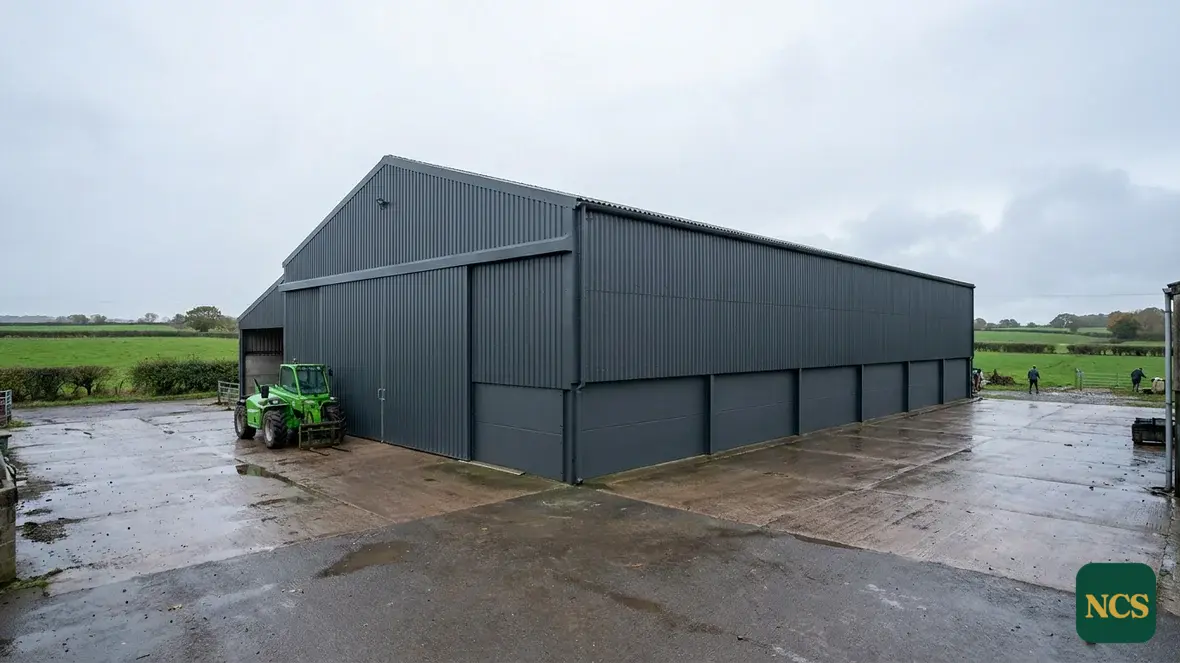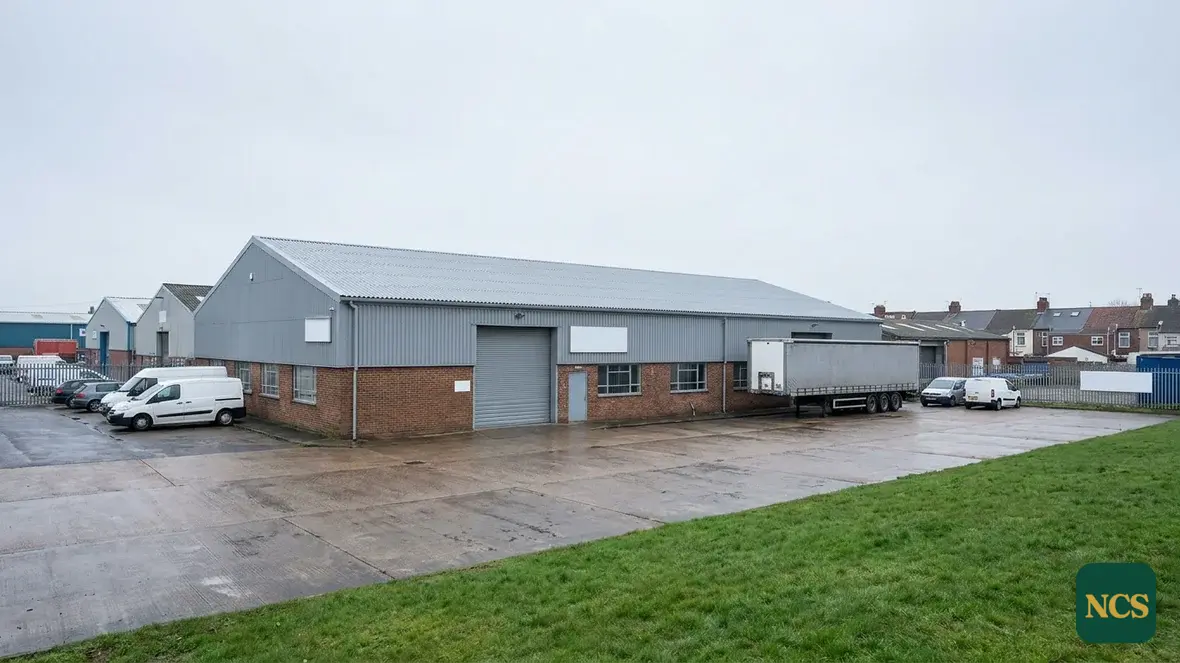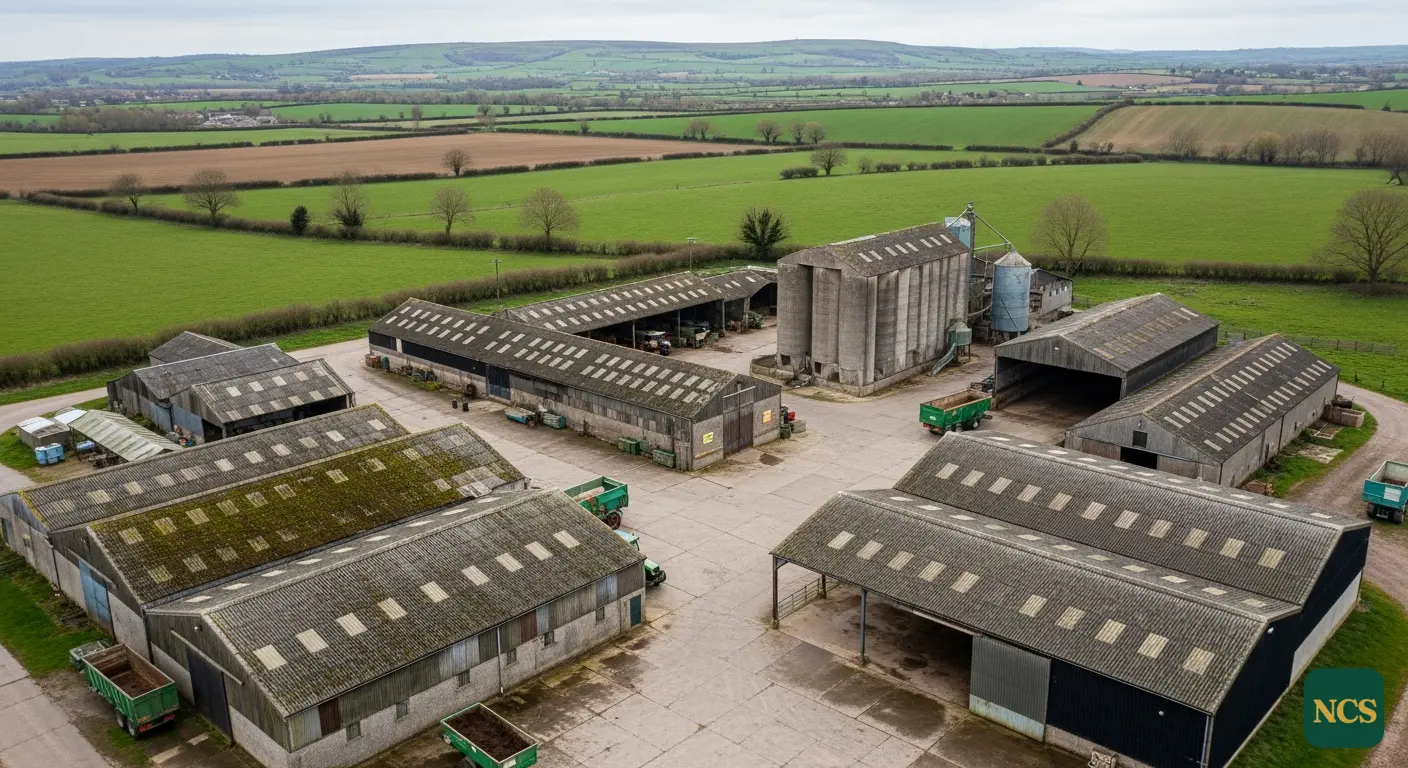
Agricultural Building Coatings in Deddington, Oxfordshire
Asbestos and the Duty to Manage on Farms (CAR 2012)
Under the Control of Asbestos Regulations 2012 (CAR 2012), farm owners and estate managers in Deddington have a legal duty to manage asbestos-containing materials on their properties. Many agricultural buildings constructed before 2000 contain asbestos cement roofs – particularly livestock sheds, grain stores, and machinery barns across Oxfordshire’s working farms. These roofs remain safe when intact, but become hazardous as they age and degrade. Proactive encapsulation through specialist coating prevents fibre release and complies with HSE requirements – avoiding the disruption and cost of full removal where structurally sound.
Farm and Estate Buildings Around Deddington with At-Risk Roofs
Surveying Deddington’s rural landscape reveals several common building types carrying ageing asbestos or metal roofs:
- Livestock housing: Cattle sheds, piggeries and poultry units on mixed farms like those along the Banbury Road corridor
- Crop storage: Grain silos and potato stores on arable holdings near Clifton and Hempton
- Machinery barns: Tractor sheds and implement stores on larger estates such as those bordering the Cotswolds AONB
- Dairy units: Milking parlours and collecting yards with profiled metal roofing common in the Cherwell Valley
These working buildings face particular challenges from ammonia-rich atmospheres, temperature fluctuations, and physical wear from farm operations.
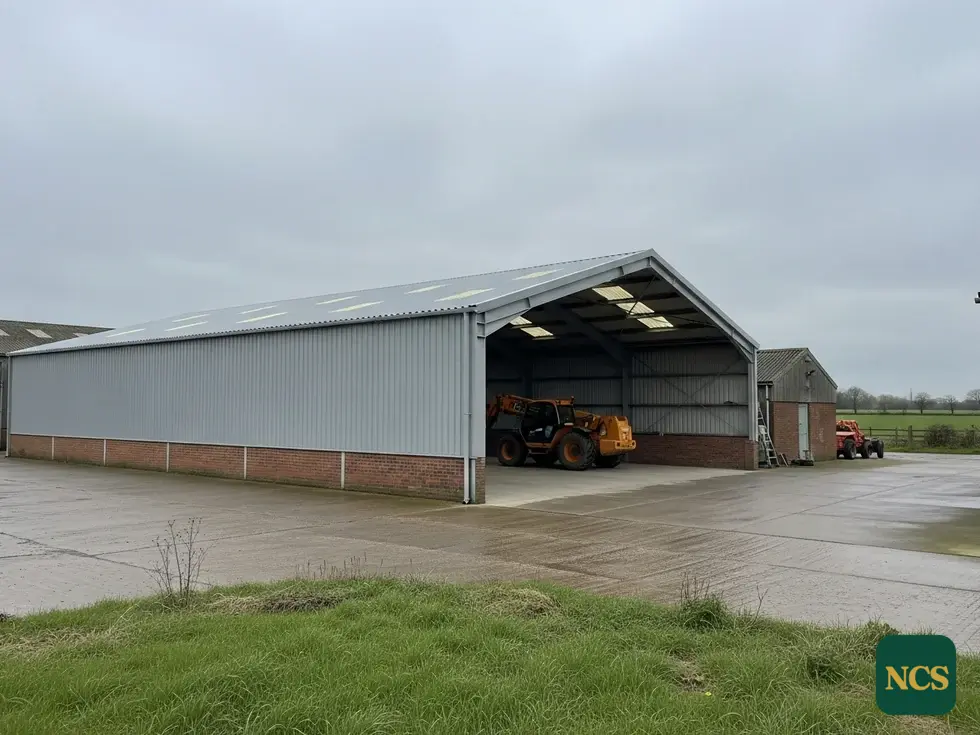
Why Farm Roofs Fail: Condensation, Corrosion and Weathering
Agricultural roofs around Deddington typically degrade through three mechanisms:
- Condensation damage: Temperature differentials in livestock buildings cause moisture penetration through asbestos sheets, leading to freeze-thaw damage and fibre release points.
- Cut-edge corrosion: Unprotected metal sheet edges on machinery barns oxidise rapidly when exposed to fertiliser dust and chemical run-off.
- Weathering: UV degradation and hail impact on south-facing slopes accelerates surface erosion, particularly on older asbestos cement roofs near Adderbury and Bloxham.
Coating Process for Deddington’s Agricultural Buildings
Our survey-led approach to agricultural roof encapsulation involves:
- Condition assessment: Detailed inspection of roof sheeting, fixings, and substrate integrity across all affected areas.
- Surface preparation: High-pressure washing to remove organic growths and loose material, followed by targeted repairs to damaged sections.
- Primer application: Specialist bonding agents to ensure coating adhesion to both asbestos cement and metal substrates.
- Elastomeric topcoat: Spray-applied protective membrane that bridges cracks and seals the roof surface while remaining breathable.
The entire process is completed from mobile access platforms without removing roof sheets, minimising farm operation disruption.
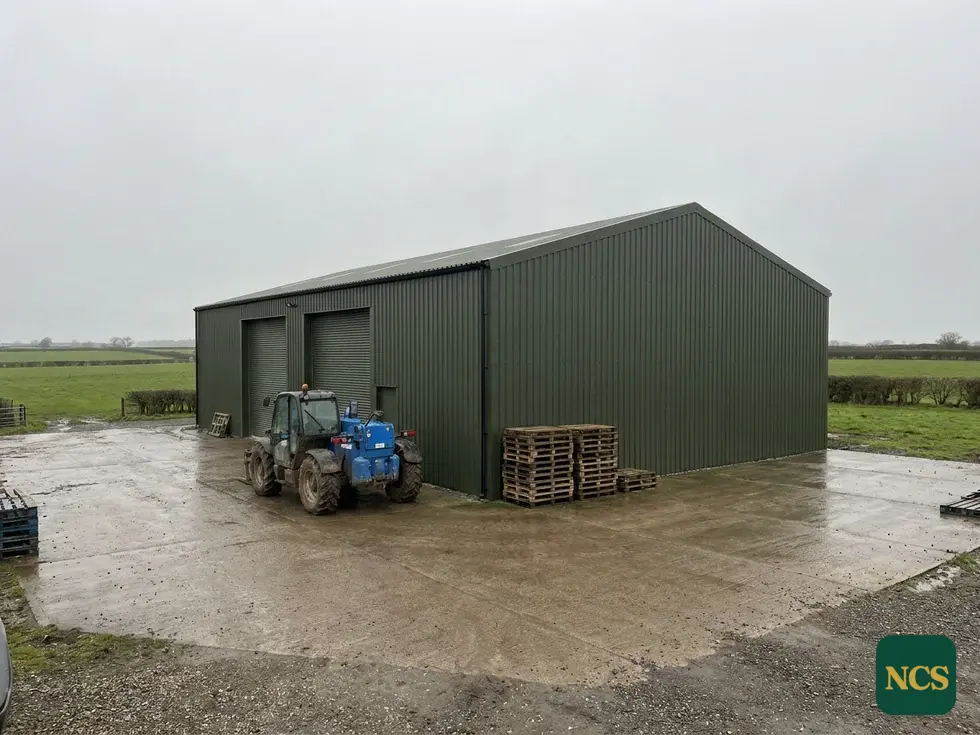
Our Survey-Led Approach to Deddington Farm Roofs
Unlike generic contractors, we tailor solutions to Oxfordshire’s agricultural buildings through:
- Farm-specific risk assessments accounting for livestock proximity and operational constraints
- Sampling and lab testing where asbestos content is uncertain
- Detailed photographic surveys with annotated condition maps
- Clear remediation options prioritising safety and functionality
- Minimal downtime scheduling around milking cycles and harvest periods
When Removal Becomes Necessary
While coating extends service life, removal may be required when:
- Structural integrity is compromised beyond safe encapsulation
- Planned building conversions change roof loading requirements
- Severe weathering has caused widespread matrix breakdown
- Future maintenance access considerations demand replacement
We provide impartial advice on the most appropriate solution for your Deddington farm buildings.
For more information on agricultural building coatings across Oxfordshire, visit our agricultural coatings page or request a free survey.