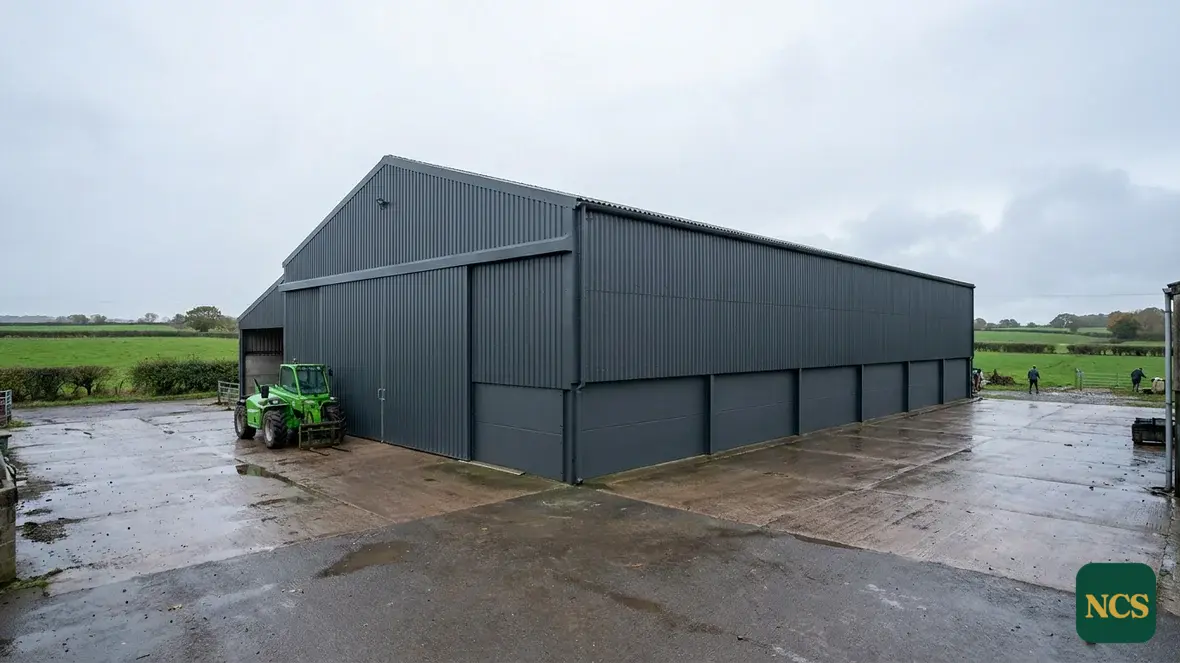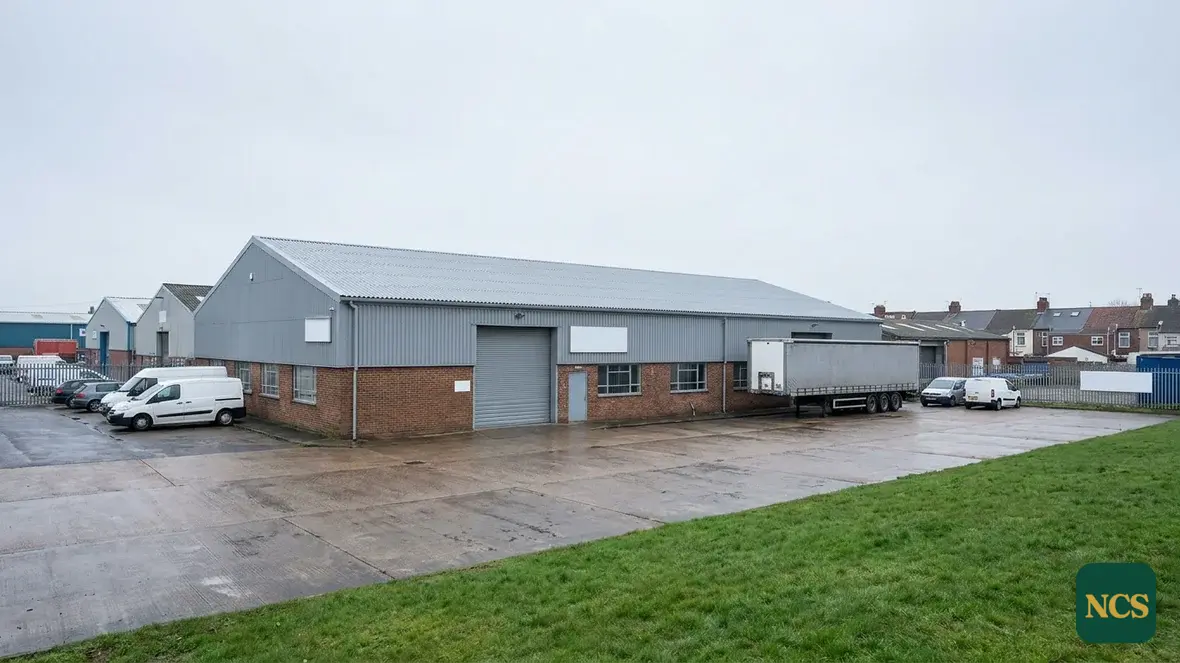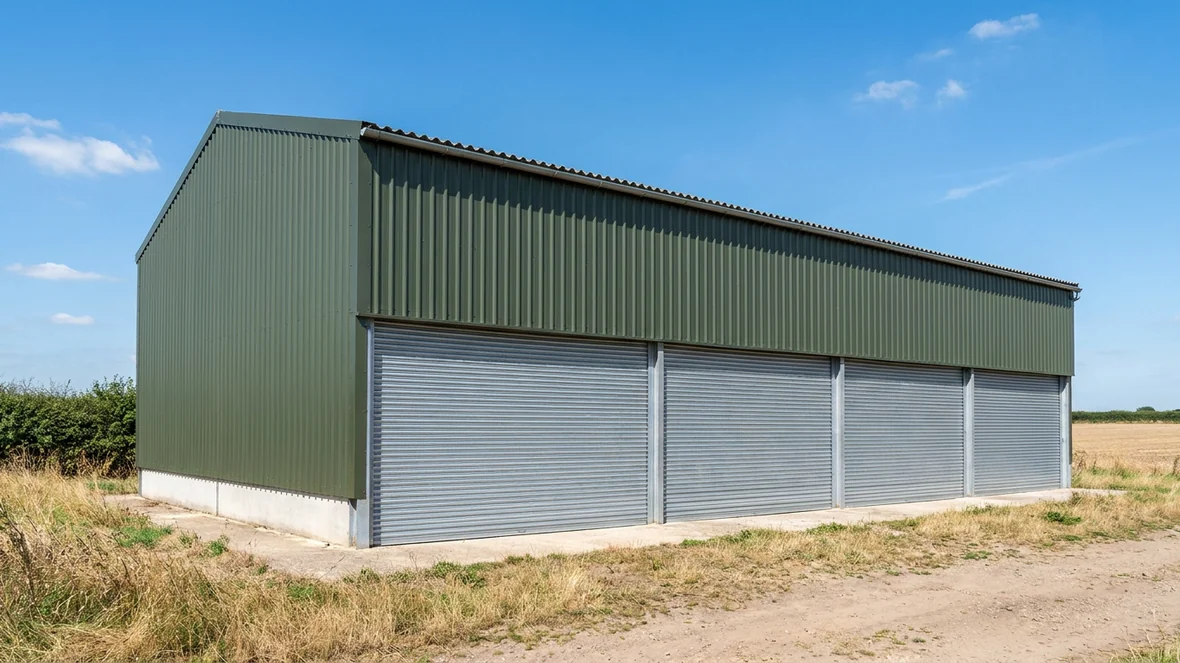
On the coastal plain below the Downs around Chichester, farm buildings take a particular kind of weather. Salt-laden wind off the Solent, long exposure and a mild damp climate all work on a roof at once, and they tend to find the cut edges, laps and fixings before anything else. National Coating Specialists is a survey-led contractor working across England from the South-East, and on the West Sussex farms we start every enquiry the same way: inspect the roof, understand the year, then decide whether a coating is genuinely the right move for that building.
The building stock around Chichester
The land between the Downs and the sea around Chichester carries a real mix: arable grain stores on the lighter coastal-plain soils, horticultural and packhouse buildings, livestock sheds on the downland farms, and the usual machinery sheds and older general-purpose barns. A fair number still sit under their original asbestos-cement or later fibre-cement roofs. The combination of coastal exposure and a damp, mild climate is hard on metal: factory finishes chalk and fade, fixings weep rust, and salt accelerates corrosion at every exposed edge. Fibre-cement turns porous and gathers moss on the shaded slopes. The portal frames underneath are usually sound, which is precisely the situation where a coating, applied to the right roof, makes sense.
Salt, exposure and two kinds of roof
Most roofs we survey near the coast fall into two camps. Coated steel fails first at the details, and salt air speeds that up: cut edges corrode, laps open and fixings stain the sheets below them while the body of the sheet is still serviceable. Asbestos and fibre-cement weather to a soft, water-holding surface that grows brittle. Where the cement sheets are intact, a clean and encapsulation system seals the surface, stops fibre release from it and extends the roof’s life without the cost of stripping and licensed disposal. Where they are cracked or soft, that is a removal job, not a coating job. The survey tells you plainly which case your roof is in.
Timing on a mixed farm
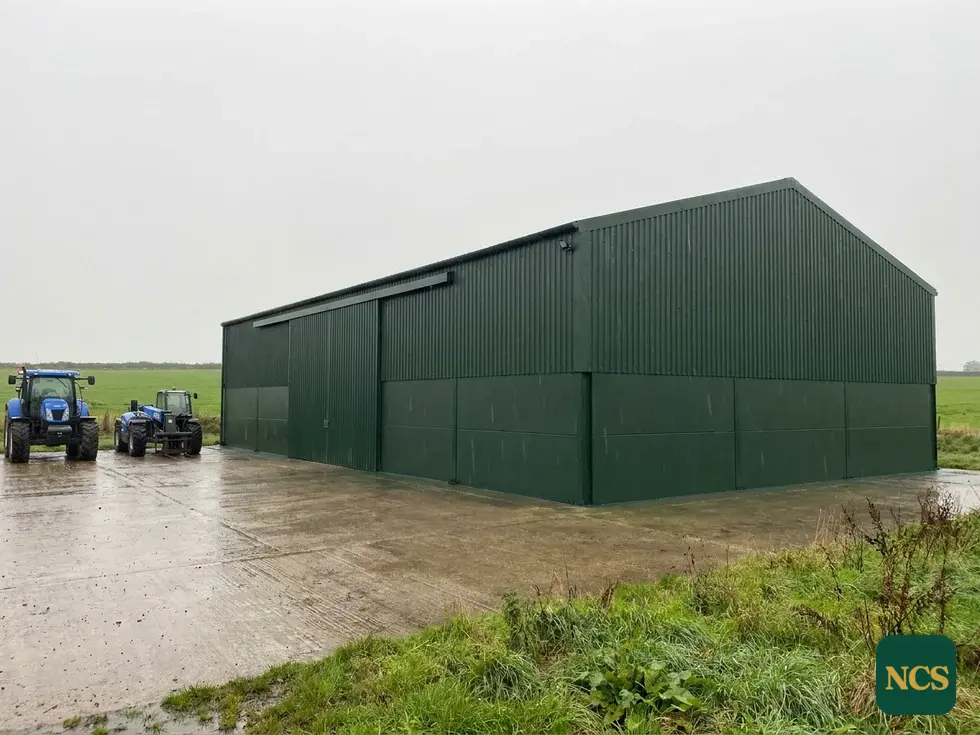
A coastal-plain farm with both arable and stock has more than one calendar, so the programme is built around whichever building is being treated. Grain and crop stores have a clear window after the old crop moves off and before harvest fills the floor again. Machinery sheds suit the weeks the fleet is in the fields. Packhouses and horticultural buildings work around their own busy season. We plan backwards from the date each building has to be back in use, and we confirm it in writing. On the exposed coastal sites we also keep a close eye on the weather window itself, because coatings need dry, settled conditions to cure, and the plain near Chichester does not always provide them on demand.
What the survey records
We price after inspection, never from a satellite image. Each slope is examined from proper access, and we note the state of sheets, cut edges, fixings, rooflights and gutters, paying extra attention to salt-driven corrosion on the seaward faces. Inside, we look for the staining that gives away leaks the yard view hides. You receive photographs and a written recommendation you are free to challenge, and where a holding has several buildings in different states, each one gets its own verdict rather than a single blended figure.
The honest verdict
We will not recommend coating to every caller, because it is not always the right answer. A roof with a few damaged sheets needs repair, and we will say so even when it is the smaller job. A roof with widespread surface failure on sound sheets is the genuine case for coating, and there are many of those on the farms around Chichester. A roof that is holed, soft underfoot or failing at the frame needs replacing, and a coating would only delay that cost while adding ours on top. The verdict, the photographs and the reasoning come to you, and the choice stays in your hands.