Guide
Silicone vs Acrylic vs Polyurethane Roof Coatings
Walk a roof with three contractors and you’ll often hear three different product recommendations, usually whichever one they buy by the pallet. A sound specification starts with the roof, not the tin. Get the choice between silicone, acrylic and polyurethane wrong and the repair fails at the first hard winter; get it right and it lasts years.
Why the chemistry decides the outcome
A roof coating is asked to do several jobs at once: shed water, resist UV degradation, tolerate thermal movement and bond to a substrate that may already be weathered. Each chemistry handles those demands differently. Silicone, acrylic and polyurethane are the three families we specify most often on UK commercial and industrial roofs, and none of them is universally best. The right choice depends on the roof’s pitch, its existing covering, how much standing water it sees and what foot traffic it carries. A survey establishes those facts before any product is named.
Silicone roof coatings
Silicone is the chemistry of choice where water sits. Its standout property is resistance to ponding: it does not soften or re-emulsify when water lingers, which makes it well suited to low-pitch and flat roofs that drain slowly. It also holds its flexibility under UV exposure for a long time, so weathering tends to be gradual rather than sudden. The trade-offs are real. Silicone attracts airborne dirt, so reflectivity can drop over time, and it is awkward to overcoat: once a roof is siliconed, the only practical recoat is more silicone. Surfaces can also be slippery when wet, which matters on roofs with regular access.
Acrylic roof coatings
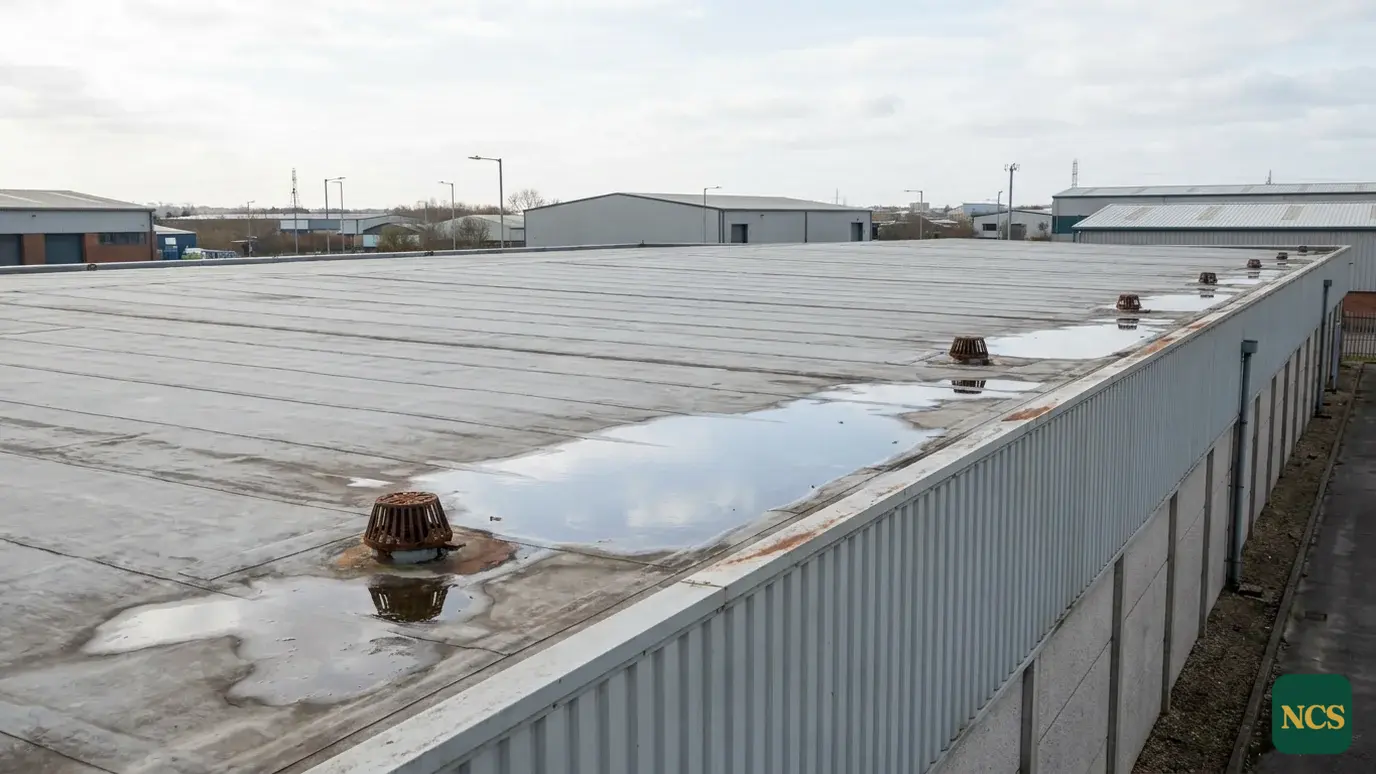
Acrylic is a water-based, breathable chemistry that performs well on pitched roofs where water drains away quickly. It is straightforward to apply, recoats easily and offers strong reflectivity, which helps with surface temperature on large warehouse roofs. Because it is breathable, it suits substrates that need to release trapped moisture. Its weakness is the flip side of silicone’s strength: acrylic does not like ponding water and can soften or break down where water stands, so it is rarely the right answer for a genuinely flat roof. It also needs adequate cure time and dry weather during application, which shortens the viable window in a British winter.
Polyurethane roof coatings
Polyurethane (PU) is the toughest of the three underfoot. It resists abrasion, foot traffic and mechanical damage better than silicone or acrylic, which makes it a sensible choice for roofs with plant, walkways or regular maintenance access. Aromatic and aliphatic grades exist: aromatic PU is often used as a base coat, with aliphatic PU on top where colour stability and UV resistance matter. The downsides are cost and sensitivity during application, as PU is less forgiving of moisture and surface contamination while curing. It is frequently specified as part of a system rather than on its own.
Silicone vs acrylic roof coating: the headline differences
If the decision comes down to silicone vs acrylic roof coating, the deciding factor is usually water. Silicone tolerates standing water and harsh UV but is hard to recoat and can hold dirt. Acrylic is breathable, cost-effective and easy to maintain but struggles where water ponds. Polyurethane sits alongside both as the answer to mechanical wear rather than water or UV alone. Most real roofs are not a single clean case, which is why systems often combine chemistries, for example a PU base for toughness beneath a topcoat chosen for the roof’s exposure.
- Roof pitch and how quickly it actually drains
- Evidence of ponding water and where it collects
- The existing covering and its condition
- Foot traffic, walkways and plant access
- Substrate moisture and whether it needs to breathe
- The realistic weather window for application and cure
Matching the coating to the substrate
The substrate often narrows the field before performance does. Profiled metal and felt behave differently from concrete or single-ply membrane, and an existing coating may dictate what can be applied over it. This is where an impartial survey earns its keep: rather than forcing one favoured product onto every roof, the specification follows what the substrate and exposure allow.
| Coating | Key strength | Main weakness | Best suited to |
|---|---|---|---|
| Silicone | Excellent ponding water and UV resistance | Hard to recoat, holds dirt, slippery when wet | Flat and low-pitch roofs that drain slowly |
| Acrylic | Breathable, reflective, easy to recoat | Poor on standing water, needs a dry cure | Pitched roofs that shed water quickly |
| Polyurethane | High abrasion and foot-traffic resistance | Higher cost, sensitive during cure | Roofs with walkways, plant or heavy access |
| Bituminous/elastomeric | Cost-effective on metal and felt | Shorter UV life than silicone | Specific metal or felt repairs within a system |
- Specify to the roof, not to a single brand or chemistry.
- Silicone for ponding water and UV; acrylic for free-draining pitched roofs.
- Polyurethane earns its place where abrasion and foot traffic are the real issue.
- Many roofs are best served by a system that combines chemistries.
Frequently asked questions
Is silicone always better than acrylic? No. Silicone wins where water ponds, but acrylic is often the better, more maintainable choice on a free-draining pitched roof.
Can you apply acrylic over an old silicone coating? Generally no. Silicone surfaces tend to accept only further silicone, which is why the first specification matters so much.
Which coating lasts the longest? Longevity depends on the match between chemistry and roof. A correctly specified coating in the right setting outlasts a premium product used in the wrong one.
Whatever the roof, the honest answer comes from a survey rather than a product preference. See our roof coatings service for how we approach specification, or request a free quote to arrange a survey.
Published by National Coating Specialists • survey-led commercial, industrial & agricultural coatings across the UK.
Accredited & insured



Where we work
Sectors and buildings we coat
Survey-led coating, spraying and exterior refurbishment across commercial, industrial and agricultural property in the UK.
Get a free site survey, no obligation
A real surveyor walks the building, photographs the condition and quotes only what it actually needs. Send us the details and we'll come back with a clear, practical route, not a hard sell.
Book your free site surveyWhat does your building need?
Pick the surface, then the problem. We will point you to the right service.