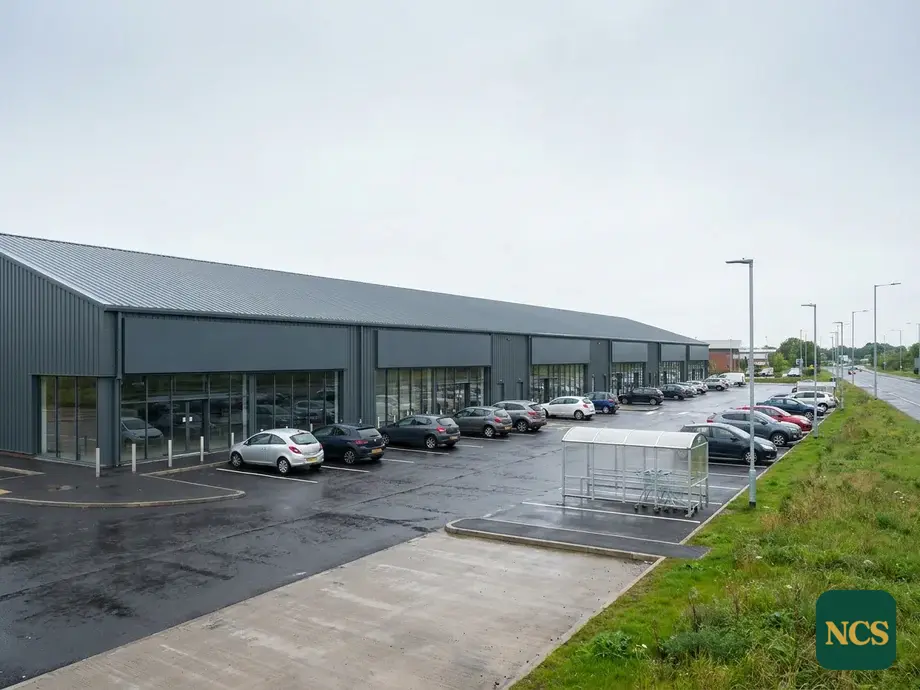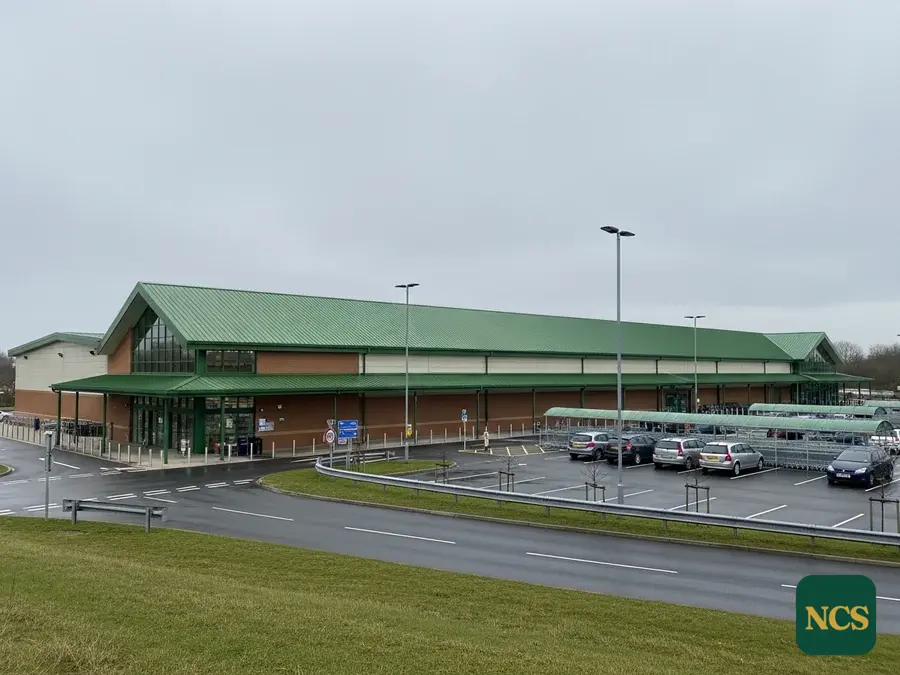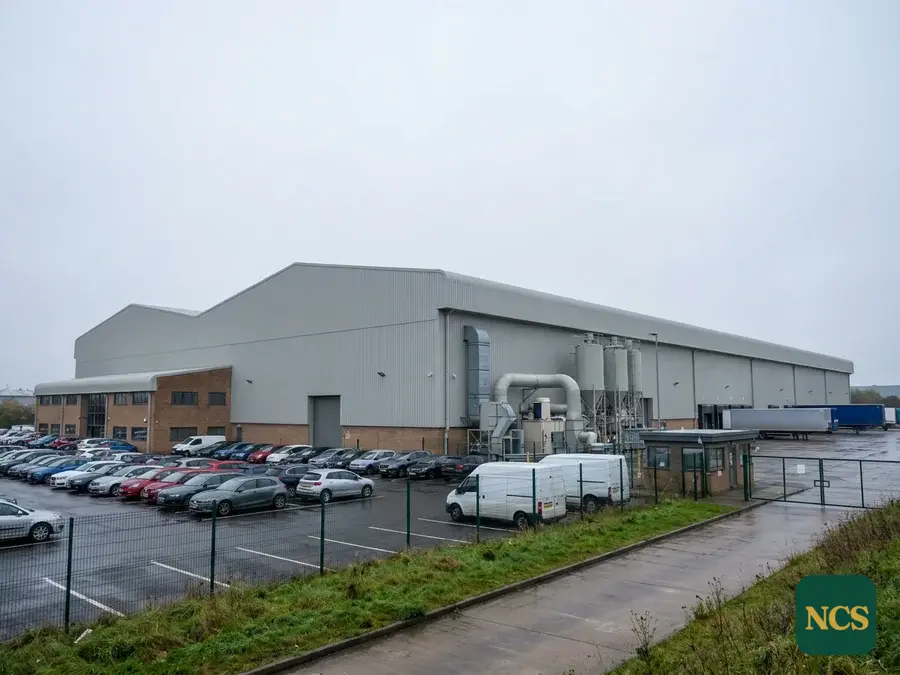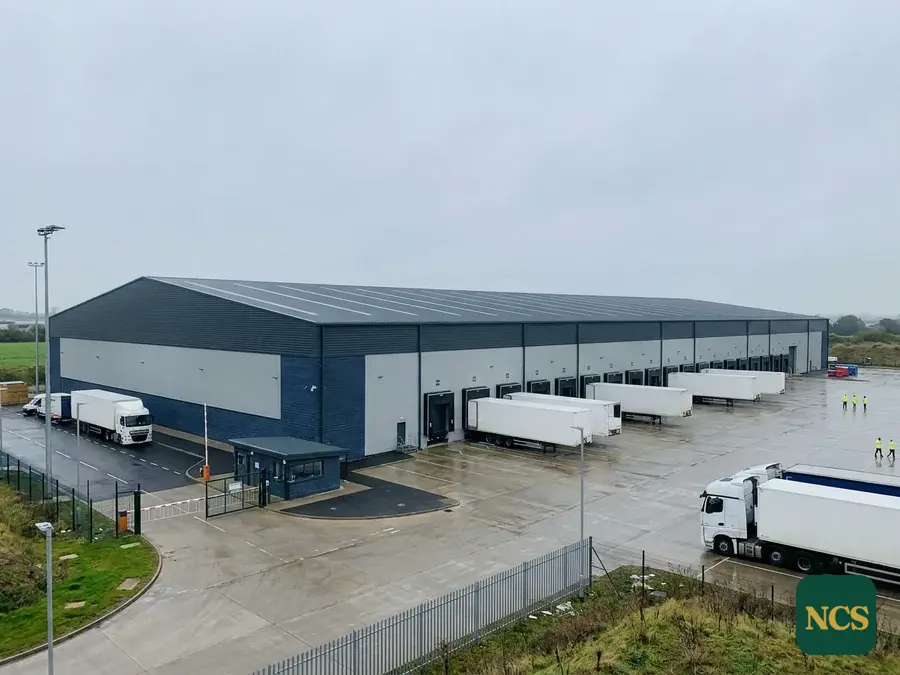



What this service is for
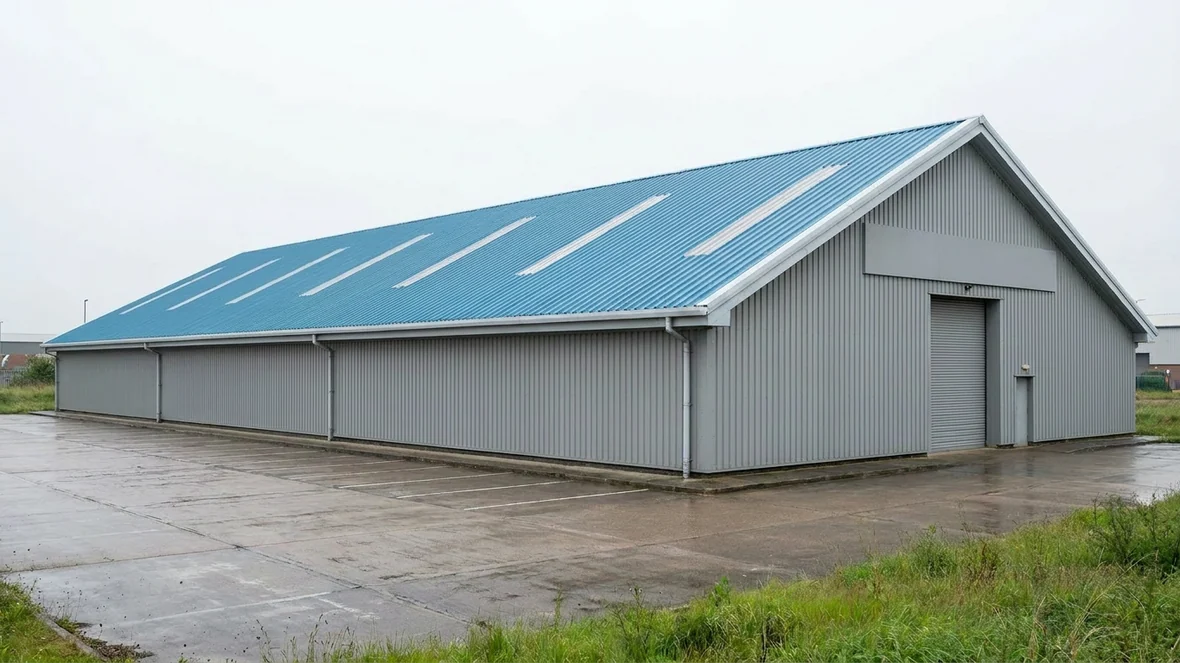
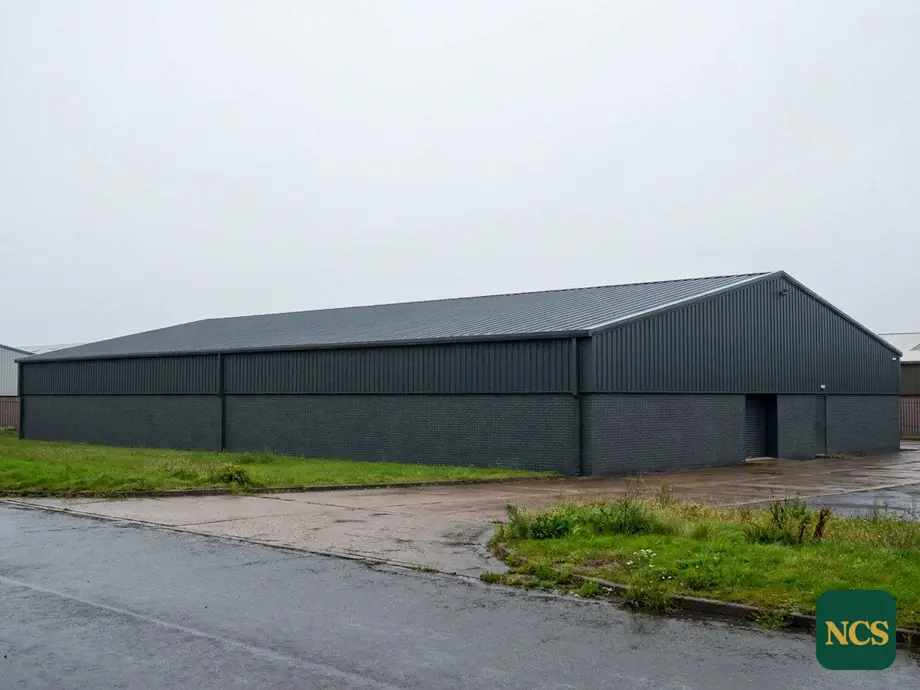
- Metal, coated and other sound commercial roof decks
- Waterproofing restored at the laps, fixings and weathered details
- Specified from a survey on the roof, never quoted from the ground
What we usually find on commercial roofs
Survey checks before specification
- Deck type, coating condition and the risk of adhesion failure
- Fixings, laps, gutters, flashings and penetrations
- Cut edge corrosion and isolated sheet failure
- Access, fall protection, weather windows and keeping the site running
Where commercial roofs fail first: laps, fixings, gutters and rooflights
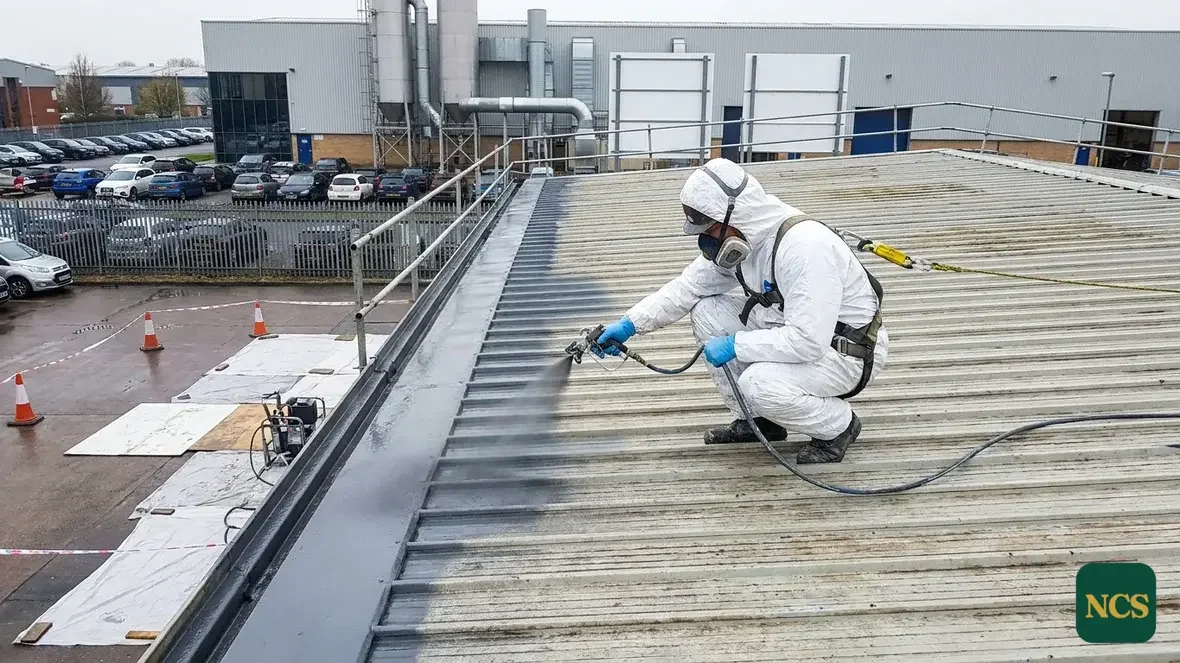
Commercial roofs rarely deteriorate evenly. Water usually finds the details where sheets meet, components penetrate the covering or drainage slows. During a survey, we therefore spend as much time examining laps, fixings, gutters and rooflights as we do assessing the main roof area. A commercial roof coating can protect a suitable roof surface, but its performance depends on these vulnerable details being identified and prepared correctly.
Laps and sheet junctions
Side laps and end laps are exposed to movement, wind-driven rain and repeated wetting. Sealants can harden, split or lose adhesion, while sheet edges may begin to corrode where moisture is retained. We check whether laps remain secure, whether capillary action is drawing water beneath the sheets and whether previous repairs are masking wider deterioration. Open or unstable laps need remedial attention before coating; simply covering them does not correct movement beneath the surface.
Fixings and penetrations
Fixings create numerous potential entry points across a profiled roof. Washers can perish, fixings may loosen and localised corrosion can develop around the holes. We also inspect vents, ducts, flues and other penetrations, where changes in material and profile make weathering more difficult to control. The appropriate preparation may include cleaning, replacing unsuitable fixings, treating corrosion and reinforcing vulnerable interfaces. The exact approach depends on the roof construction and its condition.
Gutters and drainage routes
Gutters often fail through a combination of standing water, debris, corrosion and movement at joints. Internal gutters deserve particular attention because leakage may enter the building before it becomes obvious from outside. We examine outlets, seams, stop ends and transitions, while considering whether the drainage route is clear and correctly formed. A coating should not be used to disguise inadequate falls, persistent ponding or a gutter that has lost structural integrity.
Rooflights and surrounding details
Rooflights weather differently from coated metal sheets. Their seals, fasteners and perimeter details may deteriorate, while the rooflight material itself can become brittle, damaged or heavily discoloured. We assess whether each unit is suitable to retain, requires separate treatment or should be replaced as part of the works. Safety and fragility are also considered when planning access.
- We trace defects back to their likely source rather than treating the visible stain alone.
- We distinguish isolated detail failures from signs of broader roof deterioration.
- We specify preparation and reinforcement according to the substrate and defect.
- We confirm that drainage and movement issues are addressed before the main coating is applied.
Roof coating vs re-roofing: the decision we walk through at survey
A commercial roof coating is not automatically the right answer simply because a roof leaks or looks weathered. Our survey is intended to establish whether the existing covering remains a sound basis for treatment. We compare the extent of deterioration, the condition of the supporting elements, the presence of trapped moisture and the practical demands of the building before recommending coating, partial replacement or full re-roofing.
When coating is a reasonable option
Coating is generally worth considering where the roof covering remains structurally serviceable and defects are mainly associated with surface weathering, isolated corrosion, laps, fixings or local details. The substrate must be capable of being cleaned and prepared to provide reliable adhesion. Drainage should also be workable, with no unresolved movement or deformation that would continue to stress the completed system.
In these circumstances, a commercial roof coating can provide a continuous protective finish while allowing serviceable roof sheets to remain in place. It can also make sense where local repairs and detail treatments can address the known routes of water ingress without concealing more serious defects. We still allow for proper preparation, because coating over contamination, loose corrosion or failed repairs merely preserves the underlying problem.
When replacement is the better course
Replacement beats coating when the roof covering is no longer a dependable substrate. That may include widespread perforation, advanced corrosion, extensive delamination, severely distorted sheets or recurring failure caused by movement. Re-roofing is also more appropriate where insulation is saturated, deck components are unsound or the roof build-up requires fundamental improvement. If drainage geometry is inherently defective, a new roof design may offer a more credible solution than repeated surface treatment.
Some roofs occupy the middle ground. Individual sheets, rooflights, gutters or sections may need replacement while the remaining areas are suitable for coating. We consider this mixed approach where defects are clearly contained and the retained materials can be prepared properly. It is not a shortcut: interfaces between new and existing components still require careful detailing.
What informs our recommendation
- The type, age and condition of the existing roof covering.
- The extent and depth of corrosion or material breakdown.
- Evidence of moisture within insulation or beneath the covering.
- The condition of laps, fixings, gutters, rooflights and penetrations.
- Structural movement, deflection and the adequacy of drainage.
- Access constraints, building operations and safe sequencing of the work.
- Whether defects are localised, repeatable or widespread across the roof.
We explain the limitations as plainly as the advantages. If preparation and local repair can produce a stable, continuous substrate, coating may be proportionate. If the survey shows that the roof has reached the point where retained materials would compromise the work, we recommend replacement instead.