Guide
Commercial Roof Coating Cost: What Affects It
Ask three contractors to price the same commercial roof and you can easily receive three very different figures. That is not because someone is wrong, it is because each has read the roof differently. The figure comes down to what a surveyor weighs up before any number is written: the roof’s condition, the access, the prep and the system it actually needs.
What really drives commercial roof coating cost
A coating quote is never a flat rate dressed up with a logo. The cost on any given building is built from the real condition of the substrate, the access required to reach it safely, the preparation needed before a single coat goes on, and the system chosen to suit the roof and its remaining life. Two buildings of identical footprint can sit a long way apart on price because what sits beneath the coating, and what it takes to get there, is rarely the same.
The condition of the existing roof
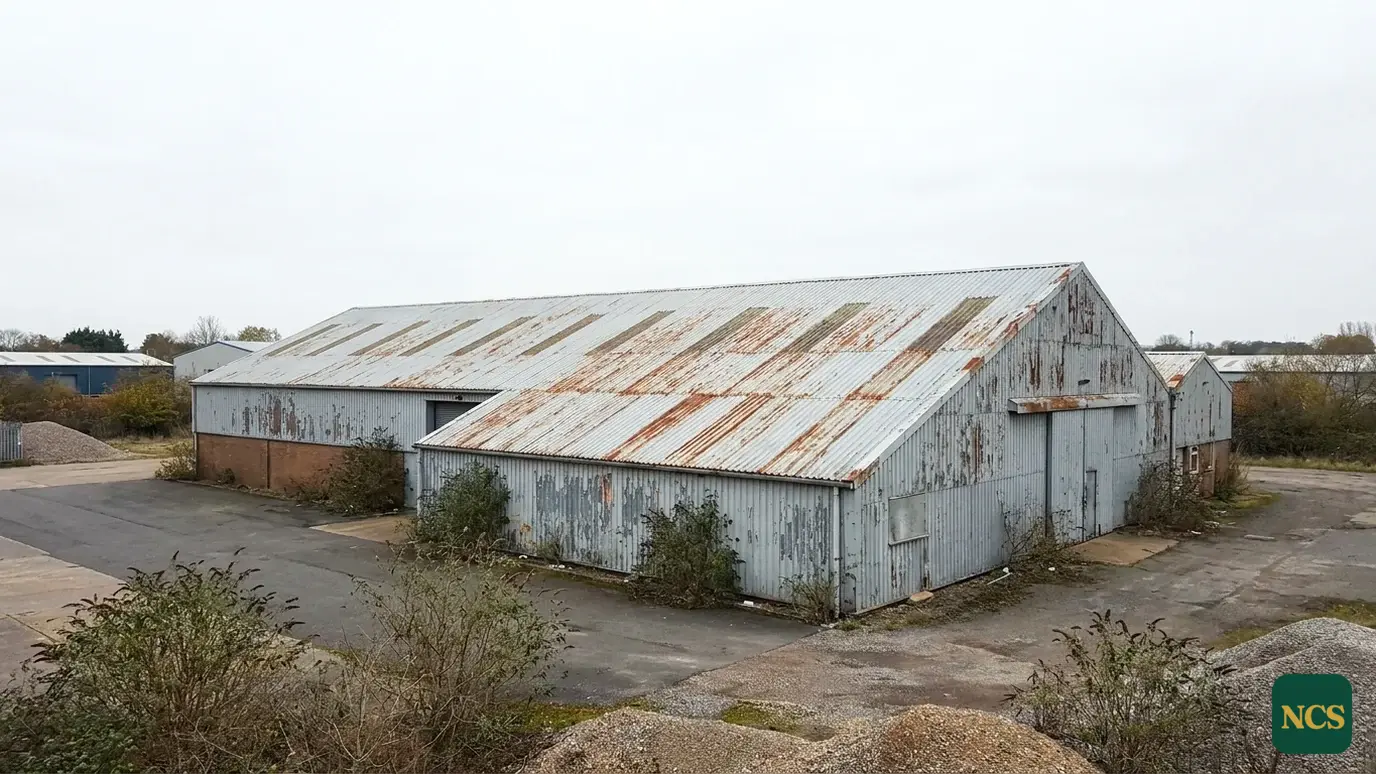
Condition is usually the largest single variable. A roof with light surface oxidation and sound fixings needs far less remedial work than one with widespread cut-edge corrosion, slipped sheets, failed laps or loose fasteners. Coatings are only as durable as what they are applied over, so any honest contractor prices the repairs first and the coating second. If corrosion, blocked gutters or failed seals are skimmed over to keep a quote attractive, the work will not last, and that is a false economy rather than a saving.
Roof size, access and height
Two factors that rarely make it into a phone estimate are access and height. A single-storey unit you can reach from a scissor lift is a different proposition to a multi-storey roof needing edge protection, mobile towers or a managed safe system of work. Fragile roofs, including older asbestos cement sheets, demand crawl boards, nets and careful handling that all take time. Live sites where production must continue underneath add another layer of planning. None of this is padding, it is the cost of doing the job safely and legally.
The coating system specified
The system itself matters, and not every roof suits every product. Profiled steel, fibre cement, asbestos cement encapsulation and single-ply membranes each call for different primers, build-ups and curing conditions. A heavier multi-coat specification with a longer service life will sit higher than a lighter refresh, but it may also be the only sensible choice for a roof you want to forget about for many years. The right answer depends on the substrate, the exposure and how long the building needs to keep working.
- Extent of cut-edge corrosion and any sheet or fixing repairs
- Gutter clearing, sealing and minor leak remediation before coating
- Safe access, edge protection and provision for fragile roofs
- Cleaning method, from soft wash to full surface preparation
- The coating system and number of coats the roof genuinely needs
- Working around live operations and restricted site hours
Why a survey comes before any quote
You cannot price what you have not seen. A measured survey establishes the true area, records the condition sheet by sheet, identifies the substrate and flags anything fragile or hazardous. It is also where realistic options emerge: whether a roof is a strong candidate for coating at all, or whether replacement would serve the building better. A figure given without that visit is a guess, and guesses tend to grow once work begins. A survey-led quote is fixed on evidence, so there are fewer surprises on site.
| Roof type | Typical condition concern | Main cost driver |
|---|---|---|
| Profiled steel | Cut-edge corrosion and fixings | Extent of corrosion repair and preparation |
| Asbestos cement | Fragility and fibre release risk | Safe encapsulation method and handling |
| Fibre cement | Moss growth and surface porosity | Cleaning and priming before coating |
| Single-ply membrane | Seam and detail failure | Repairs and compatible coating system |
| Built-up felt | Blistering and ponding | Substrate stability and suitability for coating |
- Condition of the existing roof is usually the biggest cost variable
- Access, height and fragile roofs add genuine, unavoidable cost
- The coating system must suit the substrate, not the other way round
- A measured survey turns a guess into a fixed, evidence-based quote
Common questions
Can a roof be coated, or does it need replacing? That is exactly what a survey decides. Where the structure is sound and corrosion is manageable, coating is often viable. Where sheets are perished or fixings have failed widely, replacement may be the more honest recommendation.
Why does cleaning and preparation take so long? A coating bonds to the surface it meets, so moss, dirt and loose material have to come off first. Skipping preparation is the most common reason a coating fails early.
Does coating an asbestos roof remove the asbestos? No. Encapsulation seals and stabilises the sheets in place under a controlled system, it does not remove them, and it must be carried out with the right precautions.
If you want a clear, survey-led view of your own building, start with our roof coatings service and book a no-obligation visit through our free quote page.
Published by National Coating Specialists • survey-led commercial, industrial & agricultural coatings across the UK.
Accredited & insured



Where we work
Sectors and buildings we coat
Survey-led coating, spraying and exterior refurbishment across commercial, industrial and agricultural property in the UK.
Get a free site survey, no obligation
A real surveyor walks the building, photographs the condition and quotes only what it actually needs. Send us the details and we'll come back with a clear, practical route, not a hard sell.
Book your free site surveyWhat does your building need?
Pick the surface, then the problem. We will point you to the right service.