Guide
Can You Spray Paint Metal Cladding?
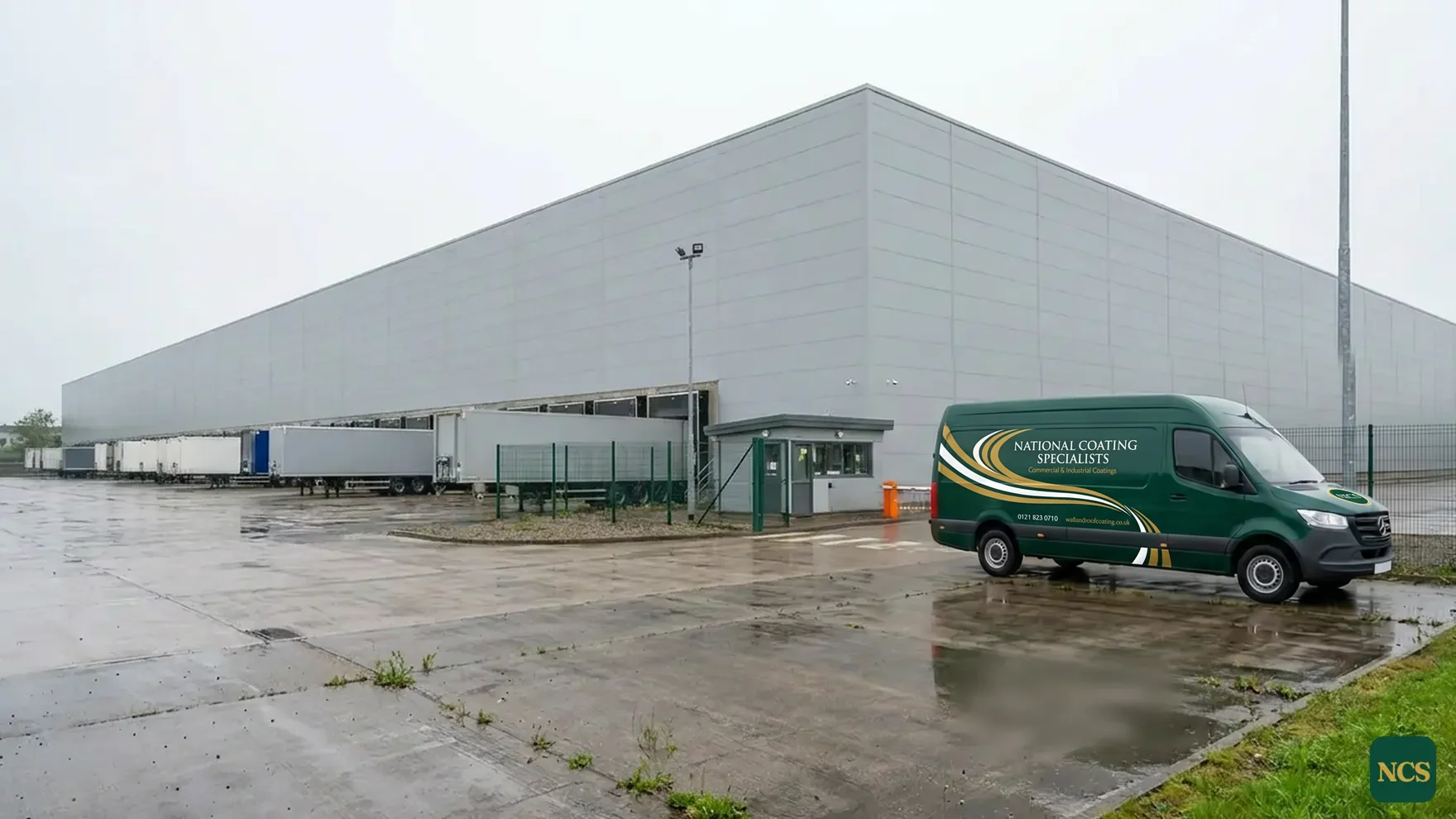
We get asked whether you can spray paint metal cladding on nearly every industrial unit we survey. The honest answer is yes, but only once the substrate has been identified, cleaned and matched to the right coating system. A fresh finish over the wrong preparation will flake within a season, and we would rather say that at survey stage than after the scaffold is down.
What the coating is actually sticking to
Most commercial and agricultural cladding in this country is coil-coated steel, and the factory finish decides how a recoat behaves. Plastisol is a thick, textured PVC coating that ages by chalking and, on south-facing elevations, by cracking and lifting at the profile crowns. PVDF (also sold as PVF2) is a thinner, harder fluoropolymer that holds colour well but presents a slick, low-energy surface that new paint struggles to grip. Galvanised sheet, common on older barns and gutters, carries a zinc layer that reacts with fresh coatings unless it is properly weathered or treated first. Each of these needs a different answer, which is why we test and record the finish before recommending anything.
Why brush and roller finishes fail on profiled sheets
Profiled cladding is not a flat wall. The sheet runs in ribs and troughs, and a roller only ever touches the crowns, leaving the sides and valleys thin or bare. Brushing into the profile is slow, leaves visible lines, and cannot lay down an even film across the changing angles. On a large elevation the result is patchy coverage and early breakdown exactly where water sits longest. Spraying is the only method that follows the profile and puts a consistent film over the whole sheet, which is the real reason contractors spray rather than paint by hand.
What proper on-site spraying involves
On-site coating is a controlled process, not a quick blow-over. It starts with a thorough clean to strip dirt, chalk, moss and any loose material, because coatings bond to the surface, not to the grime on it. Then comes masking: windows, doors, rooflights, signage, gutters and anything below the working area are sheeted to catch overspray. We use airless spray equipment, which pushes coating at high pressure to atomise it into an even fan that covers the profile properly. Weather governs the whole job. Damp surfaces, low temperatures and wind all affect how the coating lays and cures, so we work to the product’s stated conditions rather than forcing a finish on a bad day.
- Identify the existing finish (plastisol, PVDF, galvanised or powder-coated) before quoting
- Assess for cut-edge corrosion, cracking and failed sealants at laps and flashings
- Check the fixings and sheet condition, since coating will not save perished steel
- Confirm access and safe working around rooflights and fragile panels
- Plan masking for glazing, gutters and neighbouring units to control overspray
Spray paint metal cladding: matching the product to the substrate
There is no single coating that suits every sheet. The primer and topcoat are chosen against the finish we find on site and the manufacturer’s guidance for that surface. Getting this wrong is the most common cause of a recoat failing, so the survey matters as much as the spraying.
| Substrate | How we usually find it | Spray recoat suitability | Main preparation |
|---|---|---|---|
| Plastisol steel | Chalking, colour loss, crown cracking | Good once stable and cleaned | Wash, remove loose coating, suitable primer |
| PVDF / PVF2 steel | Fading, otherwise sound | Possible with the right adhesion primer | Degrease and abrade the slick surface |
| Galvanised sheet | Dulling zinc, early white corrosion | Suitable with correct treatment | Clean and prime for zinc |
| Polyester powder-coated | Chalking on older panels | Generally suitable | Clean and test adhesion |
| Perforated or badly rusted steel | Holed sheets, structural corrosion | Not suitable, replace | Overcladding or sheet renewal |
When spraying is the wrong answer
Coating is the right call on sound sheets that have simply weathered. It is the wrong call when the steel has failed. Perforated panels, widespread rust through the profile, loose or missing fixings and roofs that are already fragile all point to repair or replacement rather than a recoat. Spraying over problems like these hides them briefly and costs you the work twice. Asbestos cement sheets are a separate case again, as they are never abraded or disturbed and are encapsulated under a controlled method rather than sprayed like steel. An honest survey should tell you which of these situations you are in.
- Spraying works on metal cladding when the substrate is identified and prepared correctly
- Brush and roller cannot cover profiled sheets evenly, so early failure follows
- Plastisol, PVDF and galvanised each need a different primer and approach
- If the steel itself has failed, replacement beats a coating
Frequently asked questions
How long does spraying cladding take? It depends on the size of the elevation, access and weather, but the preparation and masking usually take as long as the spraying itself.
Can you spray cladding in winter? Only when surface temperature, damp and wind fall within the coating’s stated limits, which is harder to achieve in colder months but not impossible on the right day.
Will overspray reach nearby cars or units? Airless spraying does create overspray, which is exactly why we mask thoroughly and plan the work around wind and neighbouring property.
If your sheets are sound and simply tired, our cladding spraying service can bring them back, and the best starting point is a survey through our free quote.
Published by National Coating Specialists • survey-led commercial, industrial & agricultural coatings across the UK.
Accredited, insured & nationwide



Where we work
Sectors and buildings we coat
Survey-led coating, spraying and exterior refurbishment across commercial, industrial and agricultural property in the UK.
Get a free site survey, no obligation
One of our surveyors walks the building, photographs the condition and quotes only what it actually needs. Send us the details and we'll come back with a clear, practical route, not a hard sell.
Book your free site surveyWhat does your building need?
Pick the surface, then the problem. We will point you to the right service.