What cut edge corrosion is and why it affects Loughborough roofs
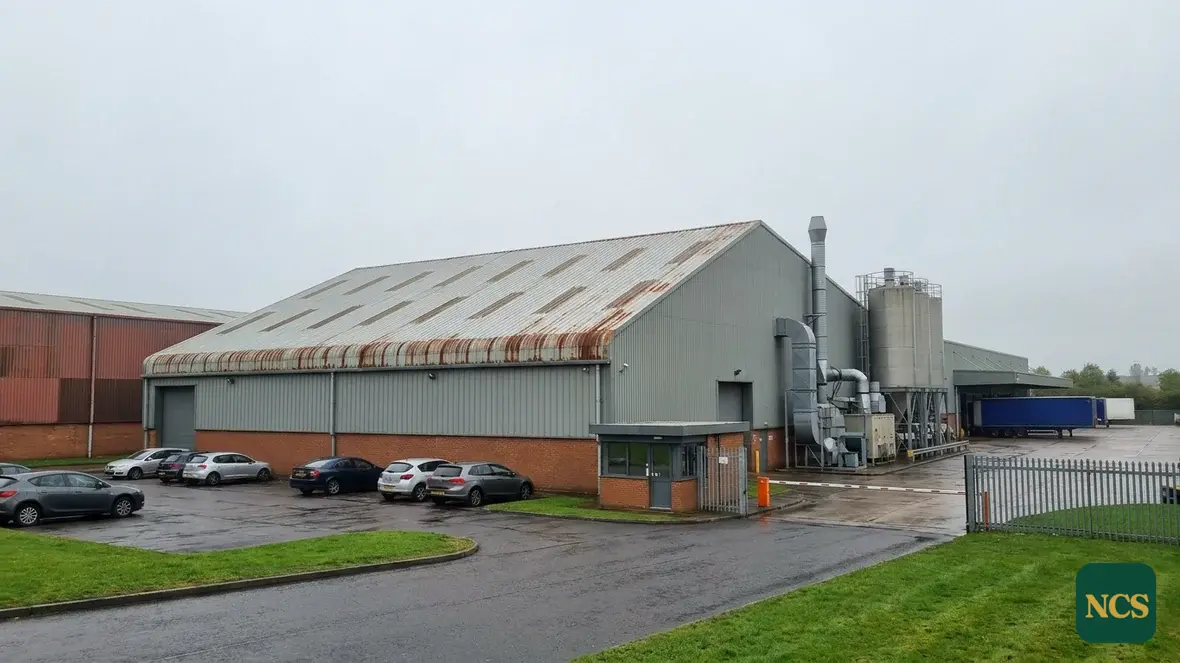
Cut edge corrosion starts where the steel roof sheets were cut to length on site. Around Loughborough, we see this mostly on industrial and commercial buildings. Think profiled metal roofs put up between the late 1980s and early 2000s. Loughborough’s engineering history means plenty of factory units and trading estates have these roofs. We find them all along the A6 corridor and near the M1 junctions. If you don’t treat it, moisture creeps under the plastisol coating, and the rust spreads out of sight beneath the surface.
Loughborough’s roof stock and vulnerable areas
You’ll find hundreds of units with these vulnerable steel roofs in Loughborough’s industrial zones. The Ashby Road estate, the trading area around Epinal Way, and the older parts of the Bishop Meadow industrial zone all have plenty of them. A lot of these buildings went up when Loughborough was growing as a manufacturing hub. The roofs were designed for thirty years, but now the edges are starting to go. The problem usually shows up first on north-facing walls and in spots where water collects, like valley gutters and lower roof edges.
We repair cut edges, laps and fixings across Loughborough before they become leaks, and coat the result so the repair holds.
How untreated edges fail
Leave it alone, and the corrosion just keeps eating its way along the cut edge and under the coating. That lifts the plastisol off the steel, making channels for even more water to get in. In Loughborough’s climate, with the freeze-thaw cycles, that damage speeds right up. Eventually, the coating gives up completely, and the rust punches right through the steel. Leaks usually appear five to seven years after you first see the edges lifting. Often, they start around the fixings, where movement puts stress on the coating.

Proper edge treatment methods
To treat it properly, we need to get rid of all the loose coating. That means stripping it back to good, sound material, usually about fifty millimetres from the edge. Then we clean the bare steel right back to shiny metal, getting rid of all the rust. After that, we put on a zinc-rich primer. A high-build coating goes on next, overlapping onto the good roof surface. The final layer has to be flexible enough to move with the temperature changes but also bond tight to both the steel and the old coating. Do it right, and you can get another fifteen years or more out of the roof.
Our survey-led approach
Every job we do kicks off with a detailed roof survey. We check all the edges, fixings, and laps, making a note of anywhere the coating has lifted or where you can see rust stains. Flashings, gutters, and any penetrations get a good look too, because they’re common spots for leaks. The survey maps out exactly how bad the edge degradation is and checks for other problems, like standing water or damaged insulation. Only once we’ve done all that do we specify what treatment is actually needed.
Why specification follows survey
Cut edge corrosion often means there are bigger problems with the roof. A good survey might tell us that some sheets need replacing altogether, while other areas only need the edge treatment. It also helps us work out if a standard repair will cut it, or if you’re looking at something more involved, like overcladding. If you prescribe a treatment without this inspection, you’re either going to underspecify the work, or you’ll pay for more than you need.
- Free no-obligation roof survey with detailed report
- Clear explanation of recommended treatments
- No hard sell or pressure to proceed
- Honest assessment of remaining roof life
- Advice on planning maintenance budgets
For more on cut edge corrosion treatment, see our main service page. To book your free survey, use our quote form.
Recently — July 2026
A survey gives you a written read on the actual condition of the roof or walls and the route we would take, with no obligation to go ahead.
Dry summer spells are the window for tackling cut-edge corrosion and tired finishes before the autumn rain sets back in.