Guide
Coating Agricultural Buildings: Barns, Grain Stores and Livestock Units
A grain store that sweats through every cold snap, a livestock unit where ammonia has crept into the sheet fixings, an asbestos cement barn that nobody wants to lay a ladder against. These are the jobs we survey most weeks. Agricultural building coating sits apart from ordinary commercial work because a farm roof is asked to do several things at once, and it rarely gets maintained until something starts dripping on stock or stored crop.
Why agricultural building coating asks more of a roof
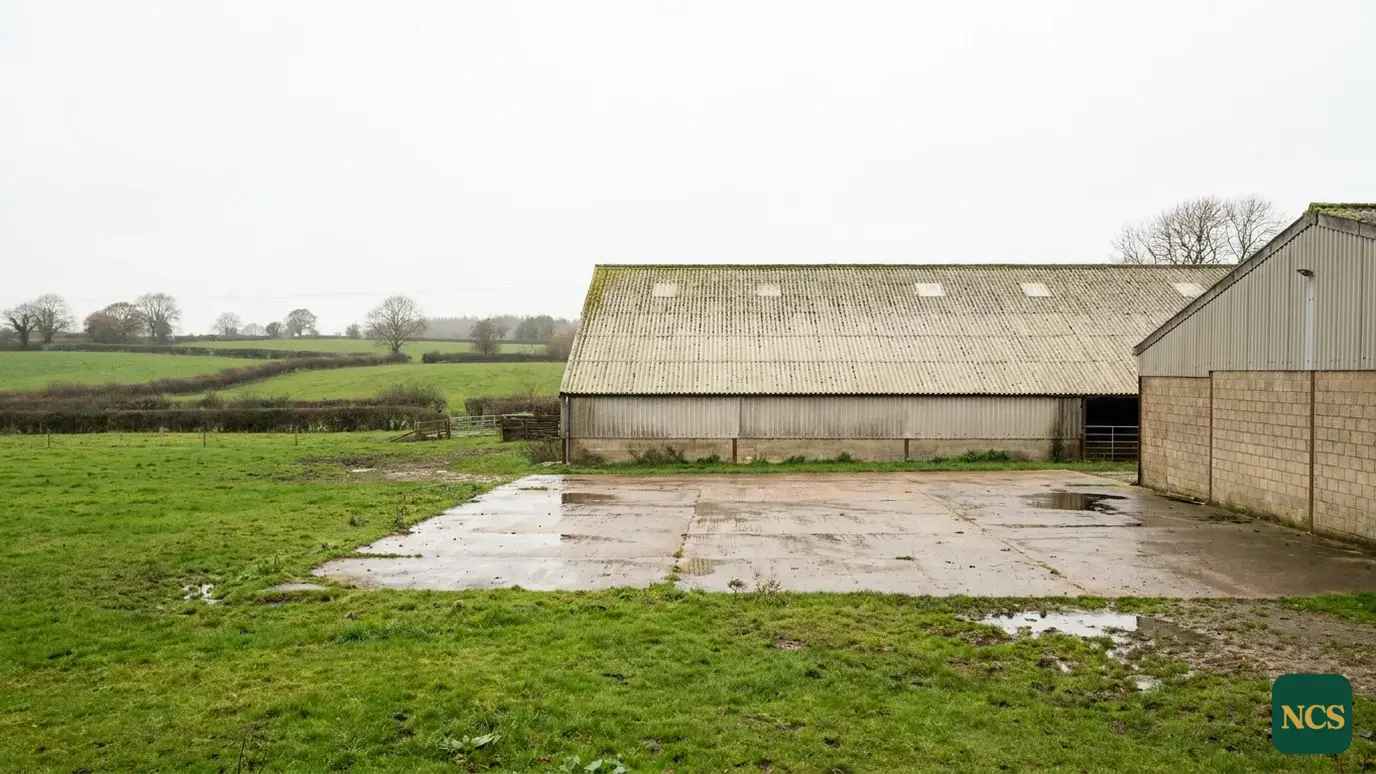
Farm roofs are usually old, large in span and built from materials chosen decades ago for cost rather than longevity. Fibre cement, box-profile steel and older asbestos cement all age differently, and they often sit side by side on the same holding. Add slurry, feed dust, salt from winter feed and the heat and moisture of housed animals, and you get a set of conditions that eat through fixings and surfaces faster than a warehouse or a retail shed ever would. Before anyone talks about a coating, the honest question is whether the substrate underneath is sound enough to carry one at all.
The asbestos cement question
A great many barns, grain stores and older livestock units were sheeted in asbestos cement. It is not automatically dangerous where it sits, but it becomes a problem once the surface breaks down and fibres can wash or blow off. Encapsulation coating is one route: a bonded coating that seals the surface and holds the material together, so the sheets can stay in service rather than being stripped and disposed of at considerable cost. It is not right for every roof. Sheets that are cracked, delaminating or carrying failed fixings may need removal by a licensed contractor instead. A survey is where that decision gets made, not a phone call.
Condensation, ammonia and the livestock environment
Housed animals produce a lot of warm, moist air, and when it meets a cold single-skin roof it condenses on the underside and drips back down. Farmers often read this as a leak when the sheets are actually sound. A coating alone will not cure a condensation problem, and we will say so. Ventilation, insulation and the building’s use all feed into the answer. Inside livestock units the air is also corrosive, so cut edges, laps and steelwork degrade from below as well as above. Any coating specification has to account for what the roof faces on both sides.
What our survey actually checks
The survey is the part that decides whether a coating will last or peel inside a season. We walk the roof where it is safe to, and inspect from below where it is not.
- Substrate type and condition, and whether asbestos cement is present
- Fixings, laps and cut-edge corrosion on steel sheets
- Signs of condensation versus genuine water ingress
- Moss, lichen and surface contamination that stops coatings bonding
- Roof pitch, access routes and the state of any rooflights
- How the building is used and whether stock or crop can be worked around
Access, weather and timing on a working farm
Farms do not stop for us. Housing periods, harvest, lambing and grain drying all limit when a roof can be worked on, and much of this trade needs dry weather and a settled surface to coat onto. Access is often awkward too, with soft ground, overhead power lines and yards full of machinery. Part of a useful survey is agreeing a realistic window and a safe method, rather than promising a start date that ignores the season. Spray application in particular needs low wind and the right temperature, so timing is planned around the weather rather than the diary.
Comparing the realistic options
There is no single answer for every farm building. The sensible choice depends on the substrate, the building’s remaining working life and the budget.
| Option | Best suited to | Disruption | Notes |
|---|---|---|---|
| Overcoat existing sheets | Sound steel or fibre cement roofs with surface wear | Low | Only viable if fixings and laps are still solid |
| Asbestos cement encapsulation | Stable asbestos cement sheets not yet breaking down | Low to moderate | Keeps sheets in service; not for cracked or loose sheets |
| Cut-edge corrosion treatment | Steel roofs rusting at exposed laps and edges | Low | Targets the failure point rather than the whole roof |
| Full re-sheet | Roofs beyond repair or badly damaged | High | Higher cost and removal, but resets the building |
| Patch and monitor | Buildings near end of use | Very low | Buys time; not a long-term fix |
- Farm roofs age faster than most commercial roofs because of ammonia, dust and moisture
- Asbestos cement can often be encapsulated, but only if the sheets are stable
- Coatings do not solve condensation; that needs ventilation and insulation looked at too
- The survey decides whether a coating is worthwhile before any product is chosen
Can you coat an asbestos cement roof rather than replace it? Often yes, through encapsulation, provided the sheets are sound and the fixings are holding. Where the material is cracking or fibres are washing off, removal by a licensed contractor is the safer route, and the survey establishes which applies.
Will a coating stop condensation in my livestock shed? Not on its own. Condensation comes from warm moist air meeting cold sheets, so it is a ventilation and insulation issue. We check whether you have a leak or condensation before recommending anything.
Do you have to work around housing and harvest? Yes, and we plan for it. Access, stock movements and dry-weather windows all shape when a farm roof can realistically be coated.
If your barn, grain store or livestock unit needs an honest assessment, read more on our asbestos roof encapsulation page and book a free quote.
Published by National Coating Specialists • survey-led commercial, industrial & agricultural coatings across the UK.
Accredited, insured & nationwide



Where we work
Sectors and buildings we coat
Survey-led coating, spraying and exterior refurbishment across commercial, industrial and agricultural property in the UK.
Get a free site survey, no obligation
One of our surveyors walks the building, photographs the condition and quotes only what it actually needs. Send us the details and we'll come back with a clear, practical route, not a hard sell.
Book your free site surveyWhat does your building need?
Pick the surface, then the problem. We will point you to the right service.