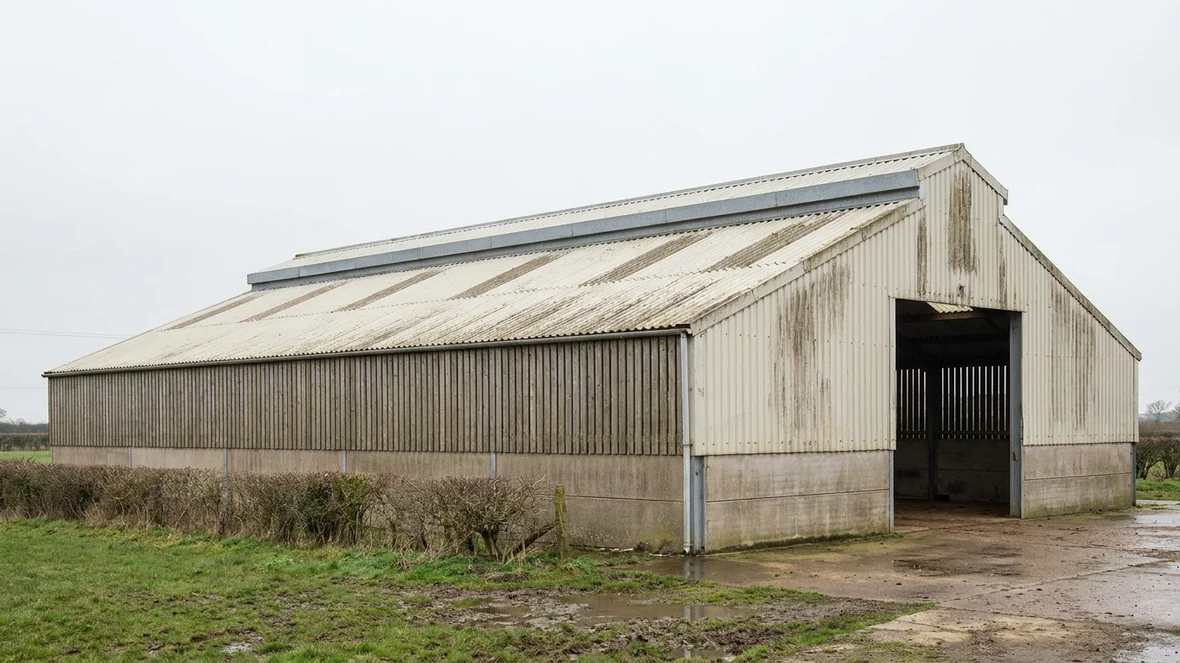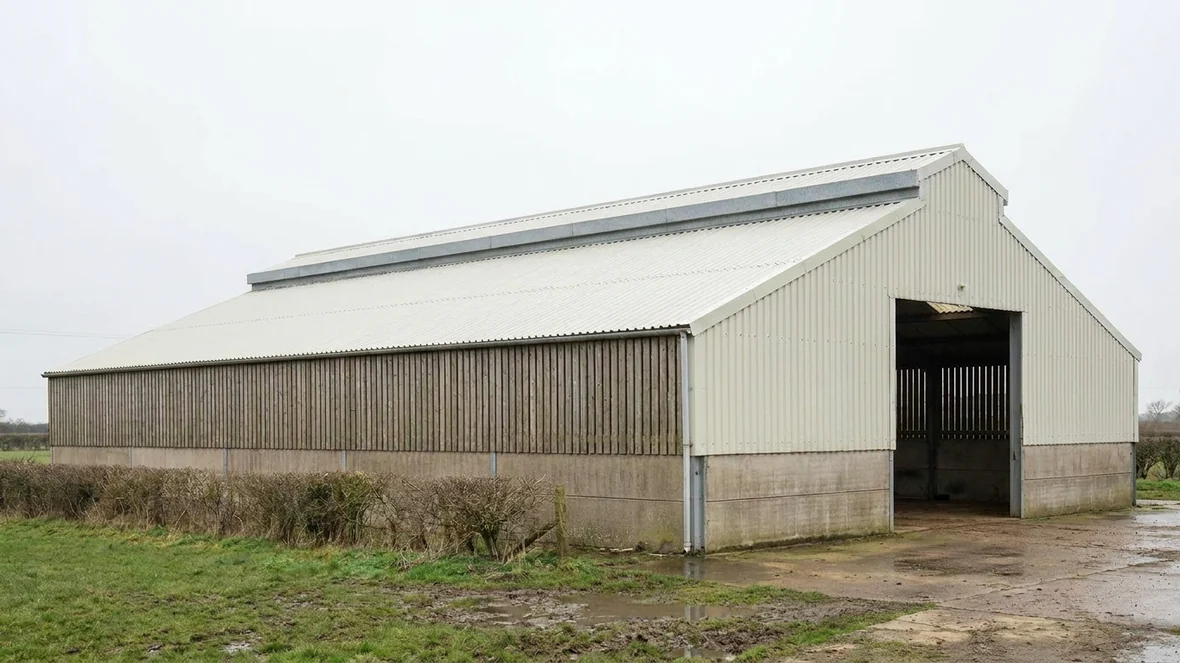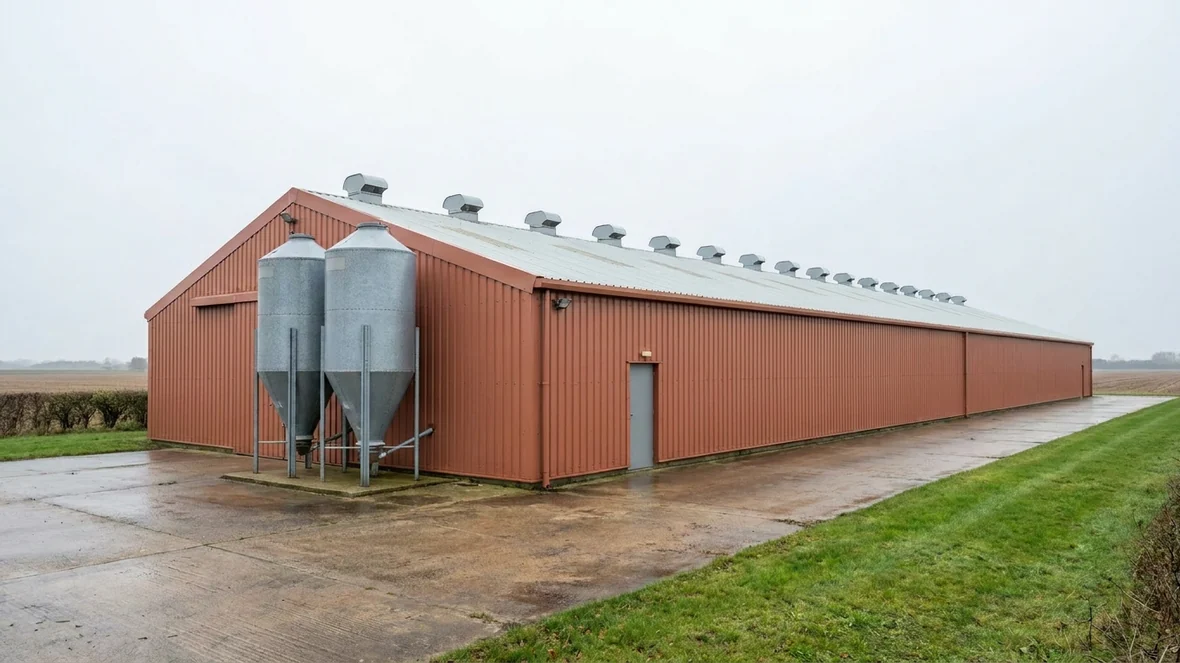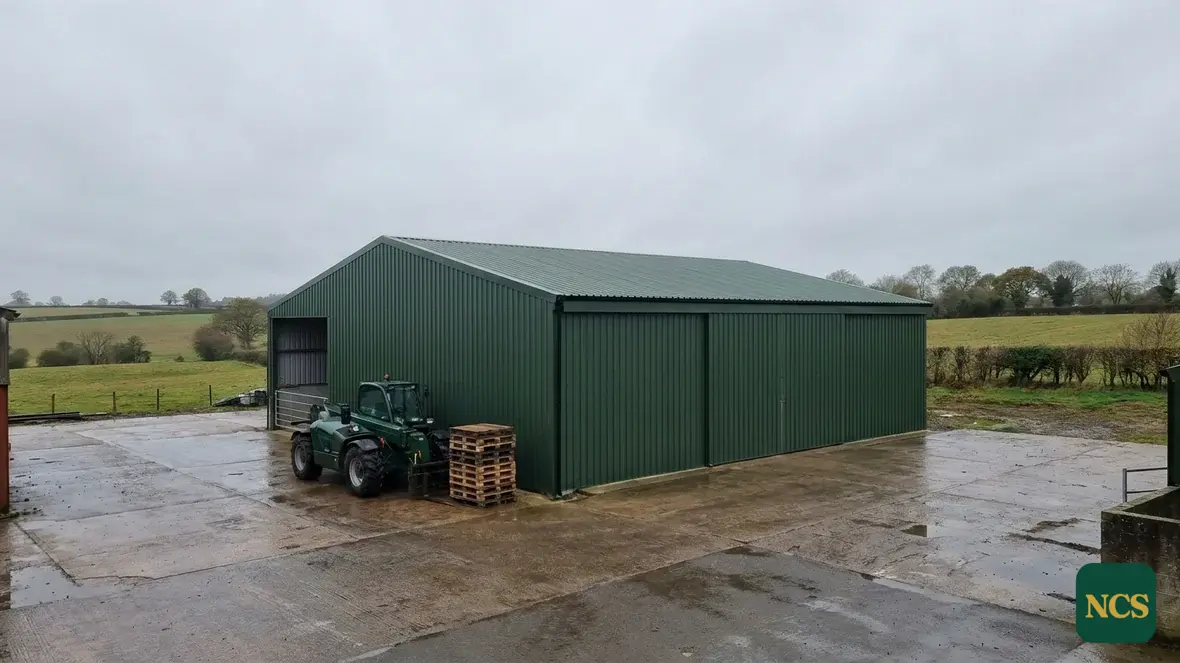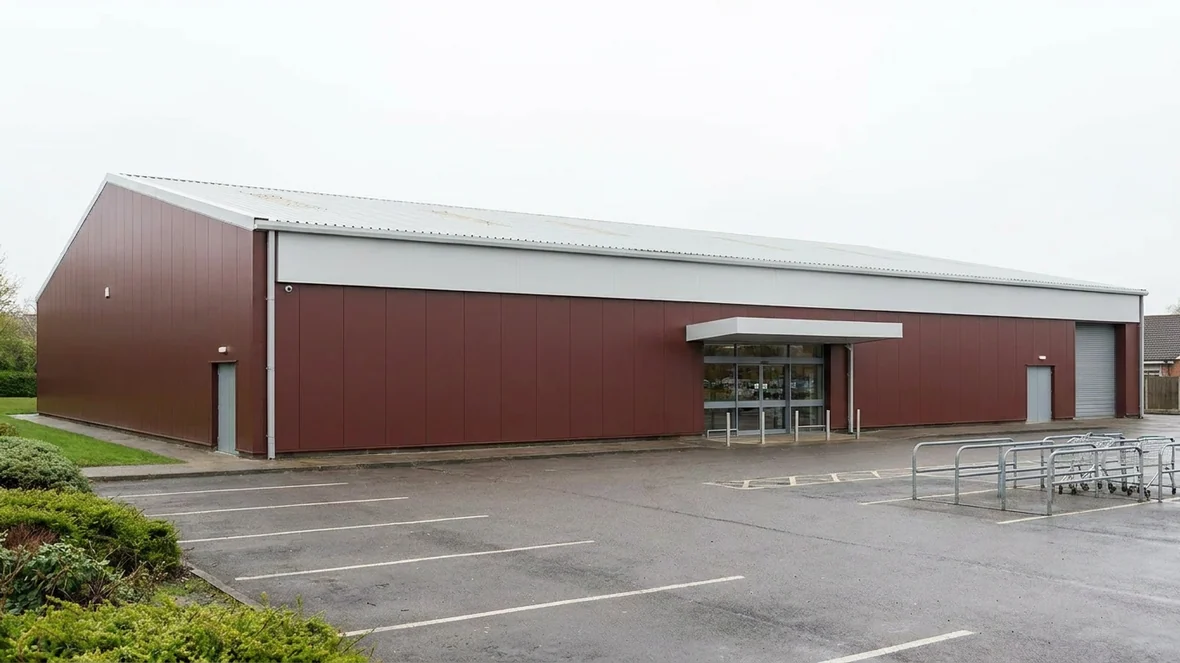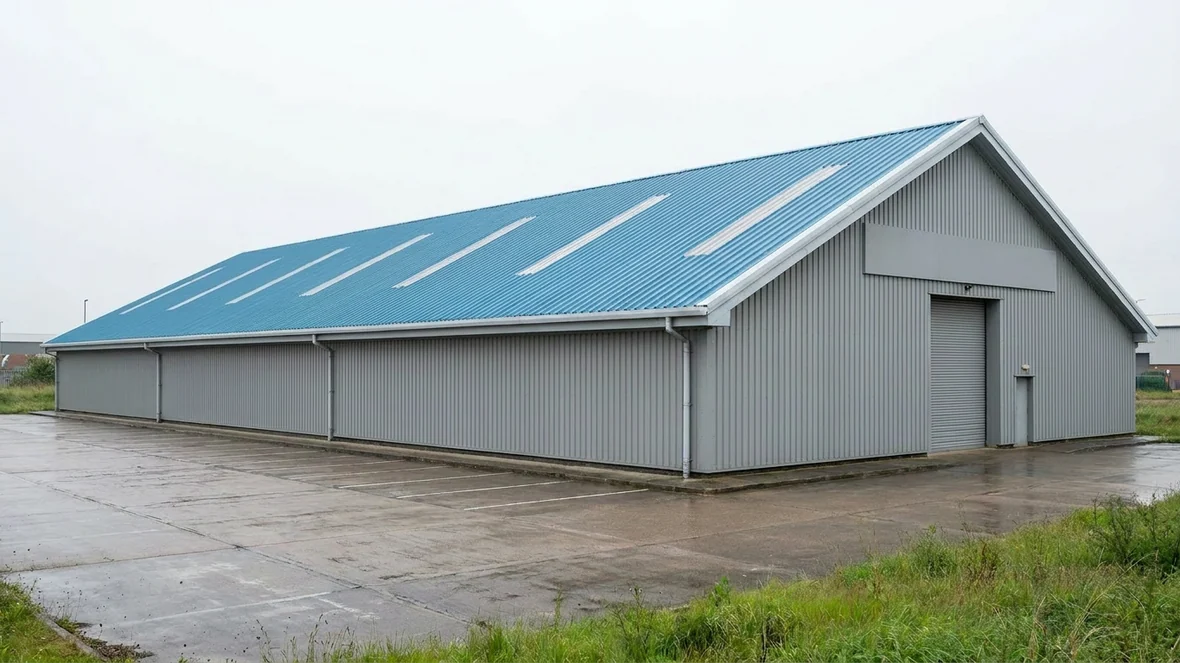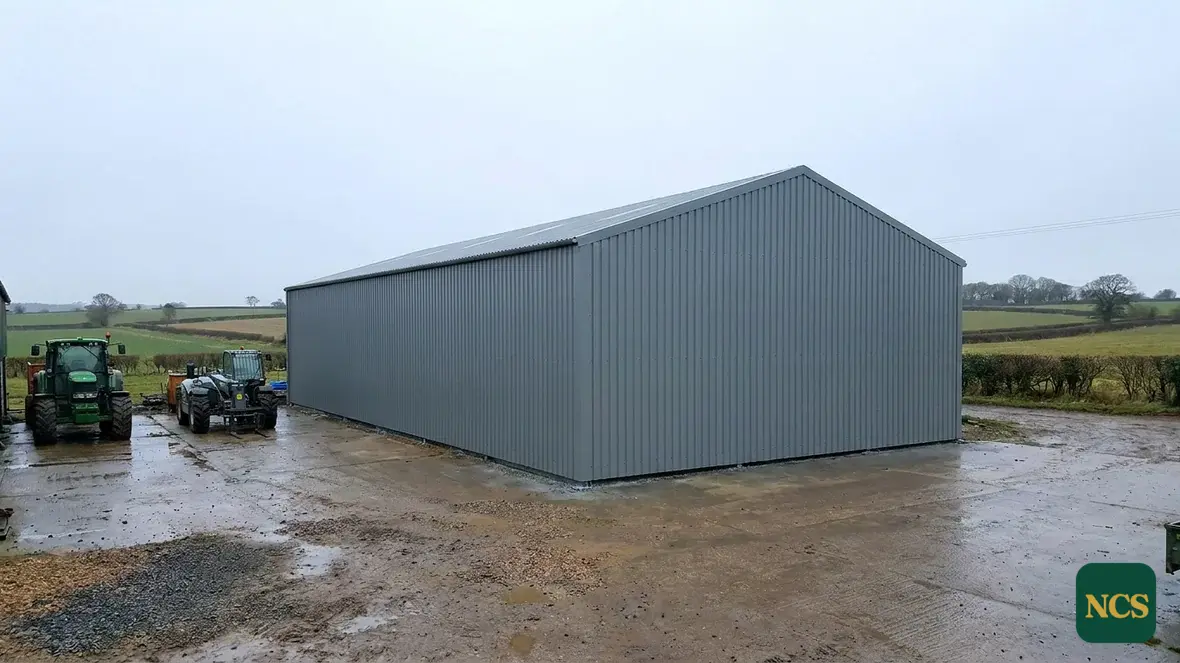




Bicester sits on the north Oxfordshire plain, a market town ringed by arable fields, mixed holdings and the villages of Cherwell. Out past Launton, Chesterton, Wendlebury, Ardley and the Heyfords the yards carry grain stores, livestock sheds and older barns that have taken decades of weather. National Coating Specialists is a survey-led commercial coating contractor working across England, and Agricultural Building Coating Bicester is the work we bring when a roof or clad wall is worn but the frame is still sound.
Most farm managers reach us when a factory finish is thinning, cut edges are rusting and gutters hold water after every storm. The choice is then to recoat while the building can still be saved, or accept a full strip and replace. That is the call we help you make on the ground.
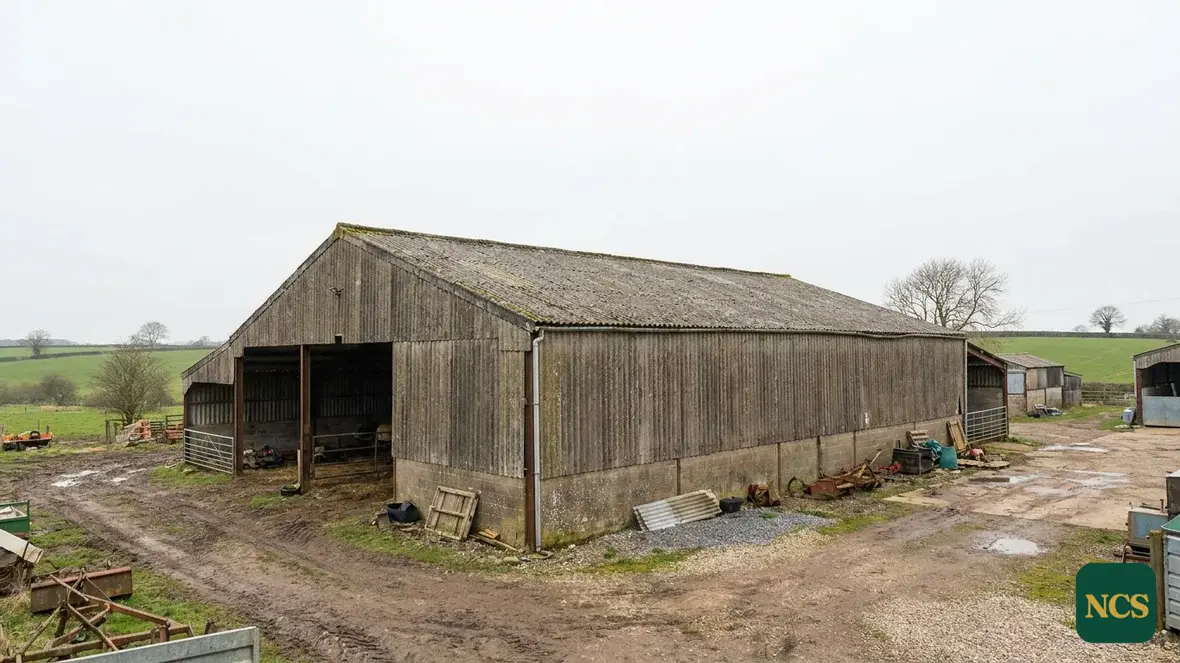
Why farm buildings around Bicester reach the coat-or-replace decision
North Oxfordshire weather is not dramatic, but it is relentless. Rain, frost and wind-driven damp work on every exposed slope, and long low-pitched roofs hold water in the gutters and laps long after rain has passed. On livestock buildings the attack also comes from inside: warm humid air condenses on cold metal, ammonia from bedding and slurry softens finishes, and washdowns strip protection from lower walls and cladding.
The roof may still look continuous from the yard while failing at the edges, fixings and underside. Coating is worth serious thought when the frame is true and the sheets are intact. Replacement is the honest answer when sheets are holed, soft, brittle or losing their fixings. We will not dress one up as the other.
We paint agricultural buildings across Bicester and Oxfordshire in plain terms, with coating systems specified sheet by sheet.
The agricultural building stock of Bicester
The countryside around Bicester is classic Cherwell mixed farming: cereal and oilseed on the plain, dairy and beef on wetter pastures, and many yards running arable and stock off the same access. Stock includes older masonry or timber barns, steel portal-frame sheds from later decades of the last century, profiled fibre-cement and steel roofs over grain stores, and more recent clad livestock buildings.
Out towards Fringford, Stratton Audley, Bucknell, Upper Arncott and Piddington the pattern is similar: several generations of building on one yard, with older steel and fibre-cement roofs first in the queue. A dry grain store and a humid cubicle shed ask different questions of a coating system, even when they share a driveway.
What an agricultural building coating does and where it is the wrong answer
A proper agricultural coating system is not a splash of farm paint. After cleaning and preparation it seals weathered sheet, restores a continuous weather face, and protects steel at the places that fail first. On sound asbestos-cement it can encapsulate the surface so fibres stay locked in. On steel it pairs with cut-edge work so rust does not keep travelling under the old finish. Cladding painting on washdown walls can also buy useful life where the panel is firm.
It is the wrong answer when the sheet has failed: soft or delaminated fibre-cement, steel that is holed or paper-thin at the ends, or roofs that move under foot because fixings have gone. In those cases we say so and point you towards repair or replacement. Barn painting and commercial painters’ language get used loosely; coating extends a sound building, it does not resurrect a spent one.
Asbestos cement sheets, cut edges and gutters: what gets assessed first
Many agricultural roofs around Bicester still carry asbestos cement from the decades when it was the everyday choice for barns and stores. Sound, weathered asbestos-cement can often be cleaned and encapsulated. Fragile, cracked or delaminated sheets belong with a licensed removal contractor, never under a coating.
On profiled steel the first trouble is almost always at the cut edges and side laps, where bare metal was left exposed when sheets were cut to length. Corrosion repairs at those edges, with failed washers and fixings, decide whether a slope is a coating candidate. Gutters and valleys fail early too, holding water and silt that back up onto the eaves. Gutter relining or proper repair is often part of making a roof weathertight again, and we record that before any specification.
- Sheet type and condition, including asbestos-cement identification where relevant
- Corrosion at cut edges, laps, fixings and underside of livestock roofs
- Gutters, valleys, downpipes and early water-staining on frames or stores
- Structural soundness of sheets under foot and purlin condition where visible
- Access, yard ground and how work can sit around livestock and harvest traffic

Our survey-led process, worked around the farming calendar
We plan around the farm, not the other way around. Grain and machinery stores are best tackled in the empty months, never while a store is filling. Livestock buildings suit the gap before animals come back inside. Drilling, spraying and harvest weeks are left alone on arable holdings. Mixed yards around Bicester often juggle both calendars, so we pick windows that free a building, agree vehicle movements, protect feed and grain areas, and leave margin for weather so coatings can cure. Roof painting on a working farm only succeeds when the programme respects how the yard runs.
Why the survey comes before any specification
We will not specify a system from a photograph or a gate-end chat. The detail that decides coat, repair or replace sits on the sheet face, at the cut edge, in the gutter and under the roof. The survey records that slope by slope, with photographs. Where coating is right, we set out preparation, system and sequence. Where it is not, you get a plain recommendation to repair or replace and a clear reason.
If you manage farm buildings around Bicester and want a clear view of what the roof or cladding will take, start with our agricultural building coatings overview, then book a free survey. We will walk the building, report what we find, and only then talk about the right next step.
Common questions about agricultural building coating Bicester
How long does an agricultural building coating last?
On a well-prepared substrate, we expect a full coating system to protect a steel or fibre cement structure for twenty years or more before a maintenance recoat is needed. The microclimate on a Bicester farm, the building’s orientation, and the frequency of chemical exposure all influence longevity. We survey the existing coating and the metal condition to give a realistic expectation before any work starts.
What preparation does my agricultural building need before coating?
We never apply an agricultural building coating in Bicester without thorough preparation. All surfaces must be clean, dry, and sound. Our team removes loose rust, mill scale, and failing previous coatings by mechanical means. On fibre cement we use a biocide wash to kill moss and lichen, followed by pressure washing. We then replace corroded fixings, repair damaged sheets, and seal any open laps or gutters. Skipping these steps always shortens the life of the coating.
Can you coat corrugated metal and fibre cement barns?
Yes, corrugated profiles are the backbone of most agricultural buildings we coat in Bicester. The profile presents no obstacle when we use the correct roller and brush techniques. We also coat roof lights, ridge caps, ventilators, and grain silo exteriors. For fibre cement we select a system that remains vapour-permeable, allowing the sheet to breathe while keeping water out.
What weather conditions do you need to coat an agricultural building?
We schedule agricultural building coating in Bicester for dry weather windows. The substrate must be free of standing moisture and the air temperature above the minimum specified by the coating system, typically well above freezing. We monitor the dew point, relative humidity, and the forecast for the curing period. Rain, heavy mist, or a sharp temperature drop within the first hours of curing can compromise the film, so we plan around the farm’s quieter periods and the Met Office outlook.
Is my building too old to coat?
Age is rarely the deciding factor. We have applied agricultural building coating to structures that have stood in the Bicester area for generations. The critical questions are whether the steel retains enough cross-section, whether the fibre cement sheets are free of deep fracturing, and whether the frame fixings are still sound. We survey the building and will only proceed if the substrate can support a durable coating system.
How we build a durable coating system on Bicester farm buildings
Every long-lasting agricultural building coating in Bicester begins with a methodical survey and a clear sequence of work. We walk the roof and the elevations, recording the condition of every sheet, fixing, and flashing. The survey informs the specification, and the specification dictates the preparation regime.
We remove all loose corrosion and failing old coatings, then clean the entire surface so the new primer can key directly to the substrate. On steel we apply a zinc-rich primer to disrupt corrosion cells. On fibre cement we seal the surface with a stabilising primer that prevents the sheet from drawing binder out of the topcoat. We then apply a high-build topcoat in multiple passes, working the coating into laps, around fixings, and into gutter seams. Our brush work follows the direction of the corrugations to avoid thin spots on the crowns.
We respect the farming calendar. Coating is phased around livestock movements, grain storage, and peak machinery use. The result is a uniform film that sheds water, resists UV degradation, and protects the building’s envelope without interfering with daily operations.
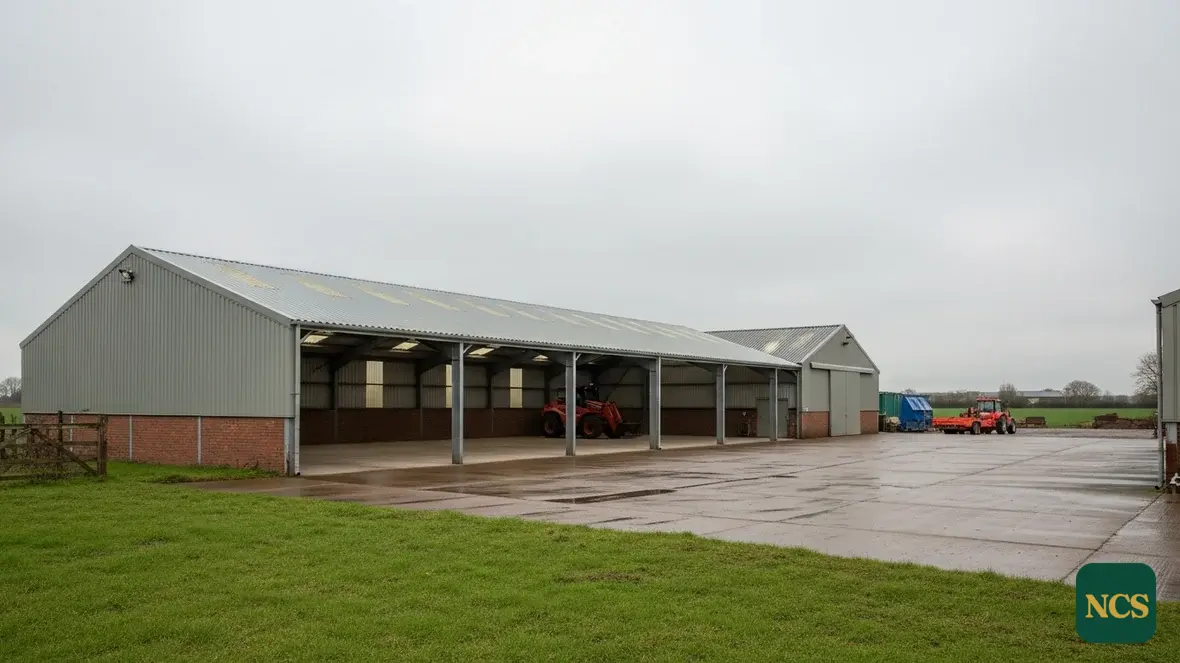
Recently — July 2026
We survey before we recommend anything, and the recommendation goes in writing, including the times the honest answer is to repair or replace rather than coat.
Dry summer spells are the window for tackling cut-edge corrosion and tired finishes before the autumn rain sets back in.