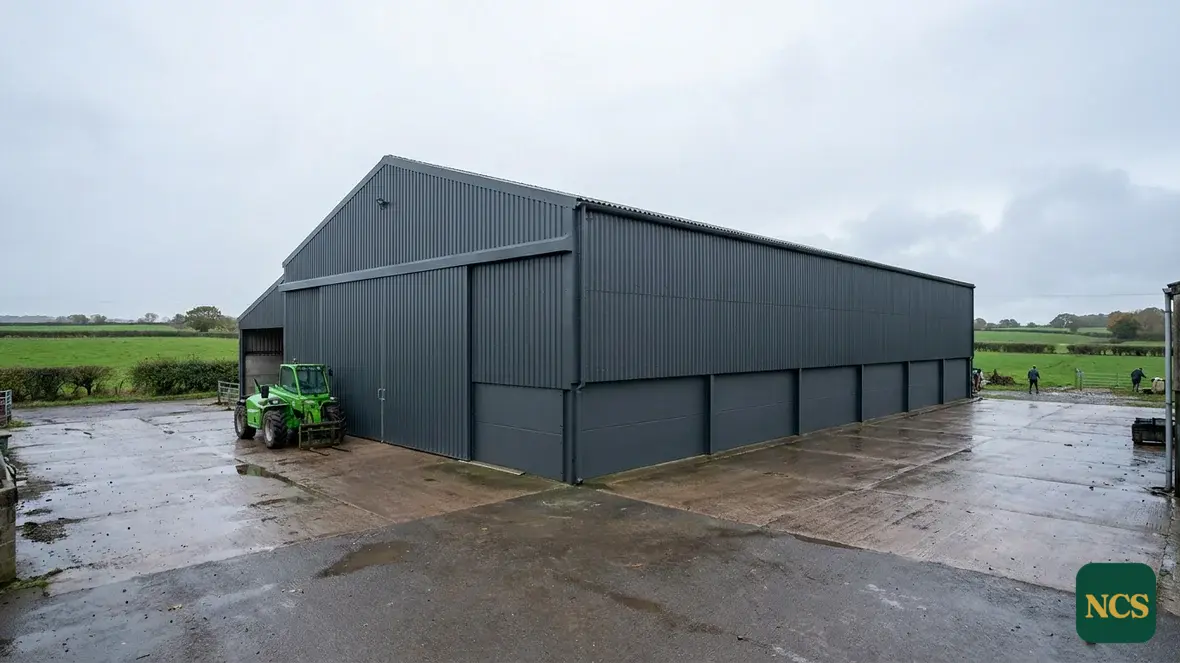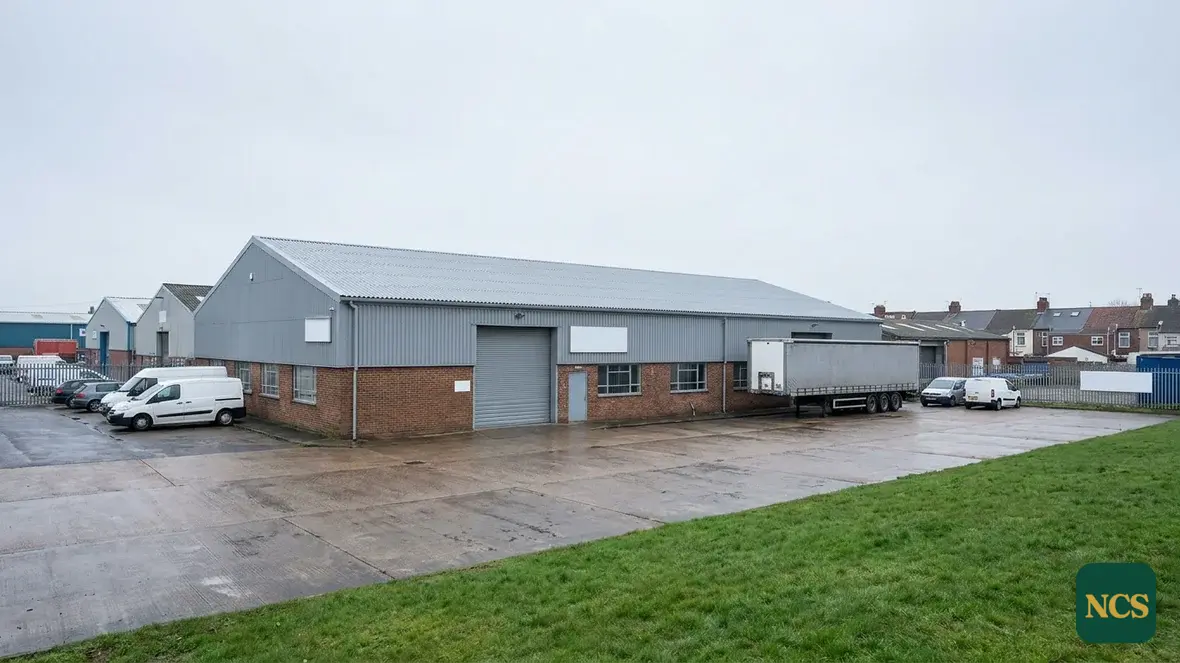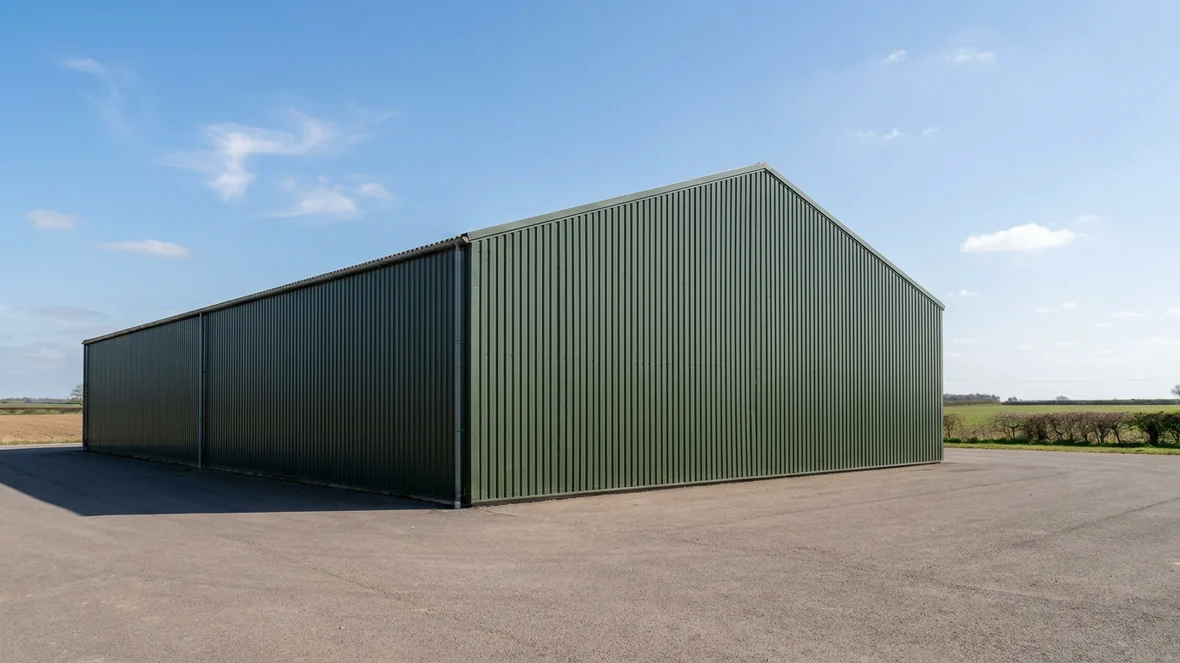
Few parts of England pack as much variety into their farm buildings as the countryside around Canterbury: fruit stores and packhouses, hop-country heritage, arable barns and livestock sheds, often within a few miles of one another. National Coating Specialists works from a South-East base, so Canterbury sits comfortably within our home range for surveys, and the mix of building types here rewards a contractor who inspects before recommending anything.
Kent’s working farm buildings
Oast houses get the photographs, but the buildings doing today’s work are steel portal frames and fibre-cement roofed sheds. Buildings we are commonly asked to look at in this part of Kent:
- Packhouses and grading buildings, where exterior condition matters commercially
- Fruit and produce stores, coated externally around their operating season
- Machinery and sprayer sheds on arable and fruit holdings
- Livestock housing on the mixed farms
- Older general-purpose barns, frequently under asbestos-cement
Coastal weather reaches well inland here, so wind-driven rain and salt-carrying air push corrosion along faster than the same buildings would see in the middle of the country. Cut edges, fixings and gutter lines show it first.
Fruit, hops and the shape of the year
The farm calendar around Canterbury is busier than most. Soft fruit ramps up in early summer, top fruit picking and packing run hard from late summer into autumn, and packhouses are flat out exactly when the weather is still good for coating. So we plan around it: spring slots before the season builds, late slots after stores are loaded and lines slow down, machinery sheds handled while the kit is out in the rows. On packhouses and stores we keep the work external, agree clean access routes with you, and stay out of the way of produce movements entirely. A programme that interrupts picking is a bad programme, whatever the roof looks like afterwards.
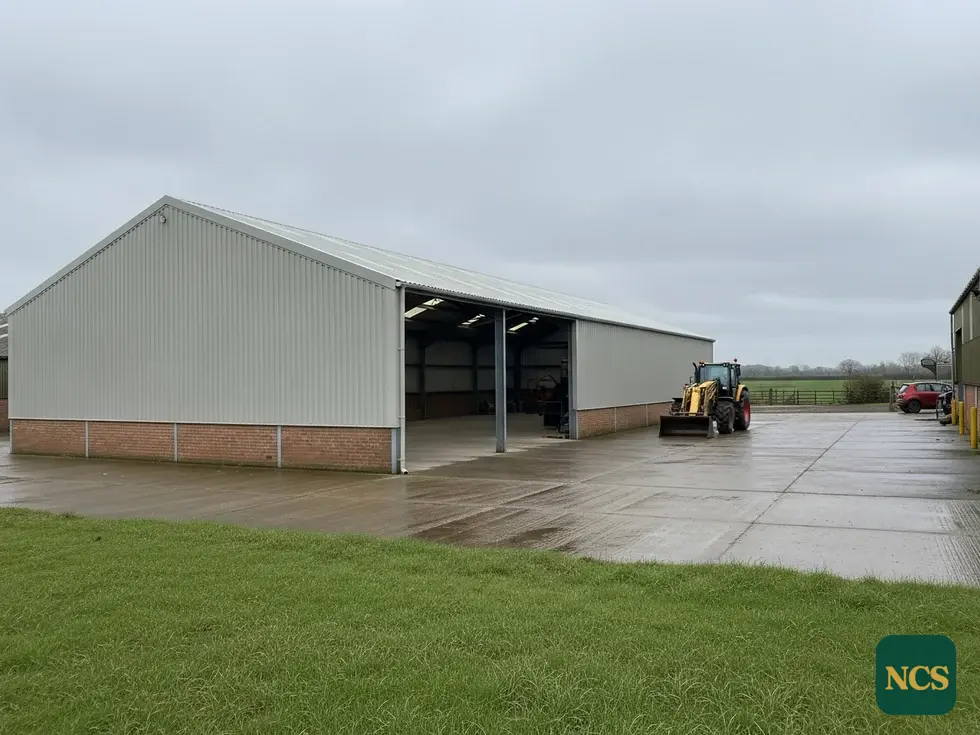
Older metal and asbestos-cement, treated honestly
Plenty of Kentish farm roofs are original asbestos-cement, now sixty or more years into their service. Where sheets are weathered but sound, cleaning under appropriate controls and encapsulating with a suitable coating system can seal the surface and add useful life without disturbing the material. Where sheets are cracked, soft or shedding fragments, coating is the wrong answer and we say so: that roof needs a specialist removal contractor, and no responsible coating firm should be walking on it, let alone spraying it. The same discipline applies to old steel: surface rust is workable, perforation is not.
Survey before price, every time
We do not put numbers on farm buildings we have not inspected. A survey visit looks at each roof slope from suitable access equipment, records the condition of sheets, cut edges, fixings, rooflights and rainwater goods, and checks inside the building for the staining and corrosion that give away leaks long before they show outside. Because this corner of Kent is within easy reach of our base, getting a surveyor to a yard here is straightforward to arrange around your working week, and the findings come back to you in writing with photographs rather than as a verbal opinion delivered from the gateway.
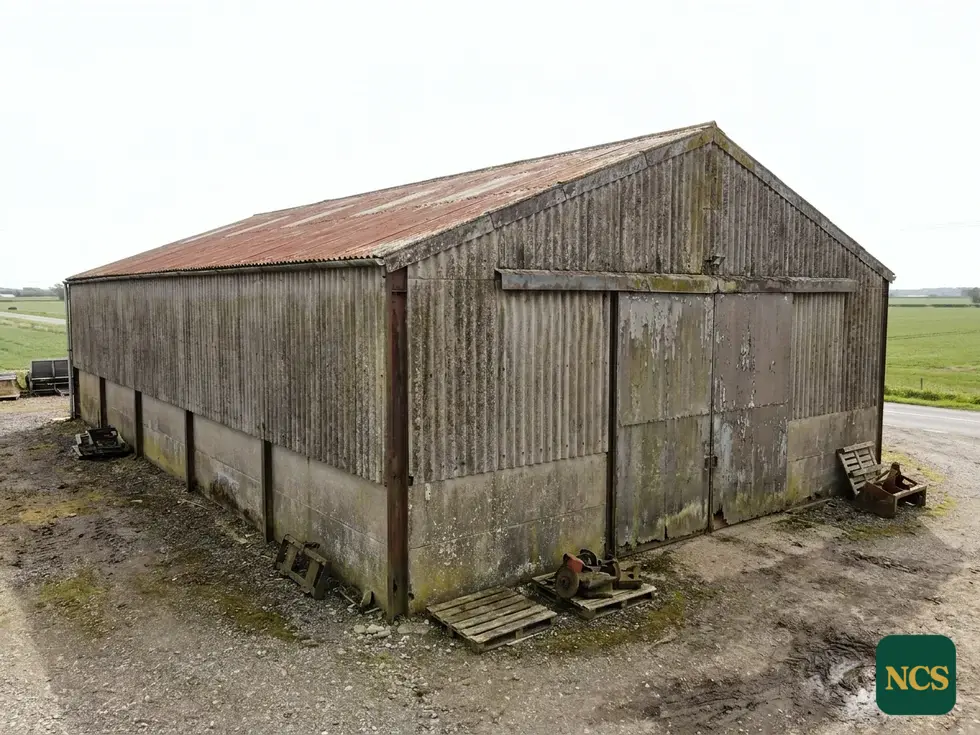
Straight answers on repair versus replacement
Every survey around Canterbury ends with one of three recommendations, given with photographs and reasons. Repair, when the damage is local and the roof is otherwise healthy; coating a whole roof to fix six sheets is poor advice. Coat, when surface protection has broken down across the roof but the sheets and frame remain sound; this is where preparation and coating genuinely pay for themselves. Replace, when the roof is past saving; we would rather tell you that plainly than take a job that fails inside a few winters. The verdict is yours to act on, but it will be an honest one, whichever way the work goes.