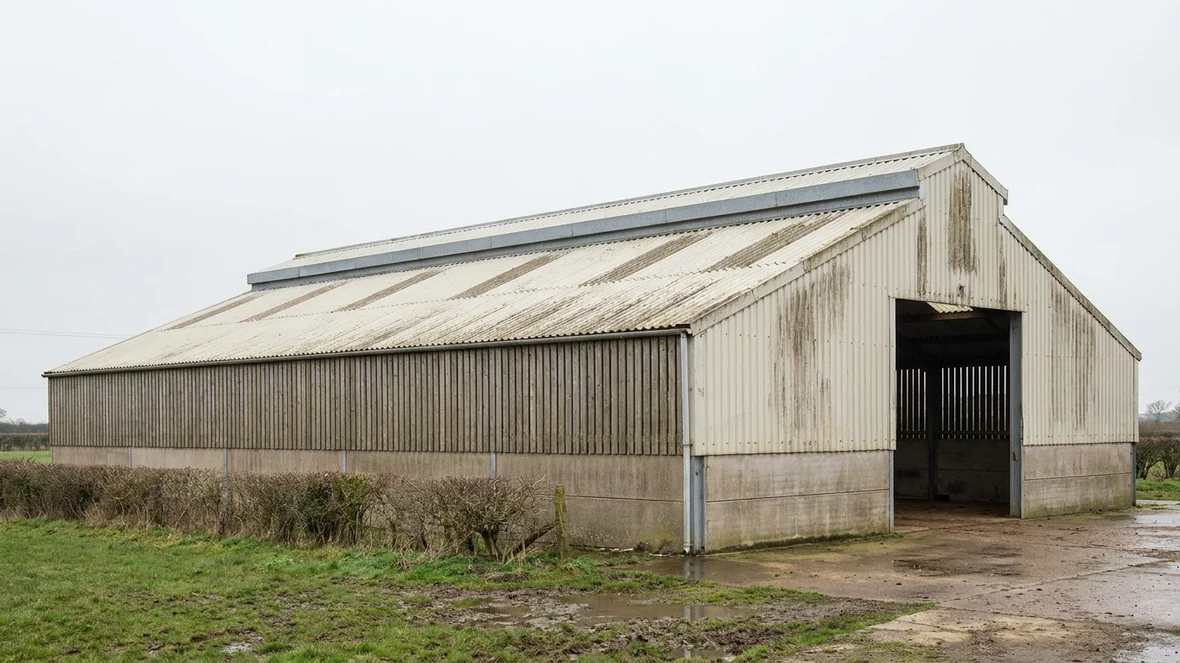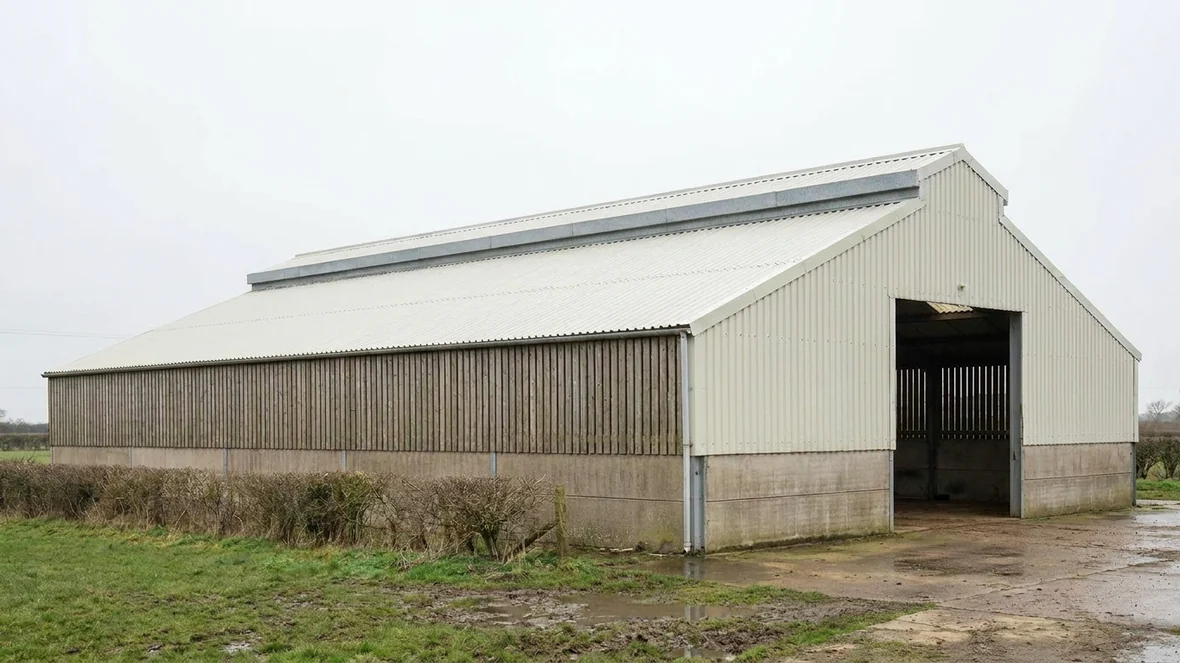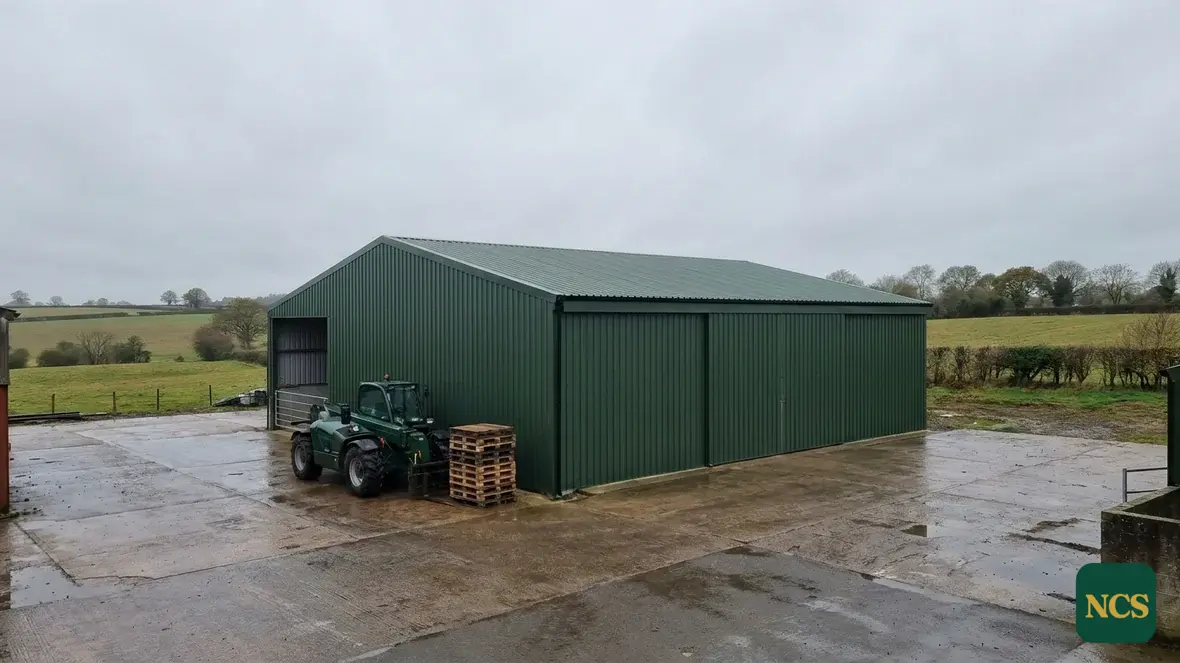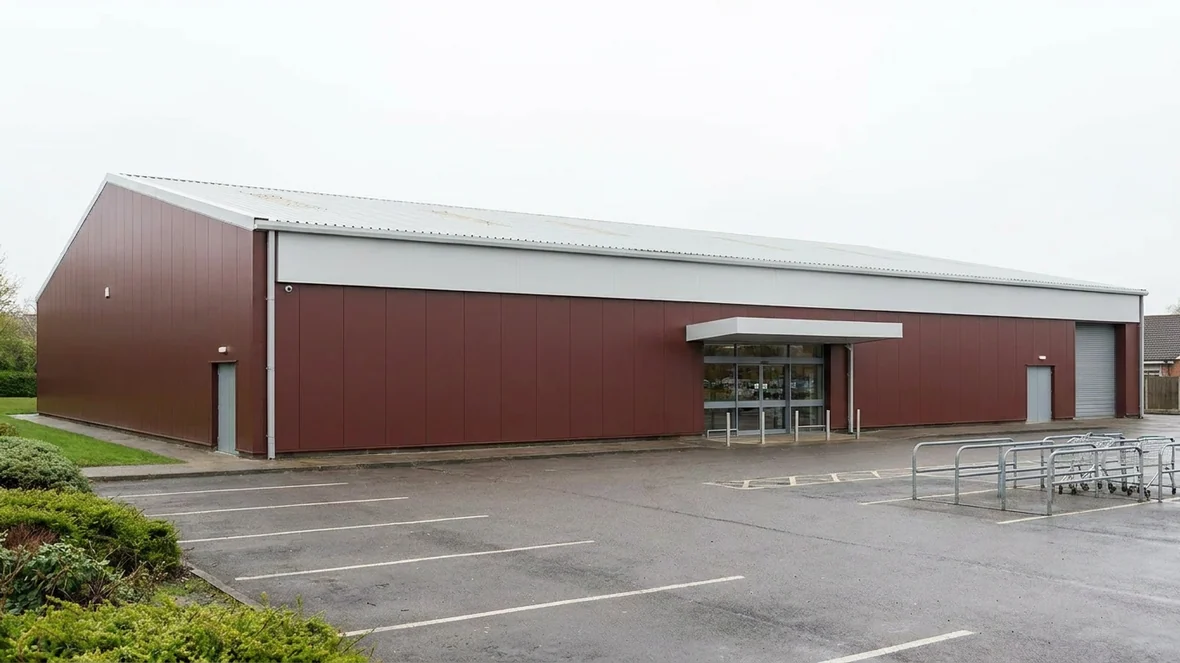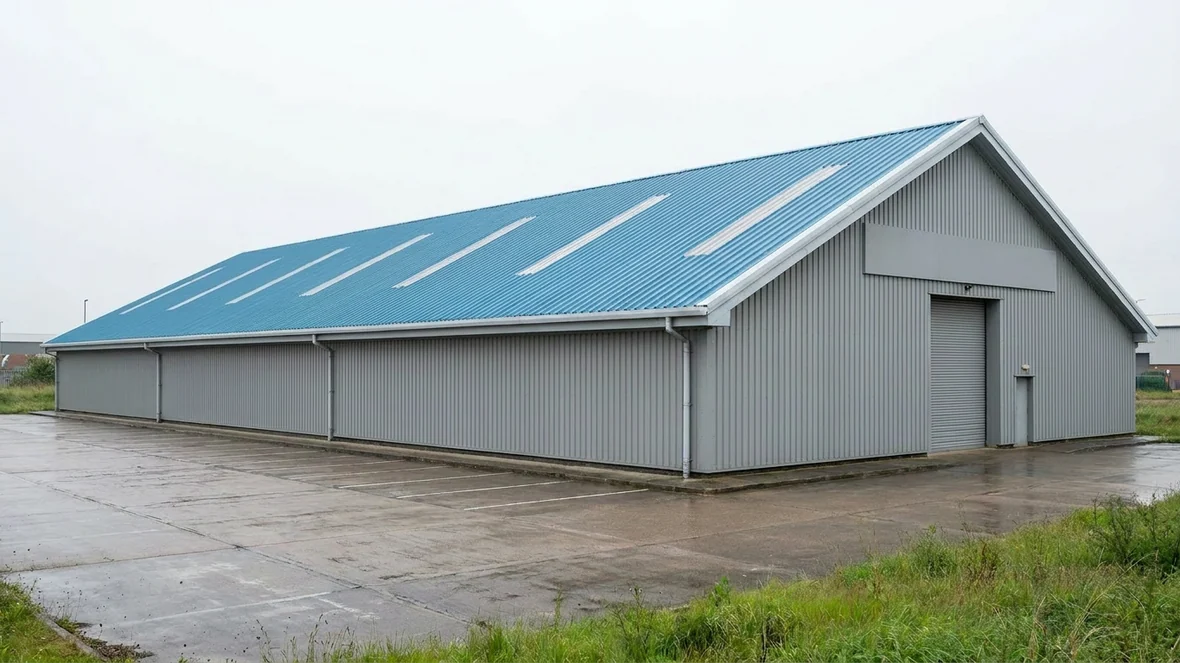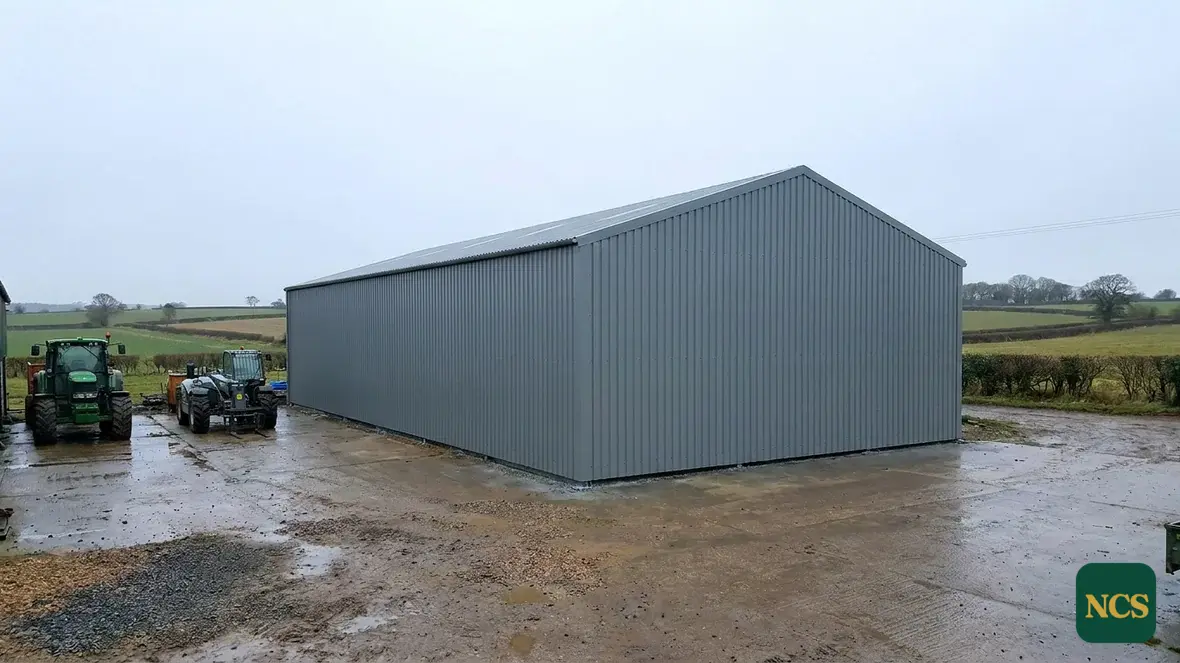




Harrogate sits between two kinds of North Yorkshire farming country. West and north the land climbs into Nidderdale and the Dales foothills: wet pasture, livestock ground and buildings that stay damp for weeks. East and south it opens toward the Vale of York, with more arable, grain and machinery stores. Around Knaresborough, Ripon and the Nidderdale villages, the coat-or-replace question on farm roofs and cladding is routine. Agricultural Building Coating Harrogate work for National Coating Specialists starts with a survey on site, because neighbouring sheds of the same age can be in different condition.
We are a survey-led exterior coating contractor working across England from a South-East base, with farm programmes planned around stock, harvest and washdown.
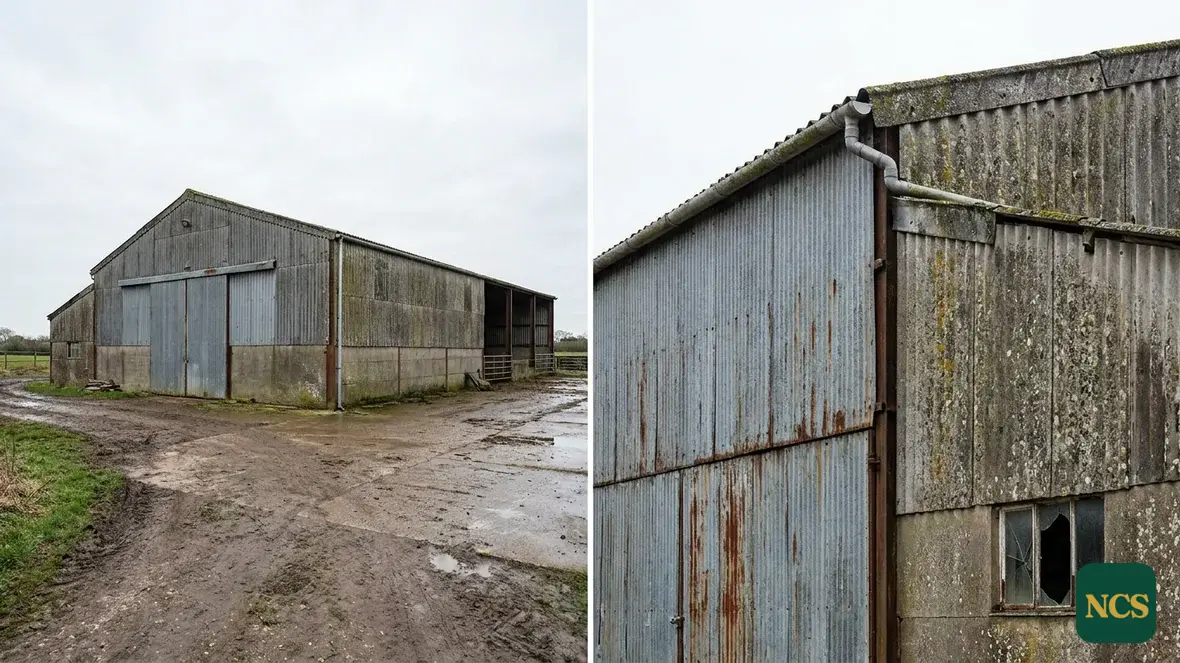
Why farm buildings around Harrogate reach the coat-or-replace decision
The weather does most of the visible damage. Higher ground toward Nidderdale takes more wind-driven rain, frost and long wet cloud than the Vale. North faces grow moss. Fibre-cement and older asbestos cement sheets stay saturated, and freeze-thaw opens hairline cracks a little wider each winter. Toward the Vale of York, UV and wind work plastisol finishes: chalking, fading and cut-edge corrosion.
Livestock buildings add a second attack from inside. Ammonia from housed stock, muck and slurry splash, and repeated pressure washdown strip coatings never built for that chemistry. Condensation on cold steel corrodes fixings and the underside of cladding while the weather works the outside. A barn painting or cladding painting programme can protect the outer surface once the survey has separated surface wear from structural fatigue and internal condensation.
The agricultural building stock of Harrogate
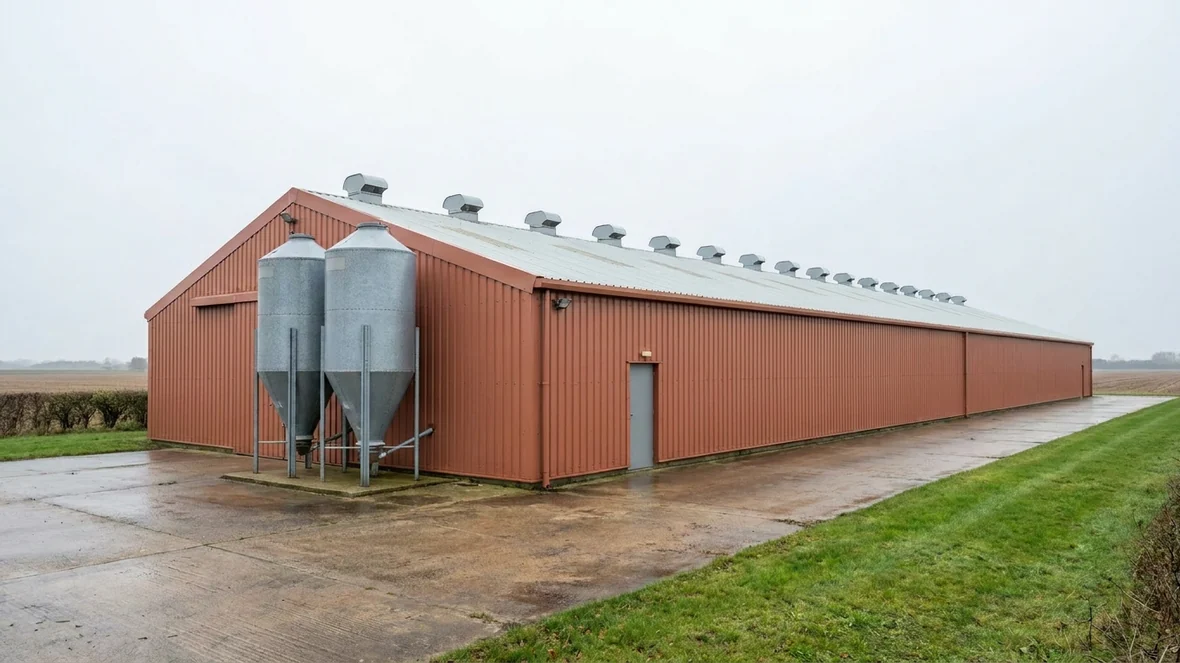
The stock matches the land. On higher livestock ground you still find gritstone and brick field barns beside later steel portal-frame cattle and sheep housing. Many of those livestock roofs are corrugated fibre-cement or older asbestos cement from the decades when that was the default farm sheet. Toward the Vale of York the pattern shifts to large grain stores, machinery sheds and crop stores under wide profiled metal, often with valley gutters and long rooflight runs. Along the A59 and A61 toward Knaresborough and Ripon sit farm workshops, livery and smallholding buildings closer to housing and tourism traffic.
Age and use unite most of this stock. Factory finishes thin, cut edges rust, and gutters fill with grit. Substrate and defect decide whether roof painting or re-sheeting is the honest next step.
What an agricultural building coating does, and where it is the wrong answer
A properly prepared agricultural coating seals a weathered but sound surface and slows cut-edge corrosion and porous absorption. On asbestos cement and fibre-cement it can encapsulate a friable or mossy face without stripping the roof. On plastisol-coated steel it can renew a chalked finish and treat cut edges so water stops working back under the coating. On lower walls it handles muck, washdown and UV better than tired site paint, which is why commercial painters often move to specialist systems after repeated failures.
Coating is the wrong answer when the sheet is past saving. Holed, soft or delaminated asbestos cement needs a licensed removal route, not a brush or spray over the top. Steel rusted through at laps or fixings needs new sheets before any finish goes on. We will not coat to hide those faults. The report separates what can be coated, what needs repair first, and what should be replaced.
Most farmers around Harrogate do not ask for a coating system, they want the barn painted or the shed roof sorted, and that is exactly the work this is.
Asbestos cement sheets, cut edges and gutters: what gets assessed first
Asbestos was not fully banned in the UK until the end of the 1990s, so corrugated sheets on livestock and general-purpose buildings of that era should be treated as suspect until identified. A sound asbestos cement roof that is porous, mossy and weathered is often a strong candidate for cleaning and encapsulation. A roof that is cracked through, spalling or soft underfoot is not. Cut edges on steel fail early: bare steel at the cut rusts first, then lifts the factory finish until a thin brown strip becomes a widening band of failure.
Gutters fail early because weathered sheets shed grit into the channels, valley gutters choke and overtop, and brackets corrode. Many leaks blamed on the sheet are gutters and flashings. Corrosion repairs, local sheet swaps, and gutter relining often decide whether a coating lasts.

Our survey-led process, worked around the farming calendar
Every enquiry begins with a visit. We inspect the roofs and cladding, record the substrate, map defects, and note access, stock and ground. A typical survey covers:
- Substrate identification: asbestos cement, fibre-cement, plastisol-coated steel, or mixed sheets on one building
- Defect mapping: cracks, holed or slipped sheets, failed laps, cut-edge corrosion and tired fixings
- Rooflights, ridges, flashings and abutments, checked separately because they fail on their own timetable
- Gutters, valleys and downpipes, including grit build-up and overflow paths that mark real leak lines
- Access and operational constraints: stock movements, harvest traffic, washdown routines and soft ground
You receive the findings in writing, with photographs, before any specification is locked. Livestock housing is coated while animals are out at grass, with curing time before they return. Grain and machinery stores wait until the floor is clear after harvest. Programmes carry real weather contingency.
Why the survey comes before any specification
Specification without survey is guesswork. Moss can hide sound sheet and rotten sheet. A faded face can sit above failed fixings. Two sheds of the same decade can need different treatments once ammonia, condensation and gutters are in the report. Cost questions resolve to a free survey with written findings.
If you are weighing roof painting, cladding painting or a wider agricultural coating programme around Harrogate, Knaresborough, Ripon or the Nidderdale and Vale of York fringe, start with that inspection. Read more on the main agricultural building coatings page, or request a free survey and quote and we will arrange a visit around your stock and harvest windows.
Common questions about agricultural building coating Harrogate
How long will an agricultural building coating last on a Harrogate farm shed?
We design every agricultural building coating Harrogate application for a long service life, typically well beyond what an untreated structure can deliver. The exact duration depends on the substrate condition, weather exposure and the coating system we select. Our experience shows that a properly prepared and maintained coated building will resist corrosion and weathering for years. Periodic inspections allow us to catch minor defects before they spread, extending the coating’s effective life.
Can coating be applied directly over rusted or moss-covered corrugated sheeting?
No. A coating is only as good as the surface it adheres to. We cannot overpaint active rust, flaking mill scale or moss without severe risk of early failure. Before any agricultural building coating Harrogate work begins, we remove all organic growth and corrosion back to a sound substrate, usually by mechanical wire brushing or controlled abrasive blasting. This step is non-negotiable if the coating is to withstand Yorkshire winters.
Is it safe to coat a working livestock building without relocating animals?
We regularly coat occupied agricultural buildings and take every precaution to protect animal welfare. Our teams create physical barriers, use low-dust preparation methods where needed, and ventilate the space continuously during application. We time work in short, managed phases so livestock can be kept well away from wet materials and overspray. No coating task should put stock at risk, and we always discuss a phasing plan before we start.
Does the colour of the coating affect the temperature inside an agricultural building?
Yes, surface colour has a measurable influence on internal conditions. Lighter shades reflect more solar radiation, helping to keep the building cooler in summer, an advantage for dairy, poultry and pig housing. Darker tones absorb heat and can reduce condensation by raising the skin temperature slightly above the dew point. We advise on colour choice based on the building’s orientation and use, rather than applying a single standard colour to every agricultural building coating Harrogate project.
What are the warning signs that our Harrogate agricultural building needs recoating?
The earliest indicators are localised rust spotting, peeling edges around fixings and a chalky, faded appearance where the existing film has broken down. On fibre cement roofs, look for dark moisture patches or moss that signals trapped water. On steel, pay attention to lap joints and gutter zones where coating failure often starts. If you can scrape coating away with a fingernail, the protective layer is no longer doing its job. We can survey the building and recommend whether a local repair or a full agricultural building coating Harrogate reapplication is the soundest move.
How we prepare Harrogate farm buildings for a resilient coating bond
Before any agricultural building coating Harrogate system leaves the mixing pot, the substrate must be made ready to accept and lock onto the film. Surface preparation is the single most influential stage of any coating project. In Harrogate’s damp, variable climate, skipping preparation steps invites premature bubbling, peeling and corrosion that will cost far more to put right than doing the job thoroughly in the first place.
We begin with a close inspection of every sheet, gutter and fixing. Heavy soiling, moss and bird lime are removed using low-pressure washing and manual scraping. Any trapped moisture inside lap joints is dried out with forced ventilation because coating over even a thin film of water guarantees early failure.
Once the building is clean and dry, we address corrosion. Our typical process follows these steps:
- Mechanical scraping and wire brushing to lift loose rust and failed previous coatings.
- Controlled abrasive blasting where heavy pitting has taken hold, cutting back to bright metal and imparting a sharp angular profile the primer can grip.
- Removal of blast dust and debris with industrial vacuum systems, followed by a solvent wipe to eliminate any remaining grease or soluble salts.
- Application of a holding primer to the prepared steel within a narrow window, before the fresh surface can react with moist Harrogate air.
- Spot priming of fixings, cut edges and weld seams, areas that are statistically the most vulnerable to coating breakdown.
We never apply a finish coat unless the primer has fully cured and the surface temperature is safely above the dew point. On a Yorkshire morning that can mean waiting a few hours after sunrise before we load the spray equipment. By governing the preparation this strictly, we give every agricultural building coating Harrogate installation the best possible start against years of wind-driven rain and ultraviolet exposure.
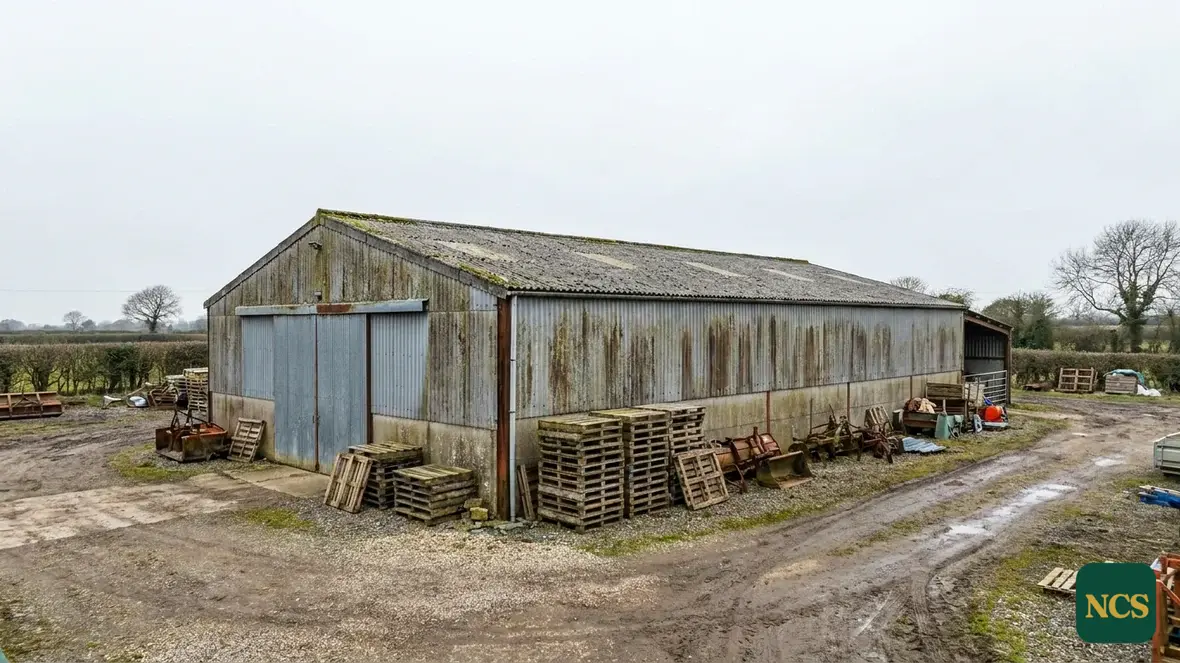
Recently — July 2026
We survey before we recommend anything, and the recommendation goes in writing, including the times the honest answer is to repair or replace rather than coat.
With surfaces staying dry for longer, summer lets us prepare and coat a roof in a single planned visit rather than working around showers.