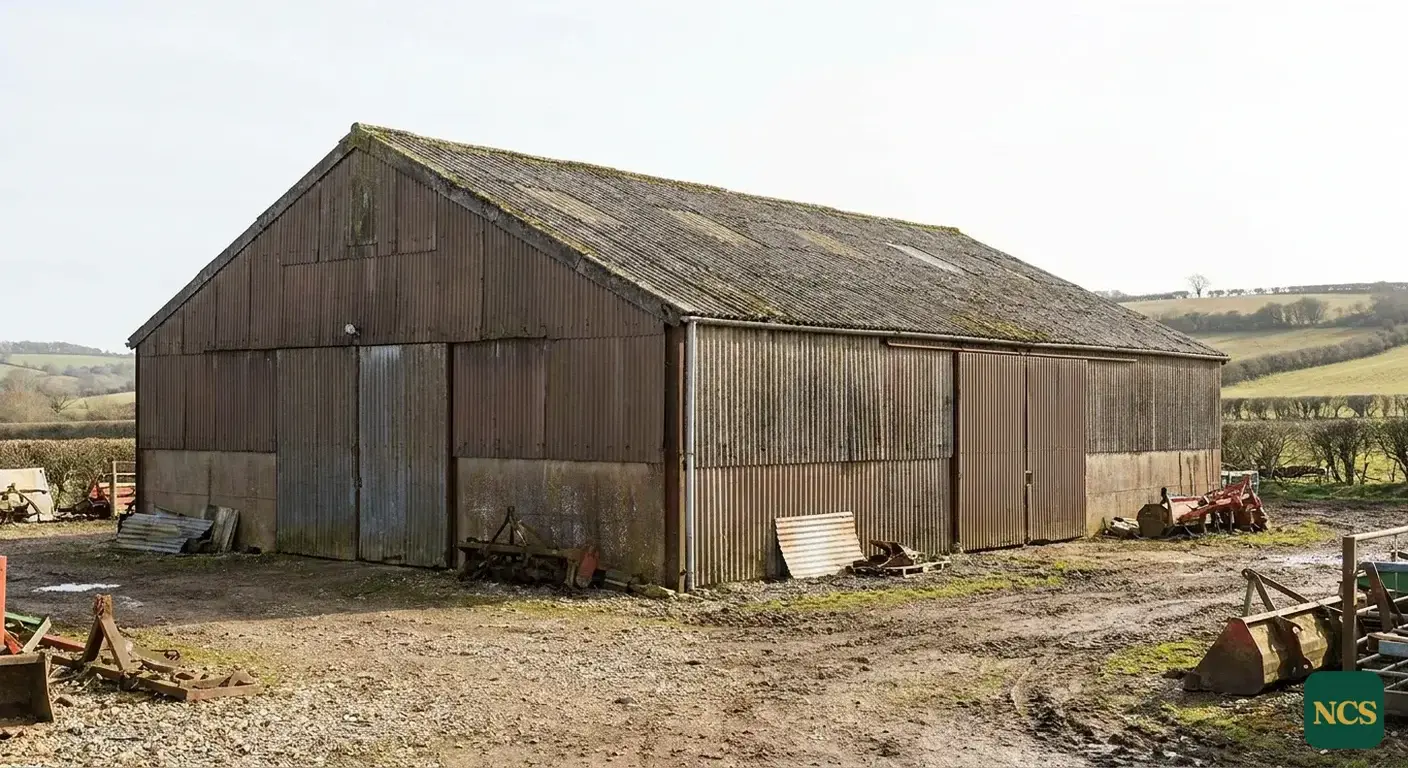
We coat the outside of commercial, industrial, and agricultural buildings across the UK. In Hook Norton, Oxfordshire, we’re often working on agricultural roofs, particularly those older asbestos-cement structures that need careful management. We don’t just paint roofs; we survey them properly, diagnose the issues, and apply durable, long-lasting coatings that protect against the elements for years.
Understanding your building’s current condition in Hook Norton
Every Hook Norton farm roof we look at gets a thorough assessment. We start with a desktop study, using old maps and aerial shots to get a sense of the building’s history. Then it’s an on-site survey to check the roof material, the fixings, and if asbestos is present, what type it is. Sometimes we even take core samples if we need to see what’s going on with hidden corrosion. You’ll get a detailed report outlining what we recommend and a no-strings-attached quote for the work.
Dealing with failing roofs on Hook Norton farms
The working farms and estates around Hook Norton are full of ageing roofs that need a bit of attention. We’re regularly out surveying and treating everything from 19th-century stone barns still sporting their original corrugated asbestos-cement to post-war livestock sheds where cut-edge corrosion has started taking hold. While coatings are usually the answer, sometimes a Hook Norton farm roof just has to come off. That’s usually when asbestos cement sheets are crumbling or delaminating badly, the timber structure underneath is seriously rotted, the building’s use is changing, or planning says it has to go. When removal’s the only option, we bring in licensed asbestos removal contractors.
Managing asbestos on Hook Norton agricultural buildings
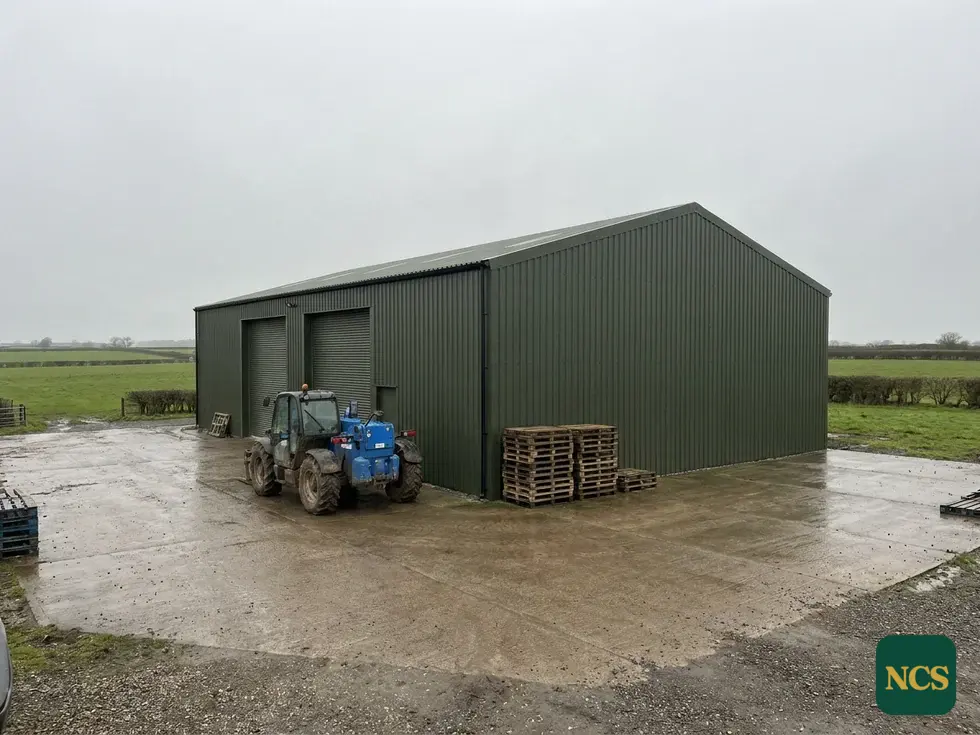
If your Hook Norton farm or estate building has an asbestos-cement roof put up before 1999, you’re on the hook legally under the Control of Asbestos Regulations 2012 (CAR) to manage it safely. We see plenty of these roofs across the Oxfordshire countryside, on everything from old grain stores and livestock sheds to tractor garages and dairy units. The law doesn’t say you have to rip it out if it’s sound, but you do need proper surveys, risk assessments, and a written management plan. We always start with a detailed asbestos survey. Our surveyor knows the ins and outs of rural Oxfordshire buildings.
Barn painting around Hook Norton is survey-led like everything else we do: wash back, treat the rust, repair what needs it, then spray a system built for farmyard life.
Why Hook Norton farm roofs degrade
Agricultural roofs in Oxfordshire have their own set of problems. The Cotswold stone often used in farm buildings holds onto moisture, which speeds up corrosion where the roof meets the wall. Early morning mists in the Cherwell Valley mean condensation under roof sheets is a constant issue. Freeze-thaw cycles make existing cracks in asbestos cement even worse. And we see a lot of bird damage around rafters on livestock buildings. Unlike town roofs, farm buildings rarely get easy maintenance access. We often find rotten purlins and failed fixings that only show up once we’re on site doing a proper survey.

Our coating process for agricultural building surfaces
For roofs that are structurally sound, whether asbestos-cement or metal, we put down silicone coatings that:
- Safely encapsulate asbestos fibres, no need to remove them.
- Stop cut-edge corrosion dead in its tracks on metal sheets.
- Cut down condensation by tackling thermal bridging.
- Give the roof a new lease of life, as long as the base is good.
- Keep the roof breathable, which helps prevent timber rot.
Our lads are trained and use proper agricultural-grade access equipment, built for uneven farm ground.
If you want us to survey your agricultural building in Hook Norton, take a look at our agricultural coatings page or ask for a free quote.
We coat agricultural buildings in and around Hook Norton. For the full survey-led service and how we assess each building, see our Agricultural Building Coatings service, or request a free site survey.
Recently — June 2026
Summer is the steadiest season for exterior coating: longer dry spells mean preparation, application and curing can be programmed with fewer weather delays.
Surveys remain free and no-obligation, with a written report on condition, the realistic options and the recommended route.