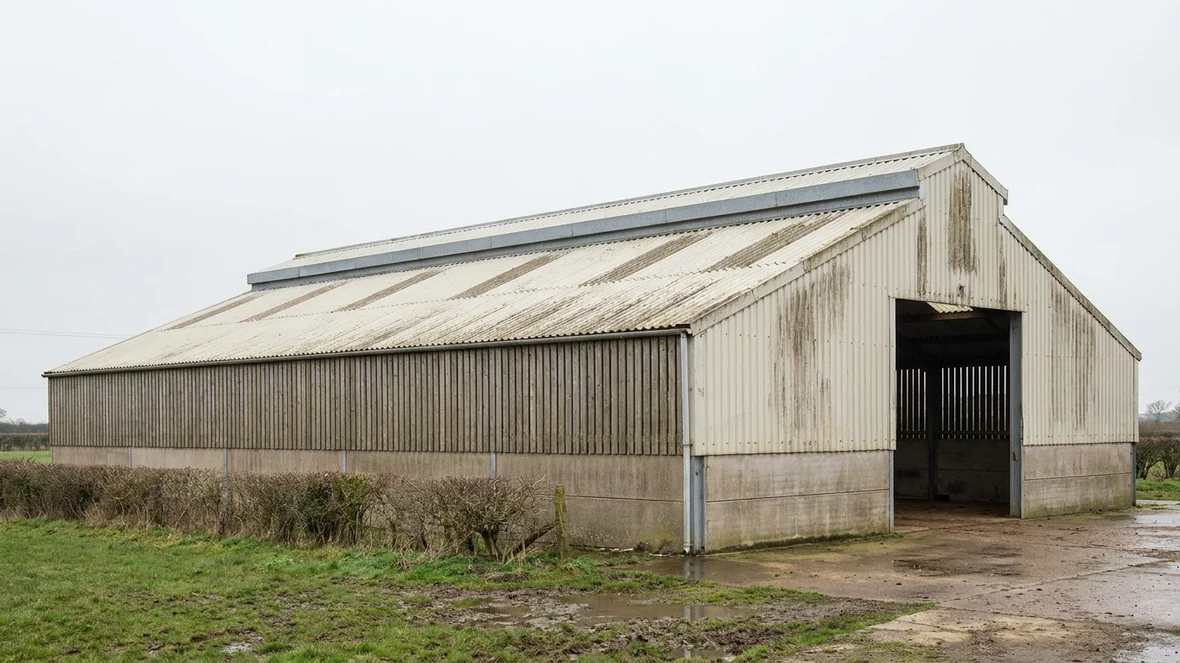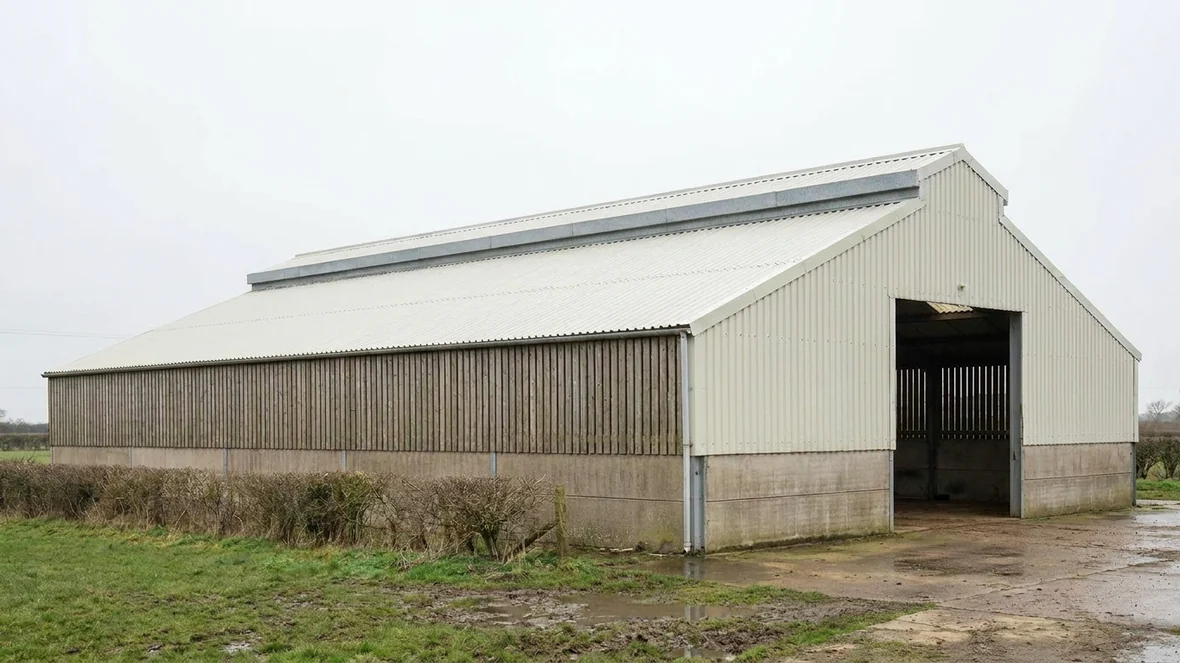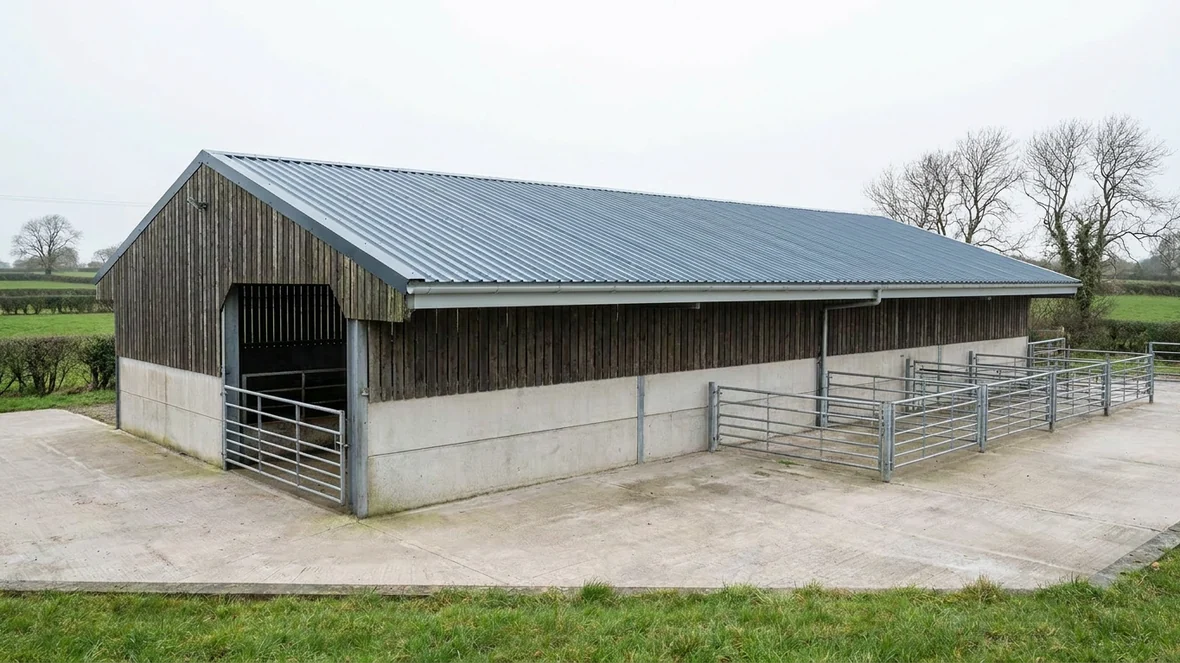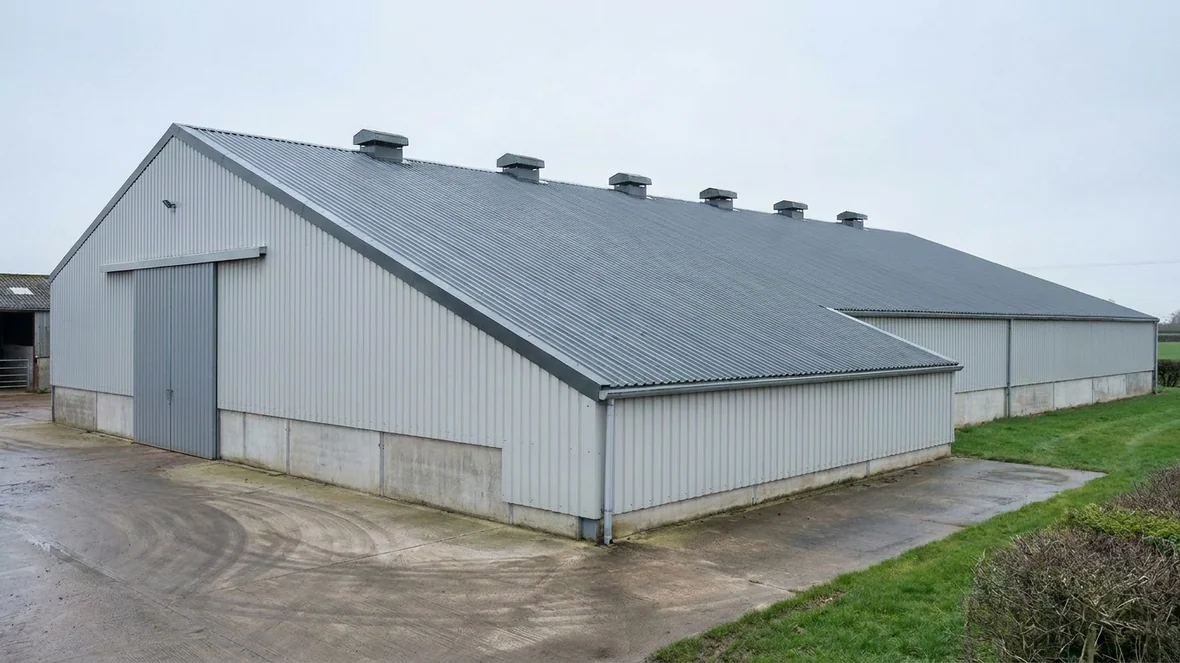



West Oxfordshire farmland sits between the River Windrush and the eastern fringe of the Cotswolds. Around Witney the holdings are mixed: arable on the lower land, stock and forage toward the hills, and farm buildings that must stay weatherproof through wet winters and harvest. We’re National Coating Specialists, an exterior coating contractor based in the South-East, and we work across England. We attend farms around Witney when roofs, cladding and gutters need a clear condition assessment before work is planned on site.
Agricultural Building Coating Witney is what most owners ask us about: can this roof or wall be coated and returned to service, or has the sheet and structure reached replacement? We don’t write a specification from a photograph. We walk the building, record the defects that matter, and only then say whether a coating system is the right next step.
Why farm buildings around Witney reach the coat-or-replace decision
Westerly rain tracks in across the Cotswolds and keeps surfaces wet for long stretches of winter. That freeze and thaw opens micro-cracks in aged fibre cement. UV on the south and west faces chalks factory paint on coated steel until water sits in the grain of the sheet. On livestock units, muck, ammonia-laden air from housed stock, pressure washdown and slurry plant traffic attack cut edges, flashings and lower wall cladding long before a roof midspan looks tired.
Grain stores and machinery sheds fail differently. Leaks matter because the crop or kit underneath can’t take a wet season. Condensation under poorly ventilated spans softens laps and fixings from below. Once fixings weep rust and laps open, the choice is coat or replace: restore the surface while frame and sheets are still sound, or strip and rebuild when the substrate is past recovery. That decision is what our survey is for.
Barn roof painting near Witney starts with what the sheets are made of. Fibre cement, plastisol steel and asbestos cement each take a different system.
The agricultural building stock of Witney
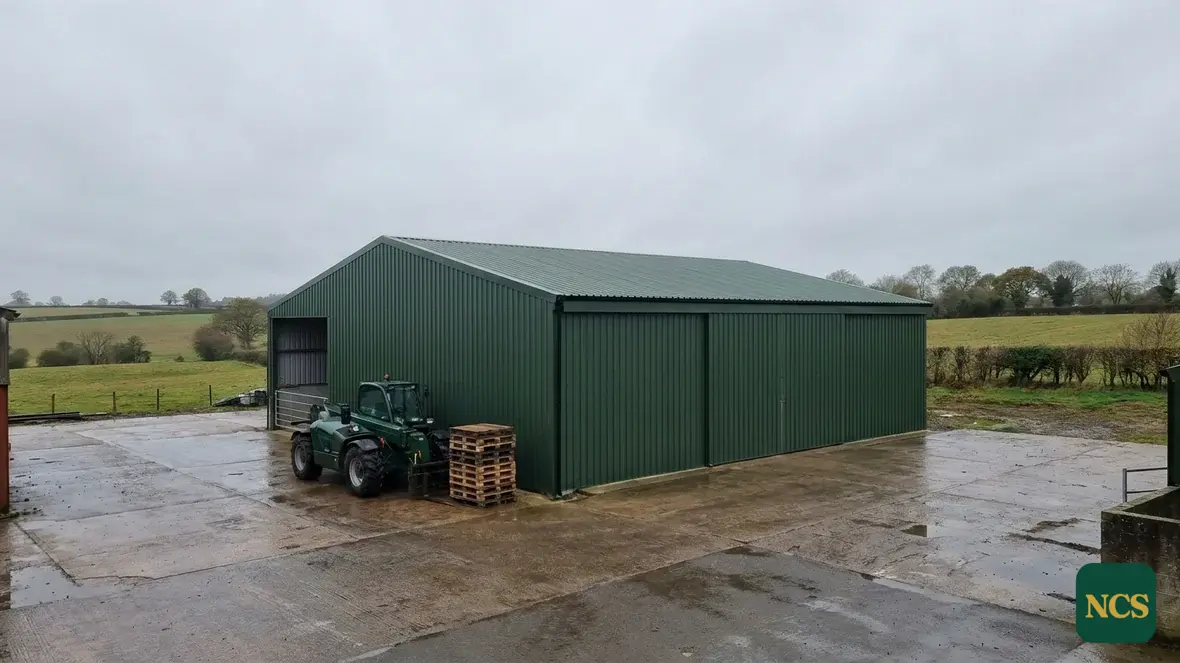
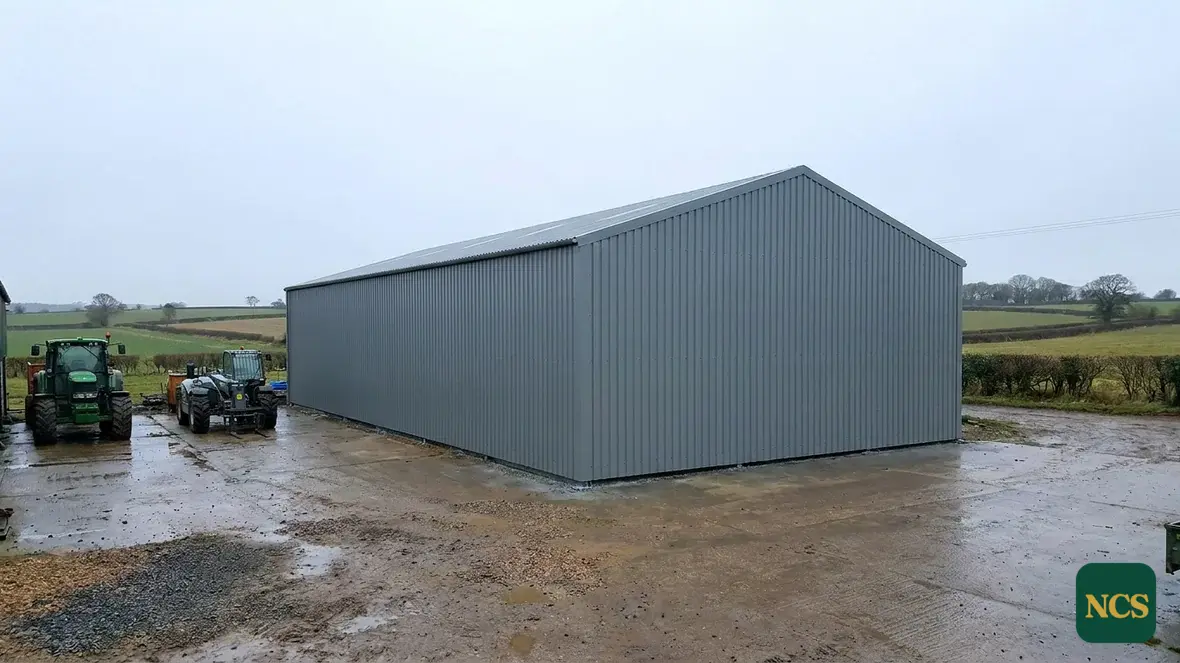
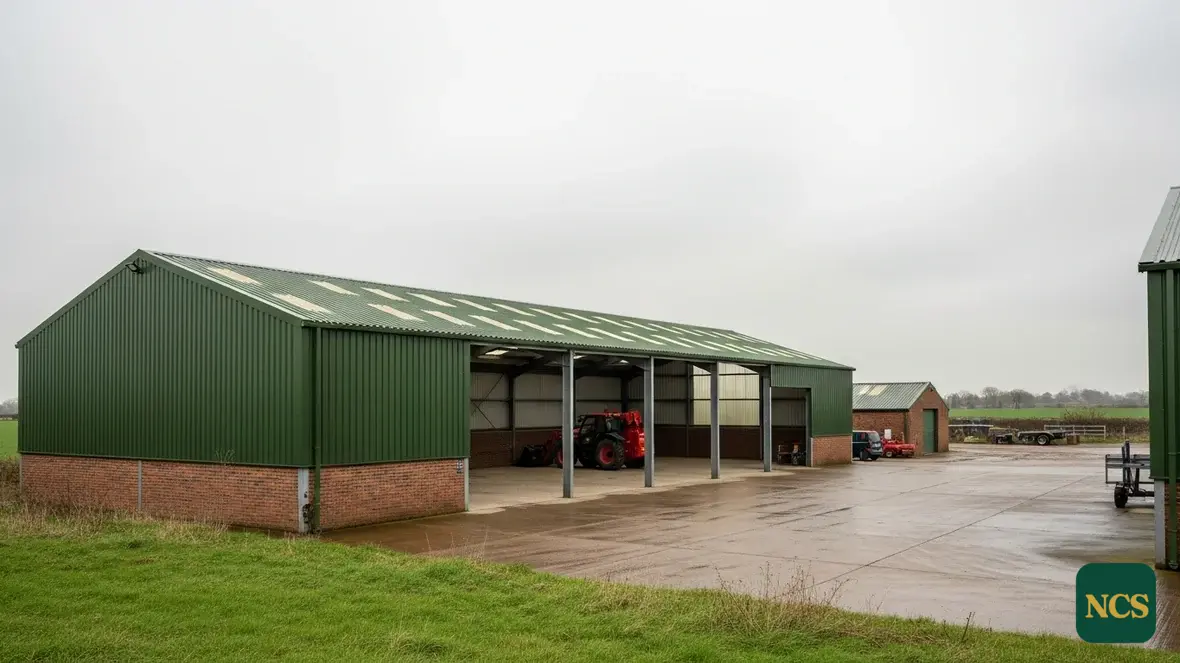
On the lanes toward Carterton, Ducklington, Minster Lovell, Bampton and the Burford side of the Windrush valley the building types repeat. Steel portal-frame grain stores and general-purpose sheds dominate arable holdings. Livestock ranges carry open-fronted cattle buildings, sheep housing on higher ground toward the Cotswolds, older Dutch barns and newer stock units under profiled cladding. Many farms still run asbestos-cement or later fibre-cement roofs on older spans, often beside coated-steel bays added when storage or stock numbers grew.
Walls are usually profiled metal cladding, or blockwork and cladding at lower courses where washdown and machinery contact are heaviest. Gutters are deep industrial profiles on long eaves, often full of leaf litter from wooded field edges. The pattern is sound frames under tired skins, with failure at edges, fixings and gutters first rather than in the middle of a clean sheet.
What an agricultural building coating does and where it is the wrong answer
A specified exterior coating cleans, prepares and seals a roof or wall so water is shed, UV attack slows, and minor porosity in fibre cement is locked down. On coated steel it can restore barrier performance where the factory finish has failed but the metal is still intact. On intact asbestos-cement and fibre-cement sheets, encapsulation coats face and edges so the material stays in place without stripping. Barn painting and cladding painting of this kind are not decorative. They are condition-led roof painting and wall protection meant to extend service life while the structure still justifies it.
Coating is the wrong answer when sheets are cracked through, soft underfoot, or so corroded at the laps that preparation would leave more hole than metal. It is wrong when the frame is failing, when asbestos is damaged beyond safe encapsulate-in-place work, or when the building needs redesign rather than surface recovery. We say so on the survey and point toward strip-and-replace or a licensed asbestos route rather than put product on a substrate that will not hold it.
Asbestos cement sheets, cut edges and gutters: what gets assessed first
On older farm roofs we first check asbestos-cement and fibre-cement sheets for cracks, soft patches, failed fixings and edge damage. Intact weathered sheets are often candidates for cleaning and encapsulation. Broken or friable areas are not. Cut edges on coated steel get equal attention: corrosion starts at the factory cut line, and corrosion repairs there can save a bay that still has life in the field of the sheet. Gutters are checked for joint leaks, standing water, failed brackets and outlet condition. Gutter relining is sometimes the right companion to a roof coating; sometimes the gutter needs mechanical repair first.
Flashings, ridges, roof lights and wall-to-roof junctions come next, because a sealed sheet field is worthless if the detailing still admits water. Moss and lichen mark a wet, porous surface rather than the whole problem. The survey records what is there so any later specification matches the roof you have, not a generic farm building.
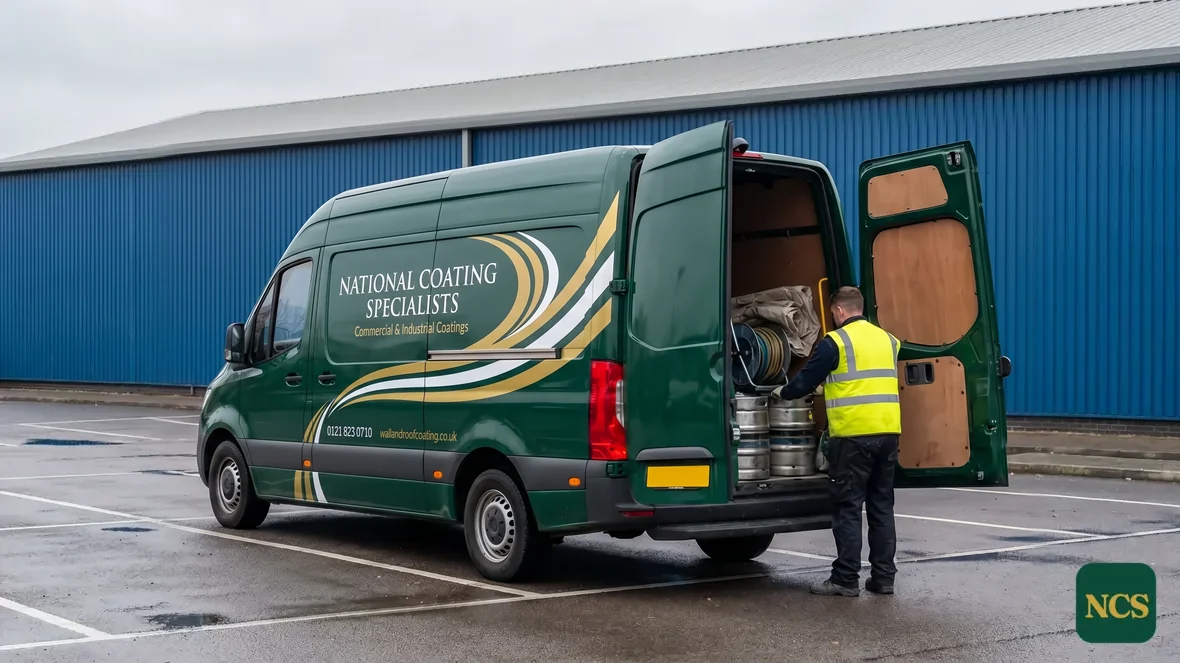
Our survey-led process, worked around the farming calendar
Harvest, drilling, lambing, housing and turn-out close windows on yards and inside buildings. We plan surveys and any later application around those pressures: empty grain stores after the crop has moved, livestock buildings when stock are out or can be shifted, and access that does not block silage or slurry movements. A free survey is the starting point. We visit, check safe access, and record roof type, wall build-up, gutter condition and the defects that drive the decision.
- Roof and wall sheet type, fixings and visible corrosion mapped on site
- Asbestos-cement or fibre-cement condition checked before any coating talk
- Cut edges, laps, flashings and gutters inspected as primary failure points
- Access, livestock movement and harvest timing noted against the farm calendar
- Clear coat-or-replace recommendation, with coating declined where it will not hold
If coating is suitable, the written scope follows the survey notes. Preparation, priming and topcoats are chosen for the substrate in front of us, not from one house system applied to every farm. If coating is not suitable, you still leave with a clear record of why.
Why the survey comes before any specification
Specification without a survey is guesswork. Two portal-frame sheds on the same lane can need different treatments: clean and encapsulate on sound fibre cement, edge corrosion work and a steel recoat, or a frank recommendation to replace. Until someone has been on the roof and looked at cut edges and gutters, any product name is premature. We do not set a system, finish or programme until the free survey is done and the substrate is understood.
For farms around Witney and the wider Windrush and Cotswold fringe, weather, ammonia, washdown and age combine differently on each range. The survey separates a good candidate for agricultural coating from a building that needs another route. When you are ready, start with our agricultural building coatings overview or book a free survey and we will take it from the yard gate, not from a brochure.
Common questions about agricultural building coating Witney
What preparation does agricultural building coating Witney require before application?
Every agricultural building coating Witney project begins with a rigorous substrate survey. We check for moisture ingress, delamination, rust on steelwork and any residual agricultural chemicals that could impair adhesion. Surfaces are cleaned by specialist grit blasting or mechanical abrasion where needed, and all failed existing coatings are removed back to a sound edge. Without this step, even the best protective systems won’t perform. We often encounter farm buildings where the previous coating has simply been applied over dirt or friable rust, and that guarantees early failure.
How long does a coating last on an agricultural building in Oxfordshire?
Longevity depends entirely on exposure, substrate condition and the system specified. Our agricultural building coating Witney work is designed for an extended service life. Farm buildings in this part of Oxfordshire face persistent wind driven rain, ultraviolet degradation and aggressive internal atmospheres from livestock or stored fertiliser. With correct preparation and the right multi coat system, we can achieve durable protection that postpones major recoating for many years. We also advise clients on simple maintenance, such as clearing gutters and washing down cladding, to stretch the interval further.
Can you coat the inside of a grain store or livestock shed?
Yes, and internal agricultural building coating Witney applications often need more careful specification than external ones. Grain stores require coatings that are tough enough to withstand abrasion from harvested crops and are certified for incidental food contact. Livestock housing demands products that resist ammonia and organic acids and can be applied to both steelwork and concrete. Ventilation is critical during application and curing, so we phase the work to keep the building empty and to manage airflow without risking dust contamination of wet film.
Will coating work disrupt our daily farm operations?
We programme agricultural building coating Witney contracts around the farming calendar wherever possible. Access is coordinated so that one bay or elevation is completed while the rest of the building remains functional. External coating can often proceed with minimal interference. Internal work usually requires the structure to be empty, so we schedule that during a planned void or a quieter period. Our site team is accustomed to working on live farms and takes responsibility for exclusion zones, plant isolation and daily clearance of debris.
What colours and finishes are available for agricultural building coating Witney?
We supply a wide palette of colours and can match existing cladding profiles so that extensions or patch repairs blend without shouting. The most common request we receive is for muted greens and browns that sit comfortably in the Oxfordshire landscape, though bright white and deep grey are also popular for dairy and storage units. Finish is not just aesthetic. A high build satin or low sheen coating sheds water more efficiently than a flat finish and makes cleaning airborne silage dust off the walls far simpler.
Recently — July 2026
Summer is the steadiest season for exterior coating: longer dry spells mean preparation, application and curing can be programmed with fewer weather delays.
We do not price a roof we have not stood on, so every job here starts with a proper look at the building.