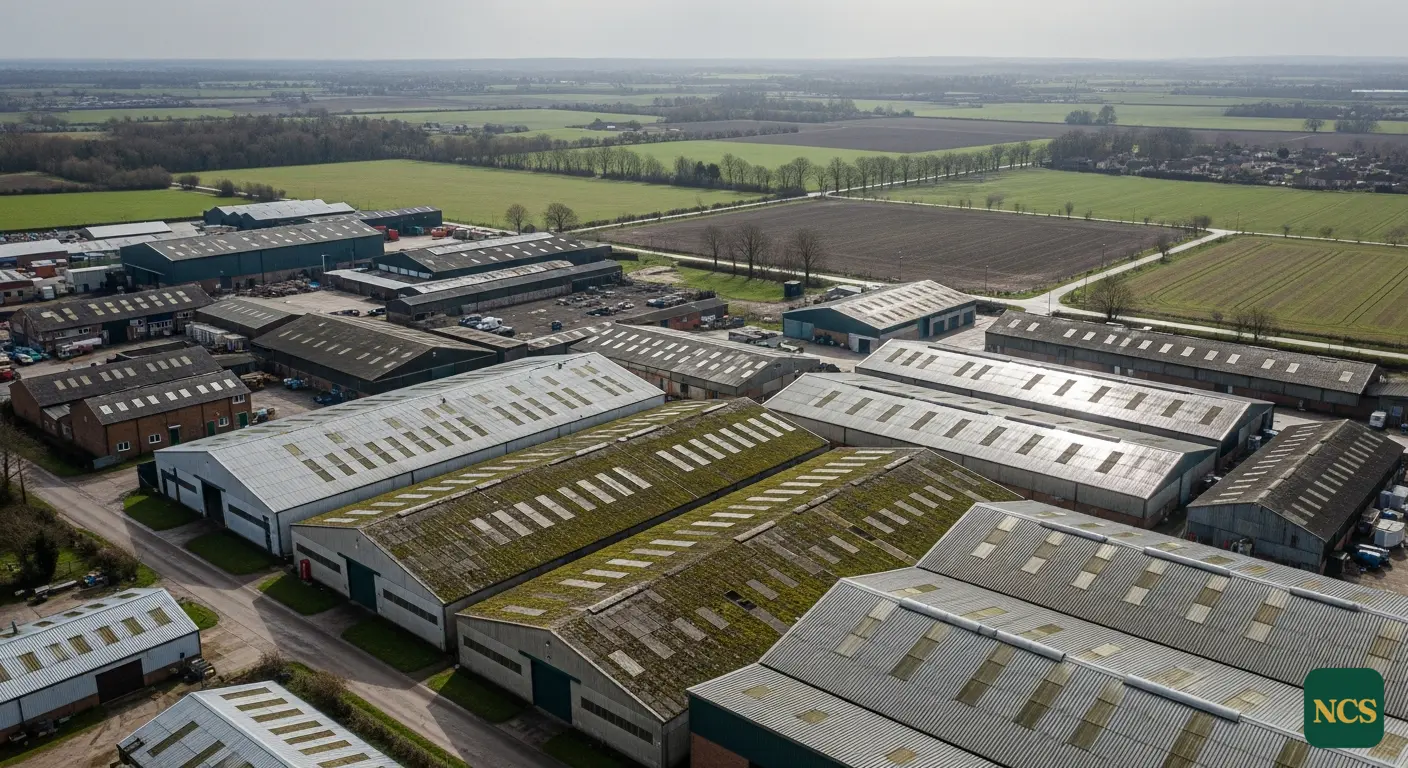
We work with commercial, industrial and agricultural building owners in Didcot, Oxfordshire, to keep their structures sound and compliant. Your building’s exterior takes a beating from the weather, and when issues like cut-edge corrosion or weathered fibre-cement roofs start to appear, full re-sheeting or replacement can be a massive headache. We specialise in coating systems that restore and protect these surfaces, often allowing your operations to continue with minimal disruption. It’s a smart way to get more life out of existing sheets and avoid the cost and downtime of full replacement.
Addressing asbestos cement roofs in Didcot
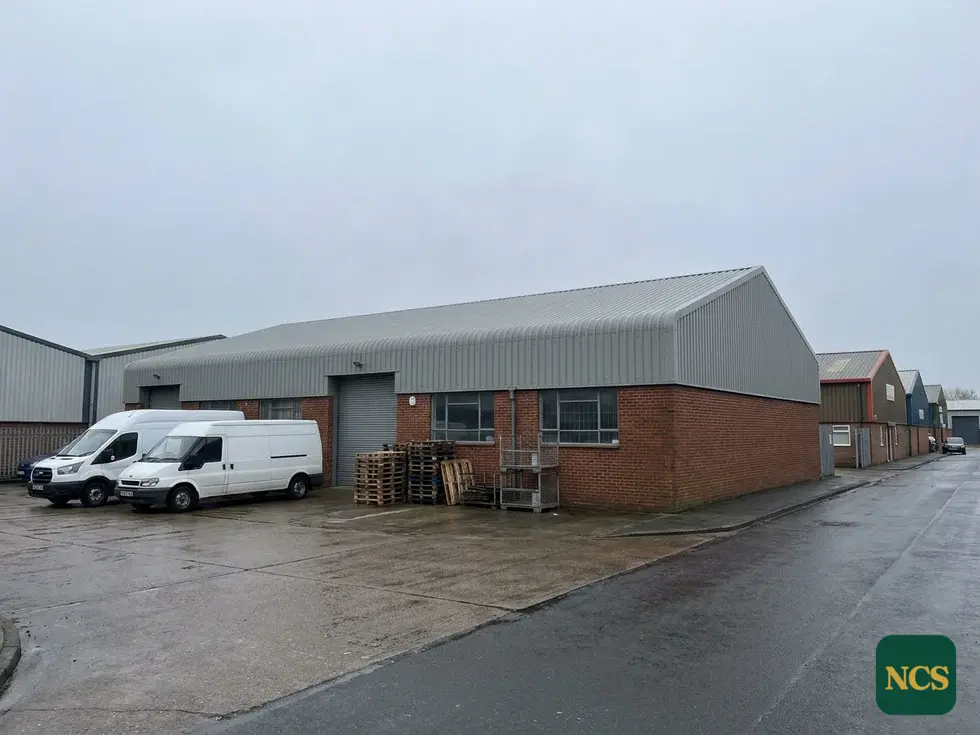
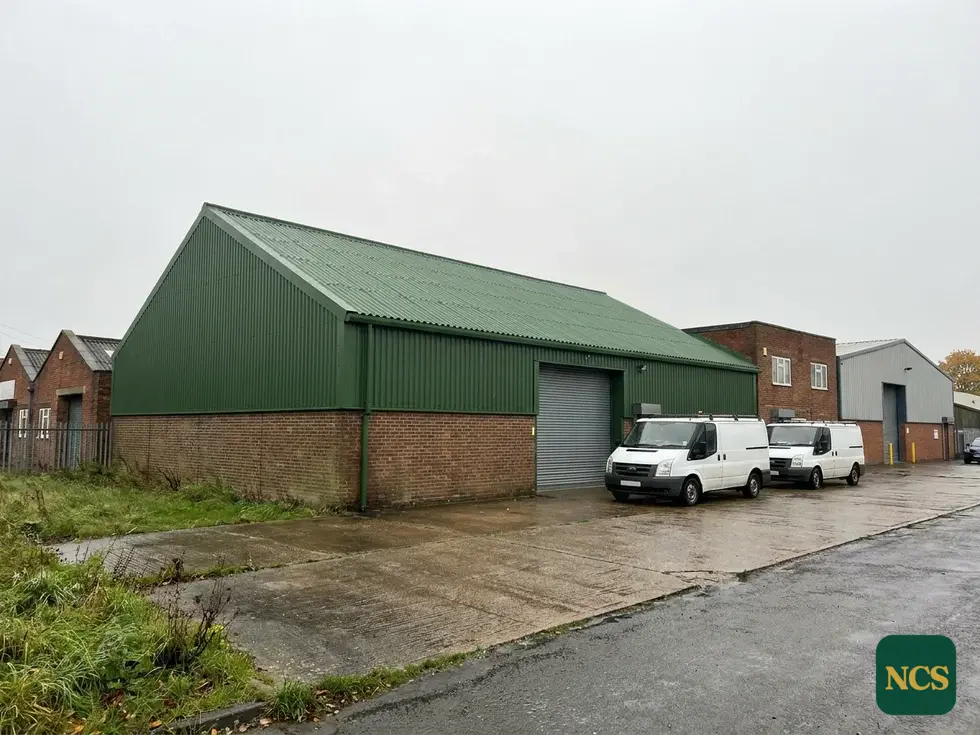
Didcot’s industrial past means we see a lot of asbestos cement roofs here. We’re talking about: warehouses and logistics sheds along the A4130 near the power station; farm buildings out in Harwell, East Hagbourne, and Blewbury; those original 60s and 70s structures at Milton Park business estate; retail back-of-house areas in the Orchard Centre; and school outbuildings and boiler sheds all over town. Those corrugated ‘big six’ profile sheets are everywhere. You often see them weathered or damaged after decades of Didcot’s rain, sun, and frost. When we inspect these, we’re looking to see if an effective coating can make them sound again, letting you keep the existing structure in place.
Why we survey before any treatment decision
No two asbestos cement roofs in Didcot are exactly alike. Things like how the local weather has battered it (prevailing winds can really chew up a roof), any previous repair attempts (you often see these on industrial units), tiny cracks from the roof heating up and cooling down, and moss and lichen growing in shaded spots all change what needs to be done. Our surveys give you the hard evidence to make the right, compliant decision for your building, and often reveal that an existing roof can be restored, not replaced.
The legal duty to manage asbestos in Didcot properties
The Control of Asbestos Regulations 2012 (CAR 2012) put the legal burden on commercial property owners and duty holders in Didcot to find and manage asbestos. That means schools like Didcot Girls’ School, shops along Broadway, industrial estates such as Milton Park, and the farm buildings dotted around Oxfordshire countryside. If you don’t properly assess and control asbestos risks, the Health and Safety Executive (HSE) will come knocking. Didcot’s got a real mix of older post-war builds and modern units, so it’s a particular focus. The rules apply to everything, even buildings put up after 1999. Some imported materials still had asbestos in them until 2003, so you still need to check. This duty is why our survey-led approach is so critical.
Painting an asbestos roof in Didcot is legal and sensible when the sheets are sound and the system is specified for asbestos cement. The survey establishes both.
Our survey-first approach for Didcot buildings
Every job starts with our surveyor getting up on the roof. For Didcot properties, we generally: look at any existing asbestos registers or management plans you have; do a visual inspection, often with binoculars, and using access equipment where it’s safe; take samples if needed, but always in a controlled way; work out how much weather and foot traffic the roof gets; and document everything with photos and clear diagrams. Only after we’ve done that survey do we recommend encapsulation, removal, or just keeping an eye on it. This thorough process helps us determine if coating is a viable, less disruptive alternative to full removal.
Asbestos roof encapsulation and when removal is needed
Encapsulation is the HSE-recognised way to seal and protect asbestos cement roofs. We don’t remove them; we just seal them up. First, we survey the roof thoroughly. Then, we apply a high-build coating system that’s made for asbestos. The coating sticks to the surface but still lets the roof breathe. That stops moisture building up and causing more damage. For Didcot roofs, we usually go with a two-part system: a primer that really soaks into the cement, followed by a flexible topcoat. That topcoat expands and contracts with the temperature changes, which is vital with Oxfordshire’s cold winters and hot summers.
Most intact asbestos cement roofs in the Didcot area are fine for encapsulation. But sometimes, removal is the only sensible choice: when sheets are badly broken or delaminating (we see this a lot on older farm buildings); if the roof’s structure is compromised (our survey usually flags this up); if you’re planning building work that means puncturing the roof; or if your own risk assessment says you need to eliminate the asbestos, not just manage it. We’re licensed by the HSE for both encapsulation and removal. So, whatever your Didcot property needs, we’ll keep you compliant, whether that’s a new coating system or full removal.
- HSE-licensed asbestos contractors
- Survey team covering Oxfordshire
- No obligation recommendations
- All work fully documented for your records
- Knowledge of Didcot’s building stock
For more details on our asbestos roof encapsulation services or to book your free survey, visit our asbestos encapsulation page or request a no-obligation quote.
We carry out asbestos roof encapsulation in and around Didcot. For the full survey-led service and how we assess each building, see our Asbestos Roof Encapsulation service, or request a free site survey.
Recently — June 2026
As always, where a coating is not the responsible answer we say so and point towards repair or replacement. The survey is what settles it honestly.
Summer is the steadiest season for exterior coating: longer dry spells mean preparation, application and curing can be programmed with fewer weather delays.