Managing asbestos roofs across Dorset starts with the law
Running a commercial building in Dorset with an asbestos roof means you’re already in charge of managing that risk by law, no matter how much it’s leaking. The Control of Asbestos Regulations 2012, Regulation 4, lays it out clearly: if you control the building’s maintenance, you have a duty to find any asbestos, assess it, record it, and manage it. Nobody says you have to rip it out. If the asbestos cement is sound, we can seal it, monitor it, and keep it in place. That’s what encapsulation is: a planned, recorded measure for managing it.
Where asbestos cement roofing sits across Dorset
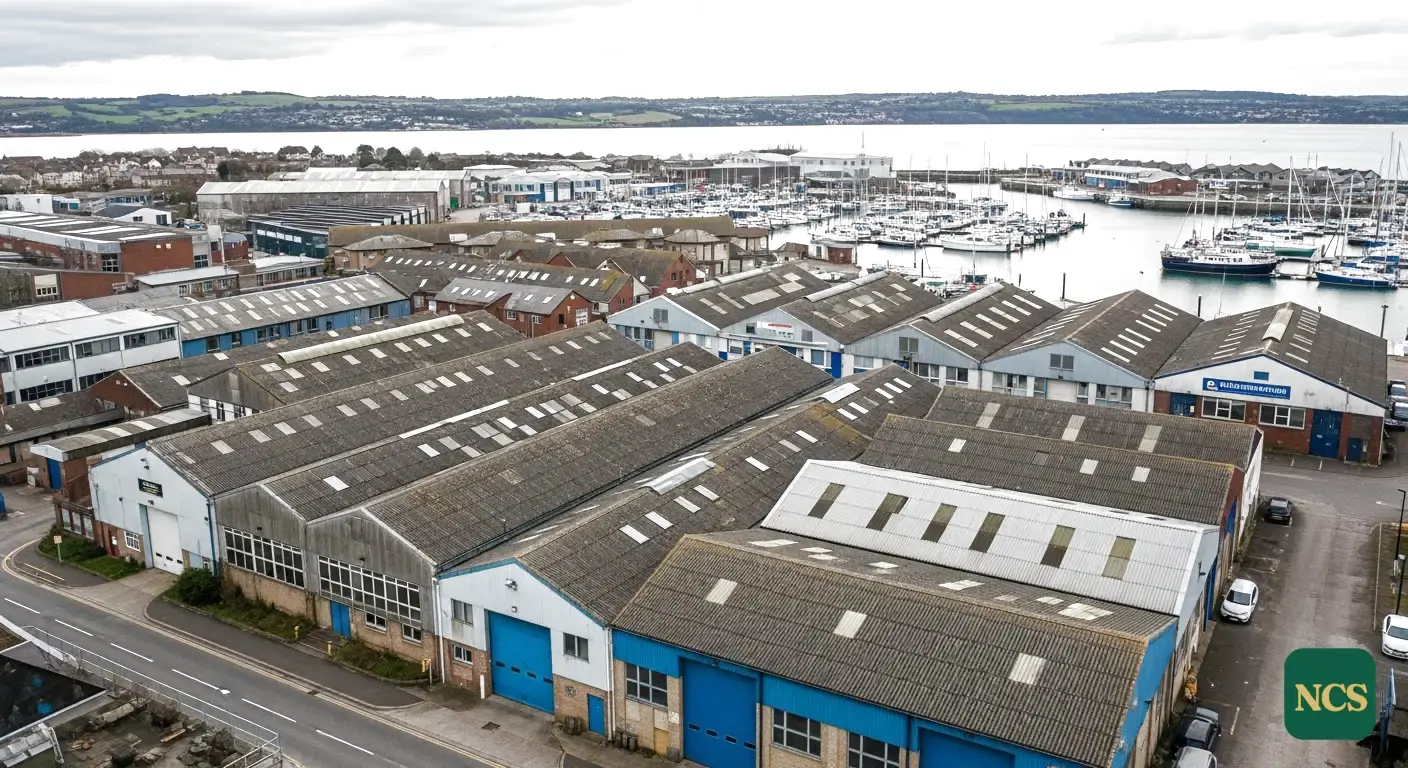
Dorset’s commercial base sits around its conurbation and harbours. Asbestos cement roofs cover the Poole industrial and marine estates, the Bournemouth and Ferndown business parks, and the agricultural buildings of the Blackmore Vale and the wider county.
We’ve seen thousands of these roofs across the country and the ones in Dorset are no different. Most were built for a thirty-year life and have long outrun it. That’s why so many are now porous, covered in moss, and leaking at the fixings, even where the sheets themselves still seem solid.
We survey asbestos cement roofs across Dorset before any talk of coating or painting, because fragile sheets decide the method, not the other way round.
Encapsulation, repair or removal: the honest choice
Where the sheets are sound enough, encapsulation is the responsible way to go. We’ll survey the roof in detail first, then clean it carefully without releasing fibres or putting any weight on the sheets. We repair what needs fixing, then we over-coat it with a system made specifically for asbestos cement. You end up with a bound, watertight surface, a roof with a renewed service life, and all done while your building stays open. It costs a fraction of what you’d pay to remove and replace it.
When we will tell you to remove instead
Not every roof is a candidate for coating, and we won’t pretend it is. That helps nobody. If the sheets are friable, badly cracked or full of holes, or if the roof’s structural movement has already compromised it, then coating isn’t the right answer. Remember, encapsulation only works for asbestos cement. If you’ve got licensable materials like insulation board, lagging, or sprayed coatings, those need to go to an HSE-licensed contractor. When removal is the right route for your building, we’ll tell you straight away.
Survey-led across Dorset
We survey commercial, industrial, managed and agricultural buildings across the county, including Poole, Bournemouth, Weymouth, Dorchester and Ferndown. The route is the same wherever the building is:
- A condition survey of sheets, fixings, rooflights, gutters and structure
- A photographic record for your asbestos management plan
- A plain written recommendation: encapsulate, repair first, or refer for removal
- A specification and price only where coating is genuinely appropriate
- Work carried out under controlled, documented conditions
If a building in your portfolio dates from the 1960s to the 1980s and the roof has never been assessed, a free asbestos roof encapsulation survey answers the compliance question and the cost question together.

Asbestos Roof Encapsulation for Dorset’s Historic and Exposed Buildings
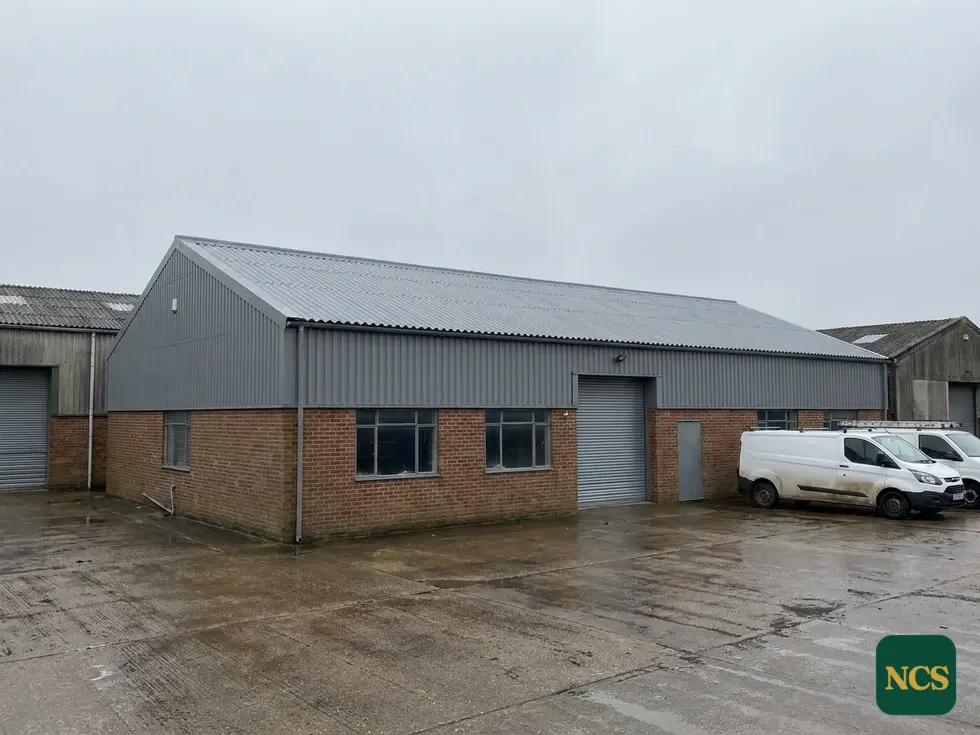
Dorset’s mix of ageing agricultural barns, coastal warehouses, and former industrial units presents a unique challenge for asbestos management. The county’s older commercial stock – particularly along the Jurassic Coast’s salt-laden winds and inland dairy farms with 1970s-era steel-framed barns – suffers accelerated weathering. Traditional corrugated asbestos cement roofs here degrade faster than inland equivalents due to marine exposure and decades of UV damage. The problems on these roofs are the ones any surveyor would expect: cracked and slipped sheets, delaminating panels, and brittle, fibre-shedding sheets that have lost their surface. Our survey maps every high-risk zone: ridge caps where mortar has failed, nail holes widened by thermal movement, and underside staining from decades of condensation cycles.
Access constraints define Dorset jobs more than most counties. Narrow country lanes can rule out standard mobile platforms, and steeply pitched roofs on converted buildings need non-penetrating anchors so the fragile substrate isn’t disturbed. Our pre-coating survey records the condition of the sheets before anything is specified. The process starts with fibre stabilisation using Dorset’s rare dry weather windows, then encapsulation in breathable coatings that withstand the county’s southwesterly storms without trapping moisture against compromised sheets.
We encapsulate asbestos cement roofs on commercial, industrial and agricultural buildings across Dorset. For how the survey works and what the full service involves, see our Asbestos Roof Encapsulation service, or request a free site survey.
Recently — June 2026
Long daylight and warm, dry days are when a coating cures and bonds best, so summer is a sensible time to get the work booked in.
If a coating is not the right call for your building, we will tell you that after the survey rather than sell you a job that fails.