The Duty to Manage Asbestos in Wantage Under CAR 2012
If you own or manage a commercial, industrial or agricultural building in Wantage that went up before 2000, you’re legally on the hook. The Control of Asbestos Regulations 2012 (CAR 2012) means you have to find and manage any asbestos-containing materials (ACMs) on your patch. That includes the roofs on plenty of local buildings, from the old dairy units over at Grove Business Park to the farm sheds dotted around the Vale of White Horse. Asbestos cement roofs got used everywhere in Oxfordshire because they were tough and wouldn’t burn. But when they get knocked about or weather-beaten, they can let out nasty fibres. The law says you have to check these materials and act to stop anyone, whether they’re workers, visitors, or the public, from breathing them in. Ignore it, and you’re looking at unlimited fines and even time inside.
Where Asbestos Cement Roofs Are Found in the Wantage Area
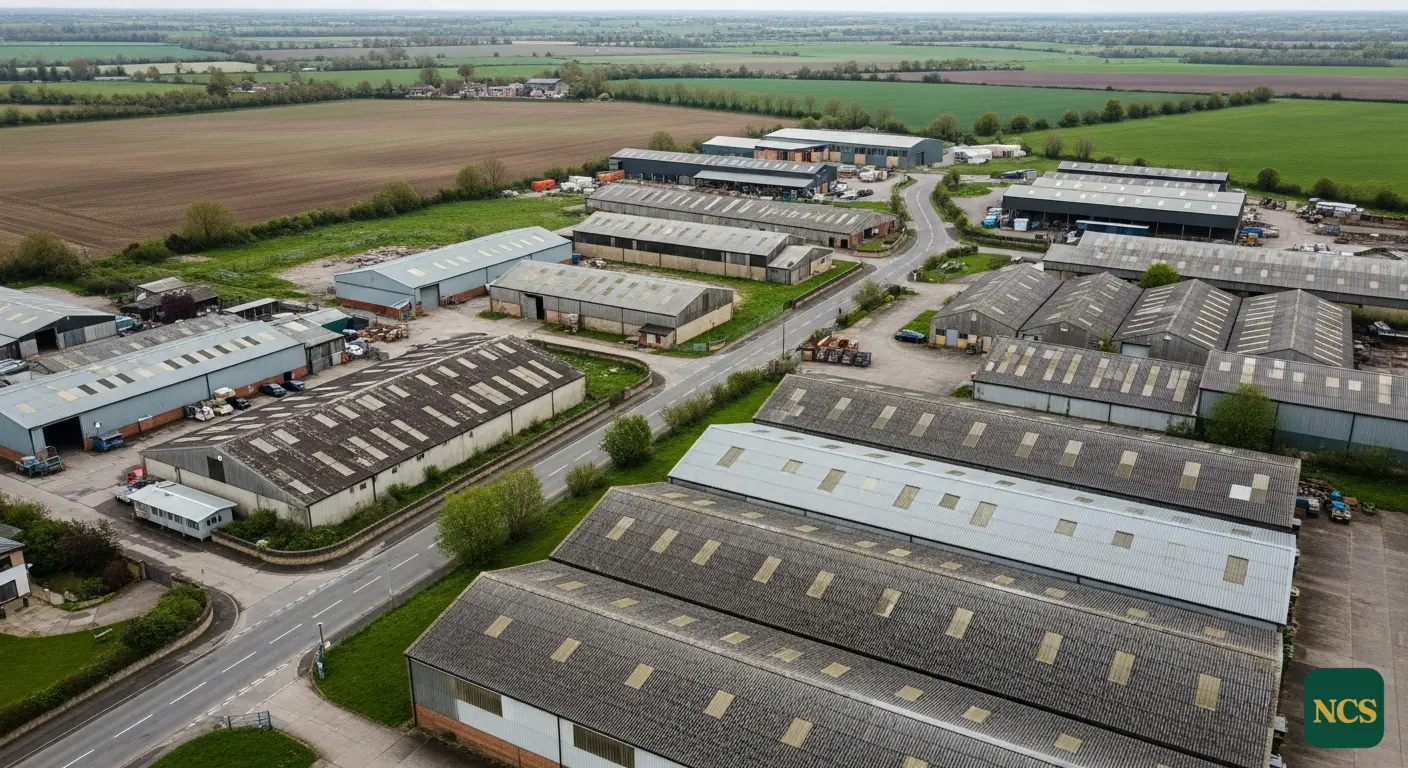
Wantage has a mix of light industry, farms, and older commercial properties, which means asbestos cement roofs are far more common than many local business owners might think. You’ll see them on the industrial units along Orchard Road and Wallingford Street, the old Ministry of Defence buildings around RAF Grove, and farm buildings in nearby villages like East Challow and Letcombe Bassett. Those distinctive corrugated asbestos cement panels were used on everything, from factory roofs and agricultural barns to school outbuildings and even some retail park canopies. We’ve even seen them on communal areas of older residential blocks like those on Newbury Street. The real danger kicks in when that brittle cement starts to break down, whether it’s from decades of Oxfordshire weather, falling branches, or someone accidentally damaging it during maintenance work.
What Asbestos Roof Encapsulation Actually Involves
Encapsulation is how we seal and protect an asbestos cement roof. We do it in a controlled, HSE-compliant way to stop fibre release without the bigger risks that come with full removal. Our crew starts by thoroughly wetting down the roof to keep any loose fibres from getting airborne. Then we put down a special coating system that sticks to the existing surface, making a protective membrane. This usually means a few layers: first a primer to get right into the substrate and stabilise it, then a reinforced bridging coat to handle movement, and finally, a tough topcoat that can stand up to UV and the weather. What you get is a waterproof, fibre-sealed roof that’s still structurally sound, and you’ve dodged the cost and hassle of ripping it all off. The main thing is, encapsulation keeps the asbestos safely where it is instead of disturbing it. That’s why it’s often the safest bet for roofs that are in decent nick.
Asbestos cement sheets around Wantage chalk and grow moss long before they fail. An encapsulating paint coat on surveyed sheets keeps the weather out and the fibres in.

When Full Removal Becomes the Necessary Choice
Encapsulation works a treat for a lot of roofs in Wantage, but sometimes, taking it all off is the only sensible way forward. If the panels are properly broken up, whether it’s from a storm, years of neglect, or botched DIY repairs, encapsulation just won’t cut it long-term. Same goes for roofs that are caked in moss or have other biological gunk. Cleaning that off often means disturbing embedded fibres, so removal is usually better. We also tell people to get it removed if the building is getting a big refurb or a change of use, as future work could mess up an encapsulated roof. It always comes down to what our survey finds. We’ll never push for removal unless it’s genuinely the safest option for your particular situation.
Our Survey-Led Process for Wantage Properties
Every NCS job around Wantage kicks off with one of our surveyors doing a proper roof inspection. We’ll check the roof’s condition, looking for cracks, holes, or anywhere it’s breaking down, and we’ll also think about how you use the building and what your plans are for it. Using borescopes and safe access gear, we’ll get into hidden spots like roof valleys and abutments, which is often where damage starts. This survey isn’t just ticking boxes. It’s how we figure out if encapsulation is even possible, what repairs we need to do first, and the safest way to get up there on your specific site. If you’ve got a farm near Childrey or light industrial units in Wantage town centre, that might mean working around livestock or business hours to keep things running smoothly.
Why a Professional Survey Must Come First
Trying to check an asbestos cement roof without proper training is both stupid and illegal. Even what looks like a small bit of damage can kick up a load of fibres, especially on an old roof where the cement has started to crumble. Our surveys follow the HSG264 guidelines. We combine looking at it with testing the materials to give you a clear, compliant report. That report doesn’t just tell us what to do. It becomes part of your asbestos register, showing you’re playing by the CAR 2012 rules. If you manage an industrial estate in Wantage or farm buildings near Upton, skipping this step could land you in deep trouble if workers or contractors get exposed down the line. The survey also lets us spot other risks, like asbestos cement downpipes or wall cladding that might need sorting out.
- A survey of the roof’s condition before we recommend anything
- No-obligation recommendations based on what the survey finds
- Clear explanation of all options in plain English
- Priority scheduling for urgent cases like storm-damaged roofs
- Detailed post-work documentation for your health and safety files
For more details on our asbestos roof services, visit our asbestos encapsulation page or request your free survey quote.
We carry out asbestos roof encapsulation in and around Wantage. For the full survey-led service and how we assess each building, see our Asbestos Roof Encapsulation service, or request a free site survey.
Recently — June 2026
Summer is the steadiest season for exterior coating: longer dry spells mean preparation, application and curing can be programmed with fewer weather delays.
Surveys remain free and no-obligation, with a written report on condition, the realistic options and the recommended route.