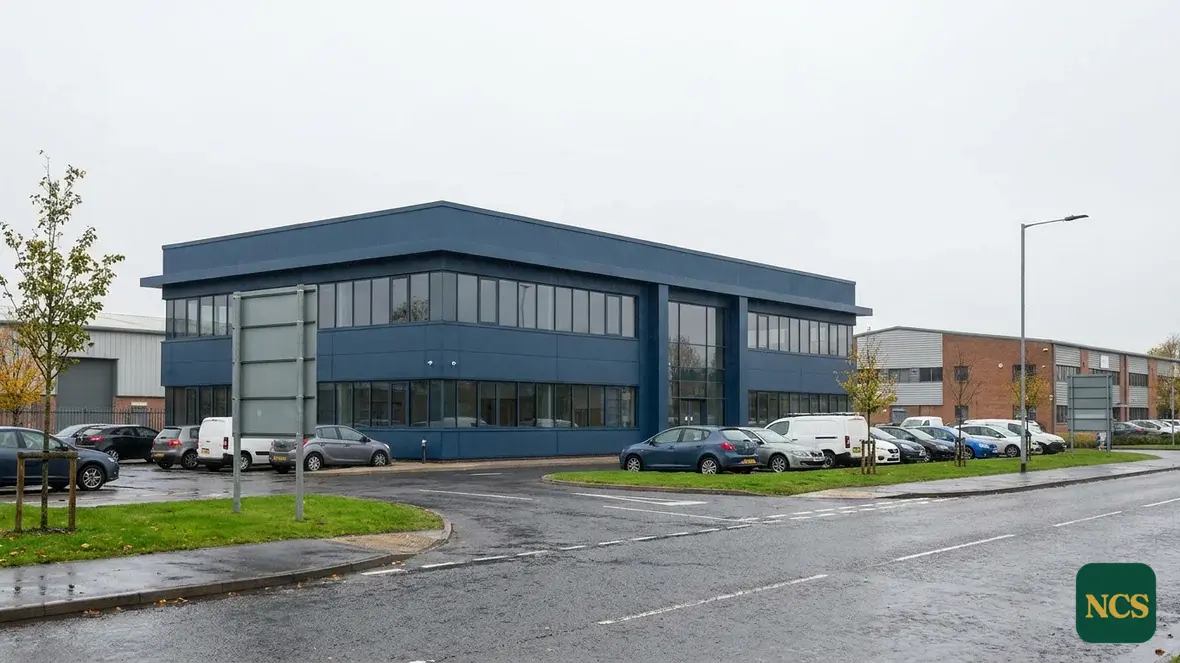
Hull sits on the Humber estuary on the east coast, and its port and maritime industry have left a lasting mark on the buildings that stand here. The formal name Kingston upon Hull appears on the maps, yet the place itself is always called Hull in daily use. Commercial and industrial owners face the same practical question every season: whether a coating will keep a building working or whether replacement has become the only honest option.
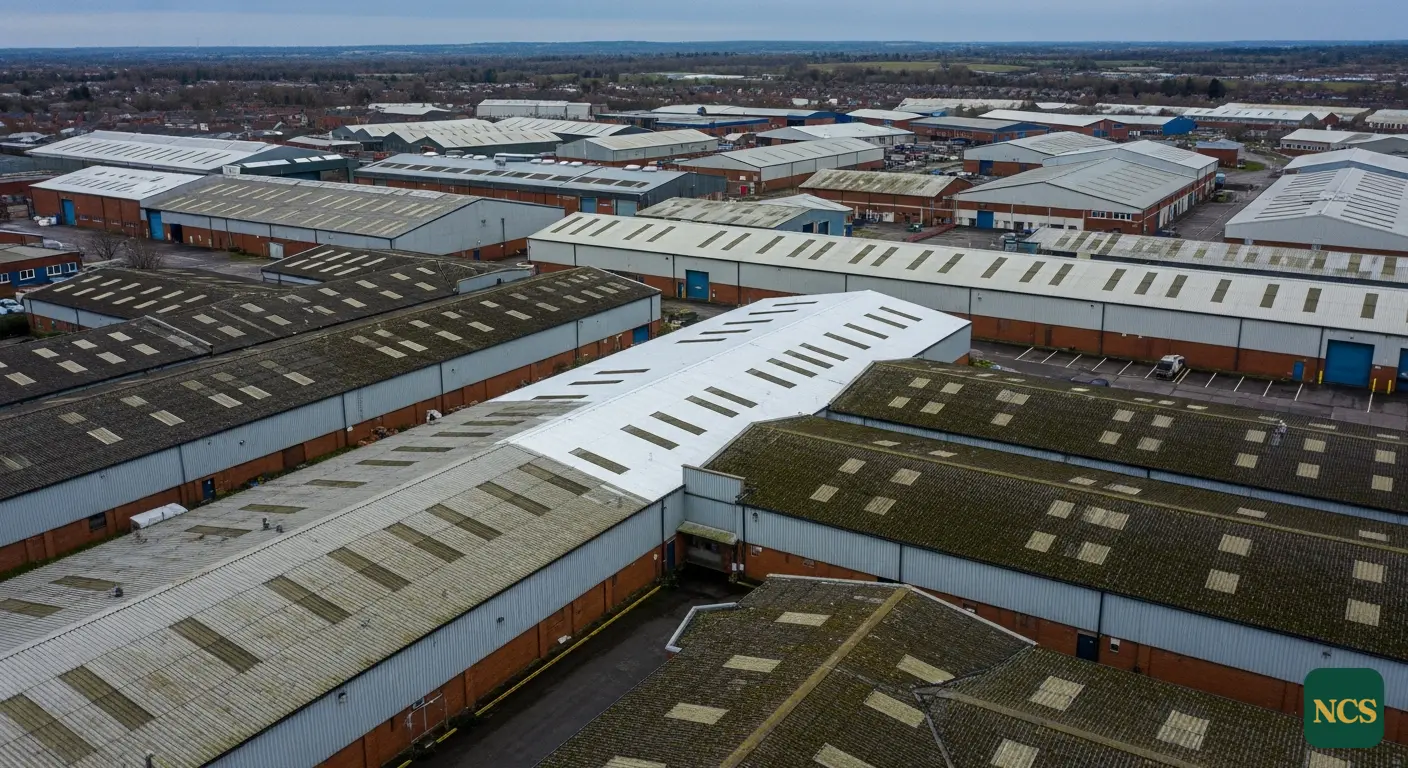
The city’s stock reflects decades of port activity and post-war rebuilding. Profiled metal warehouses line the docks and estates, older brick and render offices occupy the centre, and fibre-cement or asbestos cement barns still serve farms out toward Holderness. Constant salt-laden wind off the estuary drives rain into every weakness, accelerates cut-edge corrosion on steel sheets and lifts render from brick faces faster than the same materials would weather inland.
Hull’s building stock and how the local weather and geography age it
Hull’s position on the estuary leaves every surface exposed to salt air that travels well inland along the A63 and M62 corridors. Wind arrives across flat ground with little to slow it, driving rain horizontally into laps, joints and render. Metal sheets on industrial buildings corrode first at cut edges and fixings. Brick and concrete absorb moisture that freezes and thaws, while older asbestos cement and fibre-cement roofs grow porous and mossy but often remain structurally sound enough for encapsulation rather than removal.
The same climate affects agricultural buildings on the surrounding arable land. Large grain stores and machinery sheds take the full force of the weather with no shelter, and the diary of coating work must fit around harvest and storage cycles. Surveyors working here learn quickly that no two buildings of the same age and type reach the same condition at the same time, which is why every job begins with on-site inspection rather than a price taken from photographs.
Commercial roof coating in Hull
We coat commercial roofs across Hull after a full survey that checks substrate, laps, fixings and trapped moisture. Many city-centre retail and office buildings still carry felt or asphalt systems that have been patched for years, while units on the industrial estates show chalked finishes and early cut-edge corrosion. If you have been searching for commercial painters in Hull, an airless-sprayed coating system usually outlasts a brush-and-roller repaint once the surface is properly prepared and the right product is matched to the roof.
The survey decides whether coating is the correct step. We record where water is entering, whether sheets remain sound and what preparation the roof requires. When insulation is saturated or too many fixings have failed, the report states plainly that coating would be the wrong choice and names the realistic alternatives instead.
Commercial wall coating in Hull
Commercial wall coating in Hull begins with the same on-site inspection. Victorian and post-war brick buildings in areas such as Bransholme and Orchard Park often show spalling and salt contamination, while rendered concrete-framed blocks on the estates suffer delamination where driving rain has worked behind joints. We wash, repair structural cracks with flexible sealants and then apply elastomeric or polyurethane systems by spray in controlled conditions.
The report records moisture readings, hollow render and any sign of movement before a single litre of coating is ordered. Where widespread delamination or corroded wall ties appear, we document the defect and advise that structural repair must come first. Most sites remain open and trading throughout the work.
Cladding spraying in Hull
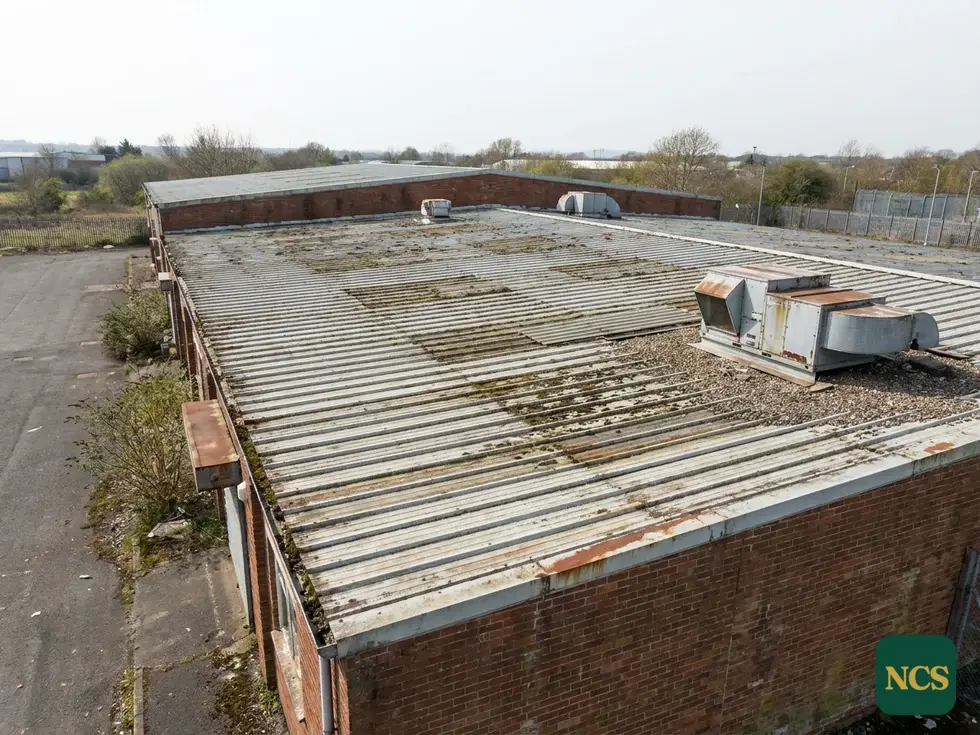
Cladding spraying in Hull addresses both waterproofing and appearance on profiled steel, concrete and composite panels. We clean the surface, treat corrosion at edges and laps, and spray a system matched to the panel type and the building’s exposure. The phrase cladding spraying describes the process exactly: preparation followed by airless application that reaches the awkward corners often missed by other methods.
Older asbestos cement sheets on dockside warehouses and trading estates are common here. Encapsulation stabilises the surface without disturbing the fibres, and the survey confirms whether the sheets remain suitable before any coating is specified. When panels are perforated or the substrate has lost integrity, the report recommends repair or replacement instead.
Industrial roof coating in Hull
Industrial roof coating in Hull is carried out on live sites that cannot stop production. Warehouses, processing plants and freight sheds around the port and along the A63 show the familiar pattern of cut-edge corrosion advancing faster because of salt air and wind-driven rain. We programme the work around shifts and access points, keeping the building watertight every night because nothing is stripped off.
If you manage industrial stock and have spoken with industrial painting contractors, the survey supplies the evidence needed to decide between coating and replacement. Perforated sheets, saturated insulation and failed fixings all lead to the same written conclusion: coating is not appropriate and the alternatives are set out for comparison.
Cut edge corrosion treatment in Hull
Cut edge corrosion treatment in Hull begins at the sheet ends and laps where bare steel is exposed by the original manufacturing process. Salt carried from the Humber keeps these areas damp for longer than inland sites, so rust creeps back under the factory finish and lifts it away. Early treatment cleans the edges, stabilises the corrosion, seals the laps and coats the whole roof in one programme so access costs are paid only once.
The survey opens laps and photographs the extent of rust so the owner sees exactly how far the defect has travelled. When sheets have perforated or the coating is detaching across wide areas, the report states that edge treatment alone cannot restore integrity and replacement of the affected sheets becomes the only sound option.
Asbestos roof encapsulation in Hull
Asbestos roof encapsulation in Hull follows the Control of Asbestos Regulations 2012 and HSE guidance that sound material can often be managed in place. Many dockside warehouses and 1960s and 1970s units still carry profiled asbestos cement sheets that remain structurally adequate yet have become porous and moss-covered. Controlled cleaning removes growth without releasing fibres, after which a purpose-made encapsulant seals the surface and restores water shedding.
The survey checks sheet condition, fixings, flashings and the underside where access allows, then produces a written assessment. Where cracking is widespread, sheets are soft or storm damage has created holes, encapsulation is not offered and the report directs the owner to a licensed removal contractor instead.
Agricultural building coating in Hull
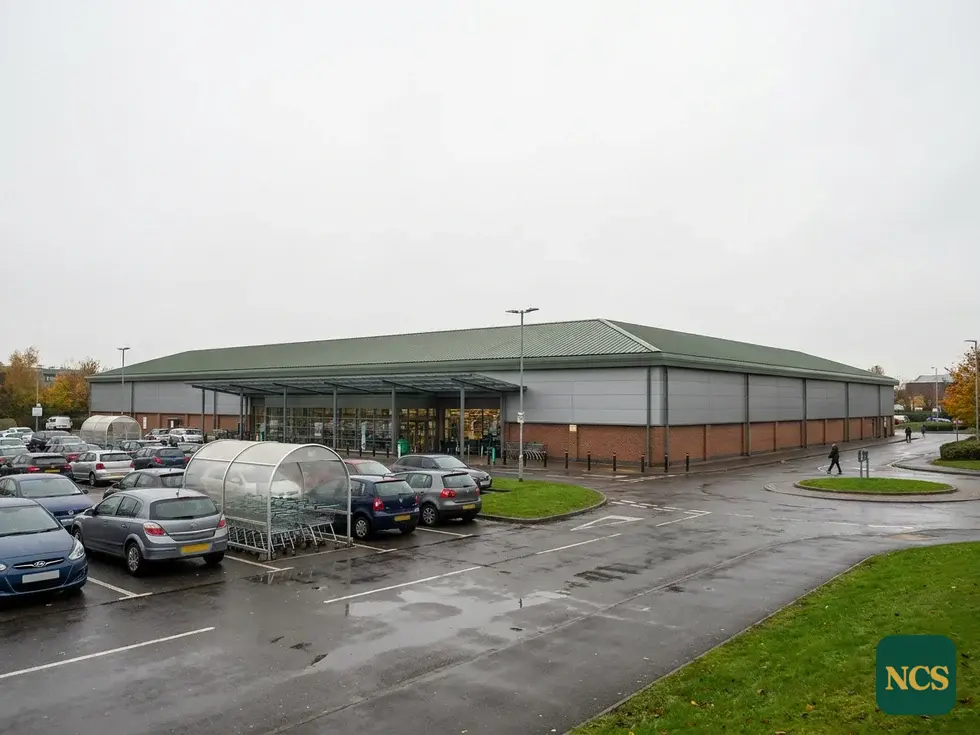
Agricultural building coating in Hull must fit around the arable calendar. Grain stores on the Holderness holdings empty after harvest and fill again before the next season, so the practical window for coating is the quiet period between. The survey records cut-edge corrosion accelerated by coastal air, failed gutters and any internal staining that signals ongoing leaks, then sets out what can be coated, what needs repair first and what has reached the end of its life.
Older fibre-cement barns alongside modern steel stores are assessed sheet by sheet. Sound asbestos cement can be encapsulated after controlled cleaning; cracked or friable sheets require a different contractor. Programmes include weather contingency because coatings need dry substrates and workable temperatures, and the report never averages the problem across an entire yard when two slopes need different treatments.
Coat, repair or replace across Hull
The honest verdict on any Hull building comes only after the survey, not before it. Coating preserves a sound structure under a tired skin, yet it cannot correct structural movement, saturated insulation or sheets that have already perforated. Where those defects appear, the written report records them with photographs and names the next step without recommending work that simply postpones the real decision.
Owners and facilities teams therefore receive a clear scope that separates preparation, repairs and coating into separate lines. That document supports maintenance planning, satisfies insurers and freeholders, and means the choice between coating, repair or replacement rests on evidence gathered from the building itself rather than on a price taken from a photograph.
Booking a coating survey in Hull
Every project begins with a free site survey that carries no obligation. The findings are supplied in writing together with photographs, a clear recommendation and the reasons behind it. Where coating is appropriate the specification names the system, the preparation steps and the way every junction will be detailed. Where it is not, the report explains why and points toward the realistic alternatives.
We cover Hull and the surrounding districts of East Yorkshire on the same visit, taking in sites along the Humber bank and across the East Riding. Contact us with the building details and we will arrange the survey and provide the written report that lets you decide the next step with accurate information in hand.