Milton Keynes holds one of the largest concentrations of distribution and manufacturing floorspace in the country, which means big roofs and long cladding runs. Across estates such as Kingston, Bleak Hall, Tongwell, Blakelands, Fox Milne and Winterhill, the profiled-metal and single-ply roofs that keep the city’s warehouses and factories running all age, corrode and weather, and that is where National Coating Specialists come in.
We survey each building in person before recommending anything, and the sections below set out each of our services for Milton Keynes buildings specifically, so the whole exterior envelope sits in one place. Everything starts with a free site survey and a written, photographed report.
Milton Keynes buildings and how they weather
Milton Keynes was built for movement, so its commercial core is dominated by large-footprint warehouses, distribution centres and manufacturing units, with a band of trade counters and offices around them. These are big, shallow-pitch roofs with long gutter runs and hundreds of fixings, and they weather from the edges in: cut edges, laps, fasteners and gutters go first, long before the main sheets fail.
The city also has an unusual property for its age: almost all of its commercial stock went up within a few decades, so the original finishes are ageing at the same time. Units built through the seventies, eighties and nineties are reaching the point where factory coatings chalk and peel and flat roofs on offices fail at the details. Being inland, the city is spared sea salt, but frost, standing water and moss on the broad roof planes still do steady damage. The right answer is almost never a single product; it is a system chosen after a surveyor has walked the roof and seen where it is actually failing.
Commercial roof coating in Milton Keynes
The bulk of the commercial stock is large, shallow-pitch metal and single-ply roofing on distribution and office buildings. A survey-led commercial roof coating holds back corrosion, seals the details and renews the surface while the building keeps operating, which matters when a distribution centre cannot afford downtime.
A survey visit means standing on the roof, not looking at it on a screen. We inspect sheet condition, laps, fixings, rooflights, gutters and penetrations, take moisture readings where flat areas are involved, and photograph every defect. Where the sheets are sound and the trouble is at the edges and fixings, coating is often the sensible, lower-disruption route; where the deck is wet or panels are holed, we say so.
Commercial wall coating in Milton Keynes
The first generation of the city’s stock is brick-clad frames, rendered offices, concrete panels and grid-square retail parades, now at the point where original finishes have faded, crazed or been patch-repaired too many times to look right, alongside newer business-park units with thin-coat render that has chalked early on exposed elevations. A commercial wall coating can completely reset a building’s appearance and add proper weather protection, but only if the system is matched to what the wall is actually made of.
That is a survey decision, not something picked from a brochure. Our surveyor establishes the substrate and any previous coatings, takes moisture readings, and records every defect that needs attention first: cracked or hollow render, open movement joints, failed sealant, spalled concrete, corroded fixings.
Cladding spraying in Milton Keynes
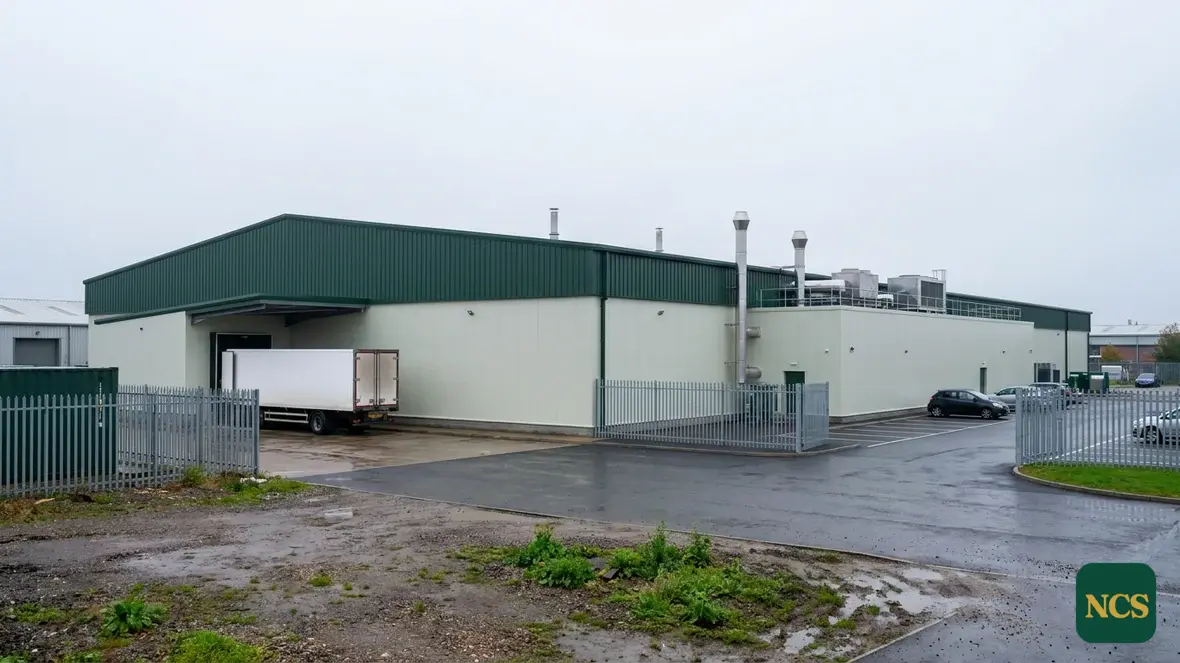
Plenty of the commercial stock that went up alongside the grid roads is now well past the design life of its original factory finish, and many of the big distribution sheds that followed are heading the same way. Cladding spraying renews that finish on site, without the cost, waste or downtime of replacement panels, and a colour change for a rebrand is no harder than a like-for-like refresh.
Live sites are the norm here rather than the exception. Loading yards keep running and offices stay occupied, so elevations are sequenced to keep doors and docks clear, masking protects vehicles and glazing, and working hours are agreed before anyone arrives on site.
Industrial roof coating in Milton Keynes
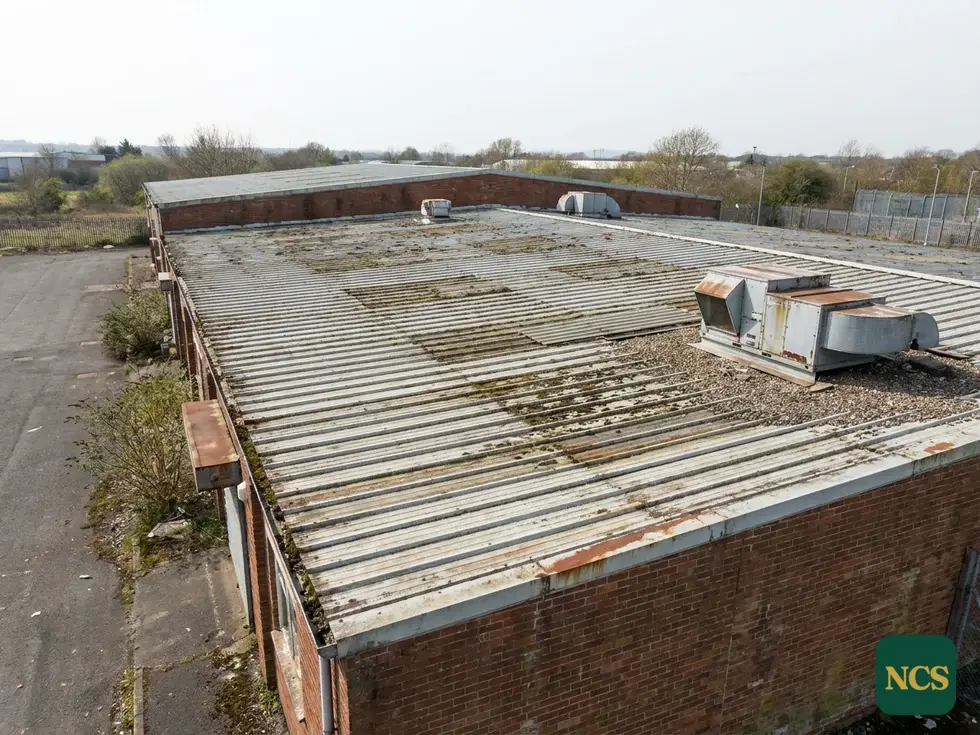
The manufacturing and logistics sheds around Kingston, Blakelands and Tongwell carry heavy-duty roofs that take real punishment from plant, foot traffic and weather. The plastisol and polyester finishes applied to their sheets had a design life far shorter than the buildings they cover, so the finish fails while the steel is usually still structurally sound. The economics of an industrial roof coating rest on that fact: protect the remaining metal now rather than pay to strip and replace thousands of square metres of it later.
Distribution sites here run to the clock, so roof areas are phased to match yard usage and trailer movements, exclusion zones under access points are kept tight and moved daily, and there is no strip-off, so racking and stock are never exposed to the weather. For estates teams running more than one building on the grid, surveys can rank the portfolio so the budget goes to the roofs that need it first.
Cut edge corrosion treatment in Milton Keynes
Profiled steel sheets are cut to length in the factory, and the cut goes right through the galvanising and the colour coating, leaving bare steel at every sheet end and side lap. Water reaches that exposed steel, rust forms and tracks back under the coating, lifting it away as it spreads. The building stock here means long runs of sheet and a huge amount of total edge and lap to protect, and on roofs this size, edge corrosion that starts small can run along a great length of gutter line before anyone on the ground notices.
Caught early, cut edge corrosion treatment is localised and low-disruption: edges cleaned mechanically back to sound metal, then treated, primed and sealed with a flexible system that moves with the sheet through the seasons. Left to run to perforation, the same fault becomes sheet replacement across what may be a very large area.
Asbestos roof encapsulation in Milton Keynes
Milton Keynes is younger than most towns, and that is precisely why asbestos cement is part of its story: the major growth years coincided with the decades when asbestos cement was a standard industrial roofing material, and the same logic applies to the older commercial pockets of Bletchley, Wolverton and Stony Stratford. Any profiled sheet roof from before the ban should be treated as suspect until identified.
Where a survey confirms the sheets are sound, asbestos roof encapsulation seals the roof rather than removing it: controlled cleaning, repairs to fixings and flashings, then an elastomeric coating across the sheet area. The building stays in use, no asbestos waste leaves the site, and the work is documented, which gives your asbestos management plan a dated record of action taken. Where the material is friable, extensively cracked or turns out to be insulation board, removal is the right answer and our report says so without hedging.
Agricultural building coating around Milton Keynes
Step off the grid roads and you are quickly into the serious arable country of north Buckinghamshire and Bedfordshire, scattered with the grain stores, machinery sheds and steel-framed barns that keep a modern farm running. A leaking grain store is a direct hit to the value of a harvest, so when we survey agricultural buildings, the grain stores come first, then the machinery sheds protecting expensive kit.
The arable year has clear windows and hard stops. Stores empty out through late winter and spring, which is the natural time to clean, prepare and coat; the weeks around drilling and harvest are a definite no-go. We plan the programme around that calendar and around the weather a coating needs to cure properly.
Coat, repair or replace across Milton Keynes
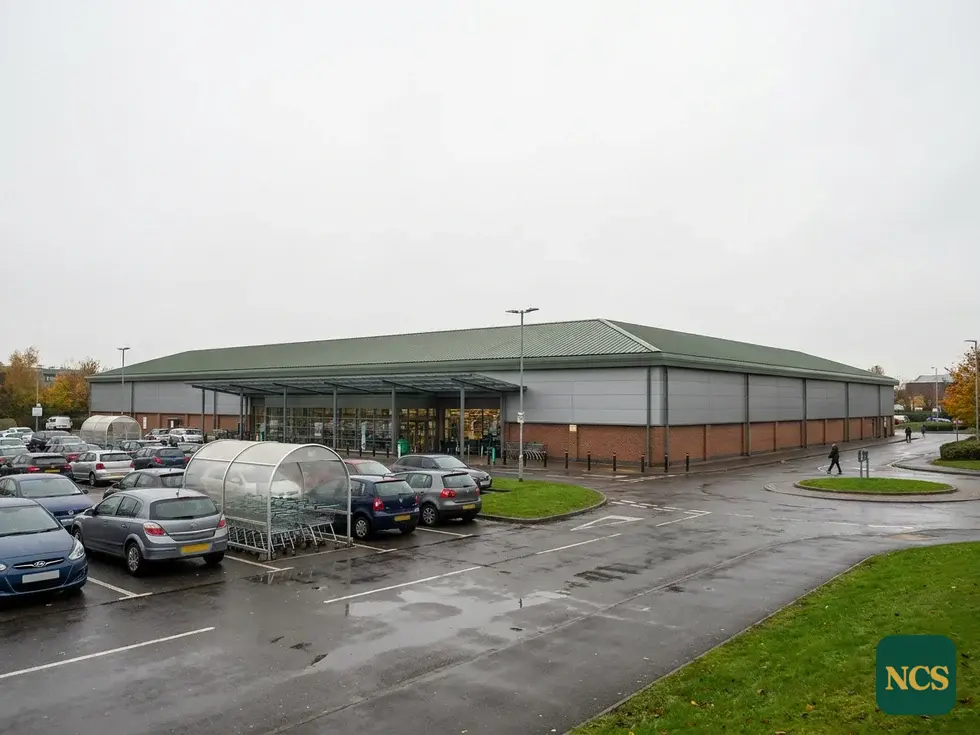
With so much of the city given over to large distribution and manufacturing roofs, the coat, repair or replace decision carries real money, so we take it seriously. Where the sheets are sound and the corrosion is at the edges and fixings, coating with edge treatment is usually the sensible, low-disruption route that keeps the building trading. Where panels are perforated, the insulation is wet or the deck is moving, we say so and set out repair or replacement instead of coating over a problem that will come back. The written report keeps the options separate, with photographs, so a facilities team can take it straight into a budget or a landlord’s schedule of works.
Recent projects near Milton Keynes
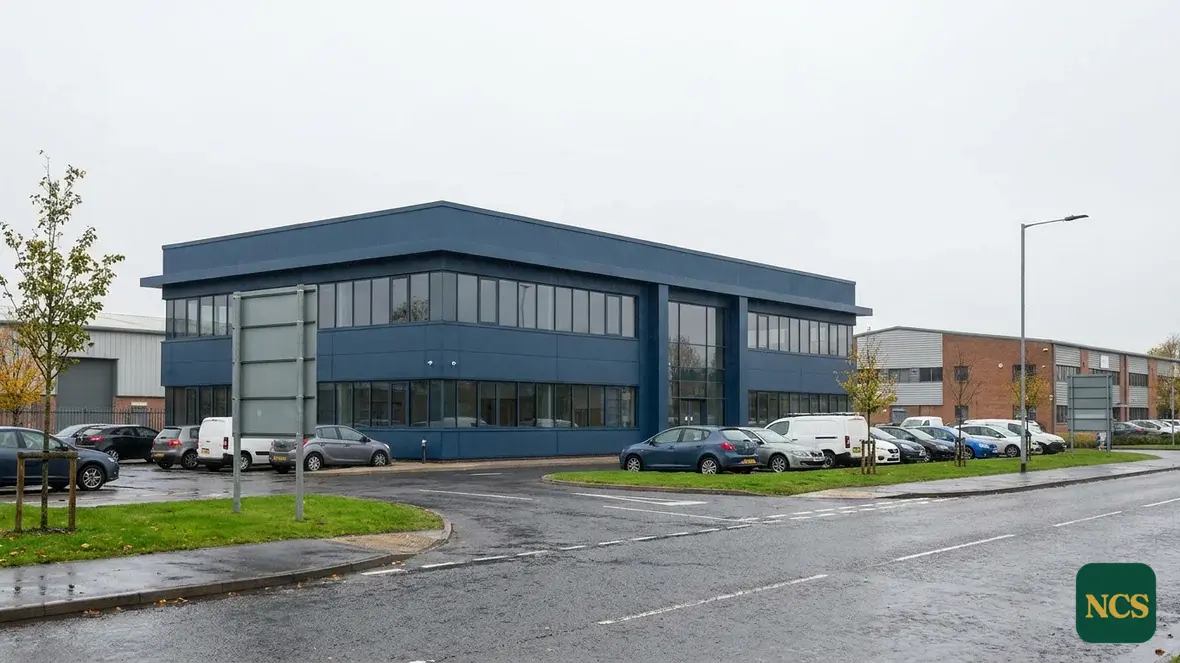
The closest example of this work is on our own doorstep: a faded two-storey office near Milton Keynes recoated in deep sargasso blue over repaired render and panels, with tenants in place throughout. Read the Milton Keynes office wall coating case study for the full record. For the big-shed end of the stock, the distribution warehouse roof coating in Huddersfield shows how a live logistics site is phased.
Booking a coating survey in Milton Keynes
A survey starts with you telling us the building type, the estate or road it sits on, the surface and the problem you can see. Photographs help us judge the right next step before we visit. A surveyor then gets on the roof, checks the laps, gutters, fixings and deck, and writes up what the building actually needs. The survey is free and comes with no obligation.
Milton Keynes is part of our wider Buckinghamshire coverage, so the same team also reaches Newport Pagnell, Bletchley, Wolverton, Buckingham and Aylesbury, and across the county line to Bedford and Northampton. See the Buckinghamshire coating hub for the county picture, or pick the service closest to your building: