Guide
Asbestos Cement Roof: Encapsulate or Remove? An Honest Guide
Accredited, insured and audited



 IPAFPOWERED ACCESS TRAINED£10mPUBLIC LIABILITYIPAFPOWERED ACCESS TRAINED£10mPUBLIC LIABILITY
It is the first question almost every facilities manager and commercial property owner asks when an asbestos cement roof starts leaking: do we coat it, or rip it off? The asbestos roof encapsulate or remove question depends on two things only a survey can settle – the condition of the sheets and the law that governs them. This guide explains both, plainly, so you can sanity-check any recommendation you are given.
Start with the law, not the leak
Under Regulation 4 of the Control of Asbestos Regulations 2012, whoever controls maintenance of a non-domestic building has a duty to manage the asbestos in it: identify it, assess its condition, keep a written record, and manage the risk.
When encapsulation is the right route
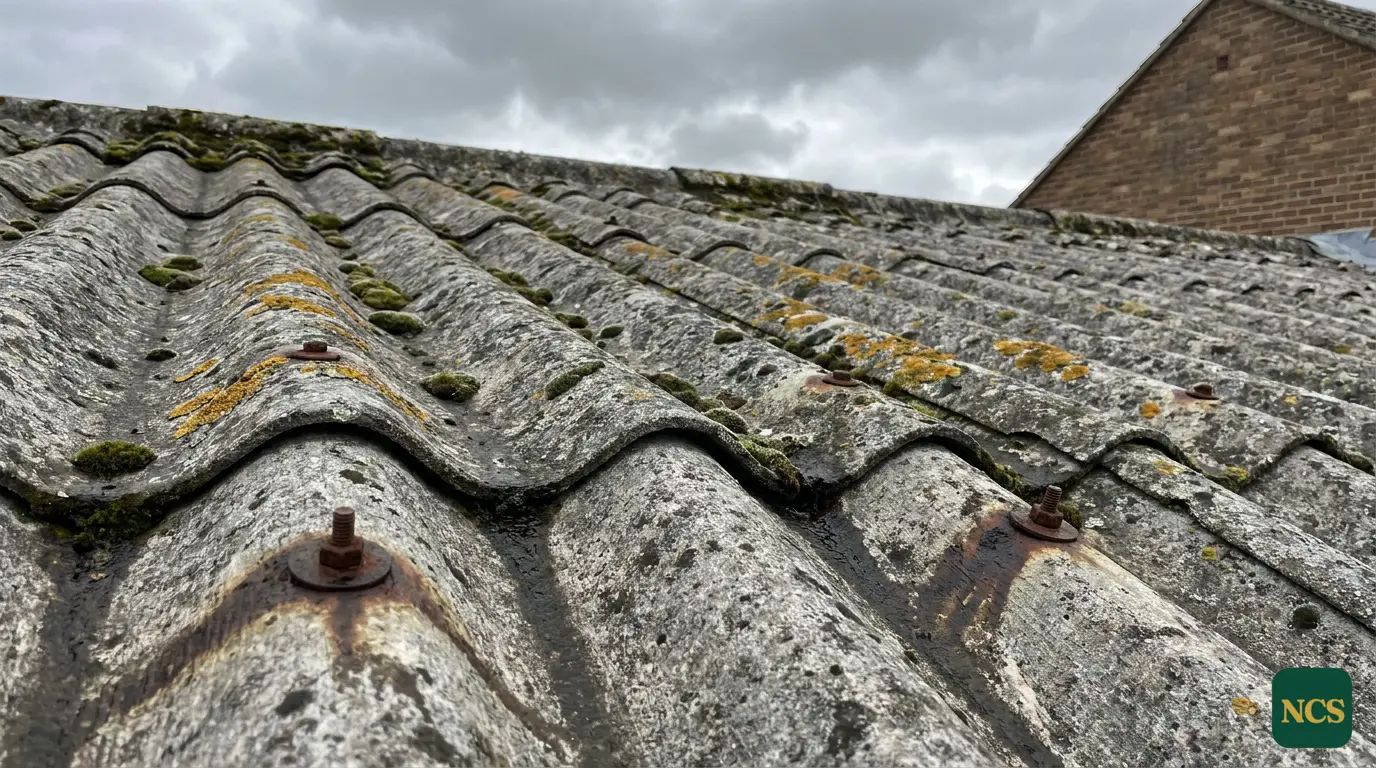
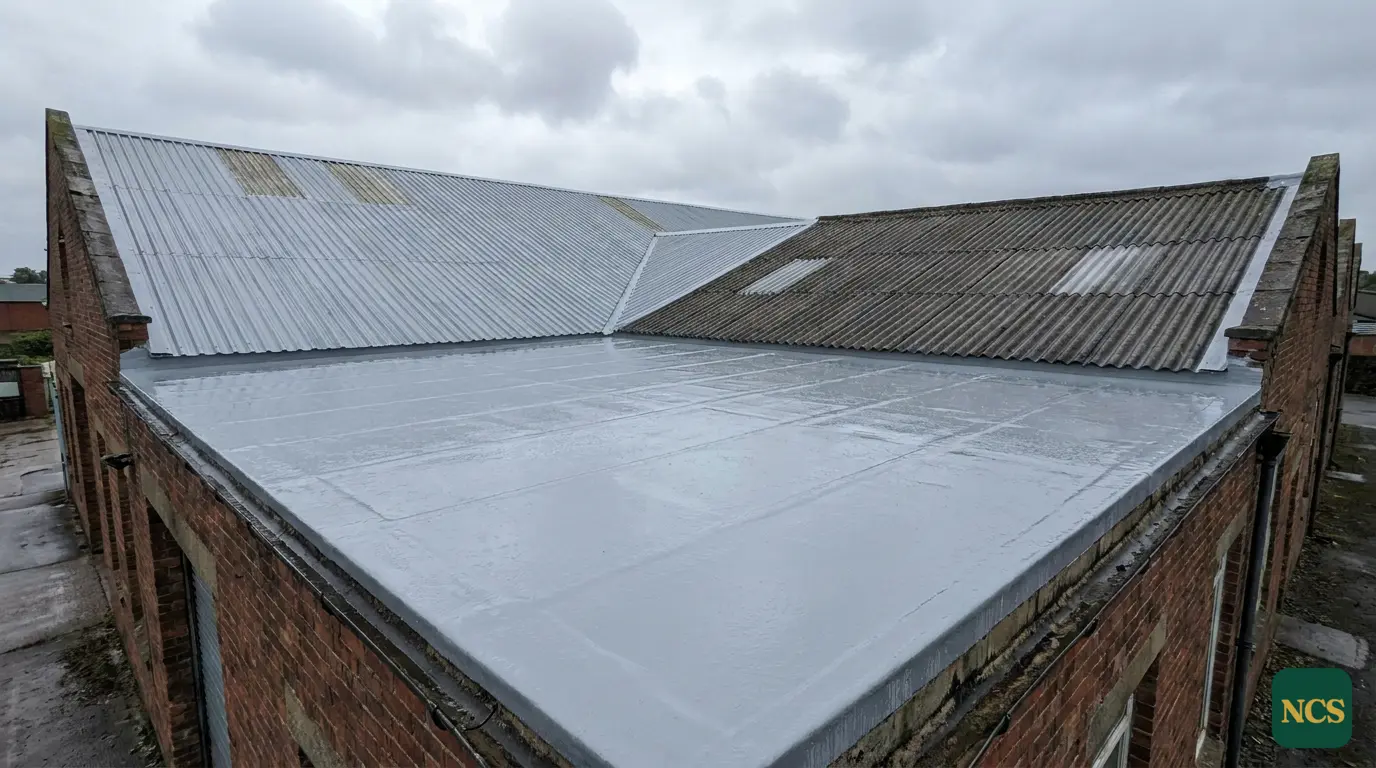
Encapsulation, cleaning, repairing and over-coating the roof with a system designed for asbestos cement, is appropriate when the sheets are structurally sound but weathered. Sealing the roof binds the surface, locks fibres in, restores water-shedding and adds years of service life. Its advantages over a full strip-and-replace are concrete:
- Scope – cleaning, repairing and over-coating the existing roof
- Disruption – the building stays occupied throughout
- Compliance – a recorded, planned measure inside your management plan
- Speed – no licensed removal programme, no long shutdown
Asbestos roof encapsulate or remove: a side-by-side
For a structurally sound asbestos cement roof, the trade-offs usually look like this:
| Factor | Encapsulate | Remove & replace |
|---|---|---|
| Approach | Cleaning, repairing and over-coating | Strip-out, hazardous disposal and a new roof |
| Disruption | Building stays in use | Area often cleared; longer programme |
| Service life added | Many years (system-dependent) | Full new-roof life |
| Compliance | Recorded measure under CAR | Licensed removal where applicable |
| Best when | Sheets sound but weathered | Sheets cracked, holed or friable |
When removal is the only safe answer
A responsible contractor will tell you before a survey, not after a failure. Removal is the right route where:
- Sheets are extensively cracked, holed or broken
- The cement has gone soft and friable after decades of saturation
- Storm damage or structural movement has compromised the roof
- The material is not asbestos cement – insulation board, lagging and sprayed coatings are licensable and must be removed by an HSE-licensed contractor
- The law (CAR) does not force removal – sound asbestos cement can be sealed and managed.
- Encapsulation suits sound-but-weathered roofs; it is faster and less disruptive than replacement.
- Removal is for cracked, friable or non-cement (licensable) material.
- Only a sheet-by-sheet survey can decide which is right for your building.
How a survey settles it
A proper survey settles the asbestos roof encapsulate or remove question by inspecting the roof sheet by sheet, producing a photographic record for your asbestos management plan, and giving a plain written recommendation: encapsulate, repair first, or refer for removal.
Frequently asked questions
Is encapsulating an asbestos roof legal? Yes – sealing sound asbestos cement in place and recording it is a recognised way to meet the duty to manage under CAR.
Do I have to remove asbestos from my building? No – not if it is in good condition and properly managed. Removal is required when the material is damaged, deteriorating or licensable.
How long does encapsulation last? A correctly specified and applied coating can protect a roof for many years.
For more on the work itself, see our asbestos roof encapsulation service, or book a site survey.
Where asbestos cement sheets are involved, our approach follows HSE asbestos guidance.
Published by National Coating Specialists • survey-led commercial, industrial & agricultural coatings across the UK.
Client feedback
What clients say about our work
Get a free site survey, no obligation
One of our surveyors walks the building, photographs the condition and quotes only what it actually needs. Send us the details and we'll come back with a clear, practical route, not a hard sell.
Book your free site surveyCommercial & industrial coating systems we specify
Always specified to the substrate and exposure after a free site survey
Where we work
Sectors and buildings we coat
Survey-led coating, spraying and exterior refurbishment across commercial, industrial and agricultural property in the UK.
Why choose NCS
Why businesses trust National Coating Specialists
Recent work
Recent projects, documented survey to handover
Accredited, insured and audited
IPAFPOWERED ACCESS TRAINED£10mPUBLIC LIABILITYIPAFPOWERED ACCESS TRAINED£10mPUBLIC LIABILITYWhat does your building need?
Pick the surface, then the problem. We will point you to the right service.