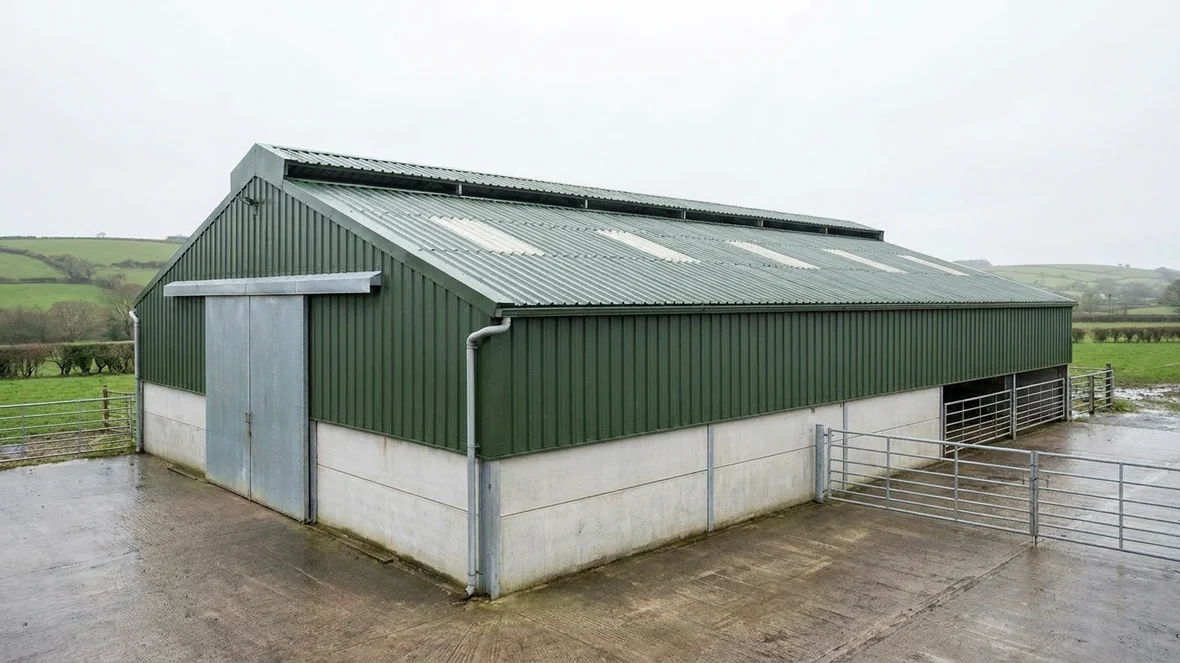
Some jobs start with a leak or a failed panel. This one started with a farmer looking across his collecting yard and deciding the place had stopped looking like the business he runs. The dairy unit, a wide steel portal building with a lean-to span at the rear, in the hills a short drive east of Carmarthen, was structurally fine. The cladding was not. The old green finish on the roof and walls had chalked to a patchy grey, rust was bleeding from the fixings, and moss had settled along the sheet laps. On a dairy, appearance is not vanity. Milk buyers visit, vets come out from Carmarthen, inspectors visit, and a building that looks run down invites questions a well run herd does not deserve. The farm wanted the whole envelope washed, repaired and spray painted back to one colour.
A tired dairy unit in the Carmarthenshire hills
West Wales is dairy country, and Carmarthenshire holds some of the best grassland in Britain. The buildings that serve Carmarthenshire’s herds work hard for it. This unit houses cubicles for the milking herd through the winter, with a feed passage down one flank, a concrete collecting yard at the gable, and steel gates channelling cows towards the parlour twice a day. The structure is a classic steel portal frame with a raised ventilated ridge, a lean-to span over the loafing area, box profile steel cladding on the upper walls, translucent rooflights down the slope, and concrete panels taking the knocks at cow height.
Plastisol coated steel cladding does not fail all at once. The factory finish chalks, then fades, then the cut edges and fixings start to show rust, and the sheet surface loses the skin that was doing the protecting. At that point the owner has two honest options: reclad, or clean the sheets back and coat them properly. Recladding a building this size means stripping and refitting the whole roof and every elevation, with the herd decanted and the unit out of use. Coating means the same sheets, kept in place and resealed under a sprayed finish, with the farm working around us for a fraction of the disruption. The farmer had already replaced a handful of translucent rooflights the previous winter; the rest of the envelope was sound, so coating was the obvious call.
There was a second, quieter reason to act now. The unit sits in sight of the lane, and the farm takes calves and silage contracts from neighbouring Carmarthenshire holdings; a business that sells to its neighbours is always being looked at, whether it likes it or not. A building that advertises decline undersells everything happening inside it, and this one had a lot happening inside it.
The colour conversation was short. This is a green landscape, the neighbouring sheds carry green sheets, and the farm wanted the unit to sit quietly in the valley rather than shout across it. Moorland Green, a deep, muted green from our standard palette, was chosen for the roof and the upper wall cladding, with the gable door refinished in grey.
What the survey found on the Carmarthenshire dairy
Our surveyor walked the unit with the farmer between morning milking and the feed round. From the MEWP we mapped the cladding on every elevation: chalking everywhere, rust tracking from fixings and cut edges on the weather side, two sheets with impact dents worth noting but not replacing, and gutters that needed clearing before they could be masked. Nothing structural, nothing beyond coating.
Programming a dairy job, in Carmarthenshire or anywhere else, is about the herd, not the paint. The cows were out at grass, which took the pressure off the cubicle housing, but the collecting yard and parlour run stayed in use every morning and evening. We agreed working hours that kept our equipment, hoses and access platform clear of the cow tracks before afternoon gathering, and the washing and spraying were sequenced elevation by elevation so the yard side was never blocked on both flanks at once. Working around farm operations is the job on a unit like this; a coating crew that makes a dairy farmer change his milking times has already failed.
Weather was the wildcard, as it always is in Carmarthenshire. A sprayed finish needs dry sheets and a dry forecast window, and West Wales does not hand those out generously, so the programme carried slack days and the crew used them. Two mornings were lost to rain that blew in off Carmarthen Bay; both were spent on repairs, masking checks and gutter work under the dry side of the building, so the finish coats never went on to a damp surface and the overall handover date never moved. Planning for Welsh rain is not pessimism, it is competence.
The work, stage by stage
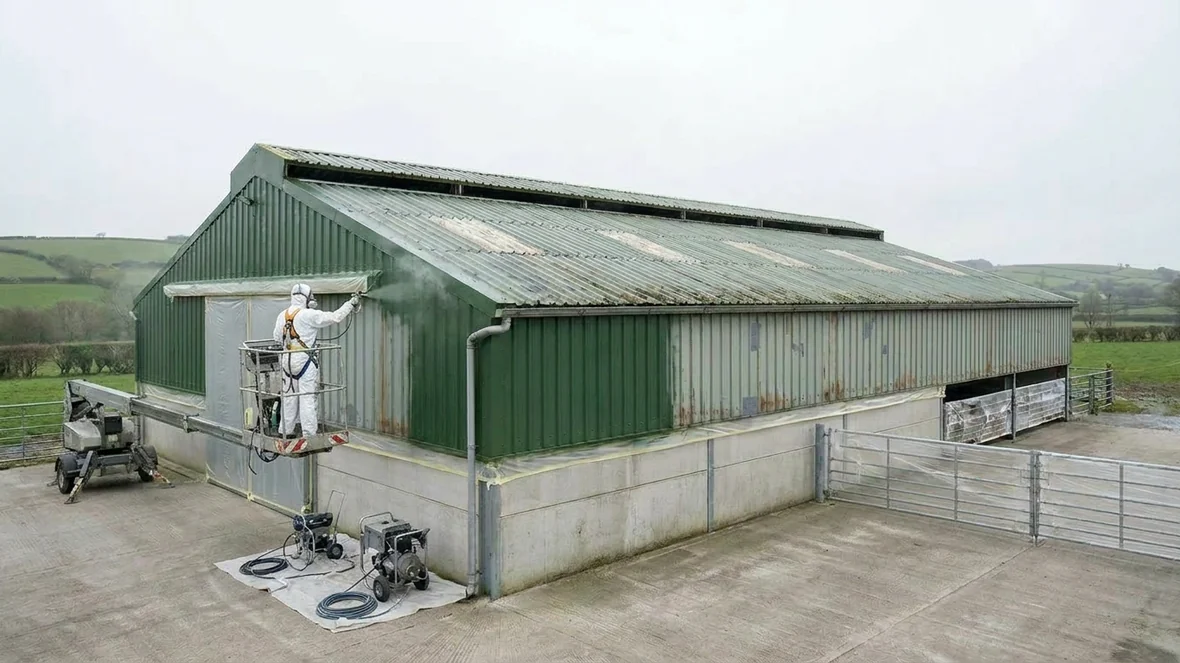
The sequence below follows the same corner of the dairy unit from the first walk round to handover, from chalked and rust streaked cladding to a single unbroken Moorland Green.
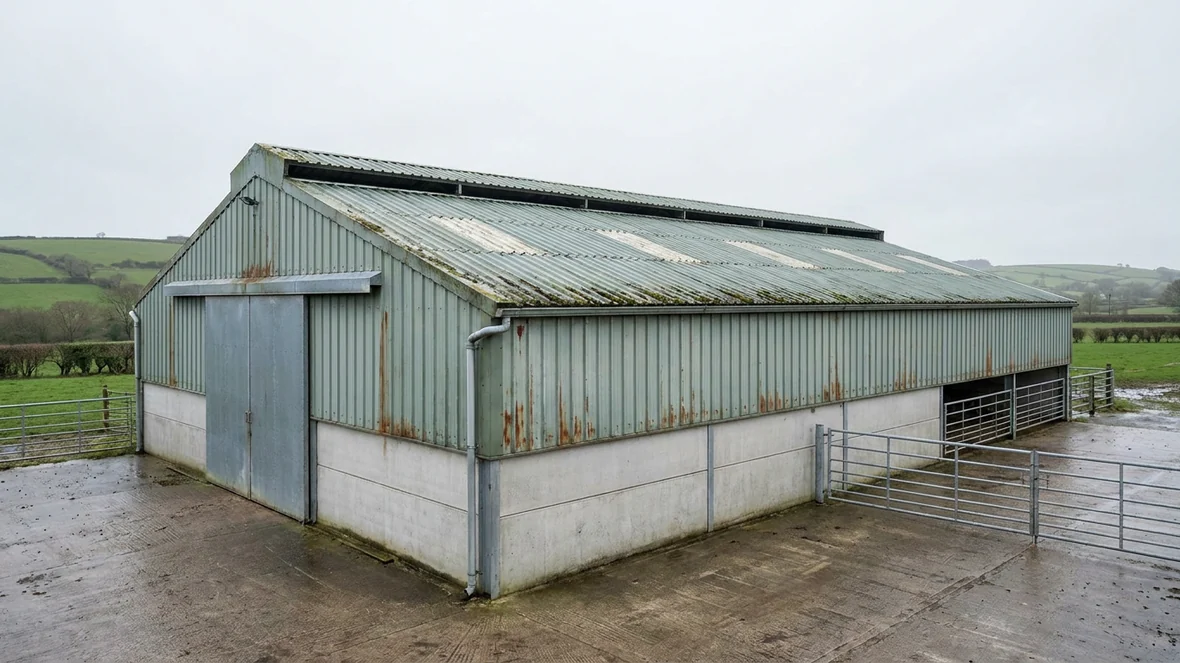
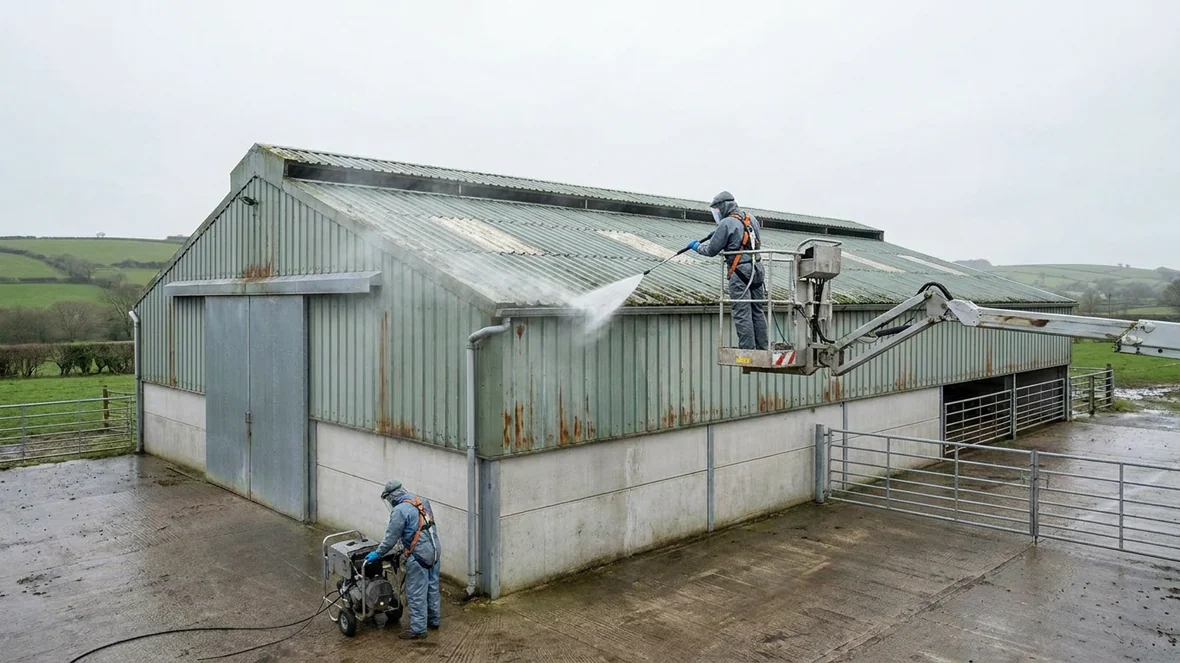
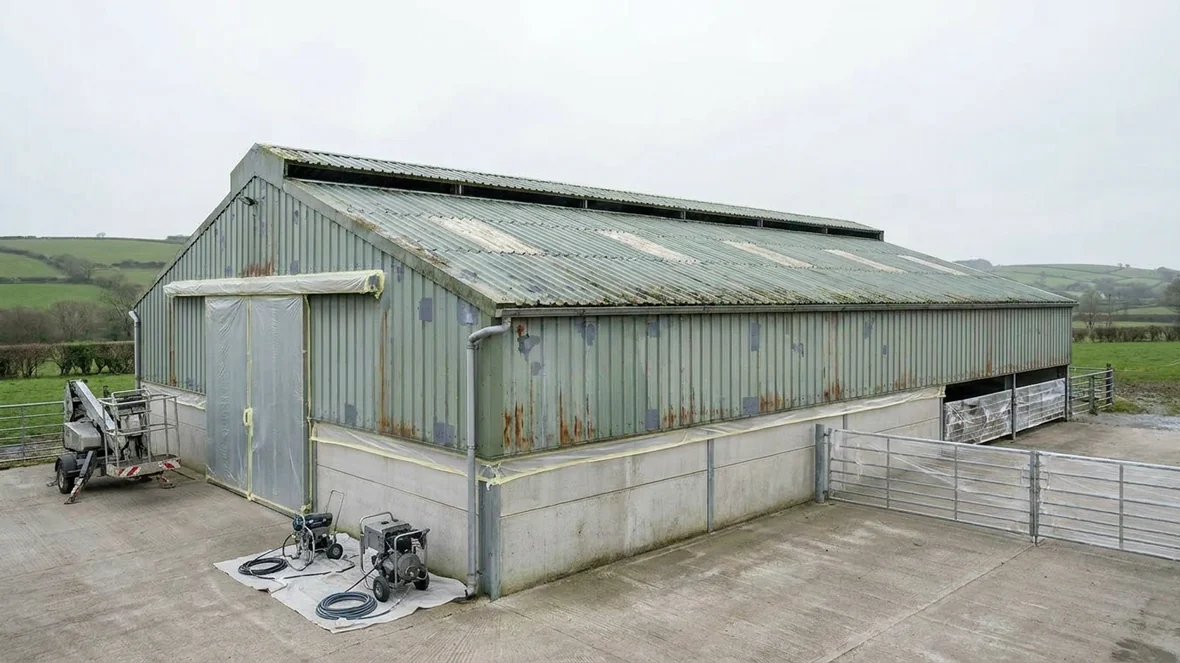

The finished dairy unit, back to work in Carmarthenshire
Behind those six frames sits a lot of unglamorous discipline. The deep clean stripped the chalk, the moss and every loose remnant of the old finish, and the washed sheets were left to dry while the gutters were cleared and checked. Masking on a livestock building has one extra rule: nothing we leave on the building can end up somewhere a cow can reach it, so every length of tape and film was logged on and off the unit, and the galvanised gates nearest the work were wrapped rather than moved, because they were still funnelling cows to the parlour every morning. Rusting fixings were replaced and capped, treated rust spots and both dented sheets were spot primed, and the cut edges were sealed ready for the finish coats. Then the spray painting itself: roof first, slope by slope with a live wet edge, cutting cleanly around the rooflights, then the walls in top to bottom passes along the corrugations, two coats building an even satin film.
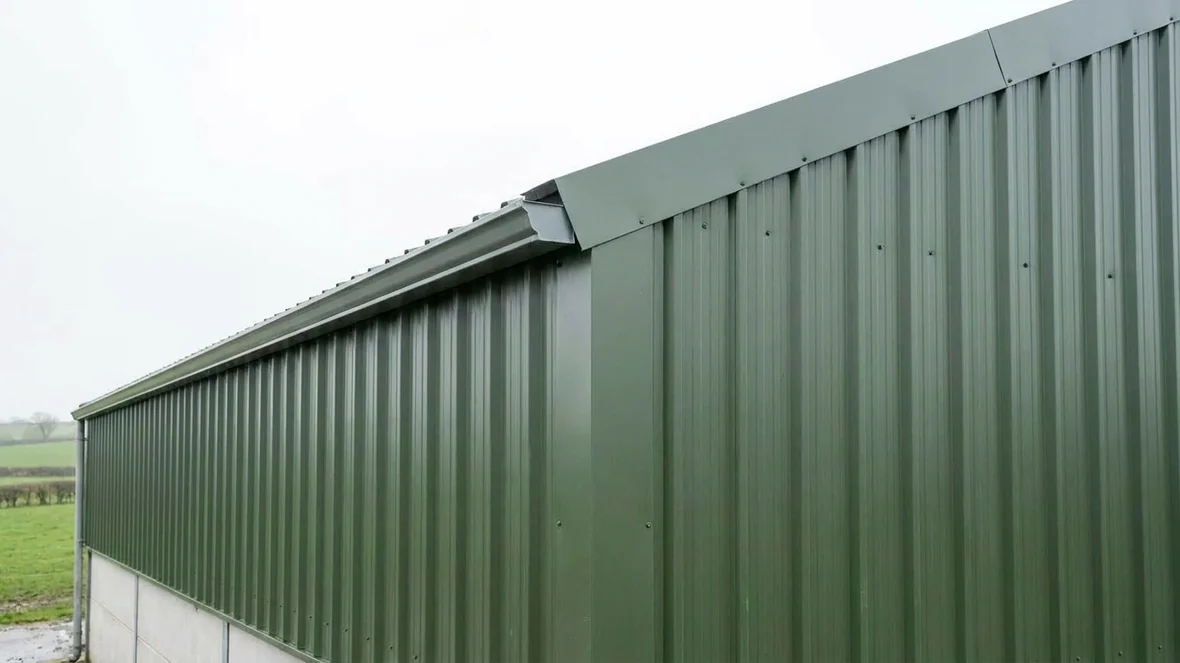
The finished building is the same building, which is the quiet trick of coating done properly. Same sheets, same frame, same gates and yard, but the roof and walls are now one unbroken satin green from ridge to concrete panel, the fixings are sealed, the cut edges are protected, and the rust staining is gone rather than painted over. Moorland Green is an easy colour to get wrong on a small swatch and a hard one to fault on a full building: deep enough to hide every trace of the patchy old finish, grey enough not to look municipal, and in a wet Carmarthenshire valley it does exactly what the farmer wanted, the unit reads as part of the landscape again. The herd’s routine never changed through the job, and the unit was handed back clean, unmasked and dry. Project completed in early summer, with the cows still out at grass.
Farm building painting across Carmarthenshire and West Wales
Carmarthenshire’s dairies, like the county’s beef and sheep holdings, run on steel portal buildings that are decades old and nowhere near done. Any farmer who stands in the mart at Carmarthen on a Monday knows exactly the buildings we mean. Our farm building painters coat them across the county, from the farms around Carmarthen itself to the dairy country towards Llanelli, the Tywi valley holdings near Llandeilo, and west towards Whitland and the Pembrokeshire border. The same crews cover Ceredigion and Swansea’s rural fringe, and our teams work UK wide, with regular agricultural work over the border through Bristol and the south west.
If you farm in Carmarthenshire and one of your buildings has reached the chalked and streaked stage this dairy unit was at, a survey will tell you honestly whether coating is the right answer. Our agricultural building coating service covers roofs, wall cladding and the repairs in between, in any colour on our palette. You can read a related job on our case study of an asbestos cement grain store roof near Taunton. To book a survey anywhere in Wales or the wider UK, contact us and we will arrange a visit that fits around milking, not the other way round.