The duty to manage asbestos on farms
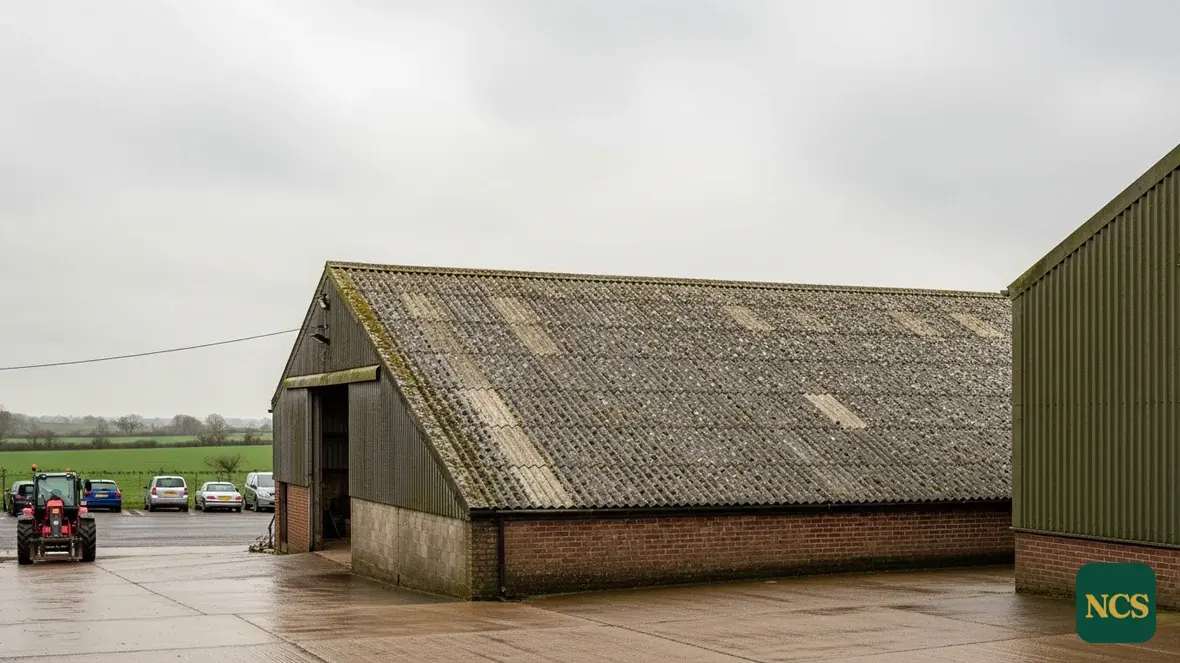
The Control of Asbestos Regulations 2012 places clear responsibilities on those managing farm buildings containing asbestos materials. For working farms, this typically means the owner, tenant or estate manager must identify asbestos presence, assess its condition, and take appropriate action to prevent exposure. Agricultural buildings often contain asbestos cement sheets in roofs and walls, installed before the material was banned in 1999. These require proper management even if currently in good condition.
Farm operators must maintain an asbestos register and implement a management plan for any identified materials. The plan should account for specific agricultural risks like ammonia exposure in livestock buildings, vibration from machinery, and weathering in exposed locations. Regular inspections are needed to monitor deterioration, with particular attention to areas subject to impact or abrasion during normal farm operations.
Asbestos cement in farm building stock
Asbestos cement features heavily in post-war British agricultural construction, particularly in roofing for livestock housing, grain stores and machinery sheds. The material was favoured for its durability, fire resistance and low maintenance, making it common across dairy units, cattle yards and poultry houses. Most farm asbestos cement takes the form of corrugated or flat sheets, often painted over in subsequent decades.
Typical failure modes in agricultural settings include mechanical damage from equipment, degradation from prolonged ammonia exposure in livestock buildings, and weathering at sheet edges and fixings. The material becomes higher risk when friable or when farm operations require work that could disturb it, such as installing new feeding systems or modifying buildings. Encapsulation provides a compliant solution that avoids full removal and keeps buildings operational.
Owners of farm buildings ask for asbestos roof coating, sealing or painting, and it is the same careful job: survey, controls, then a system the sheets can take.
How encapsulation works on farm buildings
Encapsulation treats asbestos cement roofs by applying a protective coating system that binds and seals the material in place. For farm buildings, the process begins with thorough cleaning to remove surface contaminants like ammonia salts, dust and organic growth. Specialist coatings are then applied to penetrate the substrate and create a durable, weatherproof barrier that prevents fibre release.
The method causes minimal disruption to farm operations, with most work completed from outside the building. Temporary measures protect livestock during application, with careful scheduling around milking times and feeding routines. The resulting surface withstands agricultural conditions including temperature fluctuations, humidity and chemical exposure, while maintaining the roof’s structural integrity. Encapsulation eliminates the need for costly removal and allows continued use of essential farm buildings.
When removal is the right answer instead
Encapsulation is not always the solution for asbestos cement roofs on farms. Complete removal becomes necessary when the roof sheets are severely damaged, with multiple cracks or holes that compromise structural integrity. It is also the only option when planning future building modifications that would disturb the encapsulated surface, such as installing new roof lights or ventilation systems. Farms undergoing significant redevelopment often opt for full removal to eliminate all asbestos concerns before rebuilding.
Certain high-risk areas may warrant removal even if the sheets appear intact. Roofs above livestock feeding areas or grain storage bins, where constant vibration or impact could occur, often justify the extra cost and disruption of removal. Similarly, dairy parlour roofs subject to daily pressure washing regimes may be better served by replacement rather than encapsulation, as the long-term integrity of the coating cannot be guaranteed under such conditions.
- Sheets with extensive cracking or broken edges
- Buildings scheduled for major structural changes
- Roofs above high-vibration machinery or livestock pens
- Areas requiring frequent high-pressure washing
- Sites where future maintenance access would damage encapsulation
Planning around farm operations
The agricultural calendar dictates when encapsulation work can realistically occur. Spring lambing and autumn harvest periods are absolute no-go zones for most farms, while dairy units have fixed milking schedules that cannot accommodate work noise or access restrictions. A competent contractor will first establish the farm’s key operational windows and seasonal pressures before proposing any dates.
Practical considerations extend beyond timing. Livestock must remain undisturbed, requiring careful segregation of working areas from animal housing. Grain stores need protection from dust ingress during application, while milking parlours demand strict hygiene controls. Narrow farmyard access often limits equipment choices, favouring compact spray systems over bulky machinery. The best contractors adapt their methods to these constraints rather than imposing standard commercial approaches.
Why the survey comes first
Every farm building presents unique challenges that only a physical inspection can reveal. The survey identifies not just the asbestos condition but also the building’s structural peculiarities, access limitations and operational sensitivities. It assesses how roof sheets are fastened – crucial for encapsulation integrity – and checks for hidden damage beneath surface dirt or lichen growth.
This groundwork allows the contractor to design a solution that fits both the building and the working farm. It determines whether standard encapsulation methods will suffice or if custom approaches are needed for particular roof sections. Without this survey, even the most carefully planned project risks encountering unforeseen complications that disrupt farm operations or compromise the coating’s performance.
Getting a straight answer
Our asbestos roof encapsulation page covers the system side in more depth, and the agricultural buildings page shows how we work across the sector. The practical next step is a free site survey, which costs nothing and commits you to nothing.
See a recent example of this work in our case study: Asbestos Cement Roof Encapsulation on a Grain Store near Taunton, Somerset.