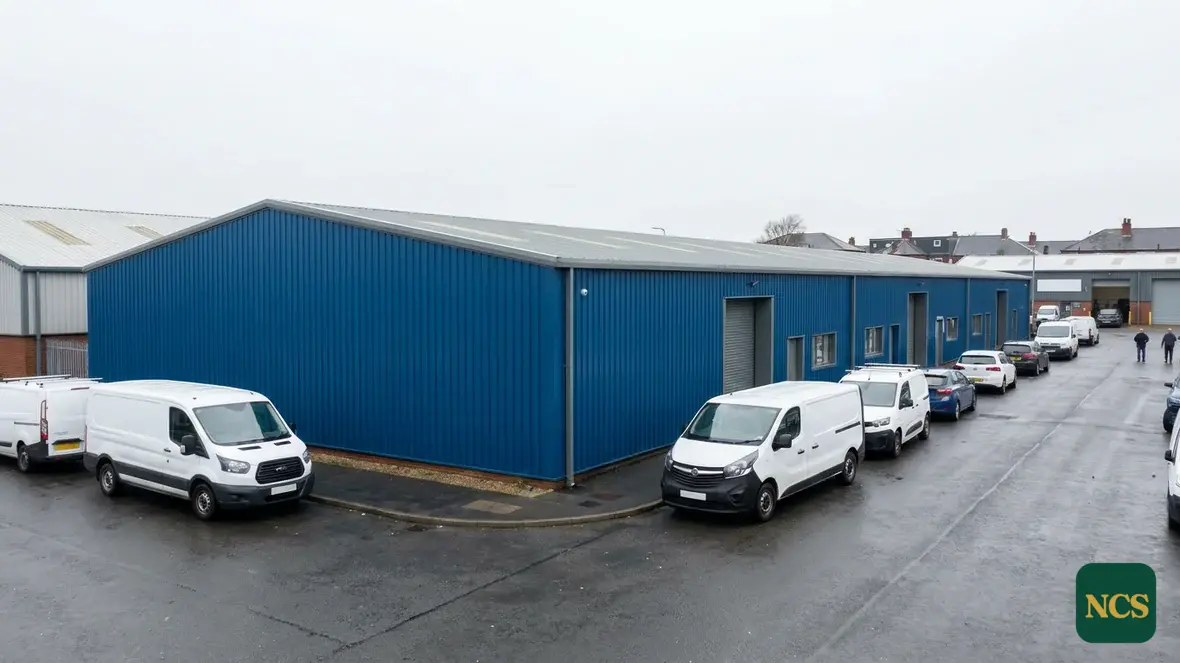
Commercial cladding spraying lets you refurbish tired industrial, agricultural and commercial cladding on site, restoring colour and weather protection without the cost, waste and downtime of stripping out and replacing the panels.
Extend Cladding LifespanProfessional coating application protects your building's exterior from weathering and corrosion, deferring the high cost of replacement.
Improve Your Building's AppearanceA uniform, factory-quality finish enhances your commercial property's image and can be tinted to match your corporate branding.
Minimise Business DisruptionOur on-site spraying services are planned around your operational needs to ensure a fast and efficient project from start to finish.
Cost-Effective RefurbishmentSpraying is a significantly more affordable alternative to full panel replacement, providing long-lasting results for a fraction of the capital expenditure.
What this service is for
Retail, office, warehouse and light industrial cladding
Cleaner brand presentation for occupied and let buildings
Connected to wall, roof and cut-edge services
Commercial cladding spraying problems this page covers
Retail and office elevationsFront-facing cladding where appearance affects visitors, tenants and brand perception.
Estate-wide refreshesMultiple units or elevations that need consistent colour and sequencing.
Letting and sale readinessCommercial property that needs exterior improvement before marketing, occupation or handover.
Patchy old finishesPrevious repairs, fading and mismatched panels that need a cleaner specification.
Survey checks before specification
Existing coating stability and panel condition
Colour matching, RAL selection and finish expectations
Tenant access, public areas and masking needs
Edges, fixings and corrosion treatment before topcoat
Specification
How commercial cladding spraying is planned
Commercial cladding spraying needs to protect the asset value and the day-to-day use of the building. The plan must account for tenants, entrances, signage and public-facing areas.
For larger sites, the specification should identify elevation priorities, colour control and phasing so the work improves the whole estate rather than creating isolated fresh patches.
Specification
Coating systems and approach
Plastisol & PVF2 Coated SteelWe specify high-performance coating systems designed to bond securely to aged, weathered or factory-finished metal cladding panels.
Aluminium & Composite PanelsOur process includes thorough surface preparation and the use of specialist primers to ensure excellent adhesion on all types of metal composites.
Agricultural SheetingWe utilise durable, corrosion-resistant coatings suitable for the demanding environments found on farm buildings and other agricultural structures.
Gallery
Coating work in detail
Industrial unit in Manchester after full cladding refurbishment.Retail park elevations being prepared for on-site spraying.A smooth, consistent finish on agricultural building panels.
How it works
Our survey-led process
1SurveySubstrate, access, exposure, corrosion and repairs are inspected first.
2ReportA written condition report on what the building actually needs.
3SpecifyCoat, repair and replace options separated clearly.
4PlanWorks shaped around safety, weather and site continuity.
5ProtectThe right system applied to extend life and restore the finish.
Accredited, insured & manufacturer-approved
Where we work
Sectors and buildings we coat
Survey-led coating, spraying and exterior refurbishment across commercial, industrial and agricultural property in England.
Free, Detailed Site SurveysEvery project begins with a thorough on-site assessment to provide a clear and honest appraisal of your cladding's condition.
Repair, Coat or Replace AdviceWe provide honest recommendations on whether spraying, targeted repairs, or panel replacement offers the best long-term value for you.
England-Wide ServiceOur teams are equipped to manage commercial, industrial and agricultural coating projects at sites located across England.
Planning the work around a trading business
Most commercial buildings cannot simply close for redecoration, so the programme is planned around how your site actually operates. Before any work starts we agree the sequence with your site or facilities contact, working elevation by elevation so that only one part of the building is affected at a time.
Phased, elevation-by-elevation working so trading and production continue throughout
Entrances, loading bays and customer-facing areas scheduled for quieter periods, early starts or weekends where needed
Careful masking and overspray control around parked vehicles, stock, signage and neighbouring units
Fire exits, escape routes and delivery access kept clear at all times
Risk assessments and method statements supplied in advance, with operatives following your site induction rules
You get a single point of contact for the duration of the work, and the plan for each stage is communicated before it begins, so your team always knows which areas are in normal use and which are temporarily handed over to us. If the building is multi-let, we can also coordinate timings with individual tenants so each unit knows in advance when its frontage will be masked and sprayed.
How long does commercial cladding spraying take?
There is no single answer, because the duration is driven by the building and the specification rather than a standard rate. The honest position is that the timescale is confirmed after the survey, once we know exactly what each elevation needs.
The main factors that move a programme are the area of cladding to be coated, the amount of preparation required (heavily chalked Plastisol or panels with cut edge corrosion need more work before any colour goes on), the height of the building and the access method it demands, the complexity of masking around glazing, signage and services, the number of colours in the scheme, and the drying conditions on site. Two units of a similar size can need quite different programmes for these reasons.
What matters for most businesses is not the calendar length but the disruption, and because spraying is carried out externally with the building in use, even a longer programme rarely interrupts trading. The survey report sets out the expected sequence and timescale for your specific building before you commit to anything.
Common questions
Commercial Cladding Spraying Across the UK FAQs
Is it cheaper to paint or replace cladding?
In most cases spraying sound cladding on site costs significantly less than a full re-clad, because you avoid stripping, disposal and weeks of working at height. It also keeps the building in use. The honest exception is cladding that is perforated, structurally failing or beyond economic repair, where replacement can be better long-term value. We confirm which applies at the free survey before you commit.
Can you spray paint plastisol cladding?
Yes. Faded, chalking plastisol coated steel is one of the most common cladding finishes we refurbish. The key is correct preparation: the chalky surface layer is cleaned back, the panels are washed down, any cut-edge corrosion is treated, and a suitable primer is applied before the topcoat. Skipping that preparation is why some sprayed cladding fails early, so we confirm the existing finish at survey and specify the system to match.
How long does cladding paint last?
The lifespan of a sprayed cladding finish depends on the coating system specified, the condition and preparation of the panels, and the building's exposure. A well prepared and correctly specified system can give many years of service before it needs attention. We set out the expected performance and any manufacturer guarantee for your specific system in the written quotation after the survey, rather than quote a blanket figure.
Do you provide a free survey?
Yes. A survey-first process helps identify the right coating, repair or spraying route before any quotation is issued.
Do you work on live commercial sites?
Yes. The site is built around commercial, industrial and agricultural premises where access, safety, programme and business continuity matter.
Can coatings avoid full replacement?
Sometimes. Coatings can be a strong refurbishment route where the substrate is suitable, but the survey decides whether repair, coating or replacement is appropriate.
Do you publish fixed prices?
No. Access, substrate condition, preparation, repairs and specification change the cost too much for responsible fixed-price claims without a survey.
A real surveyor inspects the building, photographs the condition and quotes only what it needs. Send the details and we will come back with a clear, practical route forward.