Industrial wall coatings protect the exterior of UK factories, warehouses and trading units by sealing the building envelope against weather, damp and surface decay, and at National Coating Specialists every project starts with a free, survey-led assessment rather than a guess.
Protect Your Building ExteriorOur coatings are designed to protect industrial buildings from weather damage, extending the lifespan of the underlying wall surface.
Improve Your Site's AppearanceA professional coating application revitalises the look of your premises, presenting a clean and well-maintained image to visitors and staff.
Minimise Operational DisruptionWe plan projects carefully to ensure our work is completed efficiently and on schedule, with minimal interruption to your daily operations.
Reduce Long Term MaintenanceDurable coating systems can reduce the need for frequent repainting and repairs, lowering future maintenance costs for your property.
What this service is for
Factories, workshops, warehouses and industrial estates
Suitable preparation before coating is specified
Internal linking to cladding, roof and corrosion treatments for full-envelope planning
Industrial wall coating problems this page covers
Factory wall wearIndustrial walls exposed to dirt, impact, weather and operational grime that need a stronger refurbishment route.
Warehouse presentationLarge elevations on units and estates where tired walls make a site look neglected.
Hard-to-access areasWall areas around plant, yards, loading bays and service routes where access planning matters.
Mixed substratesSites with cladding, masonry, render and concrete that need joined-up coating advice.
Survey checks before specification
Substrate mix across the elevation
Movement cracks, failed joints and impact damage
Contamination from operations, yards or traffic
Programme constraints around working industrial sites
Specification
How industrial wall coating work is approached
Industrial wall coating needs to be planned around the building while it is being used. Access, safety, contamination and drying windows are just as important as the coating product itself.
The right recommendation may combine wall coating with cladding spraying, render repairs, damp-focused preparation or roof edge work so the building envelope is treated as one system.
Specification
Coating systems and approach
Coatings for Metal CladdingWe specify appropriate coating systems for metal-clad buildings, addressing issues such as fading, weather damage or corrosion.
Masonry & Concrete CoatingsFor brick, concrete or rendered walls, we can apply weather-resistant and breathable coatings to protect the surface from moisture ingress.
Protective Steelwork CoatingsWe prepare and apply protective coatings to structural steel to guard against corrosion, often as part of a larger industrial wall coating project.
Gallery
Coating work in detail
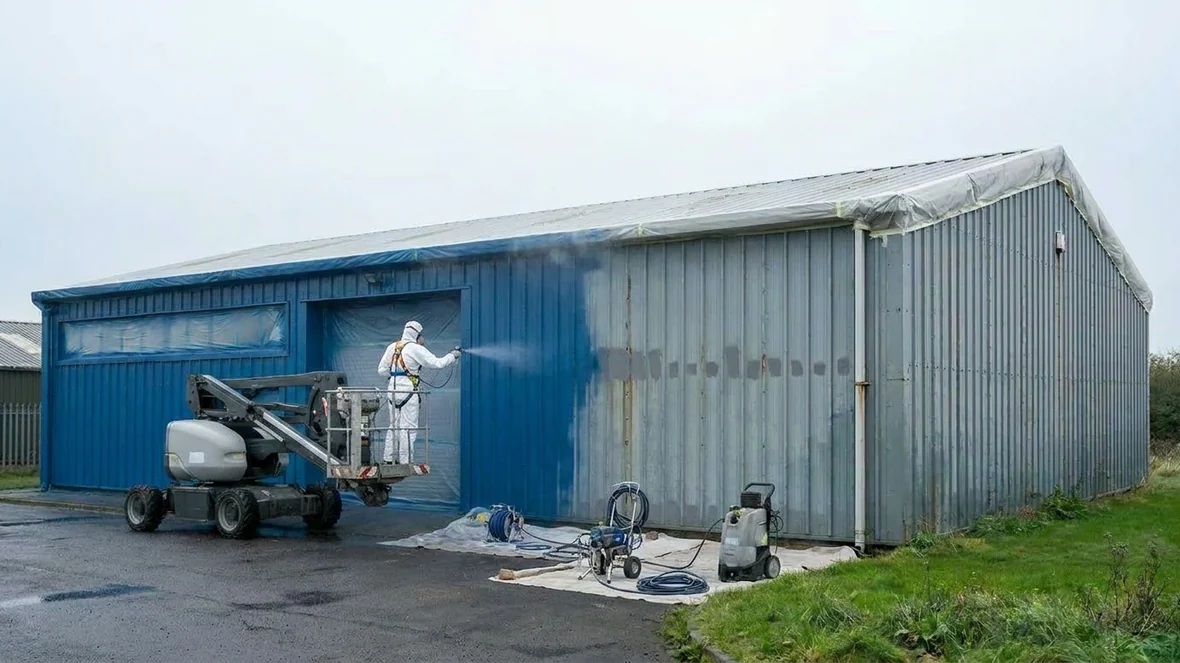
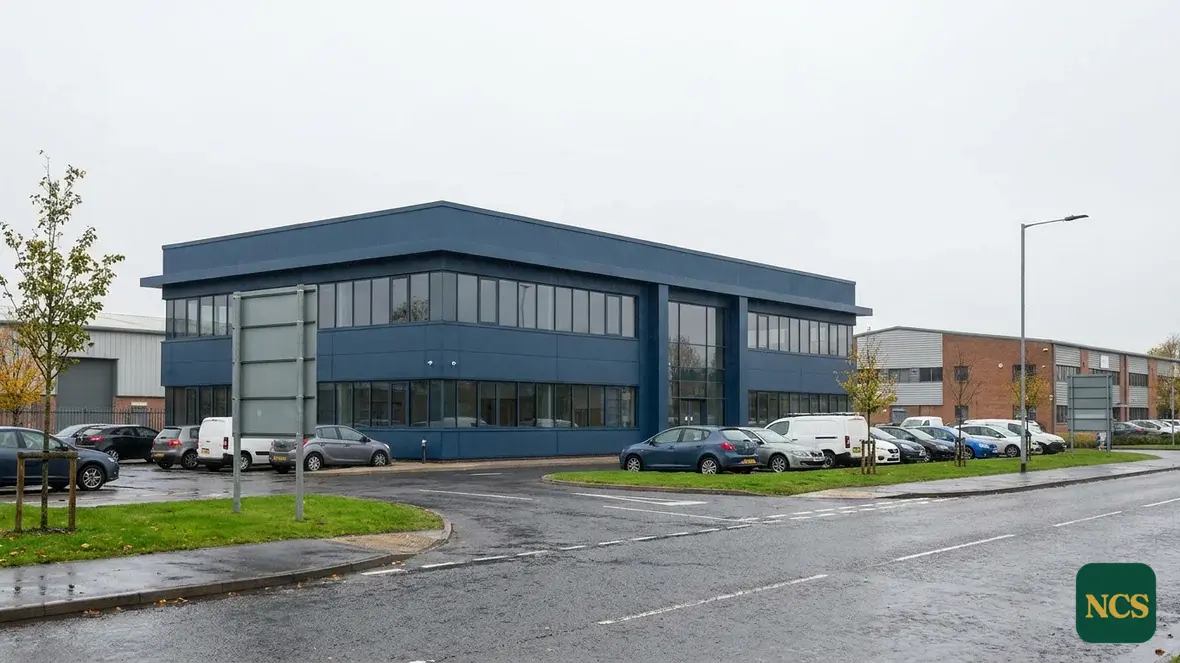
A large warehouse exterior wall after pressure washing and before spray coating application.The freshly coated masonry exterior of a UK manufacturing facility.A logistics unit's metal cladding wall half-coated, showing the before and after contrast.
How it works
Our survey-led process
1SurveySubstrate, access, exposure, corrosion and repairs are inspected first.
2ReportA written condition report on what the building actually needs.
3SpecifyCoat, repair and replace options separated clearly.
4PlanWorks shaped around safety, weather and site continuity.
5ProtectThe right system applied to extend life and restore the finish.
Accredited, insured & manufacturer-approved
Where we work
Sectors and buildings we coat
Survey-led coating, spraying and exterior refurbishment across commercial, industrial and agricultural property in England.
Survey-Led ApproachEvery project begins with a free site survey to assess the wall condition and determine the right course of action first.
Coat, Repair or ReplaceOur honest advice will tell you if a coating is the right option, or if underlying repairs or replacement are needed instead.
Manufacturer SystemsWe work with established coating systems from various manufacturers to suit the specific needs of your building and substrate.
How to prepare an industrial site for coating work
Good preparation shortens the programme and keeps the site running. The most useful thing an occupier can do is clear a working margin along the elevations being treated: pallets, stock, bins, skips and parked vehicles moved back far enough for access equipment to set up and travel. Where racking or plant is fixed close to a wall, we plan around it at survey stage rather than discovering it on day one.
Beyond clear access, preparation is mostly communication, and most of it costs nothing. Staff should know which doors, loading bays and walkways are affected and when. External fittings such as vents, flues, cameras, lighting and cable runs are identified at survey so they can be masked or protected, and any roller doors within the working zone are scheduled so coating and curing do not clash with traffic passing through them.
Clear a vehicle and storage margin along the elevations being coated
Confirm which doors and loading bays must stay live each day
Flag fragile fittings, signage, vents and external plant in advance
Agree where access equipment and materials can stand overnight
How long industrial coating work takes and what affects it
No two industrial buildings take the same time, which is why we commit to a programme after the survey rather than guessing from a photograph. The main drivers are the area and height of the elevations, how much repair the substrate needs before any coating goes on, and how freely access equipment can move around the building. A clear, level perimeter is quicker to work than one broken up by yards, fences and fixed plant.
Coating systems also set their own pace. Each coat needs the previous one to dry or cure before the next is applied, and the weather has the final say on any given day. Phasing the work around your operation, for instance keeping a loading bay live, adds a little time but is almost always worth it. What you should expect from us is a realistic, surveyed programme and honest updates if site conditions move it, so your own planning is never left guessing.
Common questions
Industrial Wall Coatings for Factories and Units FAQs
How much does it cost to paint an industrial building exterior in the UK?
There is no honest fixed price, because cost depends on wall area, height and access, the substrate, how much preparation and repair is needed, and which coating system suits the exposure. A small unit and a large clad warehouse are very different jobs. We give a written quote only after a free site survey, so the figure reflects your actual building rather than a guess.
How do I choose the right coating for industrial walls?
Start with the substrate and the problem you are solving. Masonry and render, concrete and profiled metal each need different systems, and a wall with damp issues needs a breathable coating rather than one that traps moisture. Exposure, building movement and the finish you want all matter too. Our survey matches the system to those conditions, and we will recommend repair or replacement instead if a coating is not the right answer.
How long do exterior wall coatings last on business premises?
Lifespan depends on the system specified, the substrate, the quality of preparation and how exposed the building is, so any single number would be misleading. Good preparation and the correct product for the surface make the biggest difference, which is why we front-load that work. Where a coating manufacturer offers a product guarantee, we apply to their requirements and explain the cover during your survey.
Do you provide a free survey?
Yes. A survey-first process helps identify the right coating, repair or spraying route before any quotation is issued.
Do you work on live commercial sites?
Yes. The site is built around commercial, industrial and agricultural premises where access, safety, programme and business continuity matter.
Can coatings avoid full replacement?
Sometimes. Coatings can be a strong refurbishment route where the substrate is suitable, but the survey decides whether repair, coating or replacement is appropriate.
Do you publish fixed prices?
No. Access, substrate condition, preparation, repairs and specification change the cost too much for responsible fixed-price claims without a survey.
A real surveyor inspects the building, photographs the condition and quotes only what it needs. Send the details and we will come back with a clear, practical route forward.