What is cut edge corrosion on warehouse roofs?
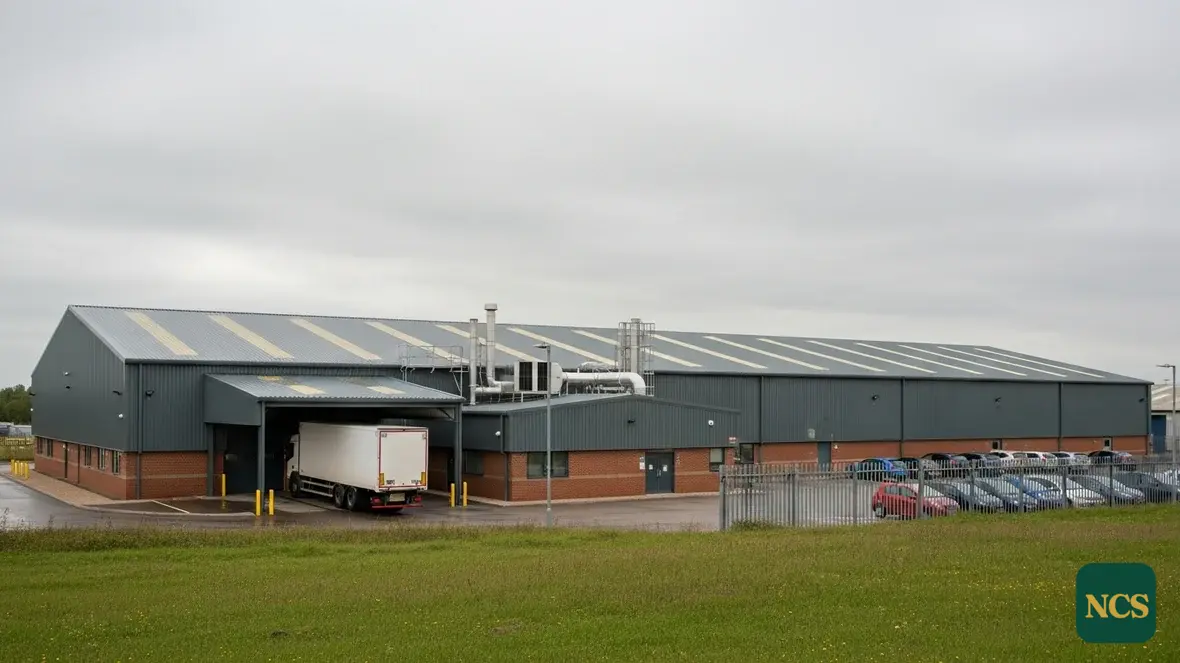
Cut edge corrosion occurs where the protective coating on profiled steel roofing sheets has been cut during installation, exposing the bare metal beneath. On warehouse and distribution buildings, these vulnerable edges are typically found along roof laps, flashings, and penetrations. The exposed steel reacts with moisture and oxygen, forming rust that spreads under the coating. Warehouse roofs are particularly susceptible due to their large surface areas and exposure to weather.
The problem often starts at installation, when sheets are cut to fit around rooflights, vents, or perimeter details. Even with careful work, the cut edges lack the factory-applied plastisol coating that protects the rest of the sheet. Over time, thermal movement and wind uplift cause small cracks that let water penetrate, accelerating the corrosion process.
Cut edge corrosion repairs on warehouses and distribution buildings stay small when they are caught early, and the survey maps every edge that needs treating before rust creeps under the coating.
The warehouse roof stock most at risk
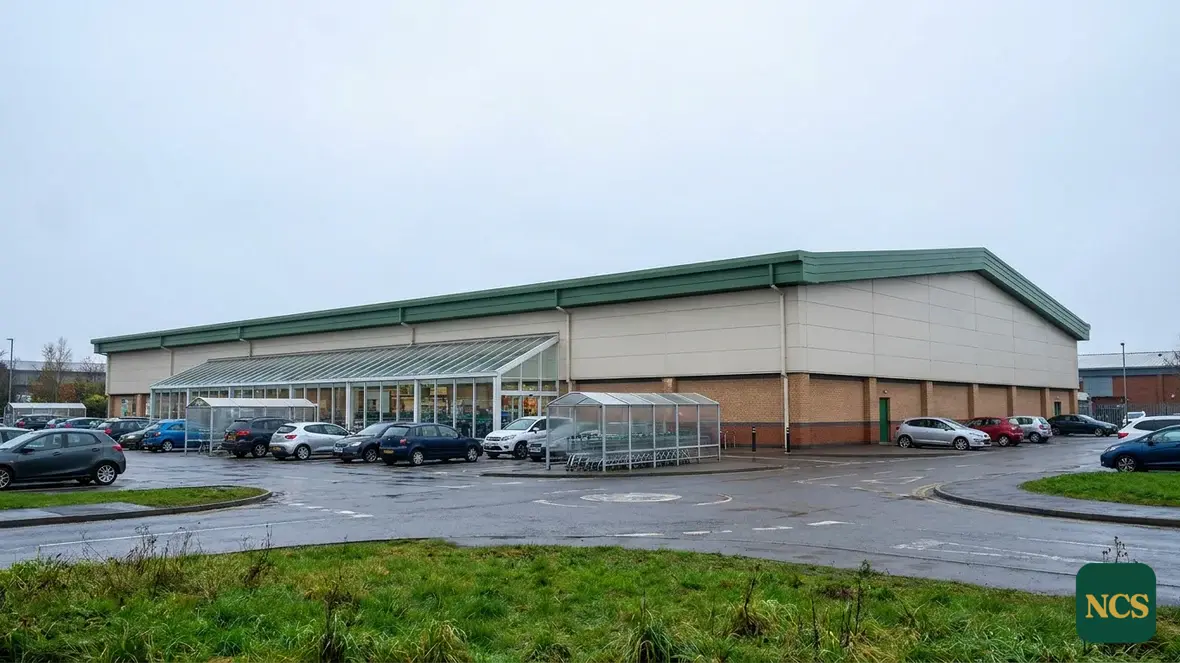
Many UK warehouses built between the late 1980s and early 2000s used plastisol-coated steel roofing sheets that are now reaching a critical age. These buildings typically feature large, uninterrupted roof spans with minimal pitch, designed for maximum storage volume rather than water runoff. The sheets themselves are often thinner than modern equivalents, with less robust edge sealing.
Distribution centres and logistics hubs face additional challenges due to their operational demands. Constant vehicle movement creates vibration that works loose fixings, while 24/7 operations make access for maintenance difficult. The original coatings on these roofs were designed for twenty to twenty-five years service, but many have exceeded this lifespan while remaining in active use.
How untreated cut edges lead to roof failure
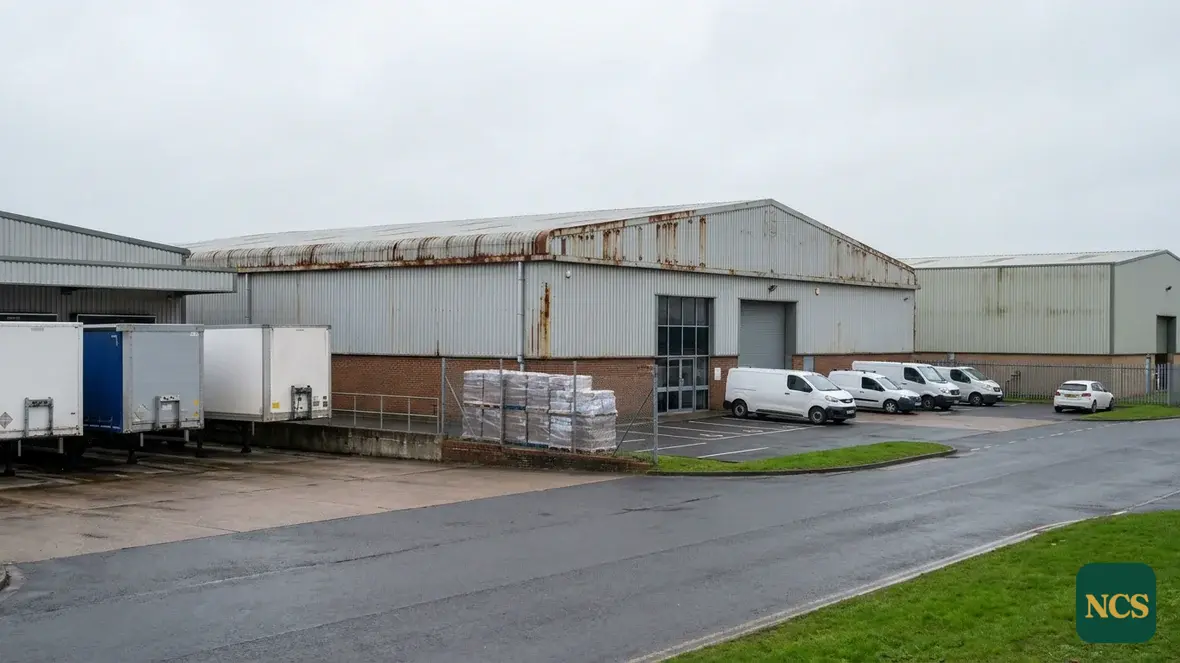
On warehouse roofs, corrosion typically starts at sheet overlaps where water can pool. The rust spreads laterally under the coating, creating ‘tracking’ that weakens the sheet’s structural integrity. In severe cases, this leads to perforations that allow water ingress into the building. The first visible signs are often staining on internal linings or drips near roof penetrations.
Once corrosion takes hold, it progresses rapidly due to the roof’s exposure and lack of maintenance access. The problem compounds as failed sealants allow more water penetration, while thermal cycling causes further coating breakdown. Left untreated, the sheets eventually lose their weathertightness entirely, requiring costly full replacement rather than targeted repair.
How proper edge treatment is carried out on warehouse roofs
The standard approach for warehouse cut edge corrosion involves three key stages. First, all loose material and existing corrosion is mechanically removed back to sound metal using abrasive wheels and wire brushes. Second, the exposed steel edges receive a zinc-rich primer to provide galvanic protection, followed by a high-build elastomeric coating that bridges the panel joints and seals the cut edges. Finally, the full roof area receives a protective overcoat to ensure uniform appearance and performance.
On profiled metal roofs, the treatment focuses on the sheet ends where factory-applied coatings are cut during installation. The side laps between sheets also require attention as these areas trap moisture. Older buildings may need additional work where previous repairs have failed or where insulation has become saturated through edge leaks.
- Mechanical preparation to bare metal at all cut edges
- Zinc-rich primer applied to exposed steel substrates
- Elastomeric coating bridging panel joints and overlaps
- Full roof overcoat for uniform protection and appearance
- Detailed inspection of side laps and existing repairs
Planning the work around warehouse operations
Warehouse coating projects require careful scheduling to avoid disrupting goods movement and despatch operations. Work typically proceeds in zones, allowing continued use of loading docks and yard spaces. Night shifts or weekend working may be necessary in facilities operating around the clock, with temporary covers protecting racking and stock from overspray.
The physical constraints of warehouse buildings demand specific access solutions. Mobile elevating work platforms often prove more practical than scaffolding in high-bay storage areas where floor space is at a premium. For buildings with internal racking tight to the walls, exterior-only access methods are specified to prevent stock movement or rack dismantling.
Why the survey comes before specification
Every warehouse roof presents unique challenges that only a physical inspection can reveal. The survey identifies variations in panel profiles, previous repair attempts, insulation condition and substrate integrity that directly influence the treatment specification. Without this assessment, critical details like fastener types or concealed edge details may be missed.
The survey also maps operational constraints that shape the work programme. Factors like shift patterns, peak delivery times and high-value storage areas all inform the phasing plan. This upfront assessment prevents costly revisions once work begins and ensures the solution matches both the building’s needs and the operator’s requirements.
The next step
You can read more about the wider cut edge corrosion treatment service, or see how we approach warehouses & storage as a whole. When you are ready, request a free survey and we will look at the building itself before recommending anything.
See a recent example of this work in our case study: Warehouse Roof Coating and Cut Edge Corrosion Treatment near Huddersfield, West Yorkshire.