Guide
7 Signs Your Commercial Roof Coating Is Failing
A commercial roof rarely fails overnight. The most telling signs appear months, sometimes years, before water reaches the building below, and most are visible from the ground or a safe vantage point. Spotting them early is the difference between a straightforward recoat and a full strip and re-roof.
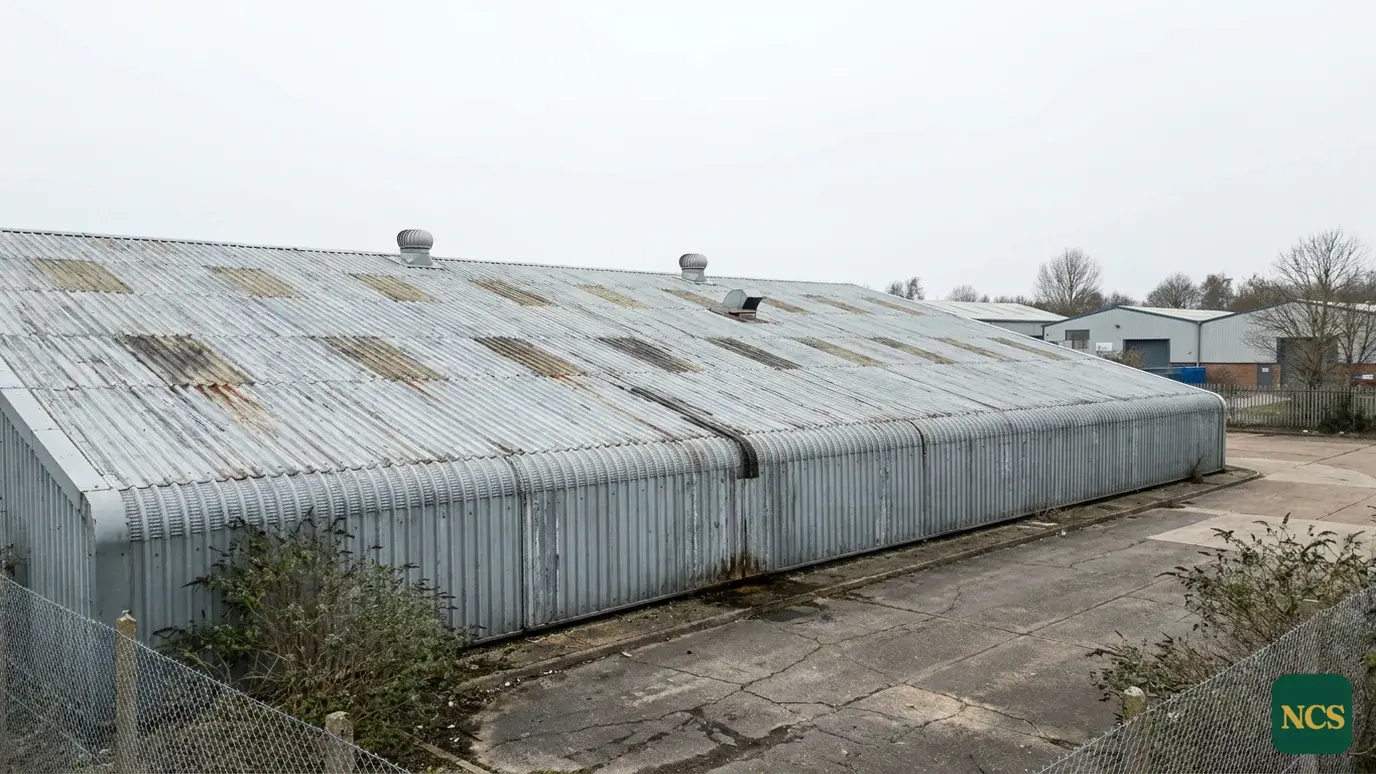
What the early signs look like from the ground
A coating rarely shows just one problem. Failure tends to arrive as a pattern: fading next to ponding, lifting laps near rust streaks. The job of a survey is to work out whether the coating alone has aged or whether the substrate beneath it has started to move or corrode. The seven signs below are the ones we look for first, and what each usually tells us about what is happening underneath.
Chalking and heavy colour fade
Run a hand or a dark cloth across the surface. If it comes away with a fine, pale powder, the coating is chalking. This is the binder breaking down under UV, releasing pigment. A light bloom is normal ageing and often just cosmetic. Heavy, even chalking means the film has thinned and lost much of its weatherproofing, and it must be removed or stabilised before any overcoat will bond. Pronounced fade on the south and west elevations usually points the same way.
Cracking, crazing and blistering
Fine, map-like crazing across the surface is the coating losing flexibility. Wider cracks that follow the sheet profile or the line of a fixing are more serious, because they let water through to the steel or membrane below. Blistering, where the film lifts into raised bubbles, means moisture or air is trapped beneath the coating, often from poor preparation or moisture driving up from inside the building. Blisters that have burst are an open door for water.
Ponding stains and trapped moisture
Dark rings, silt tide-marks or moss in the low spots show where water sits rather than drains. Standing water is not an instant failure, but prolonged ponding softens many coatings, accelerates breakdown and finds the weakest lap or detail. On flat and low-pitch roofs, ponding near outlets and upstands is one of the clearest pointers to a coating reaching the end of its service life.
Lifting at laps, seams and details
Side and end laps, ridge details, flashings and the areas around rooflights take the most movement and the most wind uplift. Coating that has lifted, peeled or split at these points is exposing the most vulnerable parts of the roof. On older systems this is frequently where leaks begin, long before the open field of the sheet shows any problem.
Rust bleed and cut-edge corrosion
Orange or brown streaks running down from laps, fixings or sheet ends are rust bleeding through the coating. On profiled steel, the exposed cut edges at the laps corrode first, lifting the coating from beneath and spreading inwards. Cut-edge corrosion is treatable in its own right, but once it is bleeding through a coating it tells you the system is no longer protecting the steel.
When to book a roof survey
One isolated sign is worth monitoring. Several together, or any sign combined with damp showing inside, means it is time for a proper inspection. A survey confirms the substrate type, including whether any sheets are asbestos cement, checks coating thickness and adhesion, and establishes whether the right answer is a recoat, a targeted repair or replacement.
- Chalk residue on a cloth or glove wiped across the surface
- Crazing, cracking or burst blisters in the coating film
- Ponding rings, silt or moss in the roof’s low spots
- Lifting or peeling at laps, ridges, flashings and rooflights
- Rust streaks bleeding from fixings, sheet ends or cut edges
- Internal damp staining, even where the roof looks sound from outside
| Option | Best suited to | What it involves | Disruption to operations |
|---|---|---|---|
| Recoat or overcoat | Sound substrate, coating-only wear | Clean, prepare, treat defects, reapply coating | Low, usually worked around occupancy |
| Cut-edge corrosion treatment | Corroding laps and sheet ends, sheets otherwise sound | Prepare edges and apply a specialist edge system | Low to moderate |
| Localised repair | Isolated cracks, blisters or failed details | Patch and seal specific areas | Low |
| Asbestos roof encapsulation | Ageing asbestos cement sheets in fair condition | Survey, seal and coat to encapsulate fibres in situ | Low, avoids removal and disposal |
| Full strip and re-roof | Failed substrate, widespread corrosion or perforation | Remove and replace sheets or membrane | High, often phased |
- Coating failure usually shows as a pattern of signs, not one defect
- Chalking, cracking and blistering point to the film itself wearing out
- Rust bleed and lifting laps mean the substrate is now at risk
- Acting at the first signs keeps you in recoat territory rather than replacement
How often should a commercial roof coating be inspected? A visual check twice a year and after major storms is sensible, with a closer survey every few years or as soon as any of the signs above appear.
Can a failing coating just be painted over? Only if the surface is sound and properly prepared. Overcoating chalk, rust or blisters traps the problem and the new coating will fail early.
Is rust bleed always serious? It means corrosion has started, but caught early at the cut edges it can often be treated without replacing sheets.
If your roof is showing any of these signs, our roof coating services begin with a survey that tells you honestly what the roof needs, and you can request a free quote.
Published by National Coating Specialists • survey-led commercial, industrial & agricultural coatings across the UK.
Accredited & insured



Where we work
Sectors and buildings we coat
Survey-led coating, spraying and exterior refurbishment across commercial, industrial and agricultural property in the UK.
Get a free site survey, no obligation
A real surveyor walks the building, photographs the condition and quotes only what it actually needs. Send us the details and we'll come back with a clear, practical route, not a hard sell.
Book your free site surveyWhat does your building need?
Pick the surface, then the problem. We will point you to the right service.