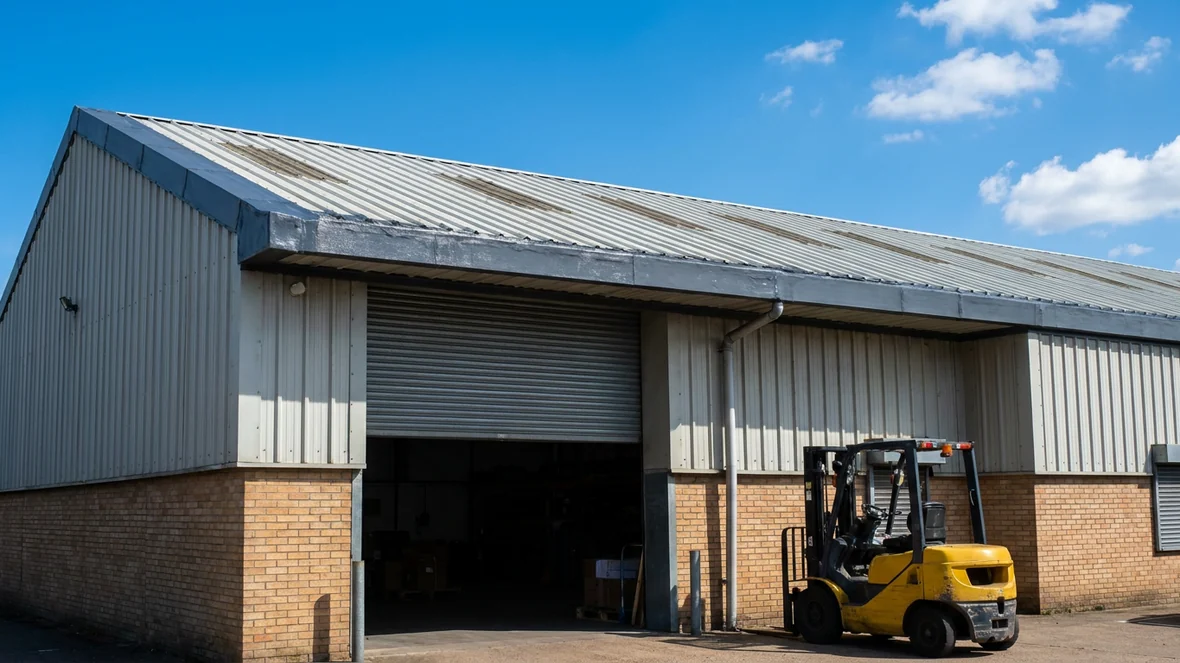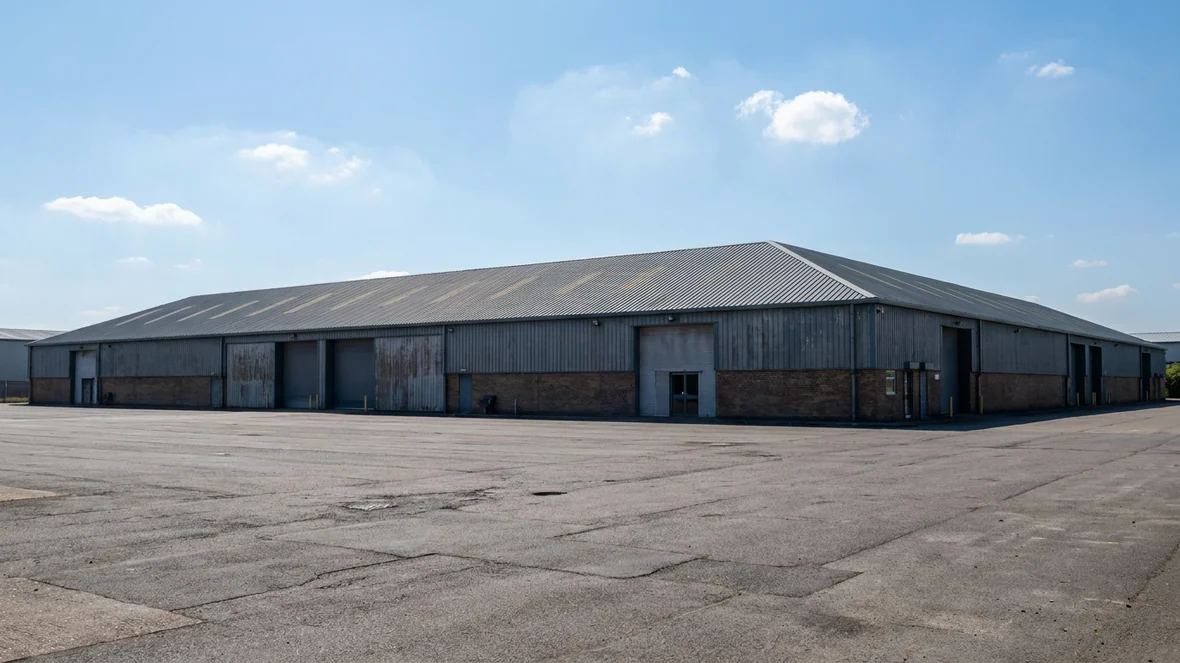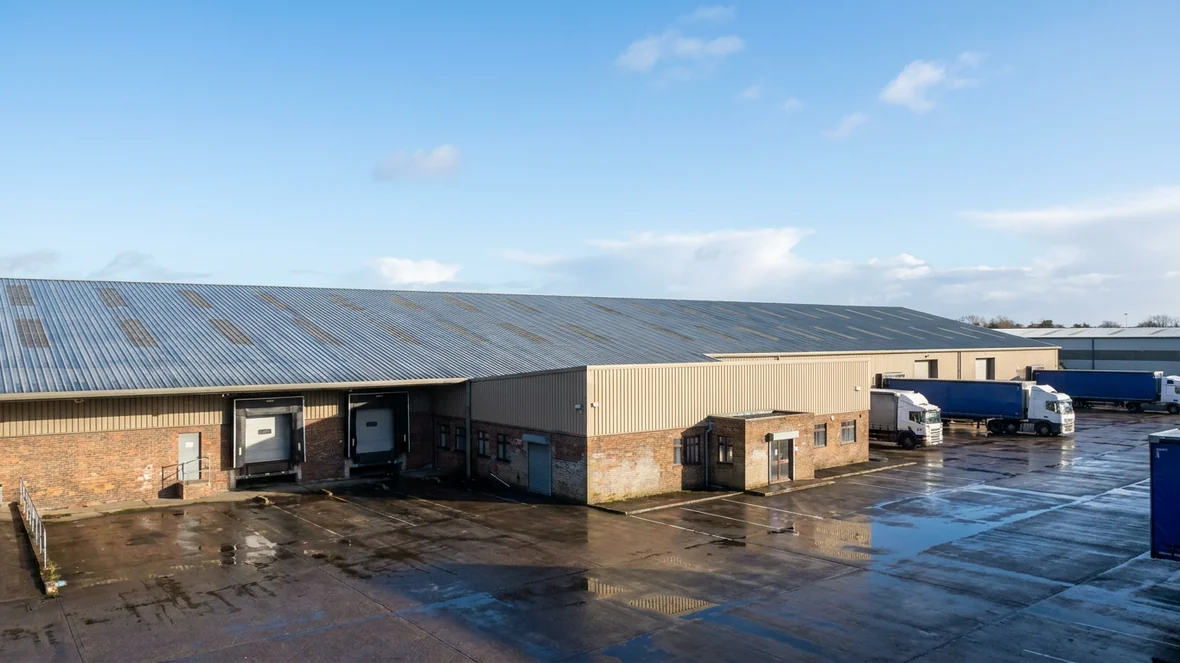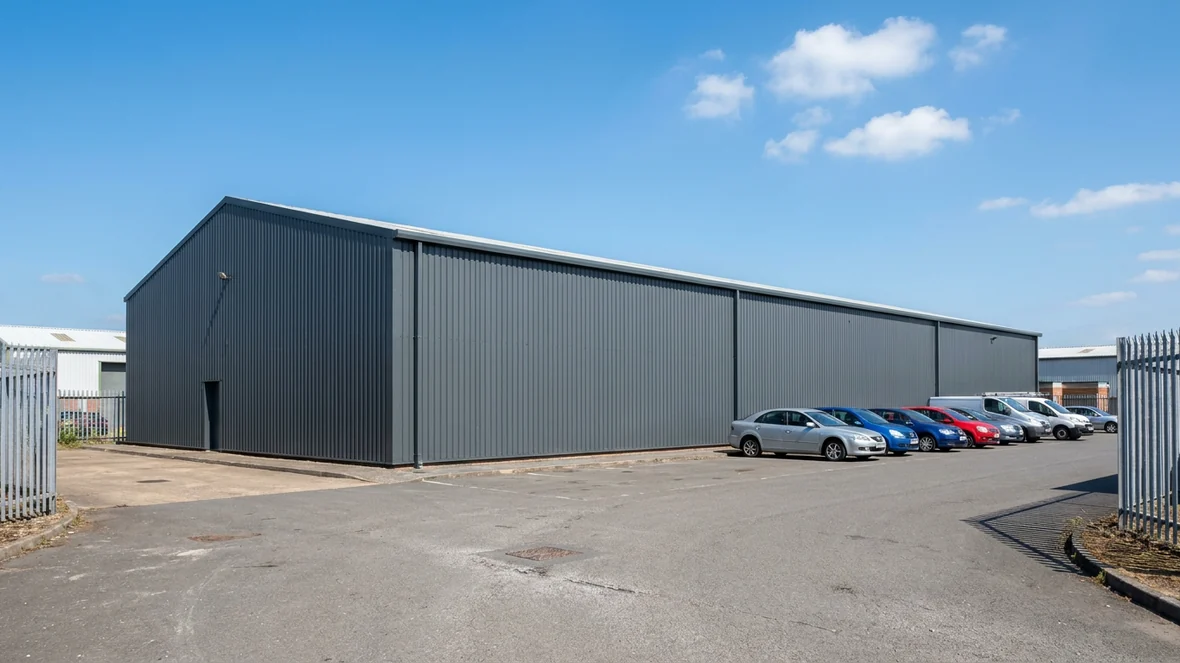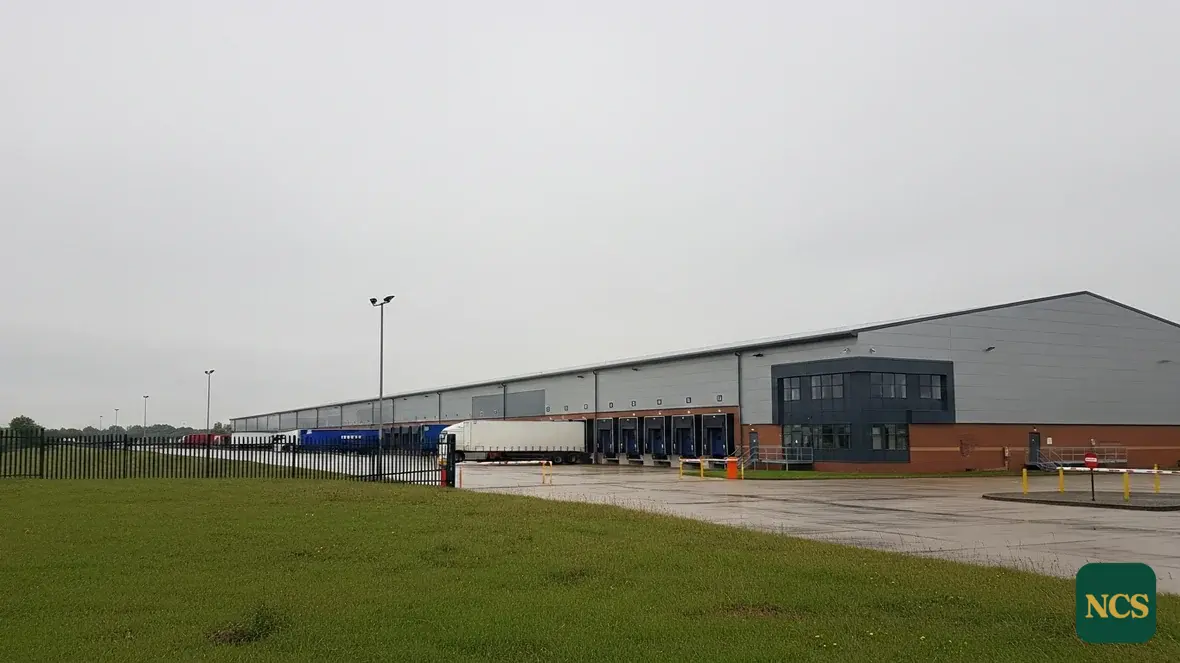










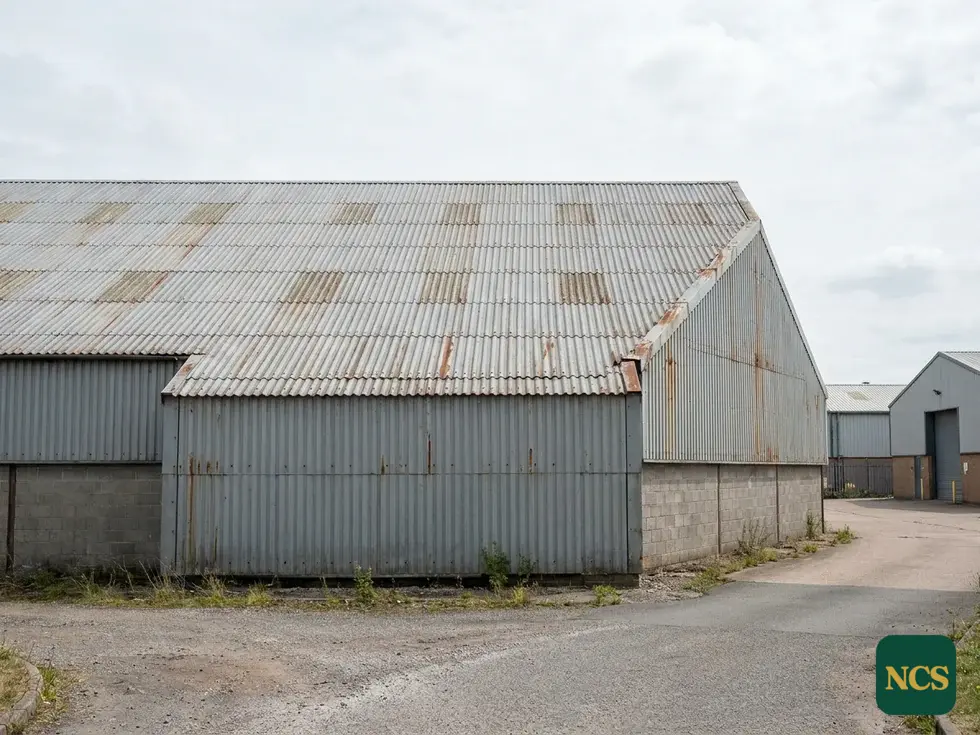
Bristol’s commercial roofscape divides roughly in two. Out at Avonmouth and along the Severnside flats sit large estuary-side sheds taking salt air straight off the channel; closer to the city are older trading estates and workshop units that have been re-roofed, patched and extended over decades. Both rely heavily on profiled coated steel, and both inherit the same built-in flaw: unprotected metal at every cut edge of every sheet.
Why coated steel rusts from the edges in
The protective finish on a roof sheet is applied to the steel coil before cutting, so the moment a sheet is cut to length, its ends and lap edges are bare. In service, rainwater is drawn into the overlaps by capillary action and held against that bare steel for days at a time. Rust starts at the edge, then travels beneath the coating, separating it from the metal as it goes. The progression is slow but one-directional: staining, peeling, delamination, perforation. Nothing about it heals itself, and painting over the visible symptoms without treating the edge simply hides the clock.
Salt, weather and the Severn factor
Buildings near the estuary live with salt-laden air and wind-driven rain, both of which shorten the quiet early years of cut edge corrosion. Sheltered estates inland of Bristol do better on average, but age evens the score: an older roof in a mild spot can be in worse condition inside its laps than a younger roof in an exposed one. The honest position is that postcode and forecast only tell you so much. The condition of the laps is a fact that has to be checked, which is why every job we take on starts with a survey rather than an estimate.
A maintenance job or a capital project
Caught early, cut edge corrosion is handled by cleaning the edges back to sound material, stabilising the rust, sealing the laps and coating the sheet ends with a flexible, purpose-made system. Caught late, it means replacing sheets, repairing whatever the water has reached and absorbing the disruption that follows. The survey exists to tell you which side of that line your roof is on, and it answers the questions that matter before money moves:
- How far has the rust crept beneath the existing coating?
- Are any sheets perforated or close to it?
- Will treatment hold on this roof, and for which areas?
- Is the rest of the finish sound, or weathering towards failure?
- What does waiting another year or two realistically cost?
Straight answers when a roof is past treatment
There are roofs we will not treat, because the treatment would fail and the money would be wasted. Perforated sheets, coating releasing across the sheet face rather than just at the laps, and steel thinned by years of unchecked rust all point the same way: replacement of the affected areas, not coating over them. We put that in the survey report in plain language, even though replacement is not work we offer and the advice ends our involvement. More often the finding is partial, with most of the roof treatable and a worst-exposed slope or eaves run beyond saving, and the scope is written to match that exactly.
Treated edges, coated roof, one visit
Edge corrosion is usually the loudest symptom of a roof finish that is ageing everywhere. Once the edges are treated, applying a full roof coating across the whole surface brings every sheet back under one consistent system and uses the access you have already paid for. For owners around Bristol that usually beats running two separate projects a few years apart. We are a survey-led coating contractor based in the South East, working across England, and the Bristol area sits comfortably within our range. If your gutters are streaking brown or the laps are starting to lift, the survey is the place to start.