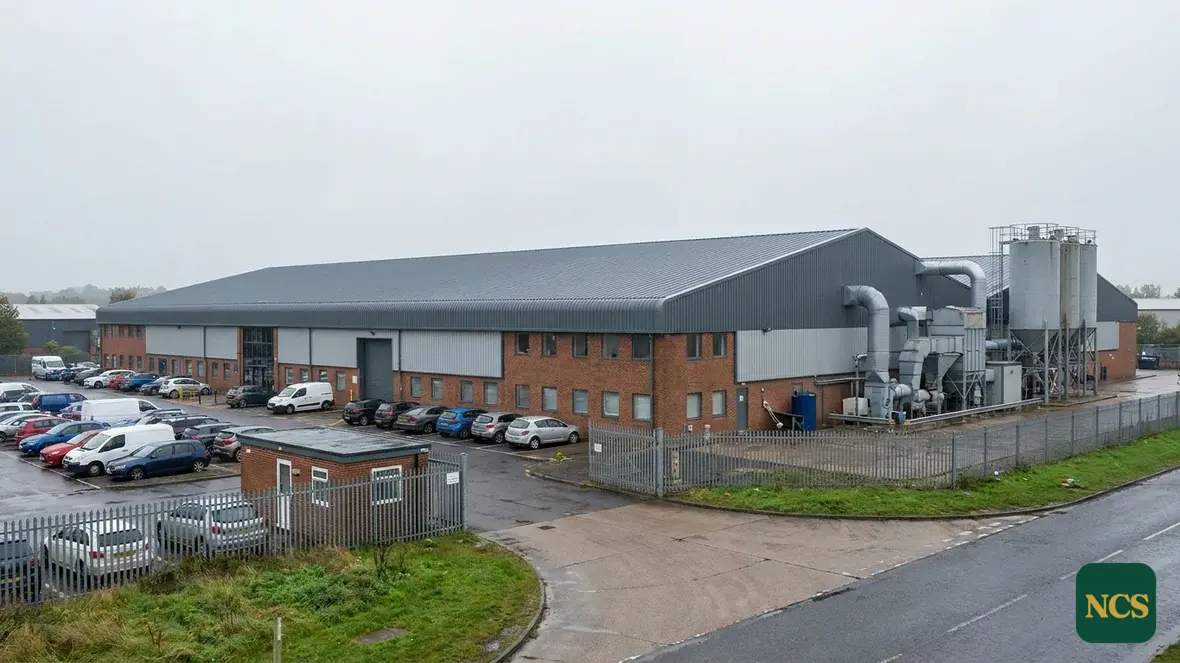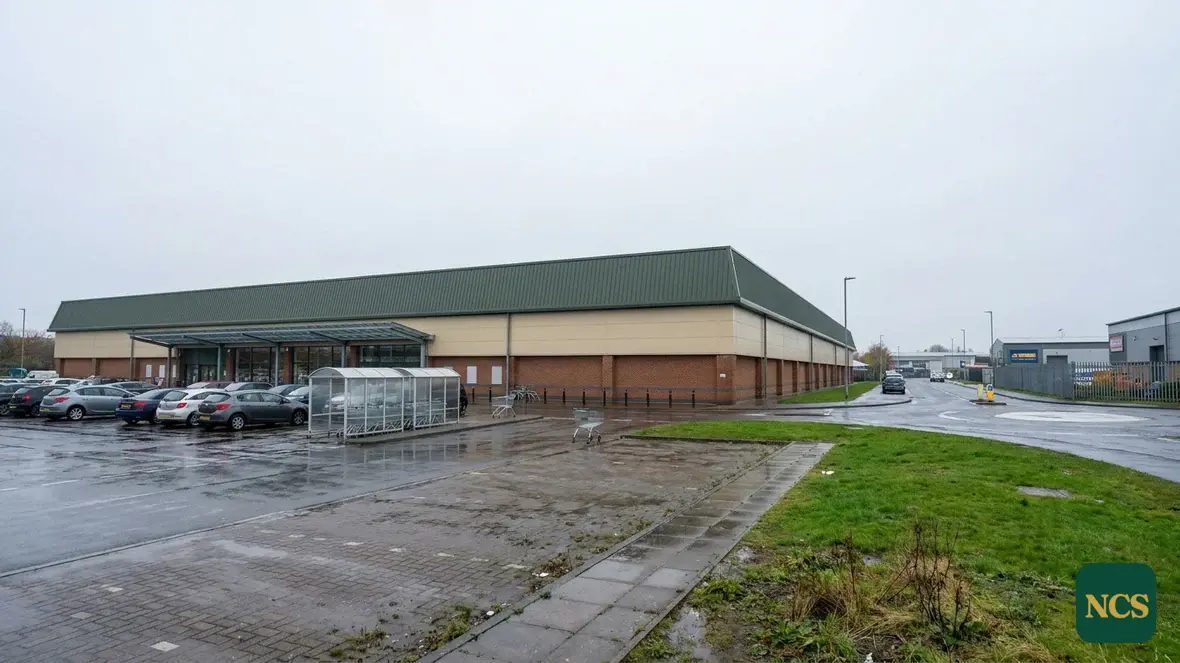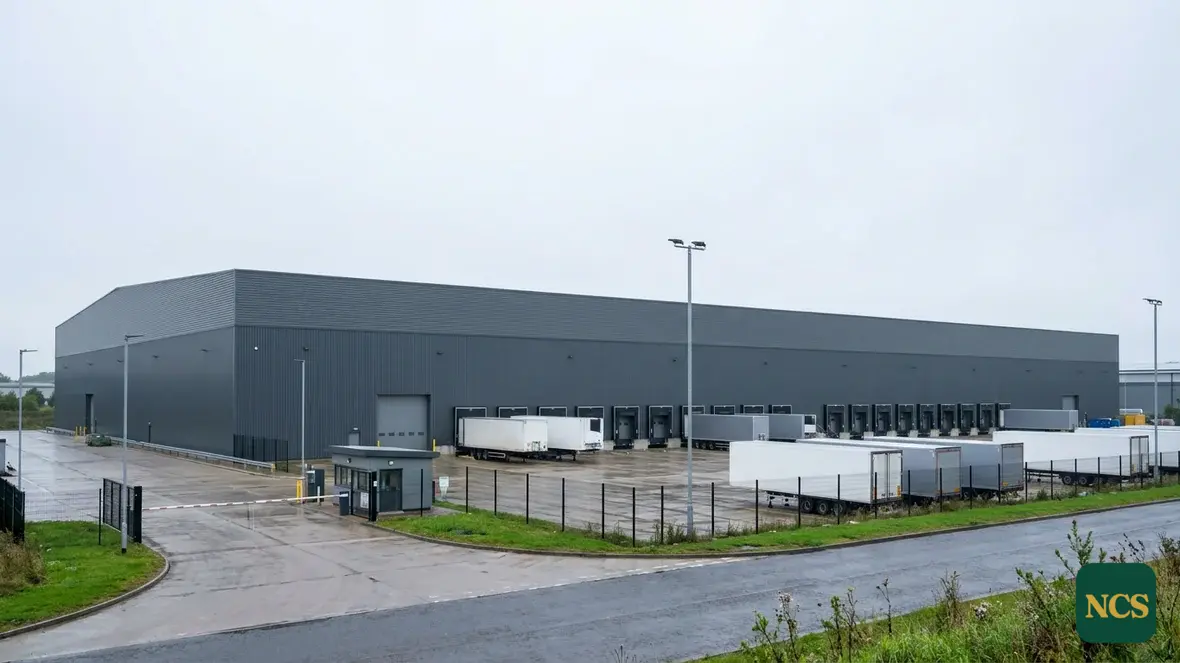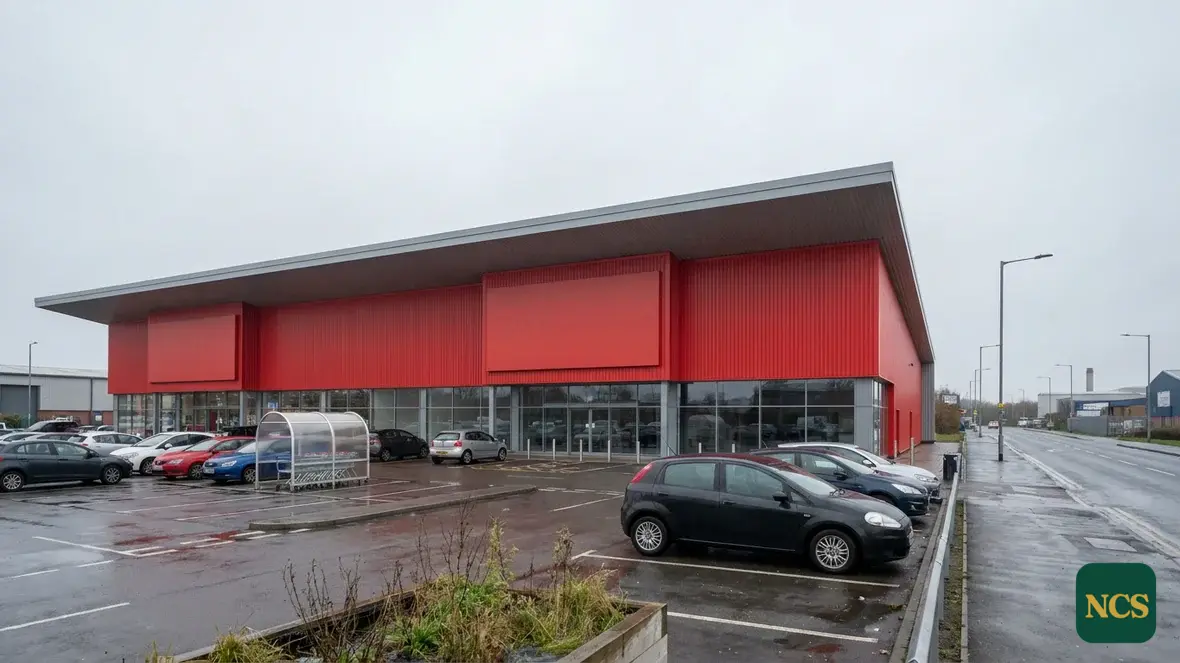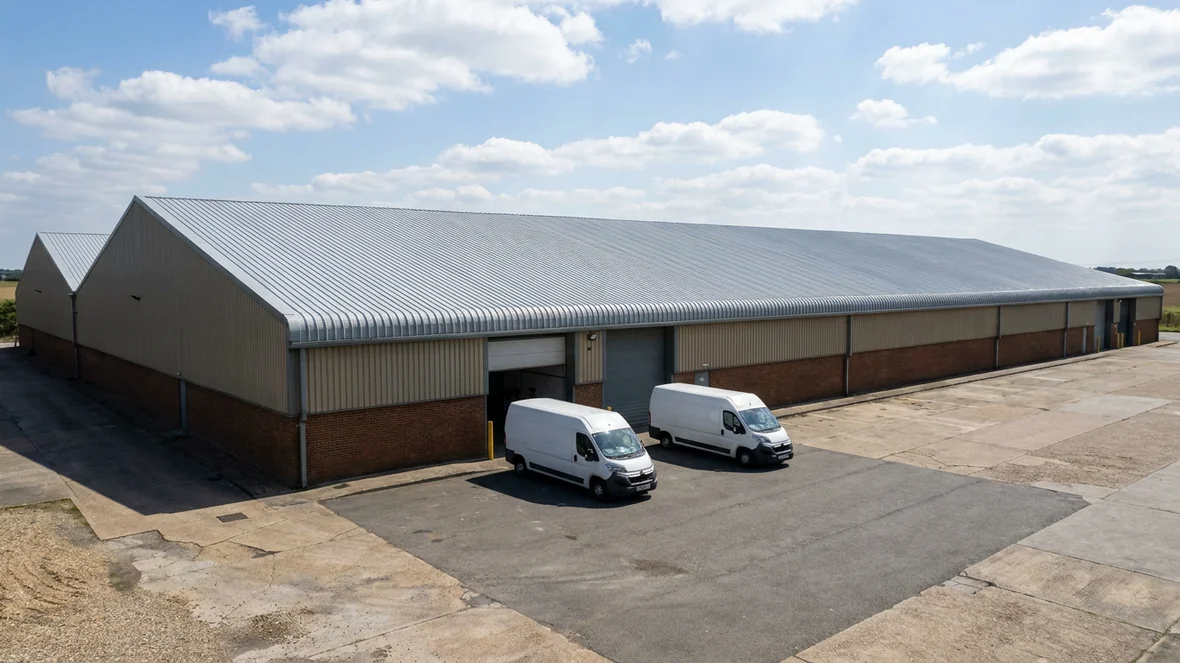
Few environments age a profiled metal roof faster than the coast. The industrial and trading-estate stock around Brighton and Hove sits in salt-laden air all year, and roof surveys show it: corrosion that starts earlier, travels faster and costs more to ignore than it would twenty miles inland. For the facilities teams running warehouses, workshops and distribution units on the city’s fringes, roof condition is a budgeting question with a clock attached.
What marine exposure does to industrial roofs
Salt accelerates corrosion wherever bare steel meets the air, and on a profiled metal roof that means every cut edge, every scratch and every fastener head. Cut-edge corrosion, the slow creep of rust back from sheet ends at laps, eaves and gutters, is the defining defect of coastal industrial roofs: it undermines the factory finish from beneath until the coating lifts in flakes. Strong coastal sunlight chalks and fades exposed finishes at the same time, and wind-driven rain probes laps and fixings that sheltered inland roofs never have to worry about. None of this means a coastal roof is doomed; it means the window for cost-effective treatment is shorter.
A survey-led answer, not a sales pitch
Our process starts on the roof, not in a brochure. We inspect sheet condition, edge corrosion, adhesion of any existing finish, fixings, rooflights and gutters, and check the underside where access allows. The report sets out what we found and what it means in plain terms: coat now, repair then coat, or do not coat at all. Because Brighton and Hove sits comfortably within reach of our South-East base, arranging the survey is straightforward, and the same evidence-first approach applies whether the roof covers a single workshop or a whole estate.
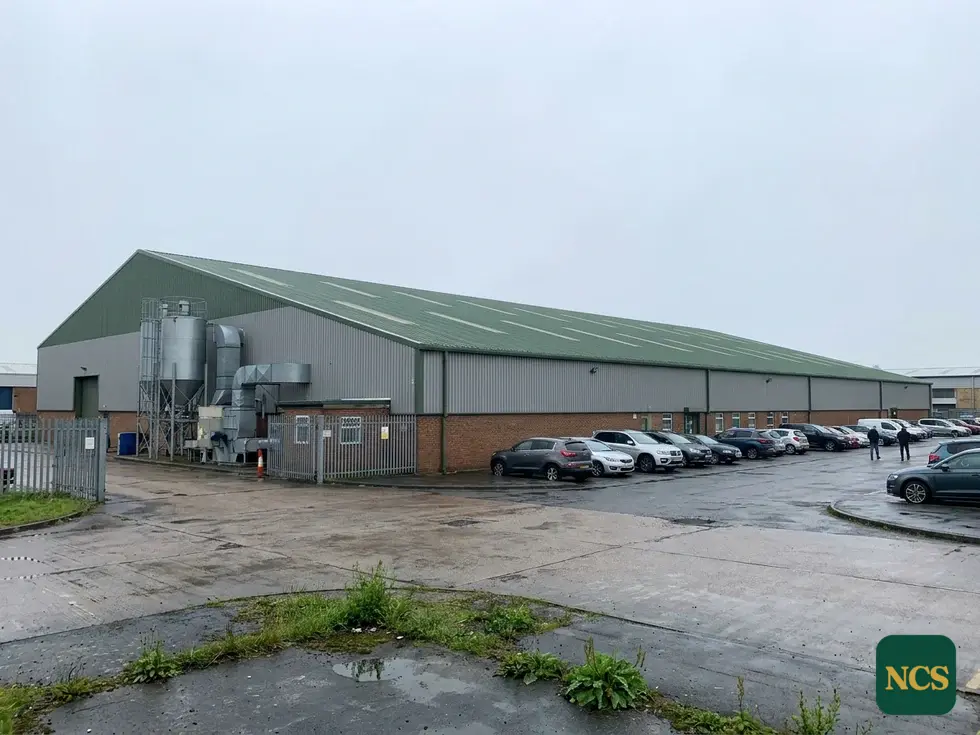
The roofs where coating earns its keep
A coating system is the right call far more often than not on coastal stock, provided the basics are sound. The good candidates share a profile:
- Sheets structurally intact, with corrosion confined to edges and laps
- An existing finish that is chalking or peeling but a deck that is solid
- Fixings and gutters that are serviceable or sensibly repairable
- No widespread corrosion visible from the underside
- A building the occupier intends to keep using for years to come
On roofs like these, preparation, edge treatment and a full coating system halt the salt-driven decay and reset the surface, at a fraction of replacement cost and with the unit trading throughout.
When coating is the wrong answer
We are equally clear about the rest. Marine corrosion left too long perforates sheets, eats through fasteners and gets into the underside of the deck, and once that has happened a coating is cosmetic at best. Where we find widespread perforation, saturated insulation in a built-up system or structural decay, our advice will be repair or replacement, in writing, with photographs. Selling a coating onto a failed roof helps nobody, least of all the facilities manager who has to explain the leaks two winters later.
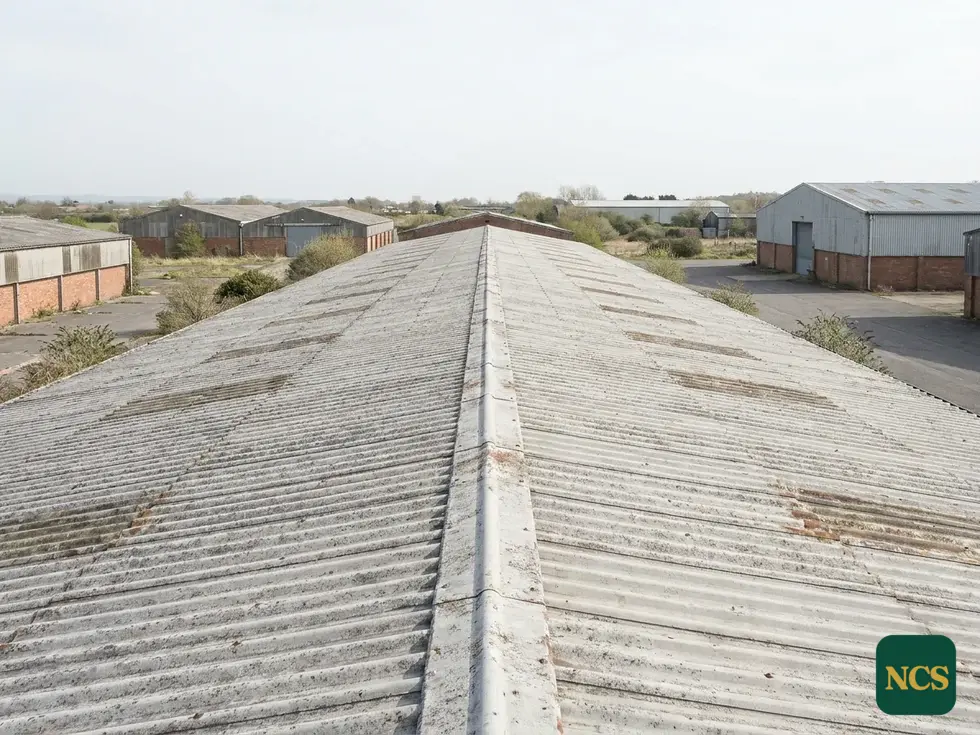
Planning works around a working estate
Coating is applied from roof level with no strip-off, so the building stays weather-tight and occupied throughout. For multi-let estates we phase by unit, agree access and timings with each occupier, and keep the noisier preparation work to agreed hours. If a roof on your estate is showing rust lines at the sheet ends, or the finish is coming away in flakes, the salt has already started work; a survey now is the cheapest decision available.