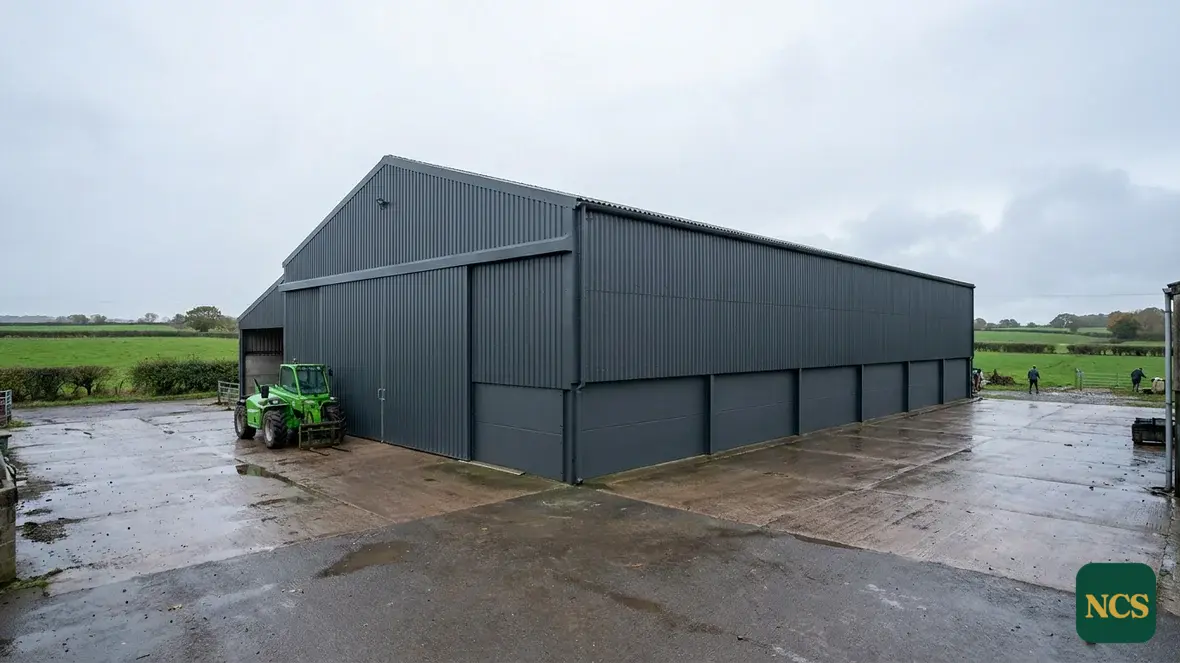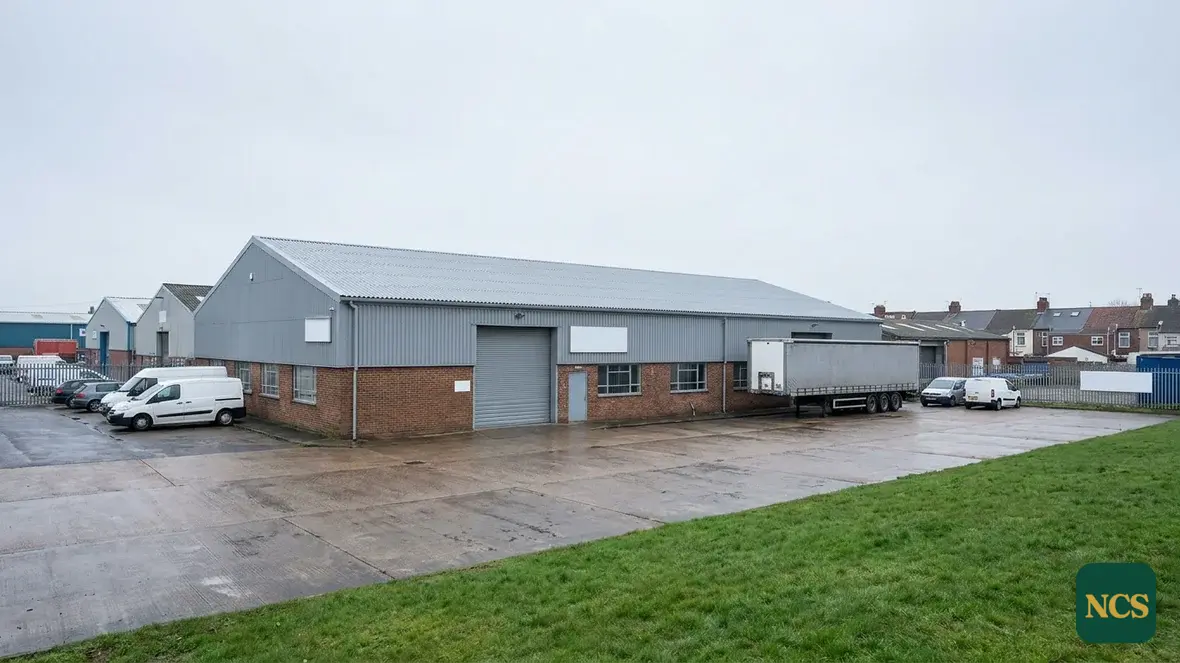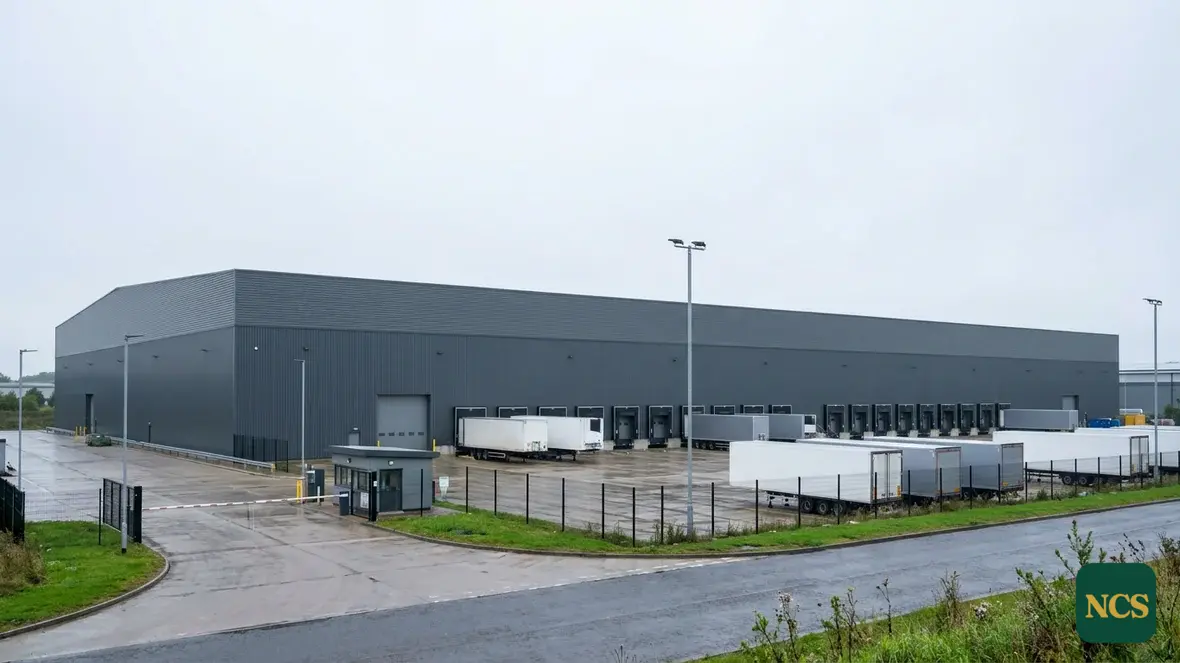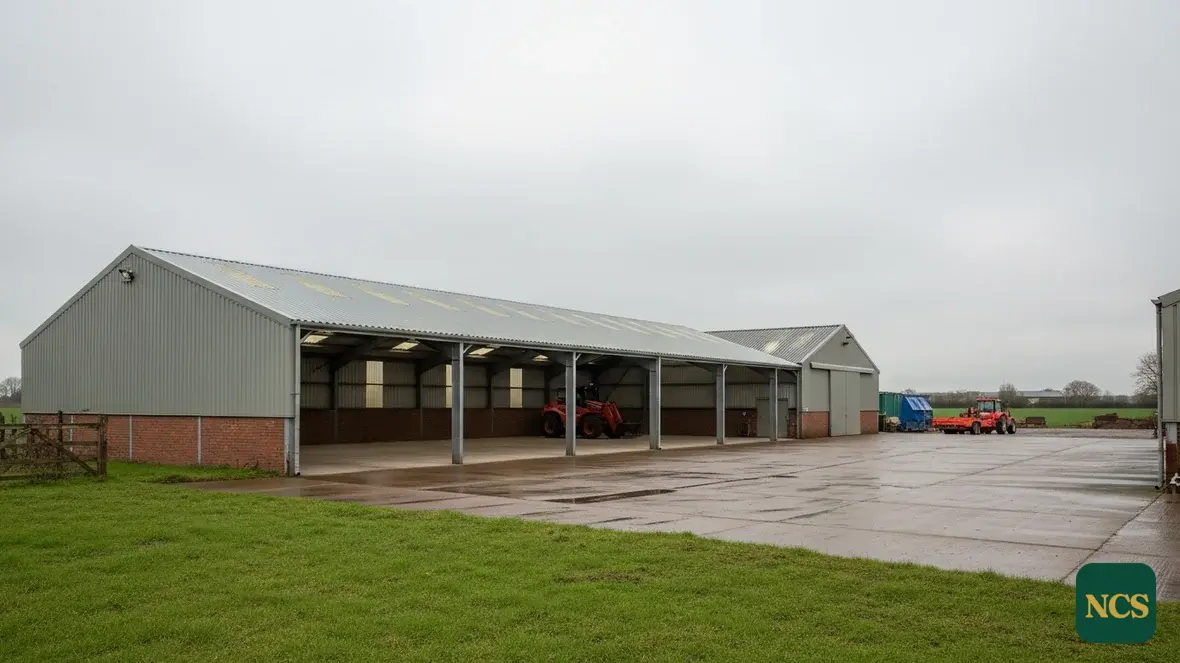
Beyond Oxford the land settles into some of the best arable country in the south: the cereal fields of the Vale, the mixed farms running up onto the downs, and the grain stores and steel-framed sheds a working farm depends on. National Coating Specialists is a survey-led exterior coating contractor working across England, and from our South-East base these Oxfordshire holdings sit well within reach. The farm buildings here are rarely beaten by extreme weather; more often it is simple age, and the slow breakdown of older roofs, that brings us to the yard.
Farm buildings around Oxford and how they age
Most holdings here run a spread of building eras off one yard: a stone or brick barn from a previous generation, a steel portal-frame shed from the seventies or eighties, and a newer clad grain store alongside. The older steel and fibre-cement roofs are the ones that usually need work first. Factory coatings on galvanised and plastisol sheets weather and fail, cut edges corrode ahead of everything else, and rusting fixings streak the slope. Long, low-pitched arable roofs also tend to hold water and debris in the gutters and laps, which keeps the metal wet and speeds up the decline. None of that means the building is done. Where the frame is sound and the sheet has not corroded through, a properly prepared and coated roof can carry on working for many more seasons.
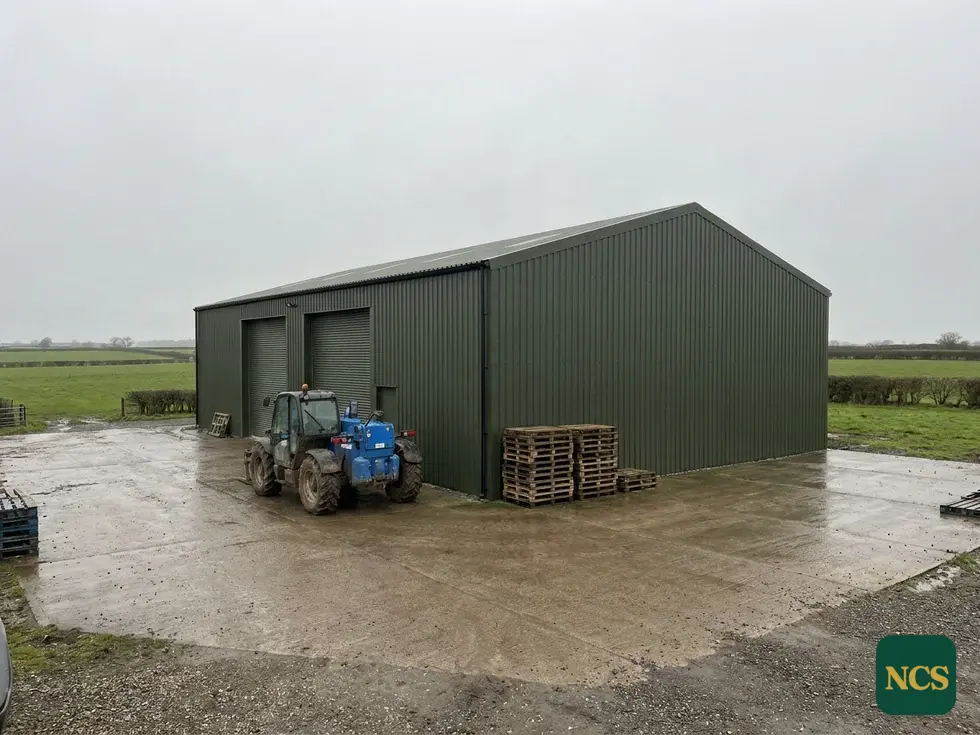
Booked around drilling, spraying and harvest
An arable year leaves clear windows and firm no-go periods. Grain stores empty through winter and spring, which is the time to work on them; nobody wants a roof job under way while a store is filling, and the weeks around drilling, spraying and harvest are off the table. We plan coating to those windows: stores and machinery sheds while they are quiet, work completed and cleared well before the building is needed again. Coatings also need dry, settled conditions to cure, so we leave enough margin to do the job properly rather than rushing it in poor weather to hit a date. Vehicle movements and access are agreed with you so our presence never clashes with the farm’s own traffic at its busiest.
What the survey settles
We do not price farm roofs from the gateway. Every enquiry starts with a survey, because the things that decide a roof’s future are out of sight from the yard:
- Sheet condition, with attention to cut edges, laps and fixings
- Sheet movement and the state of washers and seals
- Gutters, valleys and rooflights, which often fail first
- Water staining on purlins, frames and anything stored below
- Access and ground conditions for the equipment required
You get the findings with photographs before any figure, and where slopes differ they are reported separately.
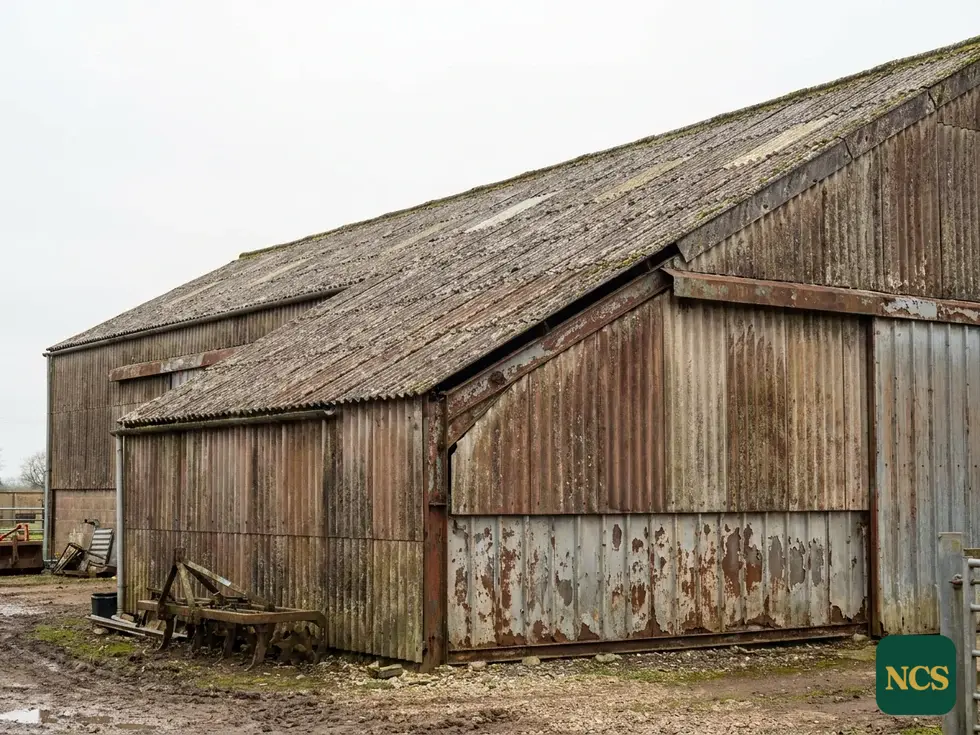
An honest answer, even when it is replacement
This is the part that matters most. We would rather lose the job than coat a roof that should come off. Localised damage on a sound surface is a repair. Widespread surface breakdown on structurally sound sheets is exactly where coating earns its keep. Sheets that are holed, soft, brittle or failing at the fixings are past coating, and we recommend replacement and explain why. Fragile or delaminated asbestos-cement goes to a licensed removal contractor; sound, weathered asbestos-cement can often be cleaned and encapsulated. The survey decides, and you get the truth rather than a sales pitch. For a farm near Oxford that means you can plan the next few years of building spend on a clear picture of what each roof needs, and in what order, instead of reacting to leaks one wet winter at a time.