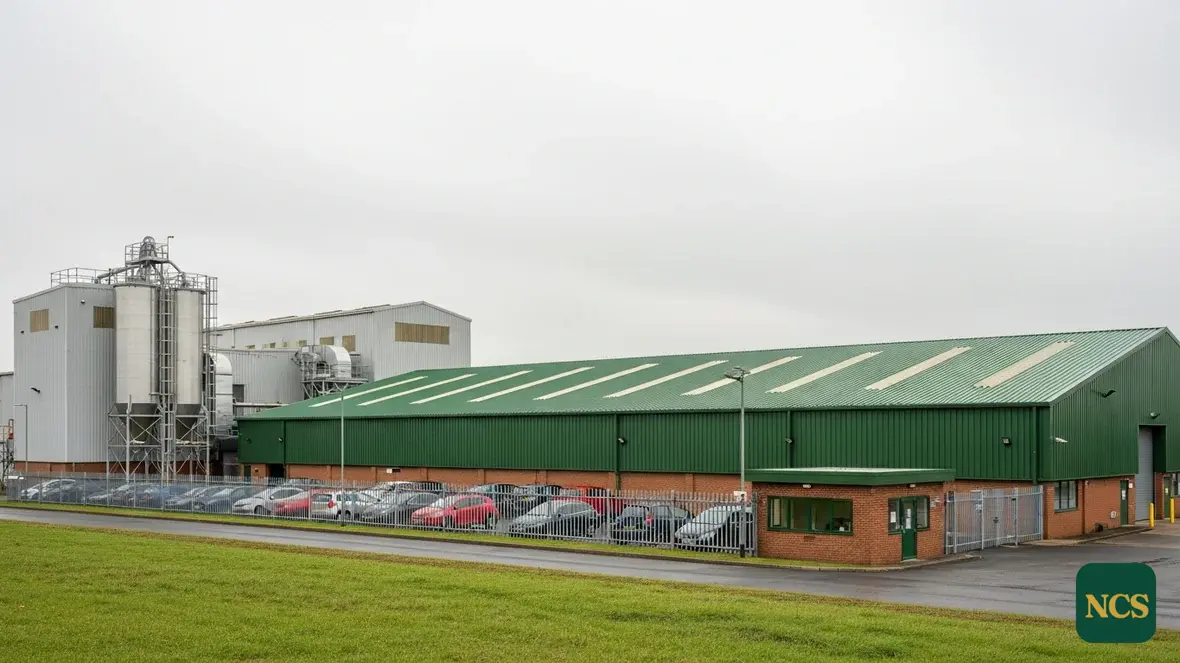
The ends of profiled metal roof sheets are always the first bit to fail. It’s not how they’re fitted, it’s how they’re made. We see it all the time on the science parks, the light-industrial units and the retail sheds around Oxford: a line of rust along the gutter, or staining where the sheets overlap. If you’ve spotted it, this is the best time to deal with cut edge corrosion. It’s cheapest and least disruptive right now, before it starts leaking.
A short anatomy of the failure
Coated steel arrives from the mill sealed on both faces. But when each sheet is cut to length, you expose a thin edge of bare metal. On the roof, those edges are at the laps and the gutter line, exactly where water sits for longest. The bare steel rusts, and that corrosion then tracks back under the factory coating, peeling it off the sheet from the edge inwards. It happens quietly, which is why so many buildings around Oxford show up with a band of orange-brown rust along most of their sheet ends at roughly the same age.
The arithmetic of waiting
The cost of cut edge corrosion is mostly about when you deal with it. Catch it early, while the damage is still just at the edges, and the work is contained: clean back to sound steel, inhibit, seal the laps and gutter runs. The building stays in use, the sheets are still good. Leave it, and the corrosion moves deep into the laps, the ends perforate, water gets in along the fixing lines. At that point, the only honest fix is sheet replacement, and all the disruption and cost that brings. The whole point of acting now is to stay on the cheap side of that line.
Our repair crews cover Oxford and Oxfordshire for cut edge corrosion, failed laps and fixings, the faults that let water in first.

Questions worth asking before anyone quotes
Cut edge work is only as good as the preparation. Not every quote covers the same scope. Before you sign anything, it’s fair to ask:
- How will the corroded edges be cleaned back, and to what standard
- Which primer and coating system is being used, and why
- Are the gutter lines and side laps included or only the visible ends
- What happens if the survey finds sheets that are past saving
- Is the whole roof assessed, or only the edges you have flagged
The point where treatment stops making sense
We won’t coat a roof that can’t be saved. If sheets around Oxford have already perforated, if corrosion has reached deep into the laps over large areas, or if the coating is failing across the whole sheet face and not just the cut edges, an edge treatment is wasted money. At that stage, the real options are replacement or over-roofing. We’ll tell you so after the survey. Saying no honestly costs us a job; saying yes dishonestly costs you a roof.
Survey-led, the full picture first
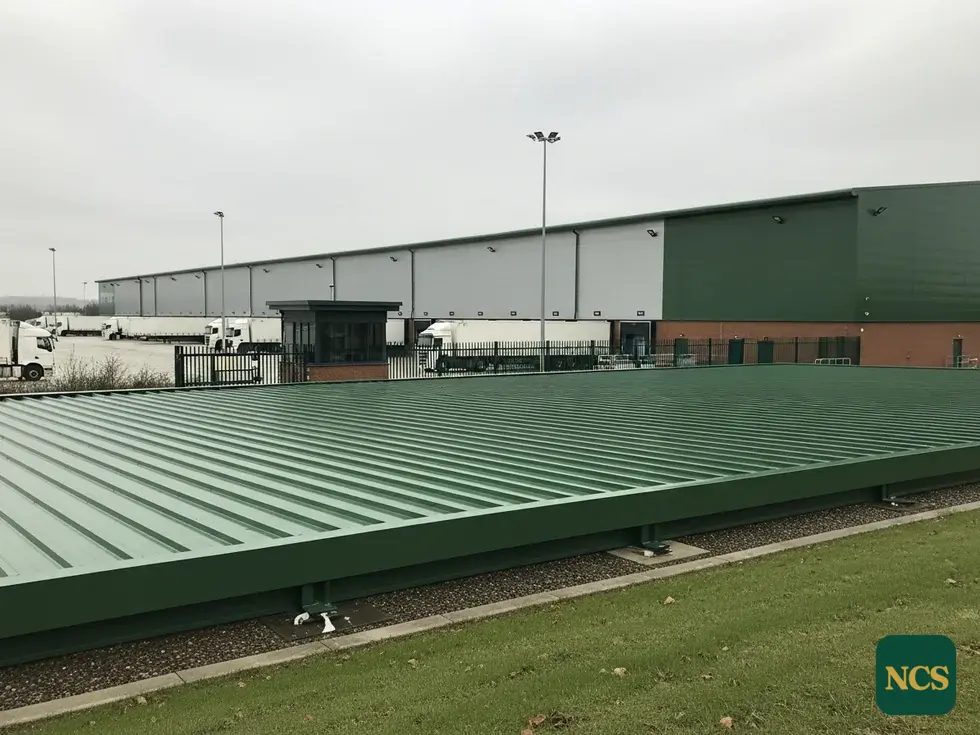
Everything starts with a proper survey: laps, edges, gutters, fixings and existing coating. We photograph and write it up so you can see the condition for yourself. If the factory finish is chalking and tired across the whole roof, it often makes more sense to treat the cut edges and apply a full roof coating together. One access set-up, one finished result. We’re based in the South East and work across the UK. Oxford and the surrounding Oxfordshire area are well within our usual working range. Send us the details and we’ll arrange a date to come and look.
Recently — July 2026
Every recommendation we make comes from getting up on the roof and looking, not from a photograph or a phone call.
Summer is the steadiest season for exterior coating: longer dry spells mean preparation, application and curing can be programmed with fewer weather delays.