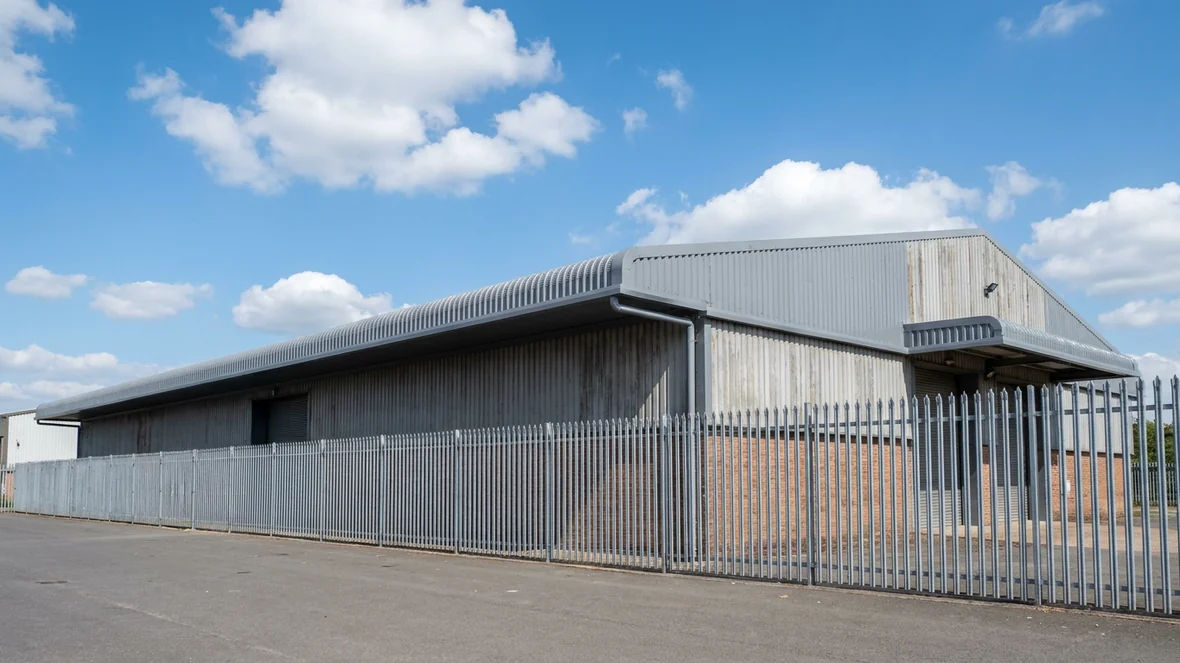
Where the rust starts on a profiled metal roof
On the industrial estates around Ipswich, the first sign of trouble is rarely the middle of a roof sheet. It is the bottom edge, the overlaps and the line just above the gutter. Profiled steel sheets are cut to length in the factory, and that cut runs straight through the galvanising and the coloured coating, leaving raw steel on show at every sheet end and side lap. The factory finish protects the face of the sheet for years; it was never able to wrap an edge it does not cover.
Once water reaches that bare steel, rust forms and then does something quietly destructive: it tracks back underneath the coating, lifting it away from the metal as it advances. What looks like a thin brown line from the yard is usually the visible front of corrosion that has already crept further than it appears.
Why estuary air hurries it along in Ipswich
Ipswich sits at the head of the Orwell estuary, and that matters for metal roofs. Damp, slightly salty air drifts up the river, and wind-driven rain pushes moisture deep into sheet overlaps where it cannot dry. Salt residue holds water against the steel, so the chemical reaction that drives rust runs faster than it would on a sheltered inland unit. Warehouses near the docks and units on the older trading estates often show edge corrosion sooner than newer buildings further out.
The defect also accelerates itself. As the coating peels back, more steel is uncovered, the lifted lip traps rainwater, and the corrosion line marches up the sheet. The laps are the worst spot, because capillary action draws water into the joint and keeps it there.
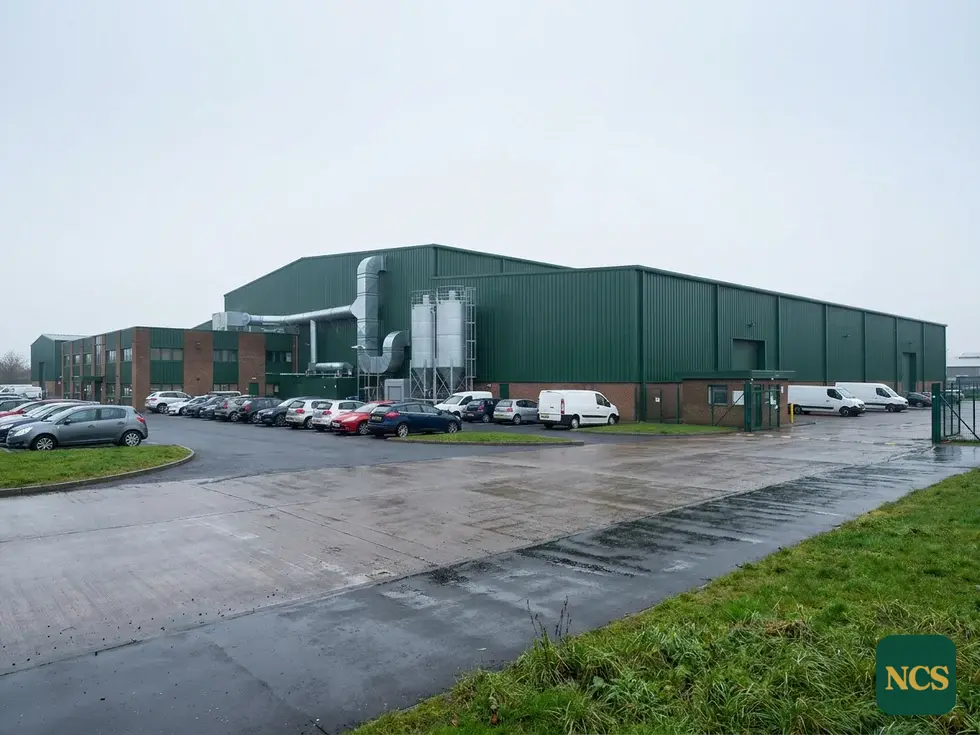
The economics of treating it while it is shallow
Caught early, this is a contained repair. The corroded edges are mechanically cleaned back to sound, bright metal, then treated, primed and sealed with a flexible coating system made to flex with the sheet through heating and cooling. The rest of the roof carries on working and the building stays open while the work happens.
Leave it, and the destination is perforation. Once a sheet has rusted through, no coating brings it back, and you move into sheet replacement: access equipment, stripping out, new sheets and disruption inside the unit. The distance in cost and upheaval between an edge treatment and a re-sheet is the entire reason to deal with rust while it is still surface deep.
What you can spot from the ground
- A brown stain running along the eaves, visible without climbing up
- Coating curling or flaking back at the sheet overlaps
- Rust rings forming around fixings near the sheet ends
- Flakes of rust or coating collecting in the gutters
- Damp patches appearing inside the building under the laps
None of these proves the full extent by itself. The honest measure comes from getting onto the roof, opening up the worst laps where it is safe to do so, and checking how far the rust has travelled out of sight.
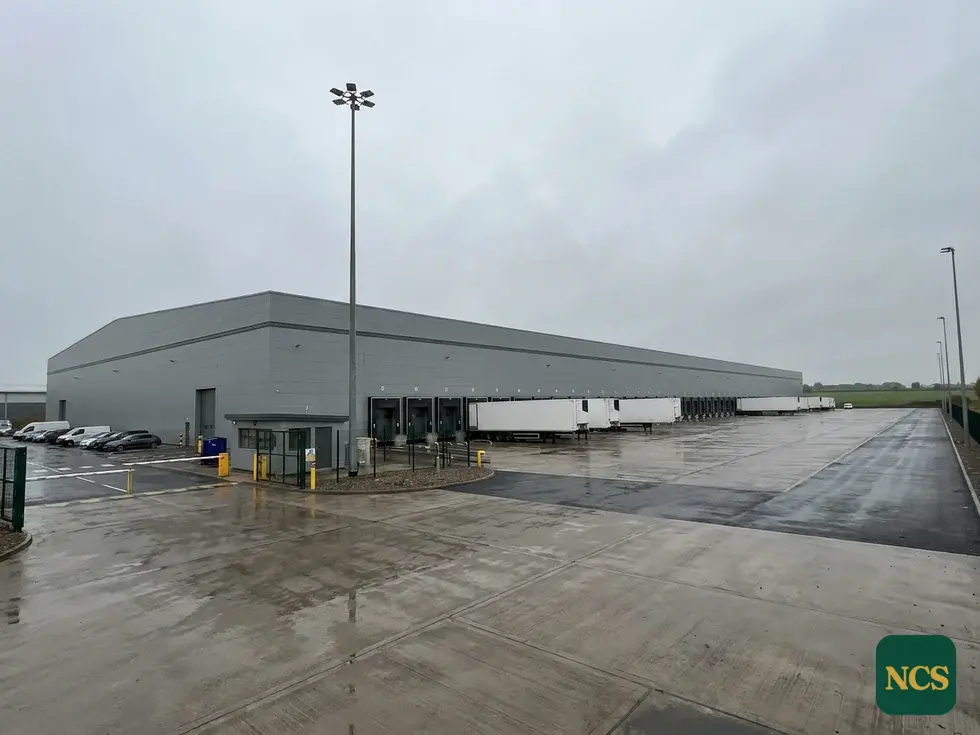
When we will tell you to stop coating and start replacing
We survey before we quote, and now and then the survey says the thing that loses us the easy job. If sheets are already perforated, if corrosion has run a long way under the coating, or if the underside is rusting where no treatment can reach, we will tell you plainly. Coating over a failed sheet is money spent on a finish that lifts again within a season. In that situation the genuine choices are swapping the worst sheets and treating the sound ones, or an overlay across the whole roof if it has reached the end of its life. Where the edges are failing but the sheet faces are also chalking and fading, dealing with the cut edges as part of a full roof coating usually makes better sense, so the surface is protected in one visit rather than in pieces. We are based in the South-East and work across England, and any recommendation for an Ipswich roof follows from photographs and findings, never a stock answer.