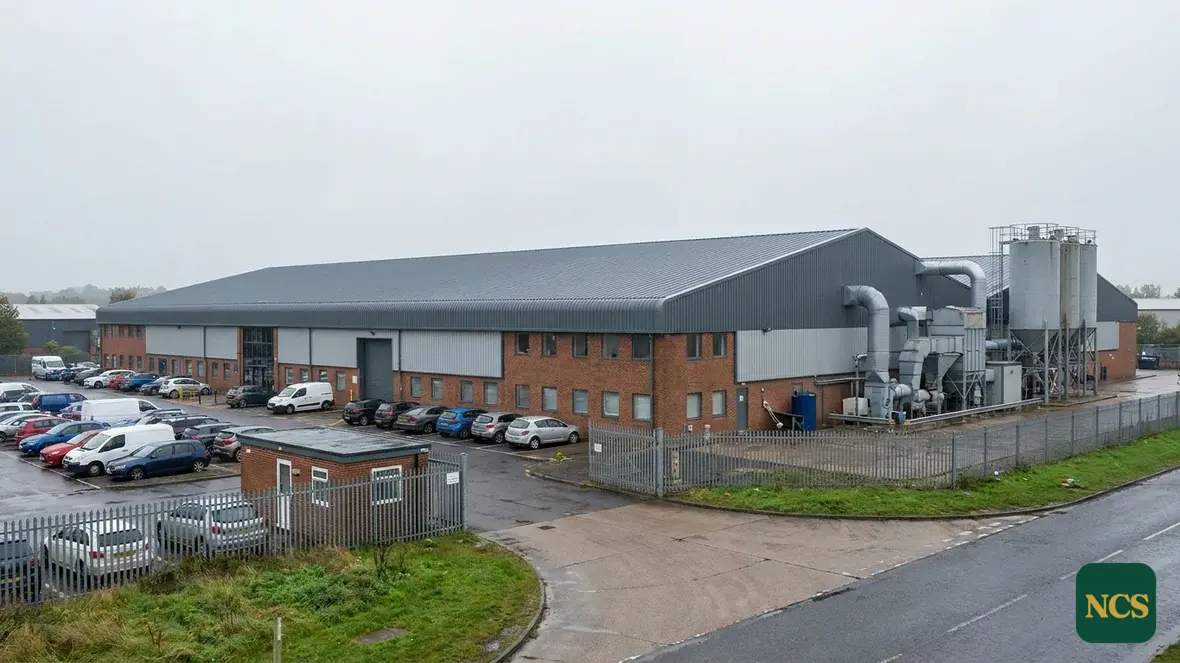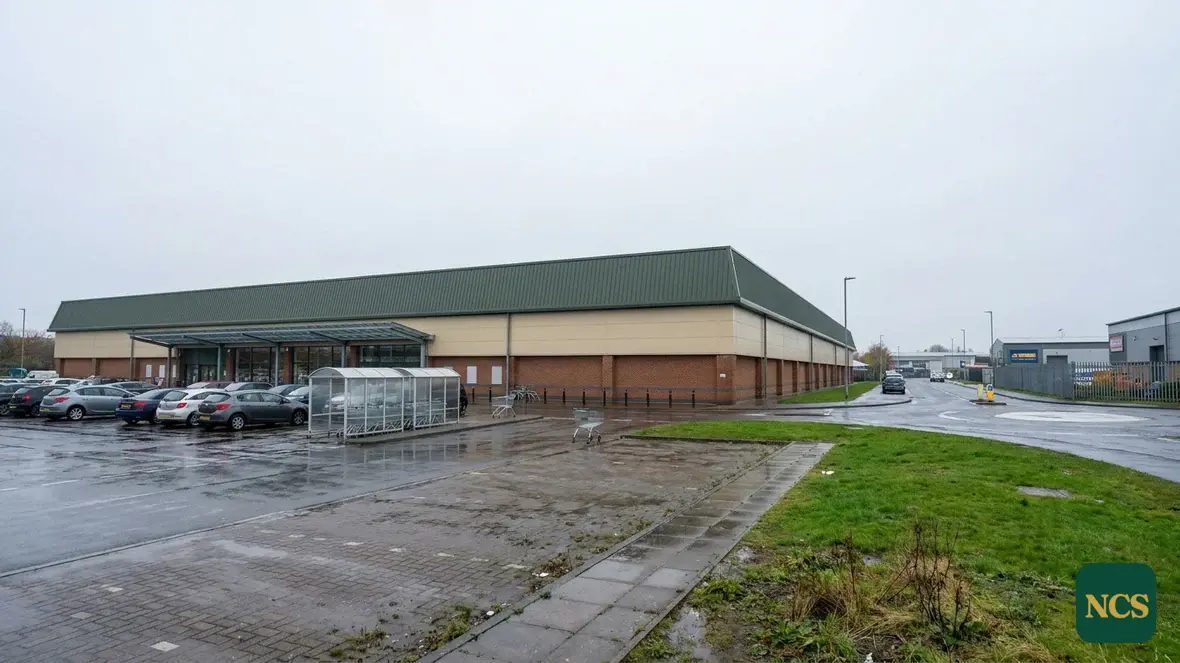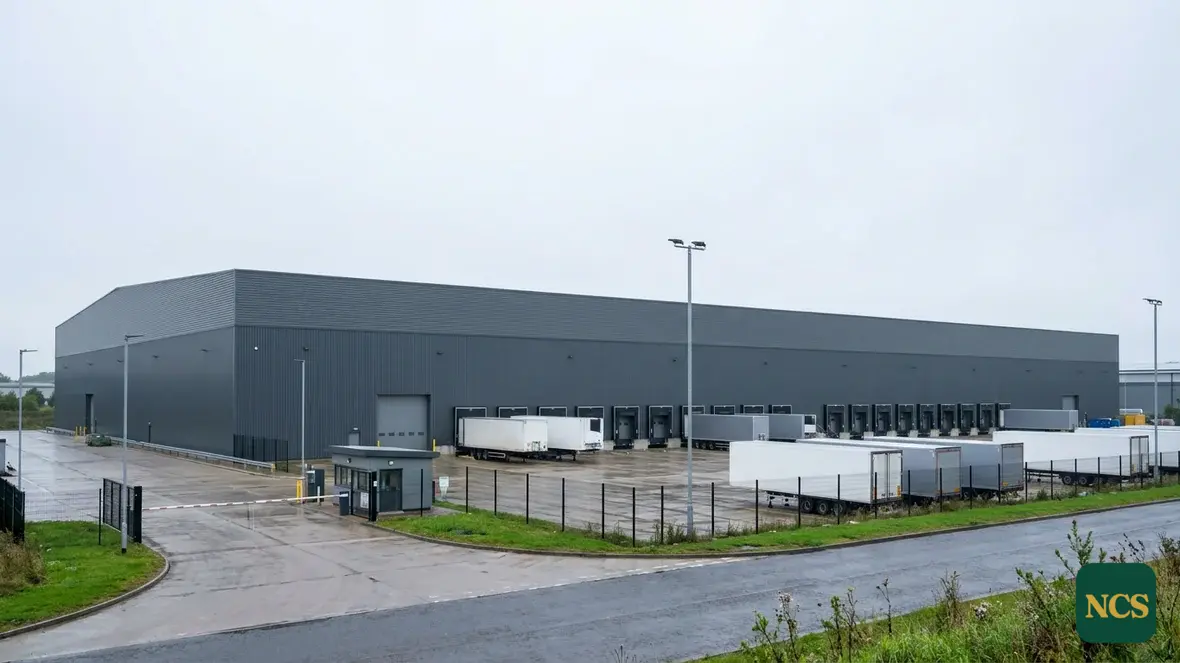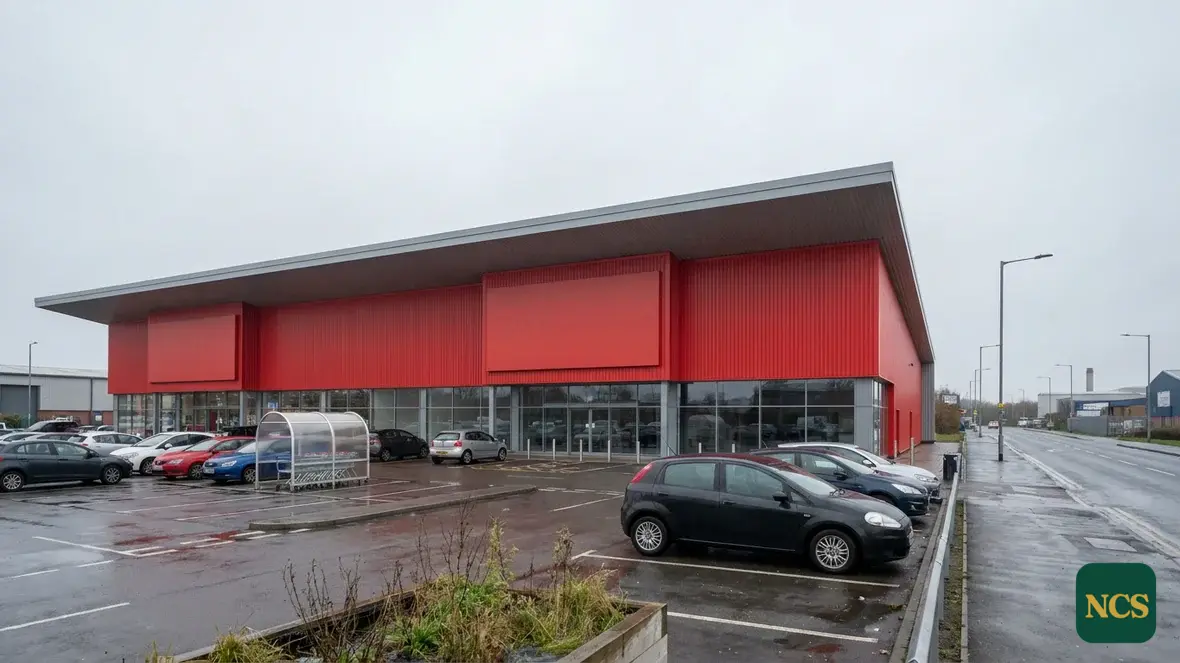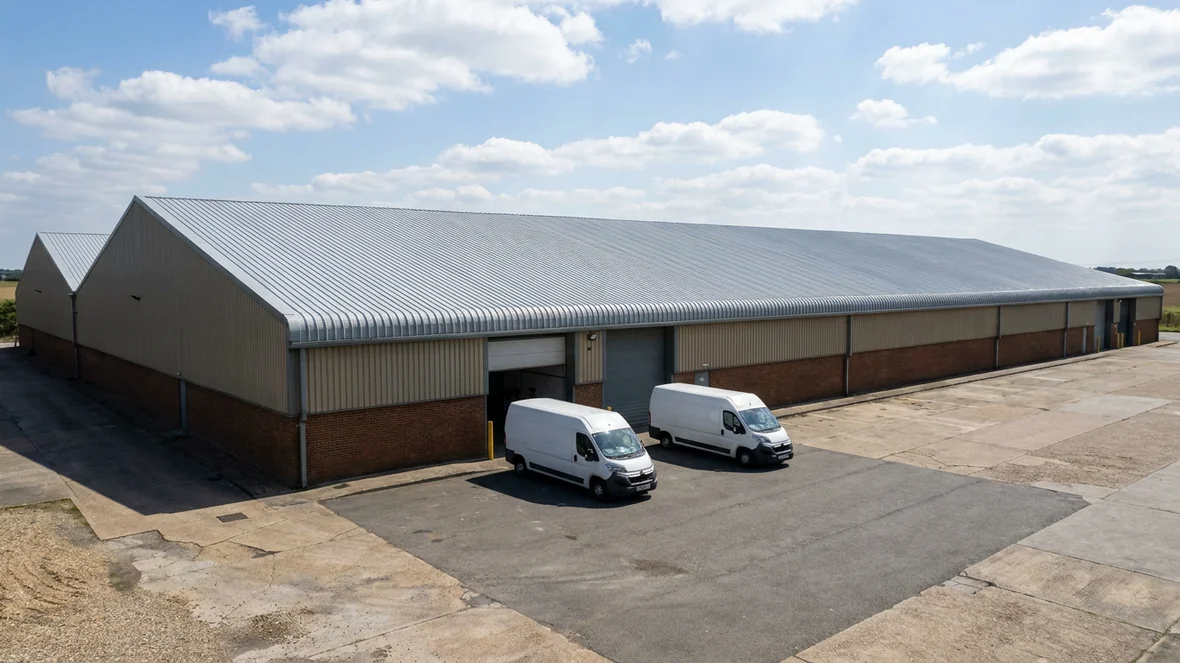
Ripon is a small North Yorkshire cathedral city, and its industrial stock matches its scale: modest trading estates, agricultural and light-industrial units, and workshops serving the surrounding market towns and farmland, most of them under profiled metal roofs that have weathered for decades. The buildings may be smaller than a city-edge logistics shed, but the roofing problems are the same, and so is the central decision. For the owners and estates teams here, the choice between coating and replacement is best made from a survey, not from a hunch or a price quoted over the phone.
Smaller stock, the same defects
A modest unit on a Ripon estate ages the way any profiled steel roof does. The factory finish chalks and thins under UV, fixing washers harden and split, and laps that were watertight for years begin to weep. Exposure to weather coming off the Dales and the open Yorkshire countryside keeps the roof working hard, and on agricultural buildings the additional internal moisture and the chemistry inside a livestock or storage shed can speed the wear along. None of it means the steel is finished. In most cases the sheets have life left in them, provided the surface is protected before corrosion takes hold beneath the old coating and starts thinning the metal from the edges in.
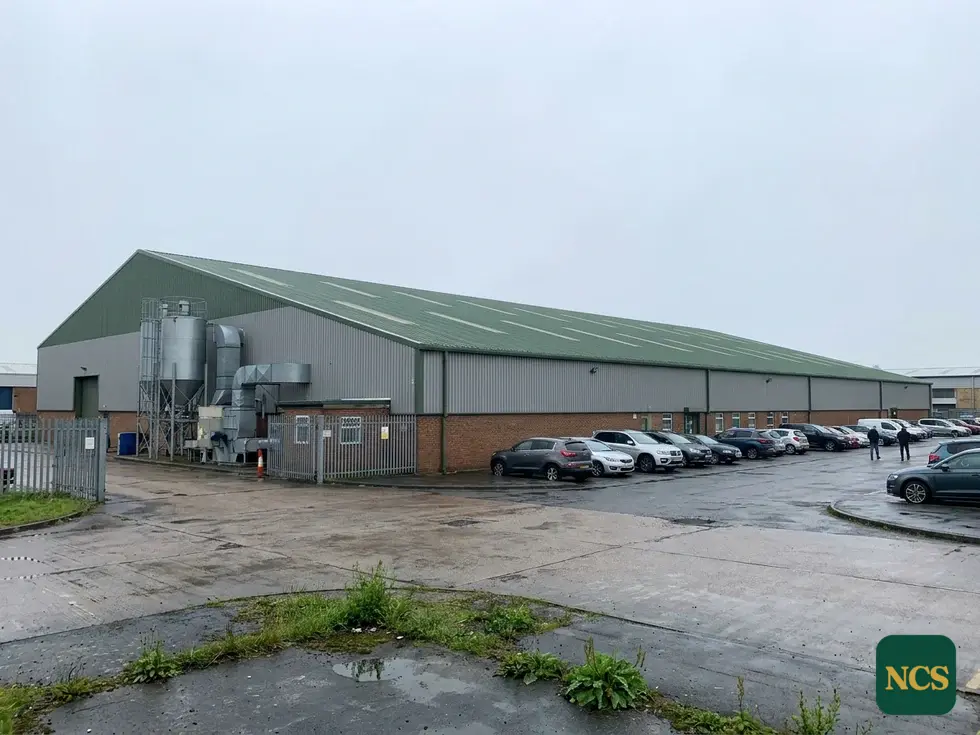
Cut-edge corrosion: where it begins
On these roofs the defect we find first is almost always cut-edge corrosion. Wherever a sheet was cut, the bare steel edge has no protection, water sits in the laps, and rust creeps back from the edge, lifting the finish and thinning the metal as it goes. Caught early it is straightforward: the edges are prepared, treated and sealed with a dedicated cut-edge system before the full coating is applied. Left for a few more Yorkshire winters, it perforates the sheet and turns a coating job into a replacement, which is a heavier cost for a smaller business to carry. The survey is there to catch it while the cheaper option is still on the table.
Coating without stopping the business
On a working unit, disruption counts, and for a smaller operation it counts even more, because there is rarely spare space to move into. Coating is carried out from roof level, so the building is never opened and stays weathertight throughout. There is no strip-off and no skip of old sheeting cluttering a small yard. Work can be phased so that the unit, or each tenant on a shared estate, keeps operating while we move across the roof. The job starts and ends with evidence:
- A physical survey of sheets, edges, laps, fixings and gutters
- A written condition report with photographs and plain findings
- A specification matched to the roof, not a standard template
- Works carried out from roof level while the unit stays in use
- A clear verdict on whether coating is the right call at all
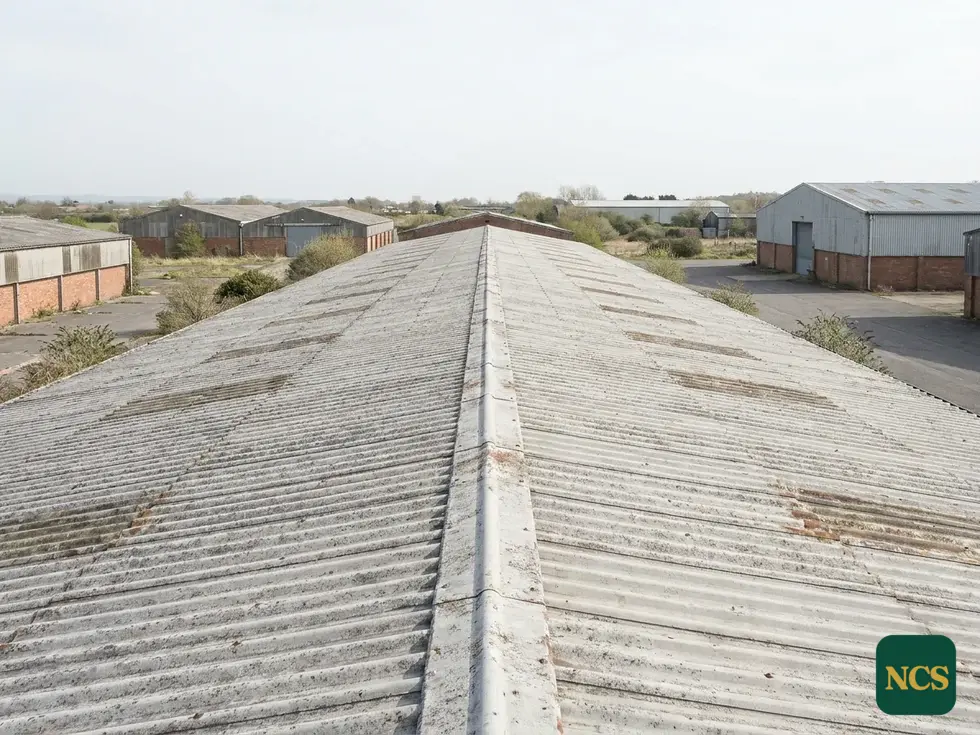
When we would say no to coating
We would rather lose the work than coat a roof that should be replaced. Widespread perforation, corrosion that has reached the purlins and fixings, or saturated insulation in a built-up roof all mean a coating only hides the decay and wastes the money. The same is true of fibre cement that has gone brittle, which is common on older agricultural buildings. Our survey establishes which side of that line your roof sits on, and the recommendation goes in writing either way, including the times when the honest answer is that coating gains you nothing. For a smaller operation, that straight answer protects the budget better than anything else we can offer.