Guide
MEES, EPC and Commercial Roofs: What Actually Applies
A landlord asked us recently whether coating the roof of a let warehouse would push its EPC from an F up to an E before a lease renewal. It is a fair question, and the honest answer is usually no, not on its own. Understanding a MEES commercial roof project means separating what the roof actually needs from what the certificate measures, because the two are not the same thing.
What MEES actually requires
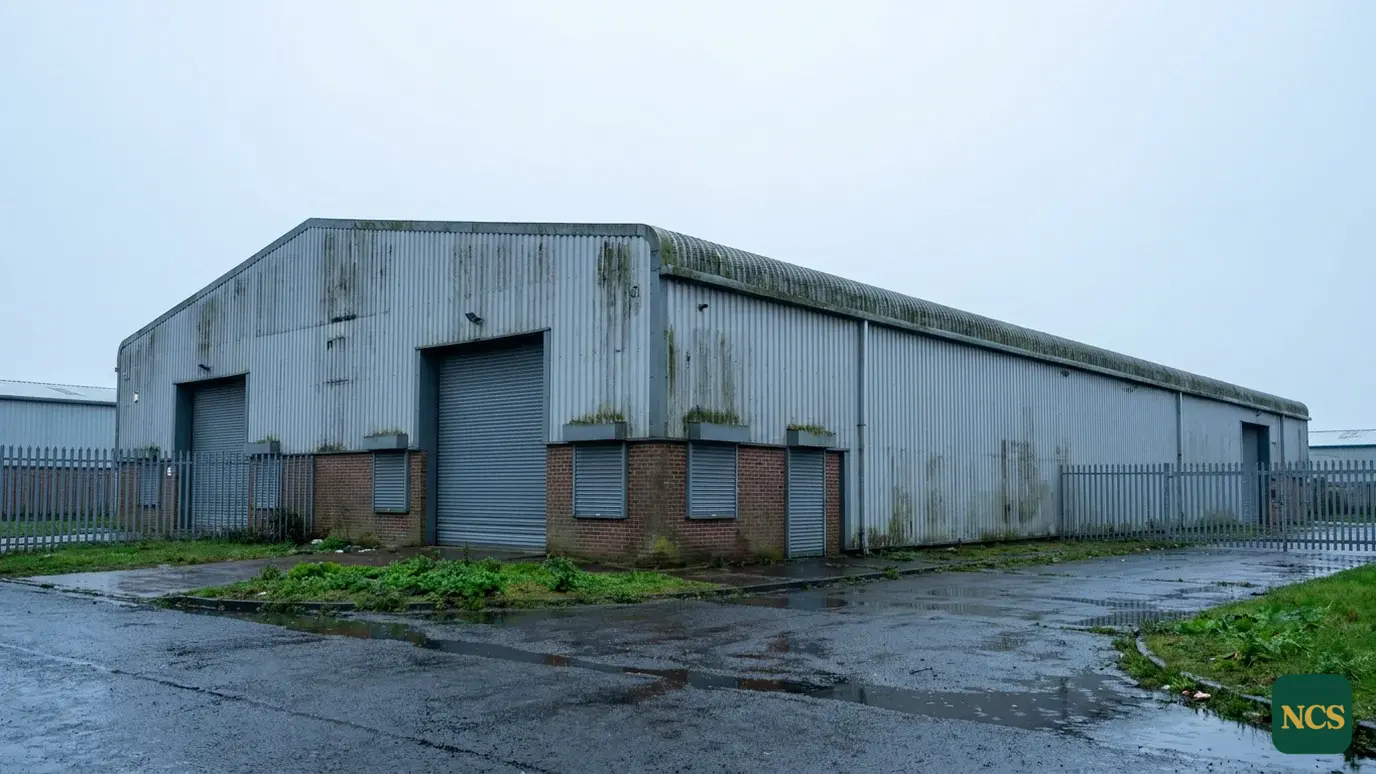
The Minimum Energy Efficiency Standards apply to let commercial property in England and Wales. Since 1 April 2023 it has been unlawful to continue letting a non-domestic building with an EPC rating below E, unless a valid exemption is registered. That covers buildings already under a lease, not just new lettings. Enforcement sits with local authorities, and penalties are linked to rateable value. For most landlords the practical trigger is a lease event or a sale, when the certificate suddenly comes under scrutiny and the pressure to act arrives all at once.
Where the EPC number comes from
A non-domestic EPC is produced by SBEM modelling, which estimates the energy a building would use for heating, cooling, ventilation, hot water and lighting. The assessor feeds in fabric U-values, the heating and cooling plant, glazing, and controls, and the software returns a rating from A to G. The point that surprises people is that the model only rewards measured, quantifiable inputs. If a piece of work does not change one of those inputs in a way the software recognises, it will not move the score, however sensible the work is on its own terms.
How a MEES commercial roof coating fits in
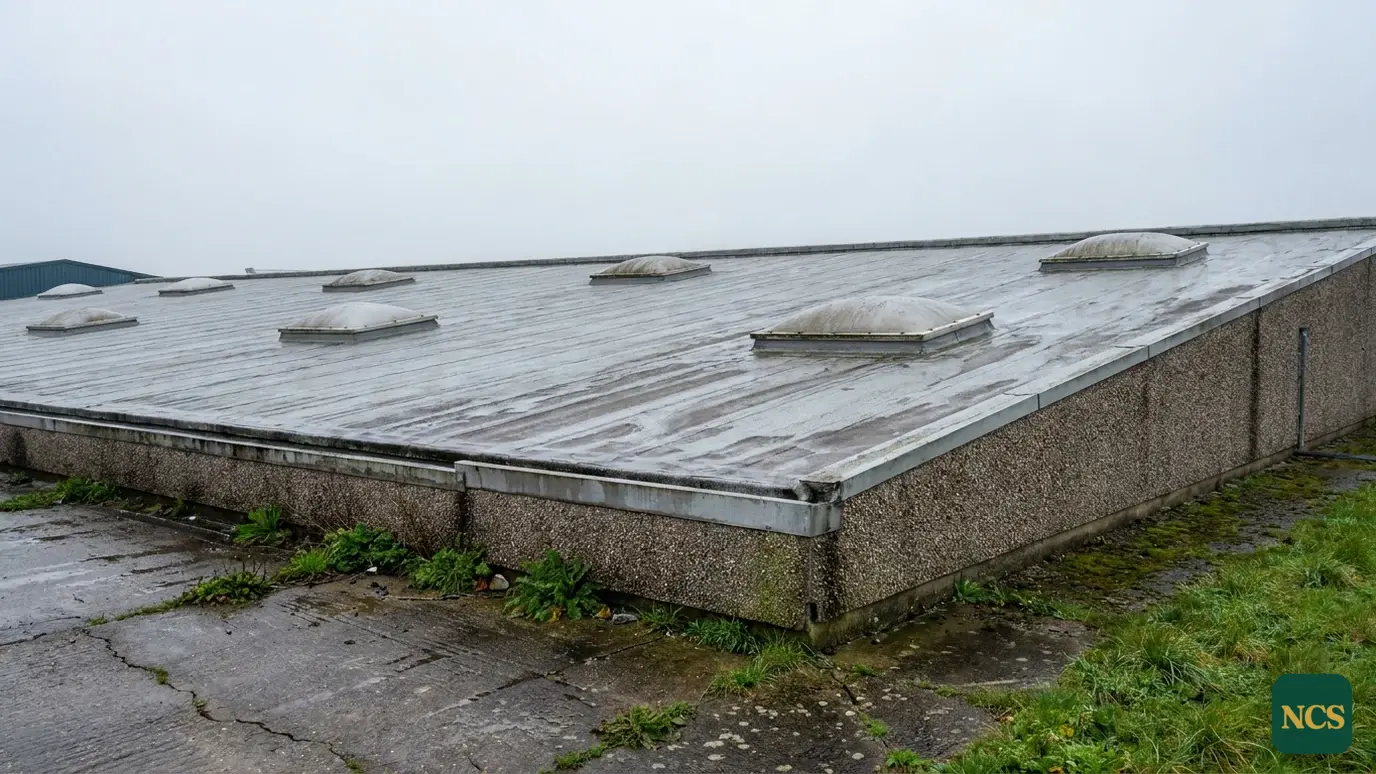
Roof coatings are a maintenance and protection measure first. On profiled metal, asbestos cement or single-ply, a survey-led coating system manages water ingress, cut-edge corrosion and surface breakdown, and it can extend the serviceable life of a roof that would otherwise face full replacement. Those are real, useful benefits. What a coating does not usually do is add thermal insulation, and insulation is exactly what the EPC model reads through the roof U-value.
What a coating does and doesn’t change
Some coatings are reflective, lowering surface temperature and easing summer cooling demand. In a building with significant mechanical cooling, that can bring a genuine energy benefit. But SBEM gives limited, and in many cases no, direct credit for solar reflectance on an opaque roof, so the modelled rating often stays where it was. If you want the roof itself to move the EPC, the reliable route is adding insulation, through over-roofing or an insulated overlay, which changes the U-value the assessor enters.
- Confirm the current EPC rating and its expiry date before planning any work.
- Ask the assessor which fabric inputs are actually driving the score.
- Check whether the building has meaningful mechanical cooling that reflectivity could ease.
- Separate roof condition needs, such as leaks, corrosion and asbestos, from EPC goals.
- Establish whether insulation can be added without overloading the existing structure.
| Measure | Roof benefit | Likely EPC effect | Notes |
|---|---|---|---|
| Protective roof coating | Extends life, stops water ingress | Little or none | No added insulation, no U-value change |
| Reflective coating | Lower surface temperature | Limited, only where cooling load is significant | SBEM credit for reflectance is restricted |
| Cut-edge corrosion treatment | Halts sheet edge failure | None | Purely a condition measure |
| Over-roofing with insulation | New weather line plus thermal upgrade | Can be significant | Changes the roof U-value in the model |
| Rooflight replacement | Reduced water risk | Small to moderate | Improves glazing and daylight inputs |
The consulted-on C and B targets
The government has consulted on raising the non-domestic minimum, with a proposed interim standard of EPC C and a later step to B. As things stand these are proposals rather than enacted law, and the timelines have shifted before. Planning around them makes sense, but treating them as fixed, guaranteed dates does not. If your building currently sits at E, the consulted direction of travel suggests further work will eventually be needed, which is a good reason to sequence roof and fabric upgrades sensibly rather than in a rush later on.
Getting the order right
The practical approach is to survey the roof honestly, deal with any condition that threatens the building, and only then decide whether the same access and scaffolding could also carry an insulation upgrade that moves the EPC. Doing both while the roof is already open is often far more economical than treating them as two separate projects a few years apart, each with its own set-up costs.
- Since April 2023 you cannot lawfully let a commercial building below EPC E without a registered exemption.
- A protective roof coating rarely moves the EPC because it adds no insulation.
- Reflective coatings help mainly where mechanical cooling is significant.
- A consulted C and later B remain proposals, not enacted law.
Common questions
Does a roof coating improve my EPC rating? Usually not by itself, because most coatings add no insulation, and the EPC model reads insulation through the roof U-value.
Will a reflective coating count for anything? It can reduce summer cooling energy, but SBEM gives limited credit for reflectance, so the rating often does not change.
Is EPC C now a legal requirement? No. E has been the minimum since April 2023, while C and B are consulted-on proposals rather than enacted law.
What actually moves a commercial roof’s EPC? Adding insulation, typically through over-roofing or an insulated overlay, which changes the U-value the assessor enters.
If your roof needs attention on its own merits, our roof coatings service starts with a proper survey, and you can arrange one through our free quote page.
Published by National Coating Specialists • survey-led commercial, industrial & agricultural coatings across the UK.
Accredited, insured & nationwide



Where we work
Sectors and buildings we coat
Survey-led coating, spraying and exterior refurbishment across commercial, industrial and agricultural property in the UK.
Get a free site survey, no obligation
One of our surveyors walks the building, photographs the condition and quotes only what it actually needs. Send us the details and we'll come back with a clear, practical route, not a hard sell.
Book your free site surveyWhat does your building need?
Pick the surface, then the problem. We will point you to the right service.