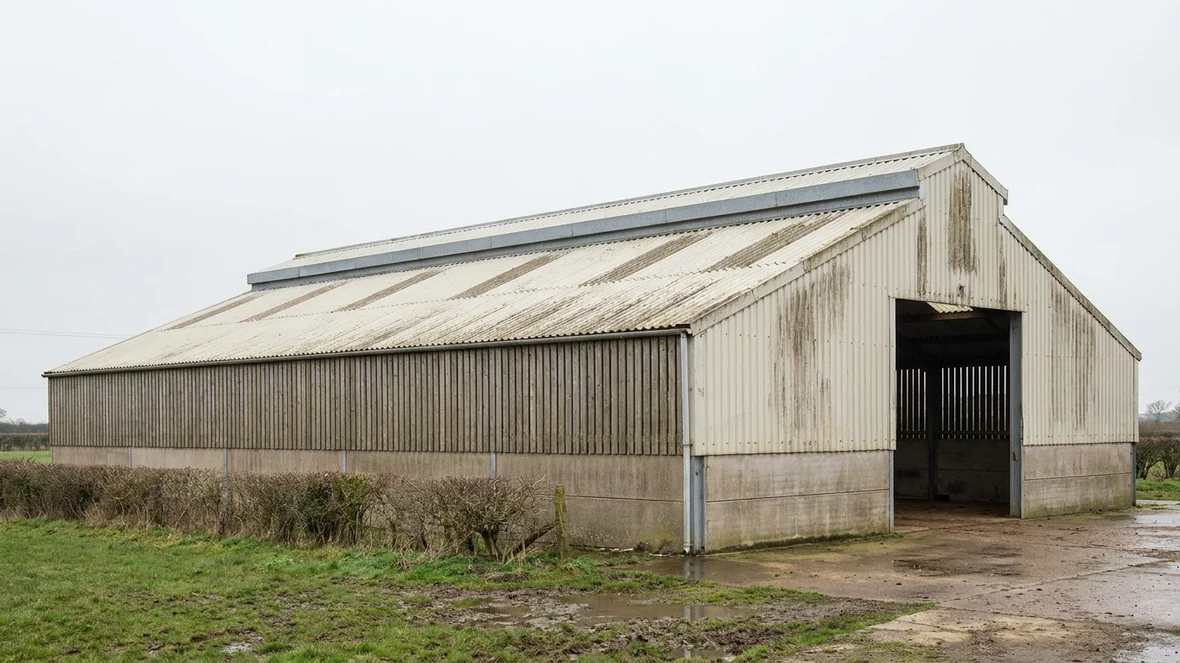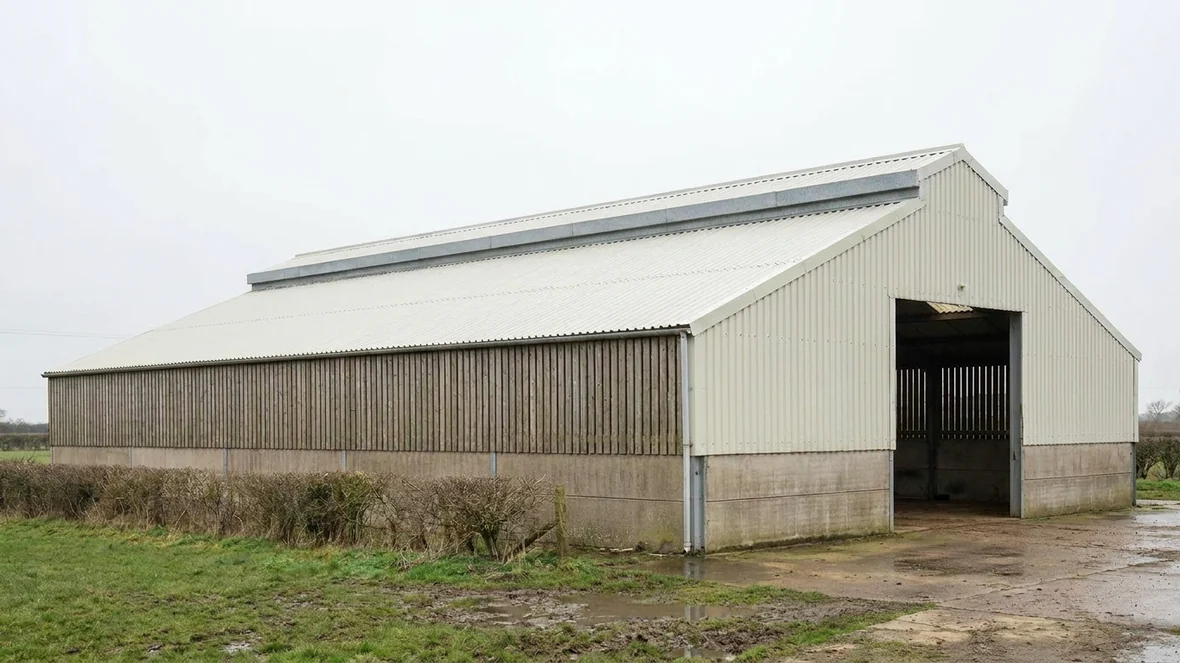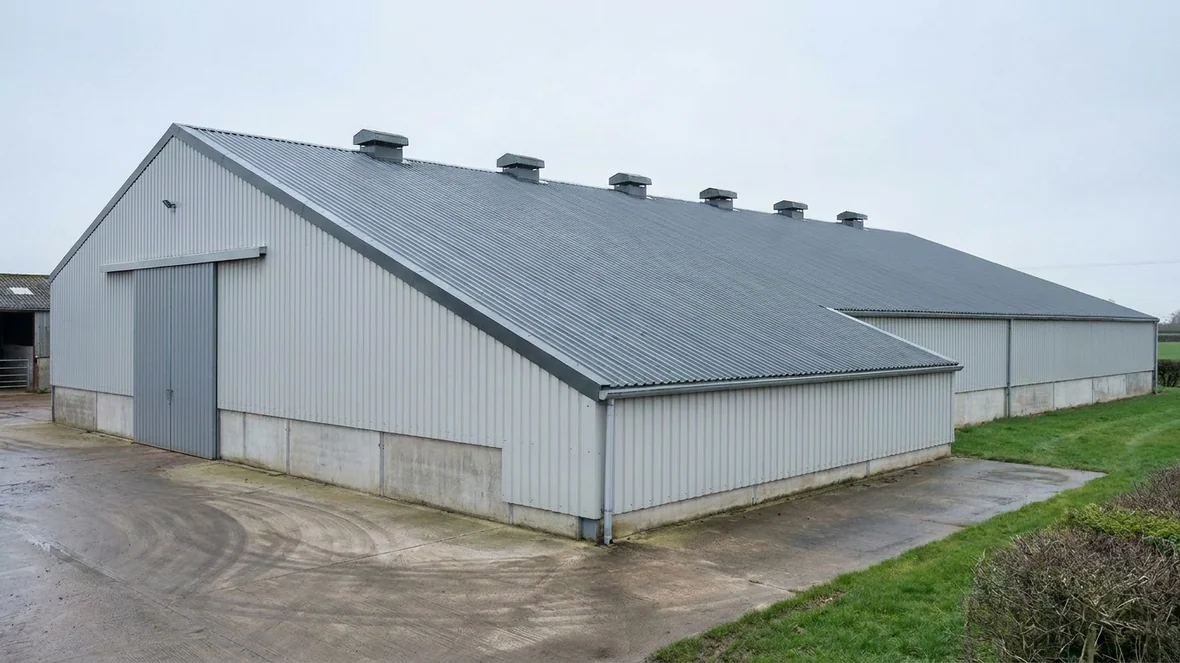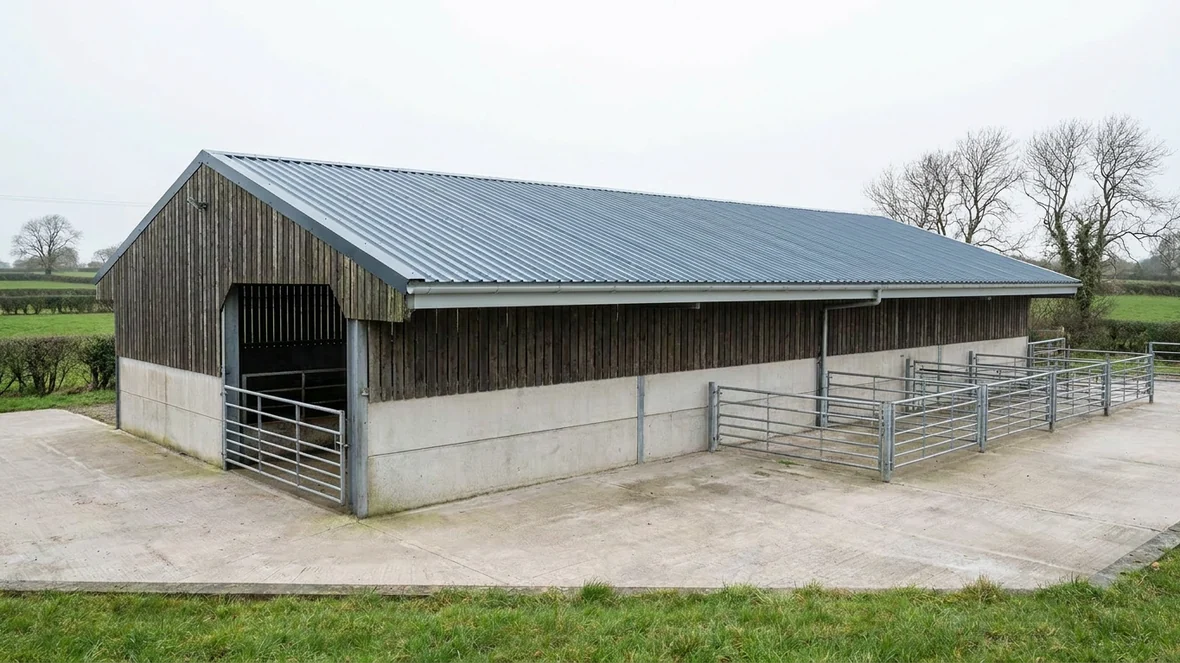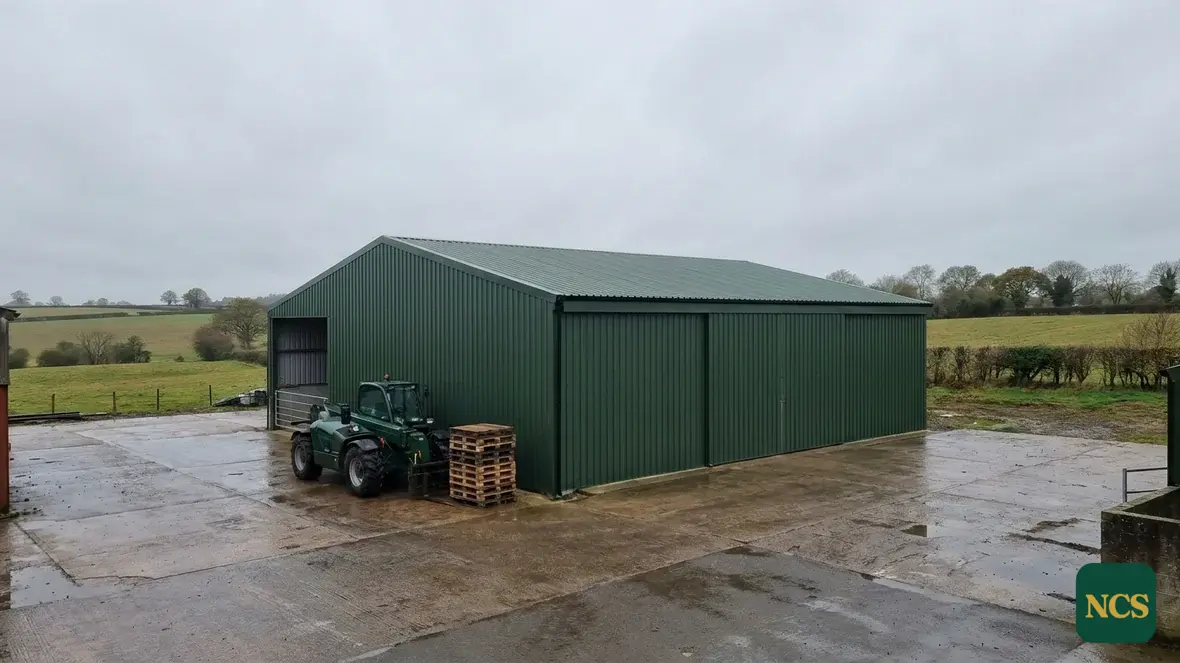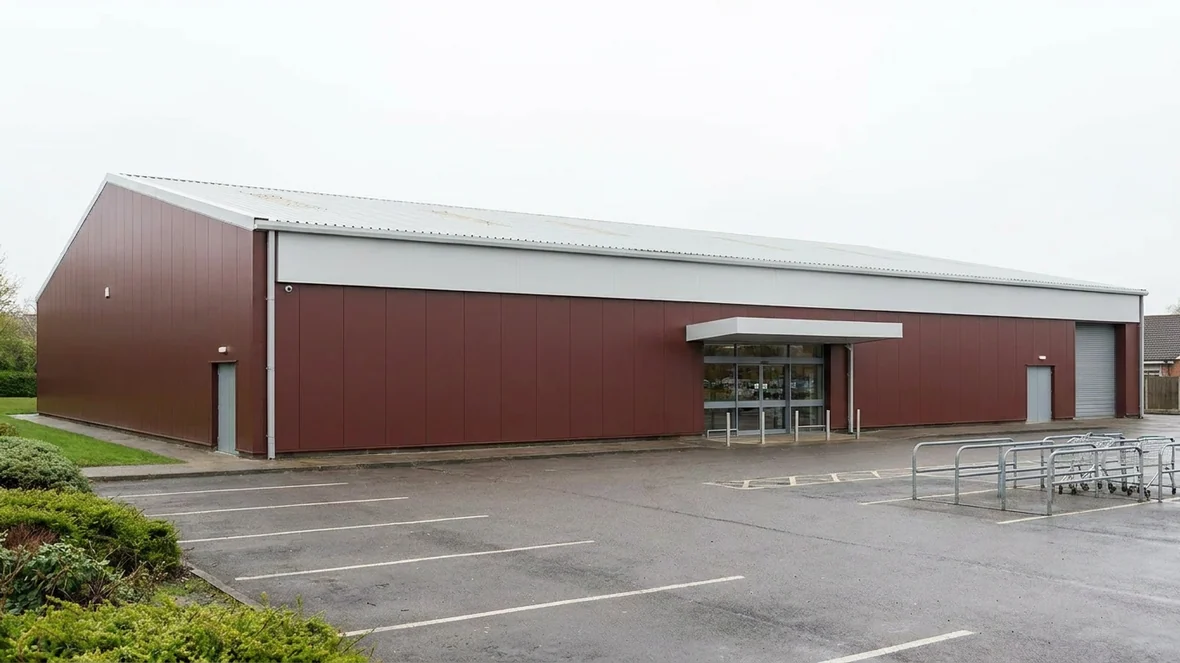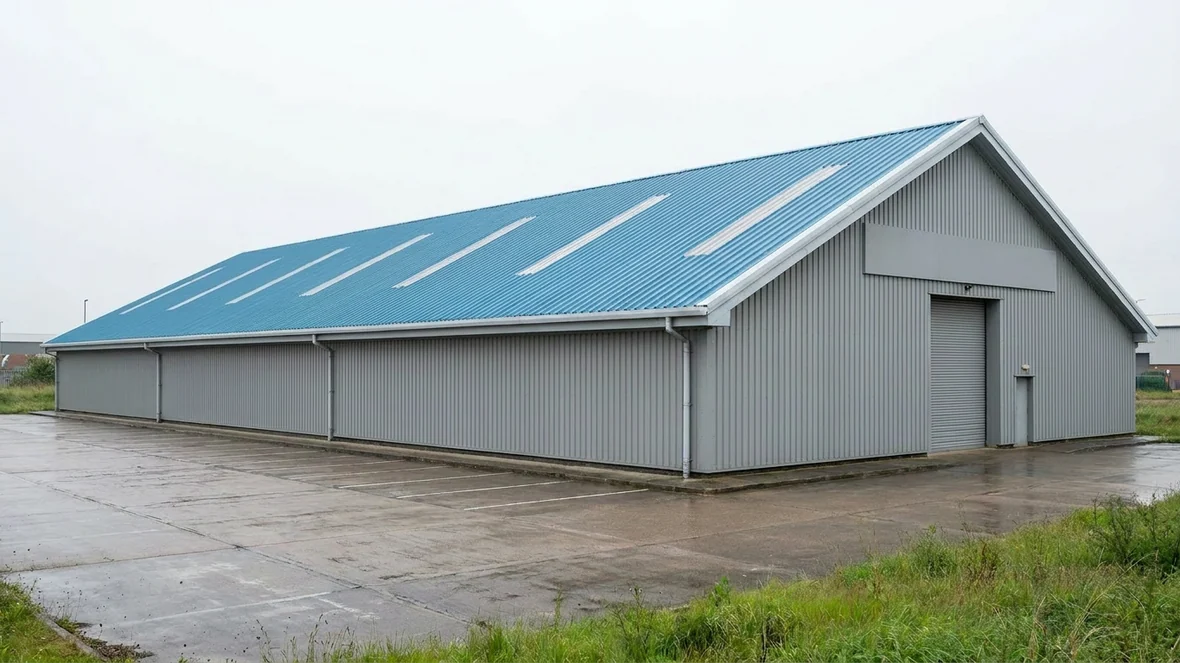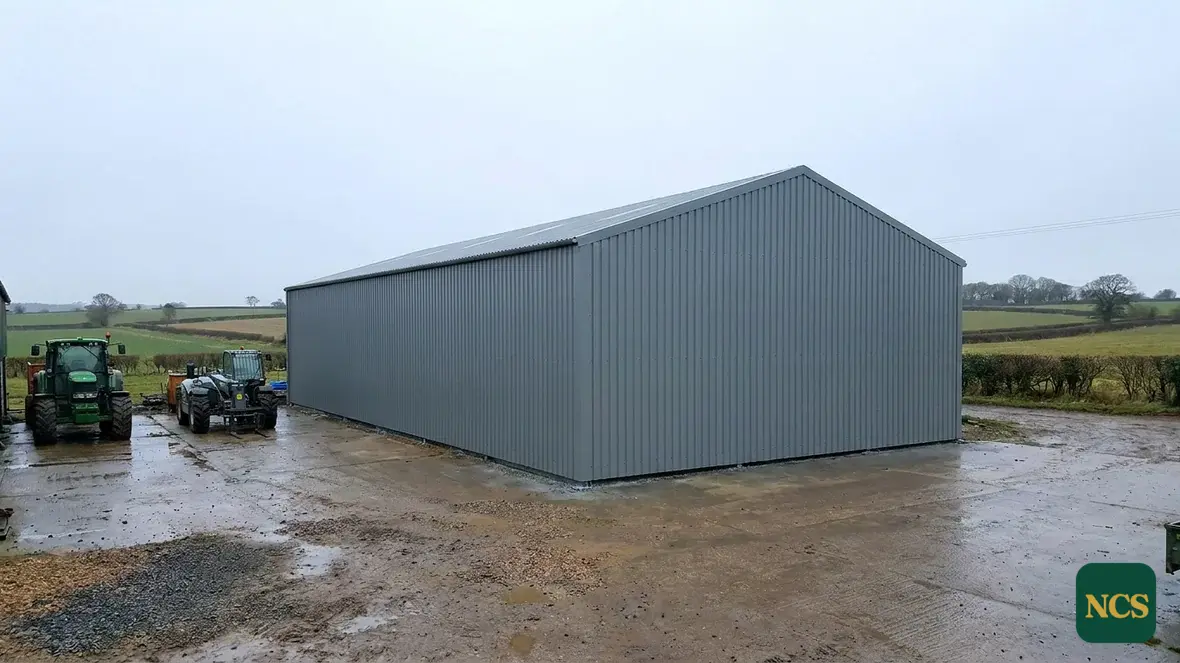




Farm buildings around Banbury sit in a working patch of north Oxfordshire: mixed arable on the Cherwell valley floor, livestock and dairy toward Bloxham and Adderbury. We see grain stores, cattle yards and machinery sheds that still earn their keep. Weather, livestock and washdown wear those roofs and walls hard. Agricultural Building Coating Banbury work starts with that reality, not with a product brochure.
We survey commercial and agricultural fabric across the Banbury area and the surrounding countryside. We assess substrate, water paths, cut edges and gutters before anyone talks about systems. Cost questions resolve through a free survey. Request one via our free quote form when you are ready.
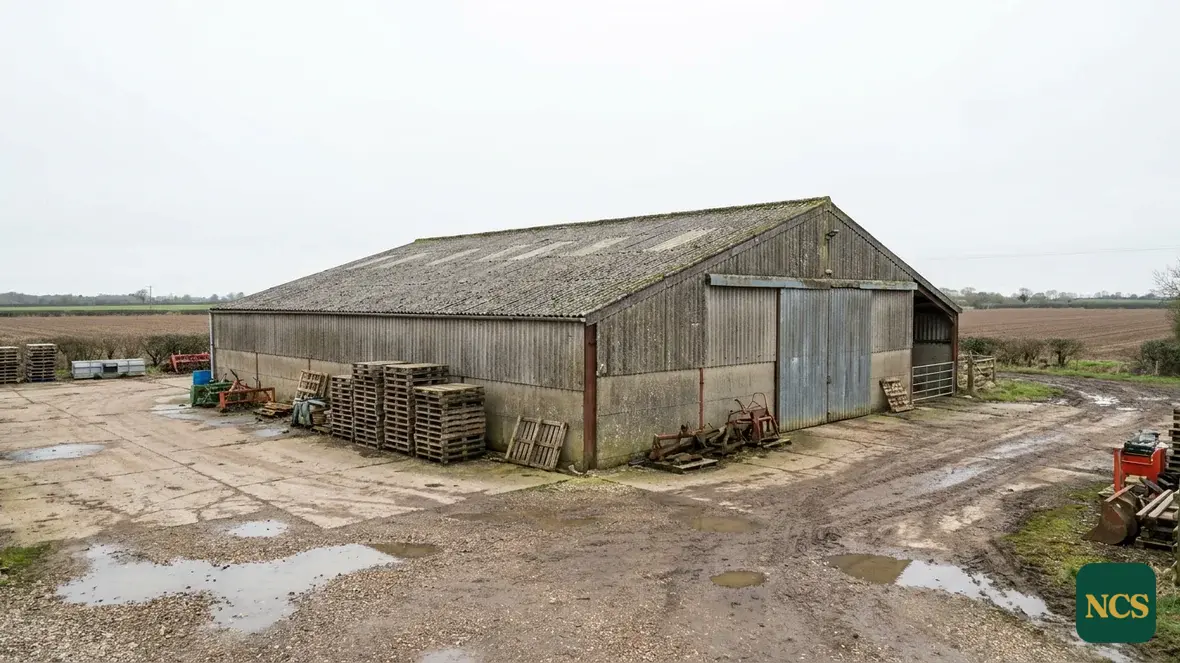
Why farm buildings around Banbury reach the coat-or-replace decision
North Oxfordshire does not need dramatic weather to damage farm fabric. Mild winters still bring freeze and thaw that open micro cracks in fibre cement and stress fixings on profiled metal. Driving rain tracks under failed laps and into purlin ends. On livestock buildings, ammonia from bedding and slurry softens coatings and attacks the underside of metal sheets. Power washdown after muck-out strips weak paint and leaves bare steel ready to rust.
Many Banbury-area sheds remain serviceable in frame, yet the surface has gone past ordinary maintenance paint. That is the coat-or-replace moment. Full re-sheet is right when structure has failed or sheets are shattered. Where the frame is sound and sheets are largely intact, a proper agricultural coating, including careful barn painting and cladding painting where the survey supports it, can restore weatherproofing without a full rebuild. Dairy and beef buildings toward Cropredy and Deddington often show soft underside corrosion, stained fibre cement and gutters choked with straw and silt. Those conditions decide whether a coating will hold.
The agricultural building stock of Banbury
Banbury grew as a market town serving the Cherwell countryside. The farm stock around it is mixed and practical: steel portal livestock sheds with fibre cement or profiled metal roofs, older pole barns for straw and machinery, grain stores on arable units, open-fronted cattle yards, and smaller field shelters toward Bloxham and Hook Norton. Some ranges sit on the town fringe at Bodicote and Adderbury. Others stand on higher ground where wind and driving rain hit harder.
Cladding mixes are common: fibre cement on older roofs, box-profile metal on later extensions, masonry gables, timber lean-tos, and roof lights that have yellowed and leaked. Long gutters collect harvest debris, and failed joints put water into the wall head. The same survey logic applies on the Warwickshire and Northamptonshire sides of the Banbury catchment: substrate first, then water paths, then a coating only if the fabric can take it.
What an agricultural building coating does and where it is the wrong answer
An agricultural building coating is a protective system applied to sound roof and wall sheets after preparation. On fibre cement it can encapsulate a weathered face and slow further breakdown. On profiled metal it can seal prepared steel, slow corrosion and restore a uniform weather face. On suitable walls and cladding, cladding painting and roof painting form part of that survey-led approach: prepare, treat defects, then apply a system matched to the substrate and building use.
Coating is the wrong answer when sheets are structurally failed, large areas are missing, purlins have lost section, or the building will be reconfigured and re-fixed. It is also wrong if cut-edge corrosion has eaten past a treatable margin, or if gutters will keep flooding the wall head. In those cases the honest survey says so. Where coating is viable, the work is not a thin decorative brush-over. Commercial painters who only handle clean factory walls are not the right fit for a slurry-stained cattle shed.
From a single barn repaint to a whole yard near Banbury, the survey comes first and the specification follows the buildings.
Asbestos cement sheets, cut edges and gutters: what gets assessed first
Older farm roofs around Banbury frequently carry asbestos cement sheets, managed under the Control of Asbestos Regulations. We do not disturb them casually. The survey notes apparent sheet type, condition and whether encapsulation by coating is sensible, or whether a specialist asbestos route is needed first. If licensed removal or further testing is required, that comes before paint.
Cut edges on metal roofs are a second priority. Profiled steel fails first at cut ends, flashings and bolt lines where the original galvanising was thinnest. Corrosion repairs at those edges often decide whether a full roof coating will last. Gutters come third: valley gutters fill with chaff and silt, joints open, and water tracks under the sheet edge. Gutter relining or repair may sit alongside roof work, or it may be the first job if the sheets are sound but water still runs into the wall.
- Substrate type and condition on roofs, walls and flashings before any system talk
- Asbestos cement sheet condition and whether encapsulation is even appropriate
- Cut-edge corrosion, fixings and lap integrity on profiled metal
- Gutter runs, outlets and wall-head water paths that would defeat a new coating
- Building use, livestock access and calendar windows for safe site work
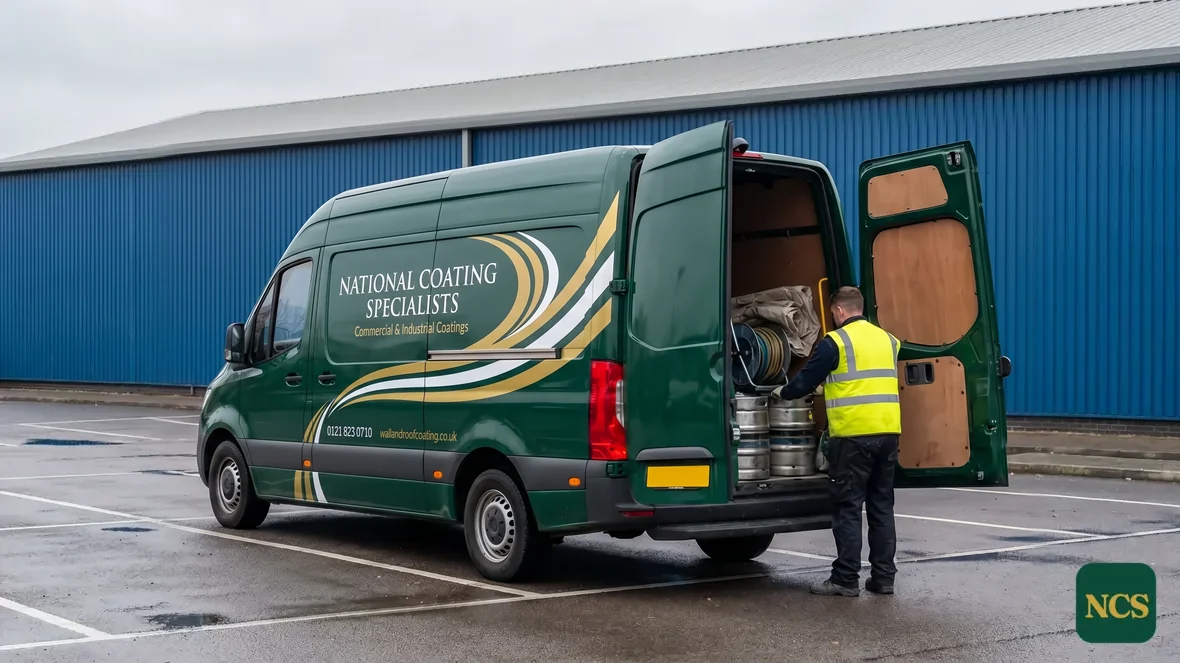
Our survey-led process, worked around the farming calendar
Farms around Banbury do not stop for contractors. Harvest, turnout, housing and slurry windows shape when a yard can open for exterior work. Our process starts with a free survey arranged around that calendar. We walk the building, photograph defects, note access and livestock constraints, and write up condition and options without pressure to buy a system on the day.
If coating is viable, the next step is a clear scope: elevations and roof planes, preparation, edge and gutter work, and what must wait. Roof painting and barn painting on livestock buildings may need empty pens or temporary segregation. Grain stores are often easier after harvest. On site, work follows the agreed scope. The survey report locks that scope; the free survey is how you get it without committing to a full job first.
Why the survey comes before any specification
Specification without survey is guesswork. Two sheds on the same lane out of Banbury can share a silhouette and still need different answers: one may need edge treatment and a metal system, the other asbestos-aware encapsulation or a decision to re-sheet. Colour charts do not settle that. Standing under the eaves with light on the cut ends does.
The survey also protects the owner from false economy. A thin coat on rotten edges wastes a season. A full re-roof on sound sheets can waste capital better spent on gutters and a proper coating. We put the evidence first so the coat-or-replace choice is honest. If coating is not right, we say so and stop. If it is right, you leave with a scope that matches the building you own.
For the wider service picture, see our agricultural building coatings area guide. When you are ready for a Banbury or surrounding-yard visit, request a free survey and we will arrange a time that fits the farming calendar.
Common questions about agricultural building coating Banbury
How long will a new coating system protect my farm building near Banbury?
When we specify an agricultural building coating in Banbury, we consider the building’s orientation, the substrate material and local exposure. A well‑applied system of corrosion‑resistant primer and high‑build, colour‑stable topcoat can give effective service for several decades. Longevity depends on regular gutter clearance, prompt repair of any mechanical damage and periodic visual inspections. We recommend a condition survey when the coating begins to lose gloss or shows early signs of chalking, so we can plan refurbishment before the substrate is compromised.
Can your coatings stop rust permanently on a steel‑framed grain store?
No coating can offer a permanent cure for rust, but a properly specified agricultural building coating Banbury system arrests existing corrosion and excludes moisture and oxygen. We remove all loose rust and mill scale by mechanical preparation, then apply a zinc‑rich epoxy primer to the bare steel. This is followed by a chemical‑resistant intermediate coat and a finish that handles frequent washdowns and grain dust. Provided the film remains intact, the steel frame stays protected indefinitely; we design systems to be recoatable so maintenance is straightforward.
What type of coating works best on cement fibre or profiled metal roofs?
For cement fibre roofs we use a flexible, water‑borne roof coating that accommodates thermal movement without cracking. It bridges minor surface crazing and carries a high vapour transmission rate, which helps prevent trapped moisture in the sheet. On profiled metal, including aluminium and plastisol-faced steel, we apply a two‑pack adhesion primer followed by a tough, polyurethane‑reinforced topcoat that resists chalking and keeps its colour through many seasons. Both systems can be applied at wet film thicknesses that maintain the original profile drainage.
Do you need to wash or blast the surfaces before recoating?
Yes, surface preparation is the single most important stage of any agricultural building coating Banbury project. We assess every building’s condition and select a method appropriate to the substrate. Typically we remove all organic growth, loose coatings and corrosion with low‑pressure washing or dry abrasive blasting. Glossy or chalky surfaces are abraded to provide a mechanical key. After cleaning, we verify the surface is dry and free of salts or dust before a single tie‑coat or primer is applied. Cutting back on preparation reduces adhesion and shortens the system’s useful life, so we never compromise this step.
When can you apply agricultural building coatings in Banbury given our damp winters?
We work year‑round but we only apply coatings when the ambient temperature and the substrate temperature are safely above the dew point. For water‑borne systems we need the surface to be a few degrees above freezing and rising; solvent‑borne systems tolerate slightly lower temperatures. We monitor weather forecasts and use infrared thermometers to check steel temperature before and during application. In damp winter months this often means coating between mid‑morning and early afternoon. We plan the sequence of elevations to follow the sun and bring sheeting or tarpaulins to protect freshly coated areas if a sudden shower threatens.

Recently — July 2026
Through the drier summer months we can programme preparation, coating and curing with far less chance of a weather delay holding the job up.
The starting point is always a proper survey of the sheets, laps, fixings and gutters, written up so you can see the condition for yourself.