


Huddersfield sits where the Colne and Holme valleys meet the Pennine fringe. Farm buildings here take wetter, windier weather than lowland England. Rain lingers on north slopes, frost works into tired sheets, and livestock yards add muck, ammonia and washdown. We’re National Coating Specialists, an exterior coating contractor working across England from a South-East base. We cover holdings around Huddersfield, Halifax, Brighouse and the land beyond Wakefield.
Agricultural building coating in Huddersfield is about assessing those roofs and walls properly before anyone commits to a programme. A grain store, a cubicle shed and an older fibre-cement barn don’t age the same way, and they don’t need the same answer. The job starts with what the building shows, not a system chosen from the road.
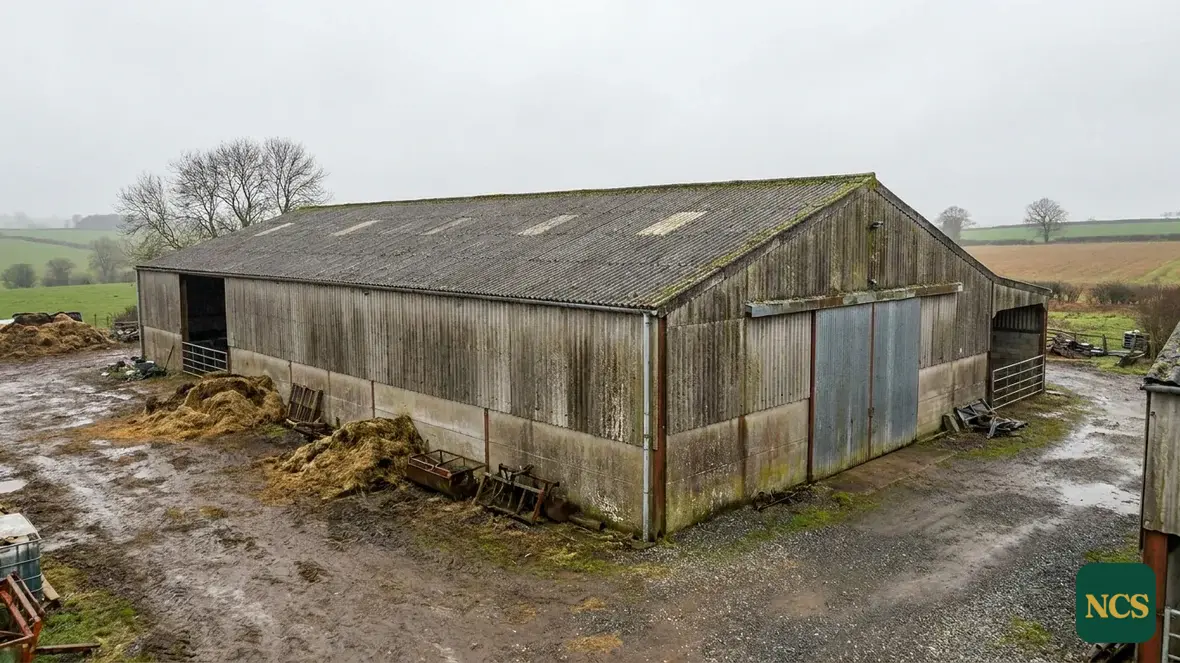
Why farm buildings around Huddersfield reach the coat-or-replace decision
West Yorkshire weather is hard on agricultural cladding. Wind-driven rain saturates porous fibre-cement, moss thickens on shaded pitches, and freeze-thaw opens hairline cracks. On profiled steel the factory finish chalks and thins, then water finds cut edges and fixings first. Inside, housed cattle and sheep put warm, humid air against cold metal, so condensation attacks from the underside while ammonia from slurry and bedding softens coatings. When leaks stain purlins, soak bedding or threaten dry stores, owners face a clear choice: coat a structurally sound roof, repair local damage then coat, or accept the sheet is finished and plan replacement. The right call starts with a survey that separates surface wear from structural failure.
The agricultural building stock around Huddersfield
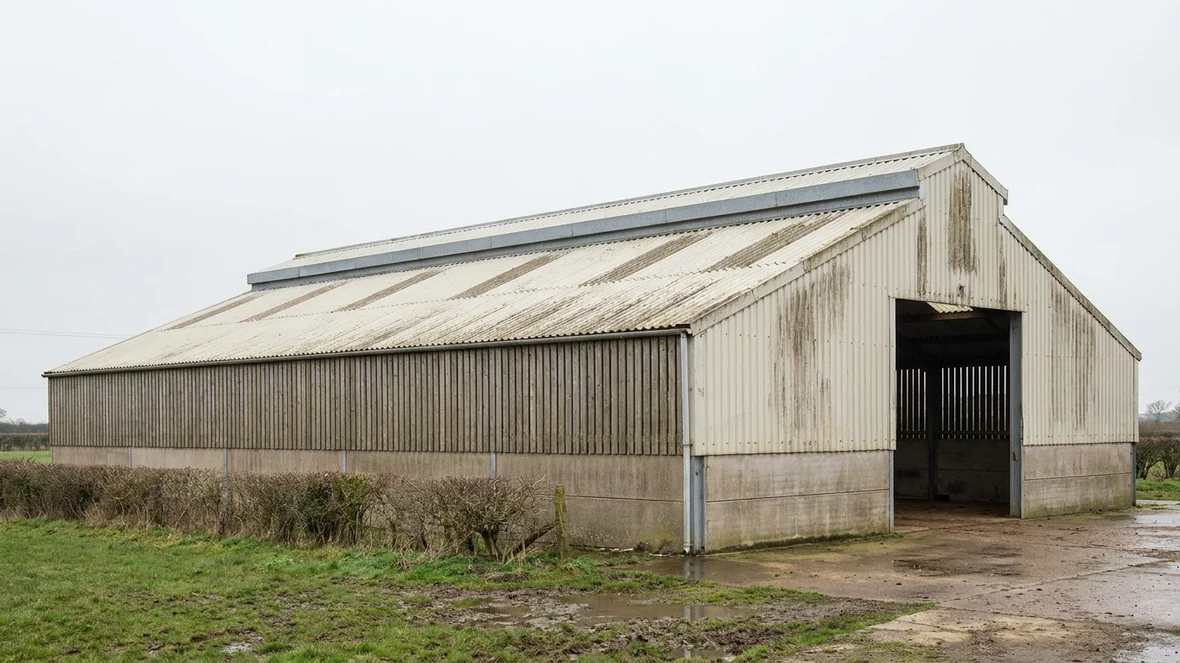
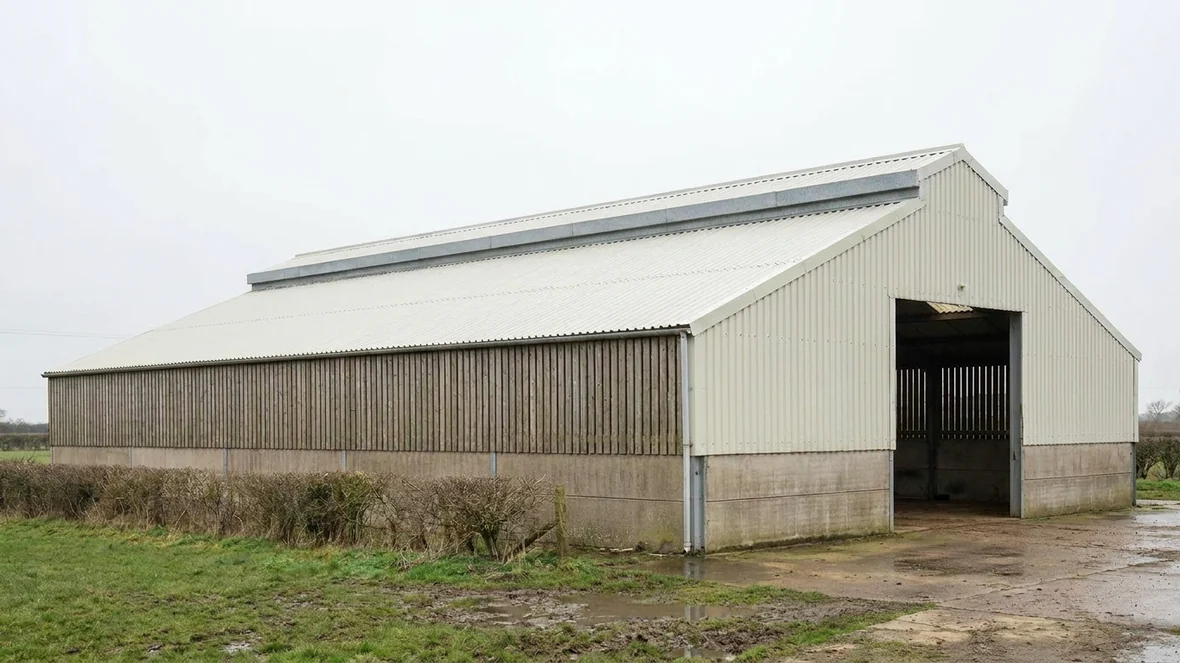
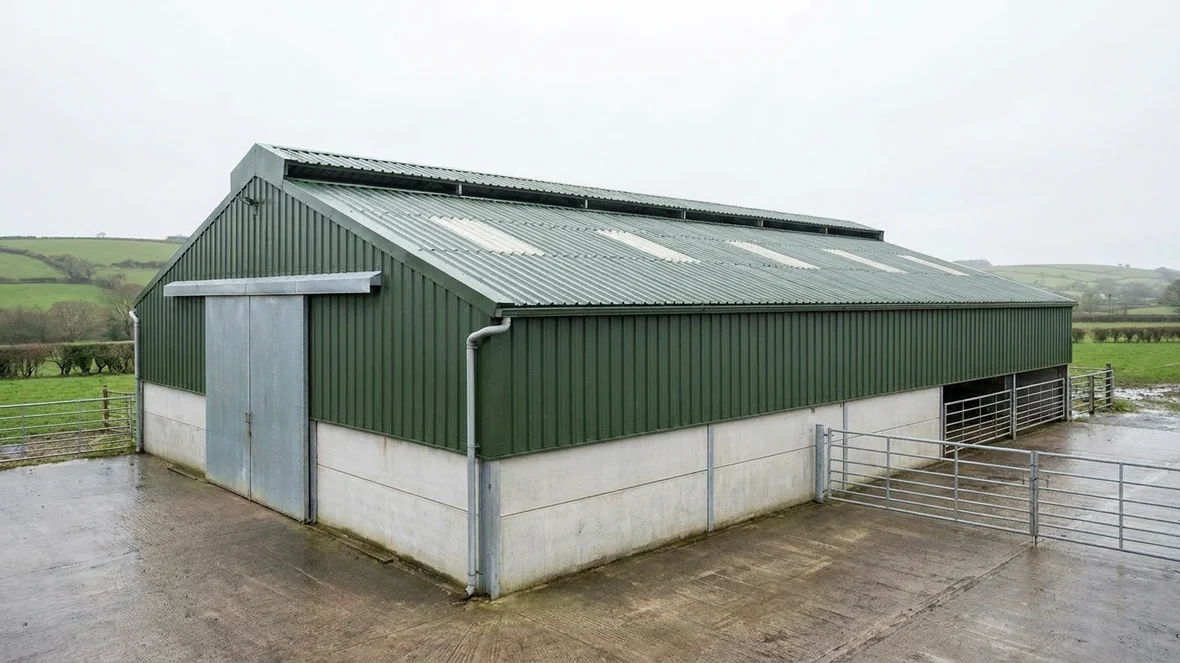
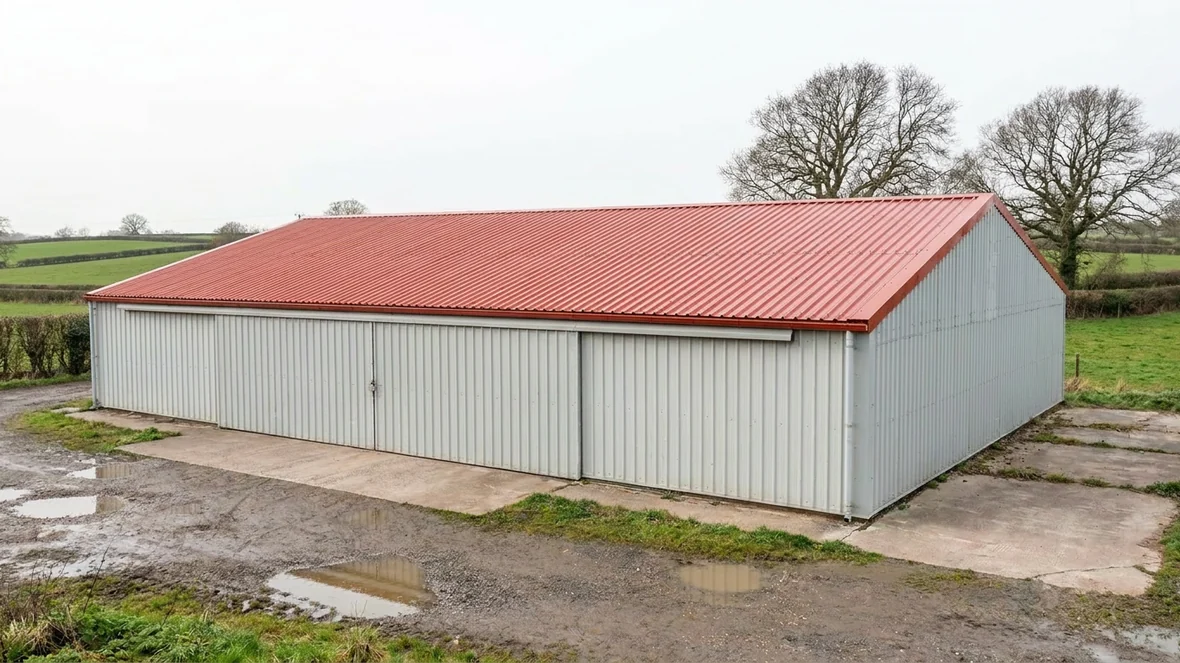
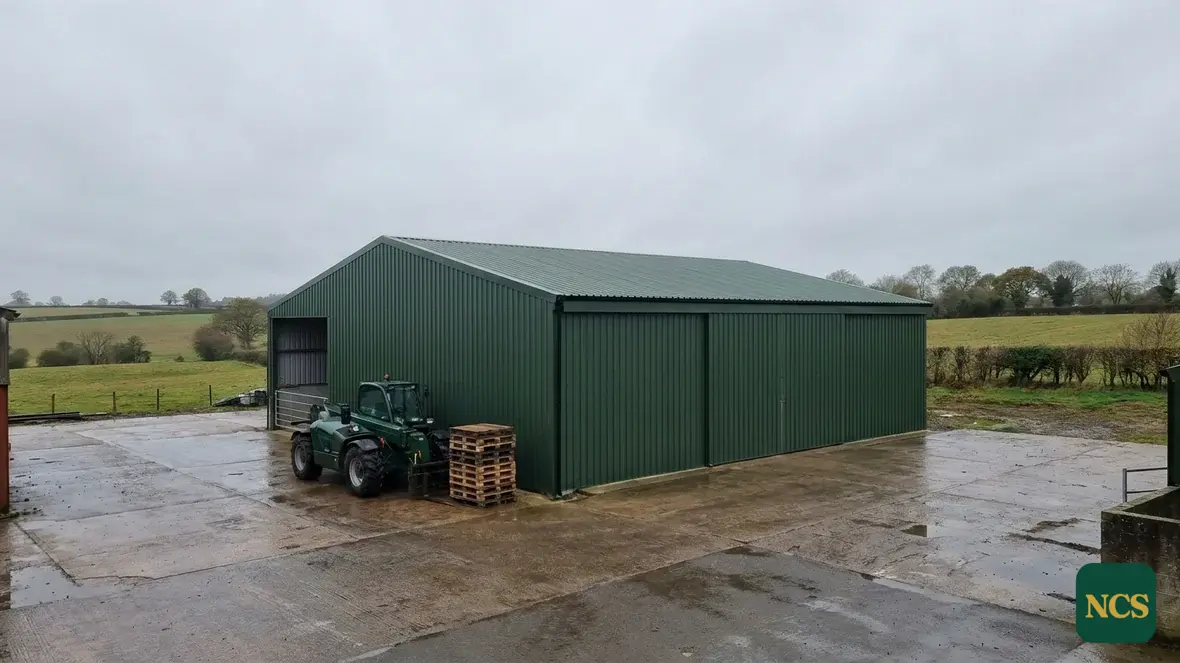
Farmland around Huddersfield is mixed country. Lower ground toward the Calder and land east of the town carries machinery sheds, general-purpose barns and grain or fodder stores under steel portal frames. Higher ground and valley sides toward Meltham, Holmfirth and the Colne Valley tend toward livestock housing: cattle and sheep sheds, silage and hay stores, and open-fronted stock buildings that take full Pennine weather. Across that mix sit older gritstone field barns adapted with steel roofs, post-war fibre-cement and asbestos-cement sheds, and later plastisol-coated metal units. Many yards run two or three generations of building side by side, so one holding can need cladding painting, fibre-cement assessment and cut-edge work in the same visit. The decision turns on whether the structure still carries load cleanly and whether the covering can still be sealed.
For Huddersfield farms, repainting the shed is usually a between-seasons job, and we programme it around stock and harvest rather than the other way round.
What an agricultural building coating does, and where it is the wrong answer
A properly specified agricultural building coating cleans, repairs and seals a sound roof or wall so water and fibre release are controlled and the building keeps working. On weathered but intact asbestos-cement or fibre-cement, encapsulation seals the surface without stripping the sheet. On profiled steel, preparation, corrosion repairs at edges and a compatible system restore weather protection where the substrate is still solid. Barn painting and roof painting on farm buildings are protective programmes, not decorative work. Coating is the wrong answer when sheets are holed, soft, fixing-failed or delaminated, when the frame has moved or purlins are compromised, or when cracked asbestos-cement needs licensed removal rather than a seal. It is also wrong as a cover for chronic condensation damage that starts inside. We would rather walk away than coat over a failure that will return.
Asbestos cement sheets, cut edges and gutters: what gets assessed first
Plenty of agricultural roofs here still carry asbestos-cement or later fibre-cement. Sound, weathered material can often be cleaned and encapsulated. Fragile, cracked or delaminating sheets are not candidates for coating and should go to a licensed removal route. We assess sheet condition from proper access, not by walking freely on brittle coverings. On metal roofs the first failures are usually at cut edges, side laps and fixings, where the factory finish never wrapped the raw steel. Cut-edge corrosion and weeping fixings are early warnings. Gutters, valleys and rooflights often fail ahead of the main slope. Gutter relining and edge treatment belong in the same honest assessment as the sheet itself.

Our survey-led process, worked around the farming calendar
We do not put a figure on a farm roof from the gateway. A survey around Huddersfield is booked to fit the holding. Grain and machinery stores are best tackled when floors are empty. Livestock housing is planned for the empty window before animals return inside, with curing time allowed so stock are not put back under wet film. On the day we agree vehicle movements, protect feed and water areas, and keep access clear for the farm.
- Substrate identification: asbestos-cement, fibre-cement, plastisol-coated steel or mixed coverings
- Sheet and cladding condition at faces, cut edges, laps and fixings
- Underside checks on livestock buildings where condensation and ammonia work
- Gutters, valleys, ridges, rooflights and flashings as separate failure points
- Access, yard ground and operational constraints for staging work around the farm
You receive the findings with photographs before any figure is named.
Why the survey comes before any specification
Two sheds of similar age on neighbouring valleys can need completely different work. One may take a full protective coating after modest corrosion repairs; another may need only gutter attention and local sheet replacement; a third may be past coating and should be planned for re-roof. Specification without survey is guesswork. The survey is also where we say no. If coating will not last, if asbestos-cement is too far gone, or if only part of a roof needs work, the report says so in plain language. When coating is right, the specification follows the findings. When it is not, you still leave with a clear record of condition and a sensible next step.
For the full service picture, see our agricultural building coatings overview, or request a free site survey for a holding around Huddersfield.
Common questions about agricultural building coating Huddersfield
How do you carry out an agricultural building coating in Huddersfield without shutting down the site?
We phase the work around the farm’s operational calendar and keep livestock and machinery well away from the immediate work zone. Masking and encapsulation isolate the application area, and we use methods that produce no airborne overspray drift. On a typical project we can coat the elevations in sequence so that storage bays, milking parlours or machinery sheds remain usable while we move across the building. Our method statements account for biosecurity and access, which means coating work rarely causes a halt to day-to-day farming activity.
Can you coat sheeted roofs on older farm buildings around Huddersfield?
Yes, we frequently apply agricultural building coating Huddersfield to fibre cement, box profile metal and corrugated steel roofs. First we check the condition of fixings, laps and purlins. The coating system is built up in a series of thin, high-bond layers that stabilise friable surfaces and tie the sheets together. This approach arrests water ingress and prevents the rinse-off of fibres without adding weight that could overload the frame. If a roof has widespread structural fatigue we will advise on targeted sheet replacement before we coat.
What preparation does a steel portal frame need before coating?
Preparation depends on the condition of the existing coating and the degree of corrosion. We remove failing material by mechanical cleaning back to a sound substrate, treat any surface rust with a conversion compound and then apply a zinc-rich primer that isolates the steel from moisture and air. On frames with deep pitting we abrade the area back to bright metal and fill the pits with a compatible bridging filler before the primer coat. Every joint, purlin cleat and baseplate receives the same attention so the finished agricultural building coating Huddersfield system performs as a unified corrosion barrier.
How does Huddersfield’s weather affect coating work on agricultural buildings?
Moisture is the dominant constraint. We monitor dew point, relative humidity and substrate temperature before and during application and we will not proceed if the steel is within several degrees of the dew point or if rain is forecast within the curing window. High winds on exposed moorland sites can make safe access impossible, so we schedule exterior spraying for periods of settled weather. The coating formulations we use are selected for cool, damp conditions and can cure reliably at low positive temperatures, which extends the working season across most of the year in the Huddersfield area.
How long does an agricultural building coating last before it needs re-coating?
Lifespan is governed more by surface preparation and film build than by any blanket figure. When we apply a full system, correctly prepared, to a well-detailed structure we routinely expect the coating to withstand decades of agricultural exposure. The first sign we watch for during periodic condition surveys is localised breakdown at sheet laps or around fixings. Early intervention with a localised maintenance coat prevents spreading degradation and keeps the main envelope intact for a service life that substantially exceeds a single intervention cycle.
Moisture management during coating preparation on agricultural sheds
Many farm buildings in Huddersfield sit in hollows or beside watercourses and suffer from persistent condensation, runoff staining and moss growth on shaded elevations. Before we apply an agricultural building coating, we map the moisture load across each elevation using non-destructive meters and visual indicators such as tide marks and blistered coating edges. The first practical step is always to improve the building’s passive drying by clearing gutters, re-securing downpipes and repairing or fitting ventilated ridge details. We then dry the substrate to an acceptable moisture content using forced air movers, shielding the work area from rain ingress with temporary screens. During the wash-down phase we use a fungicidal wash to kill spore colonies that would otherwise push through a curing film. This combination of drainage correction and protracted drying gives the primer the best possible chance of penetrating the surface profile and establishing a tenacious grip. On concrete panels we dress any hollow-sounding areas back to sound material and reprofile with a polymer-modified mortar that cures to a vapour-permeable finish, allowing internal moisture to escape without lifting the paint film. Only when the substrate has passed our hold-point moisture checks do we begin priming, usually in the early part of a day so that the film can start its cure before the evening humidity rise. That methodical approach to moisture control is what separates a coating that weather-washes away in a few winters from one that bonds for the long term on working agricultural buildings throughout Huddersfield.
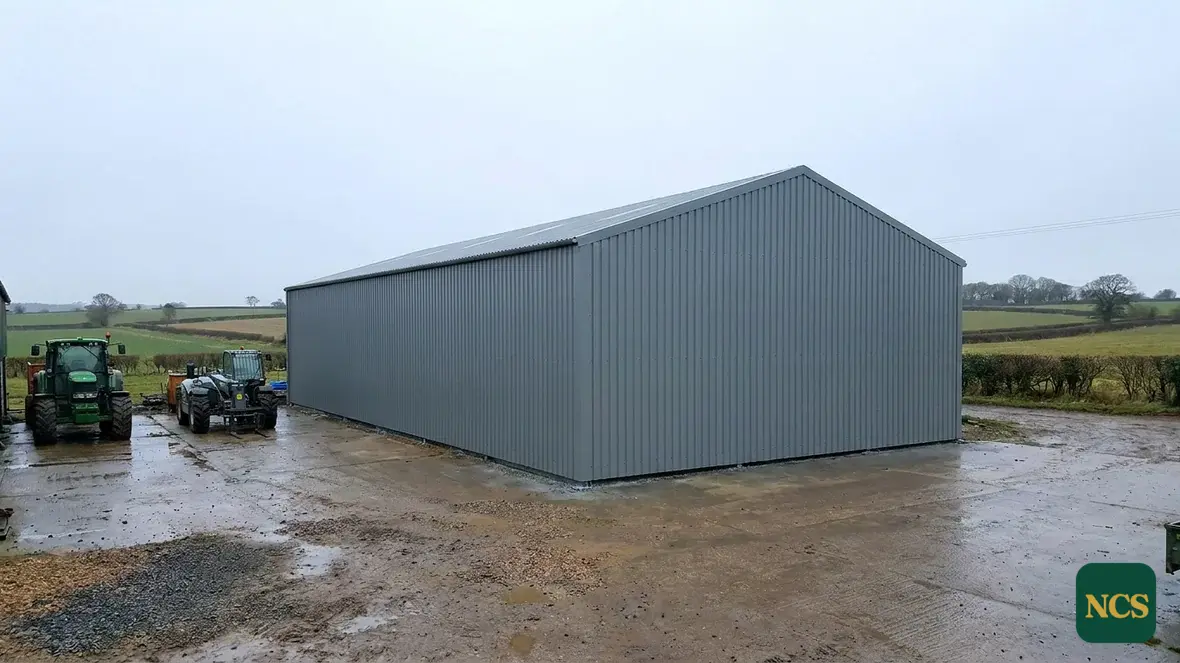
Recently — July 2026
We coat roofs and cladding that still have life in them, and we say so plainly when one is past saving.
Summer is the steadiest season for exterior coating: longer dry spells mean preparation, application and curing can be programmed with fewer weather delays.