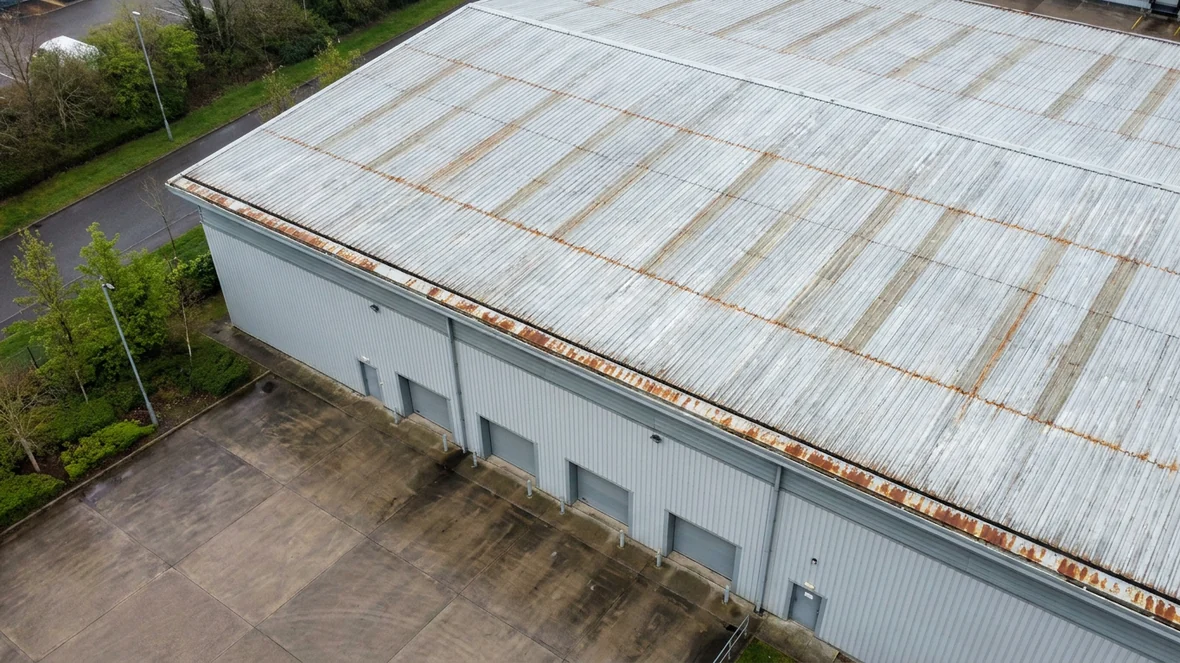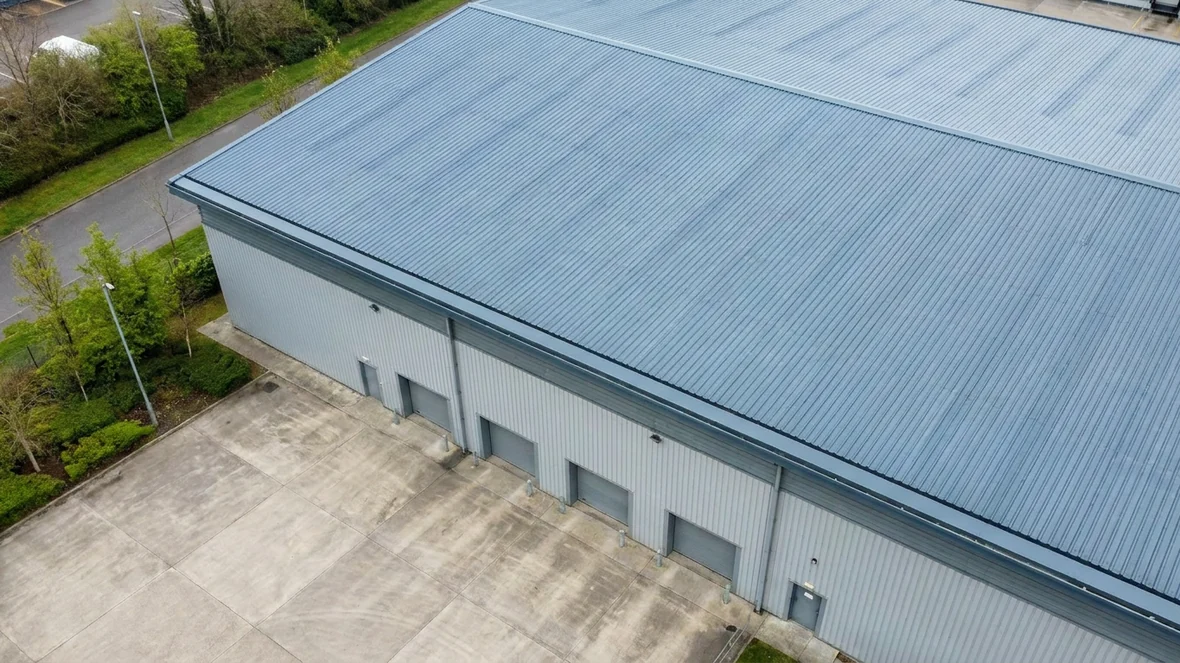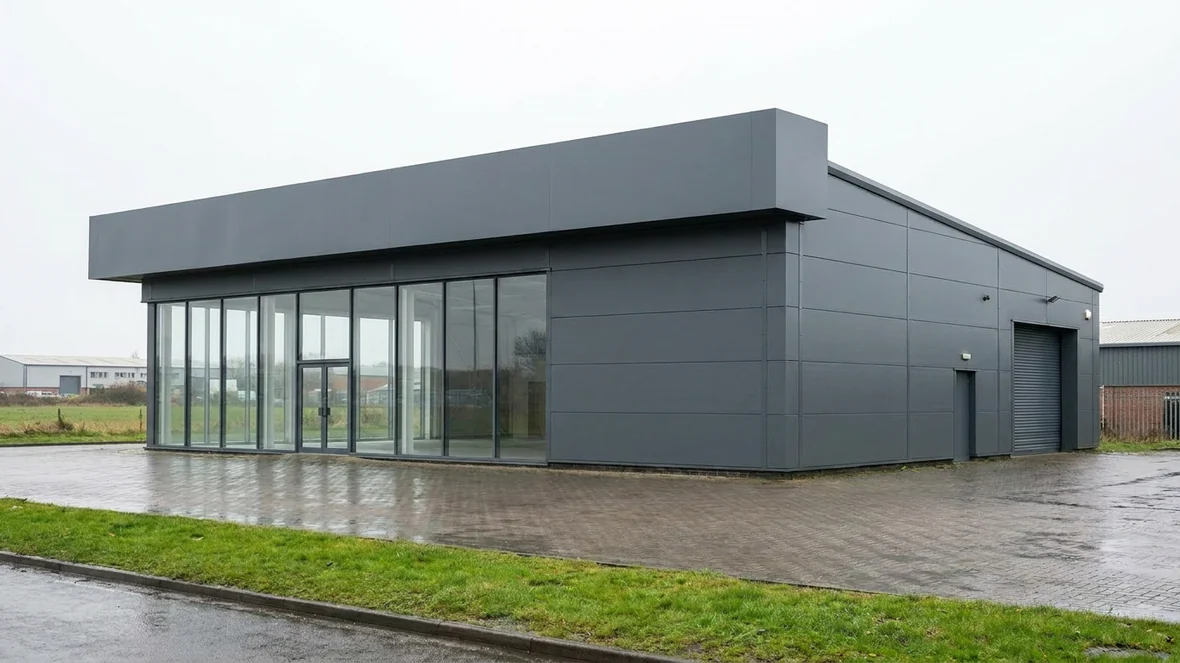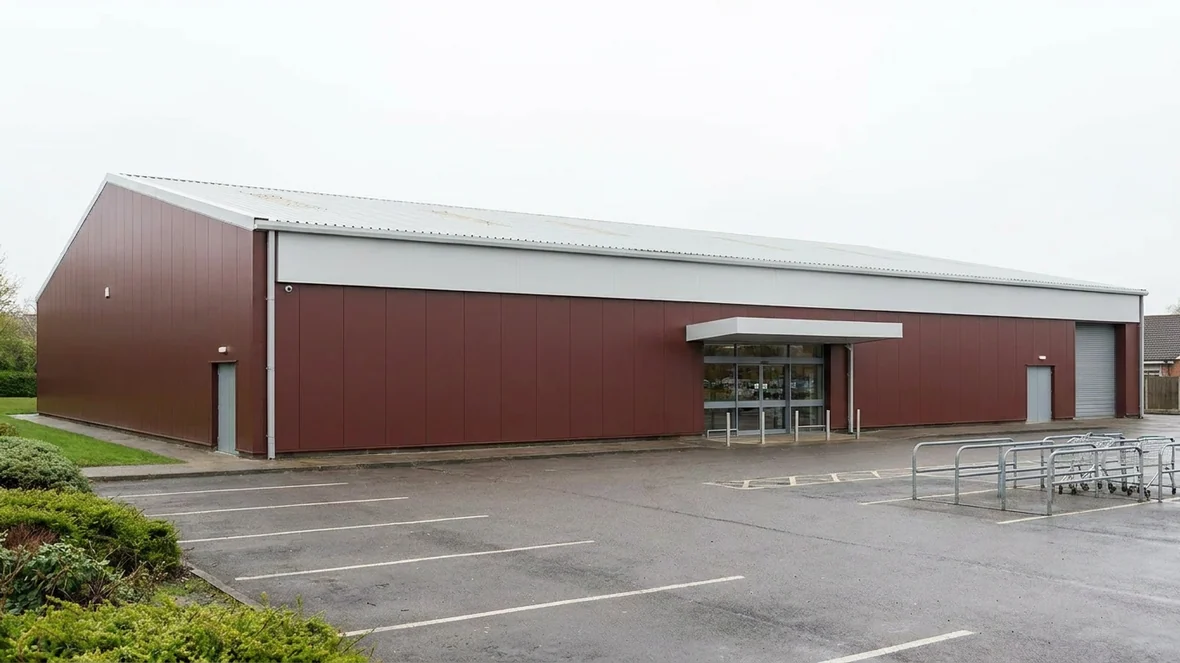




Stockton-on-Tees sits on the Tees with a commercial map built from industrial estates, logistics sheds and plant that still serve the chemical and distribution economy of Teesside. Profiled metal roofs, flat-roofed stores and ageing factory finishes take the weather hard along the river corridor. When sheets chalk, cut edges rust or water finds a failed fixing, Commercial Roof Coating Stockton-on-Tees work is often the practical choice between restoring a still-sound cover and a full strip and replace.
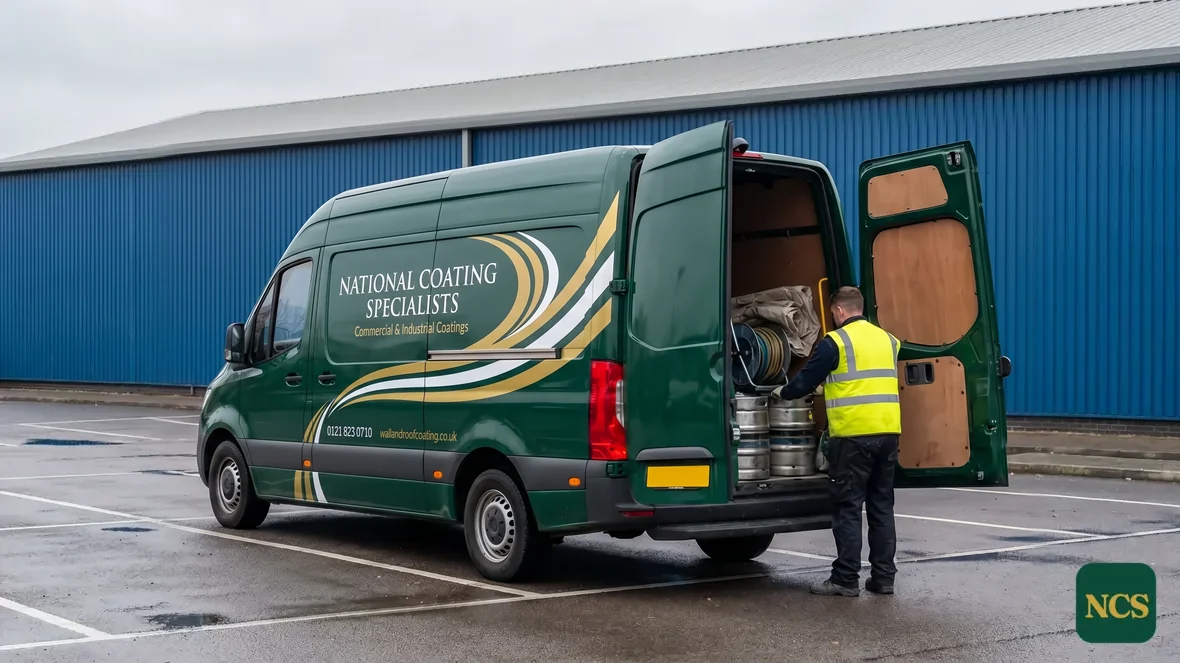
National Coating Specialists (NCS) surveys commercial and industrial roofs across Stockton-on-Tees and the surrounding Teesside area before any coating is specified. We assess the substrate, fixings, rooflights and drainage first, then set out what a roof coating can and cannot achieve on that building.
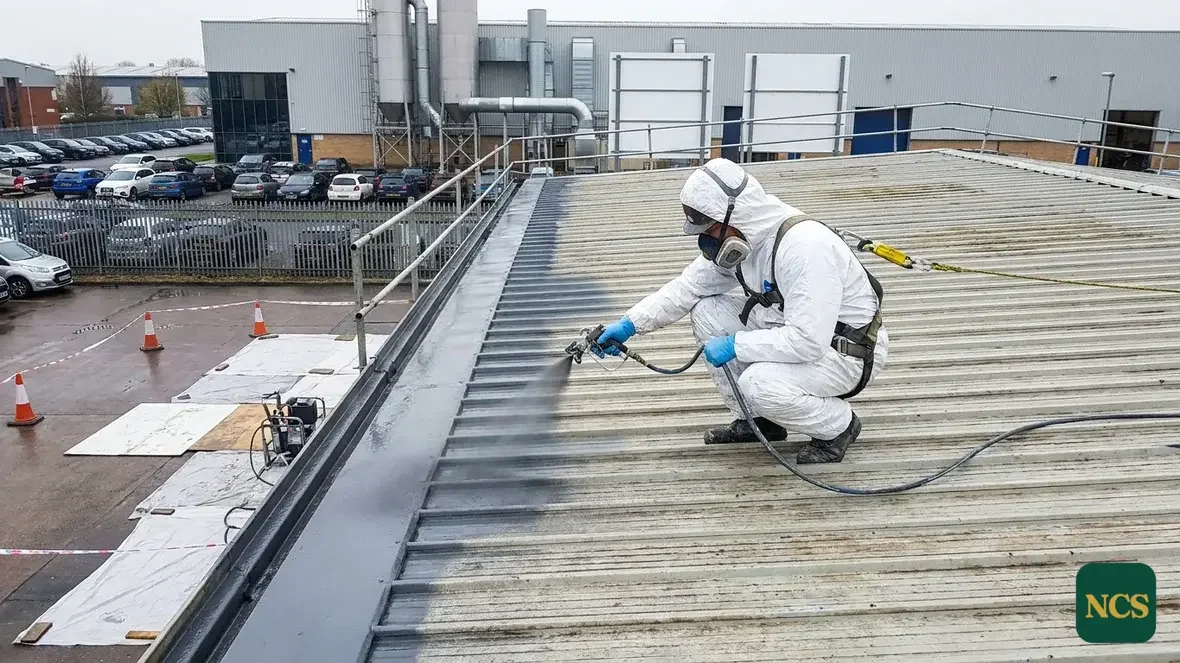
Why commercial roofs around Stockton-on-Tees reach the coat-or-replace decision
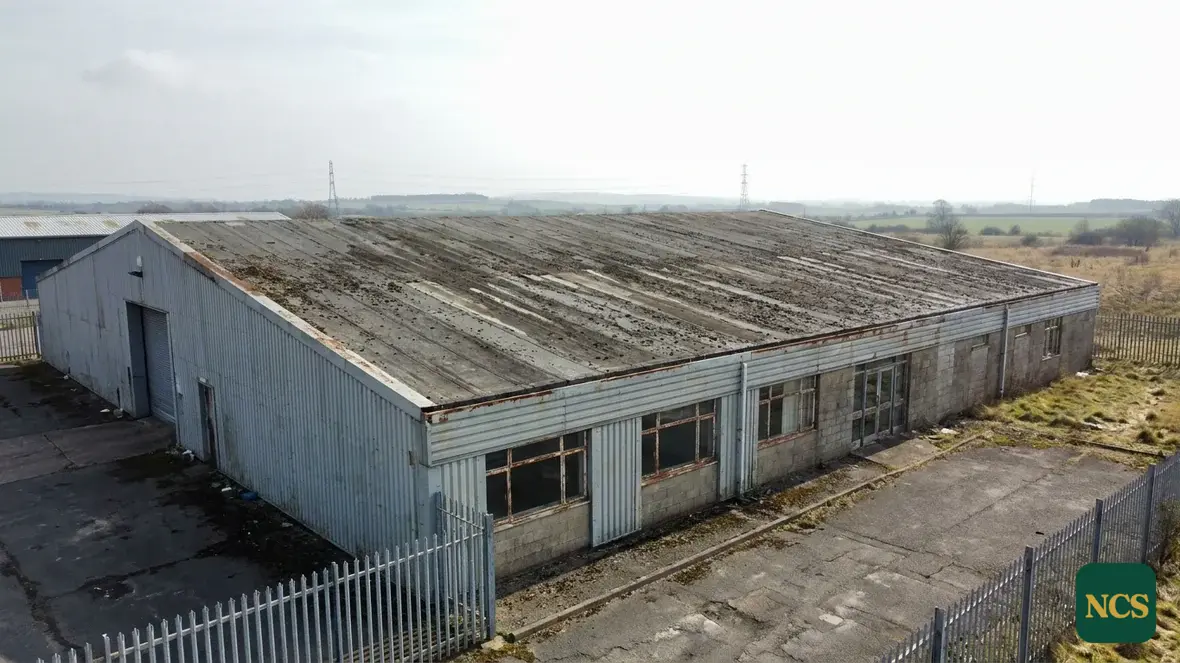
Teesside weather is unforgiving on commercial covers. Moist air moves inland along the estuary, and freeze-thaw cycles prise at any film that has started to lift. Many units on the industrial estates still carry original factory finishes on profiled steel. Once that film thins, chalk dusts off on a hand, colour fades, and water tracks into cut edges and sheet laps. Flat roofs on workshops, stores and mixed commercial blocks pond after heavy rain if falls and outlets have settled. The honest question is whether the deck and structure can take a new protective system, or whether replacement is the only sound route. Coating is right when the sheets or membrane can be prepared, repaired and sealed. Replacement is right when perforation, structural movement or widespread substrate failure means a film would only hide a problem that will return.
Owners around Stockton-on-Tees describe the same job in different words, roof painting, roof coating or refurbishment, and the survey treats them all the same way.
The roof stock of Stockton-on-Tees
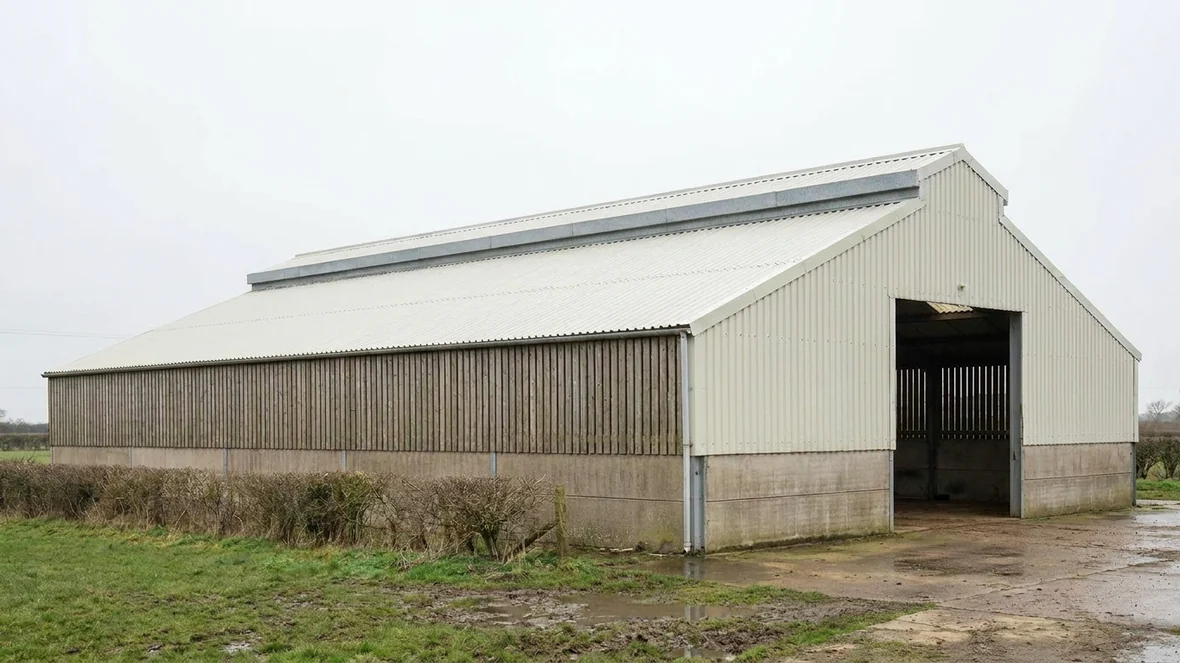
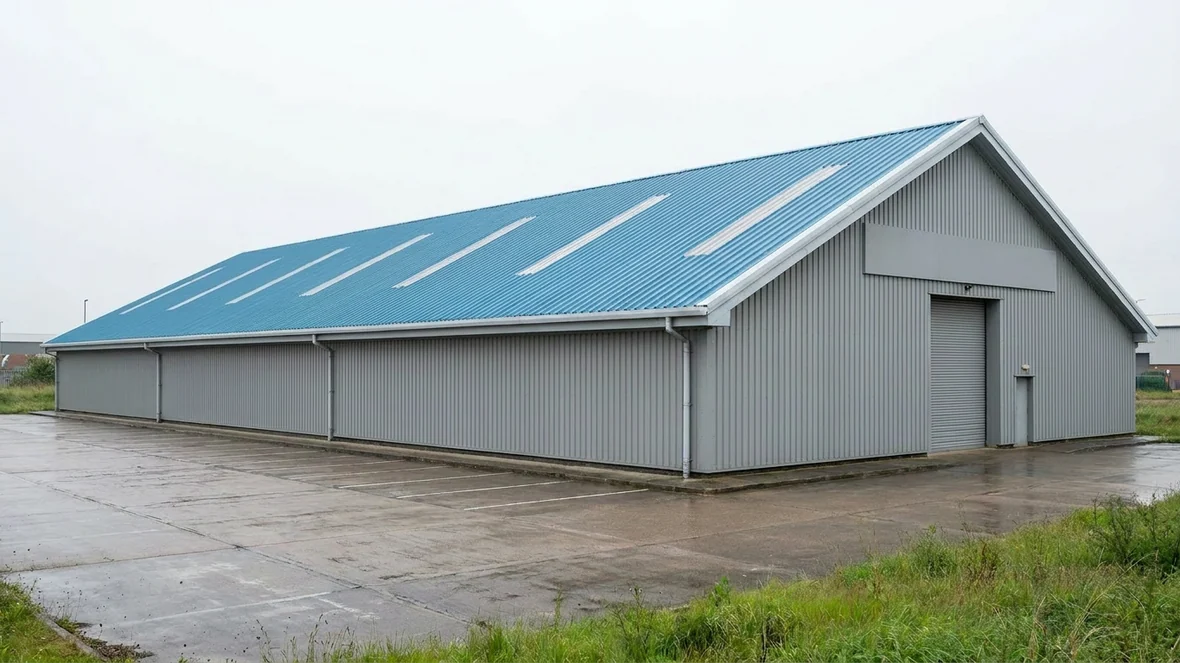
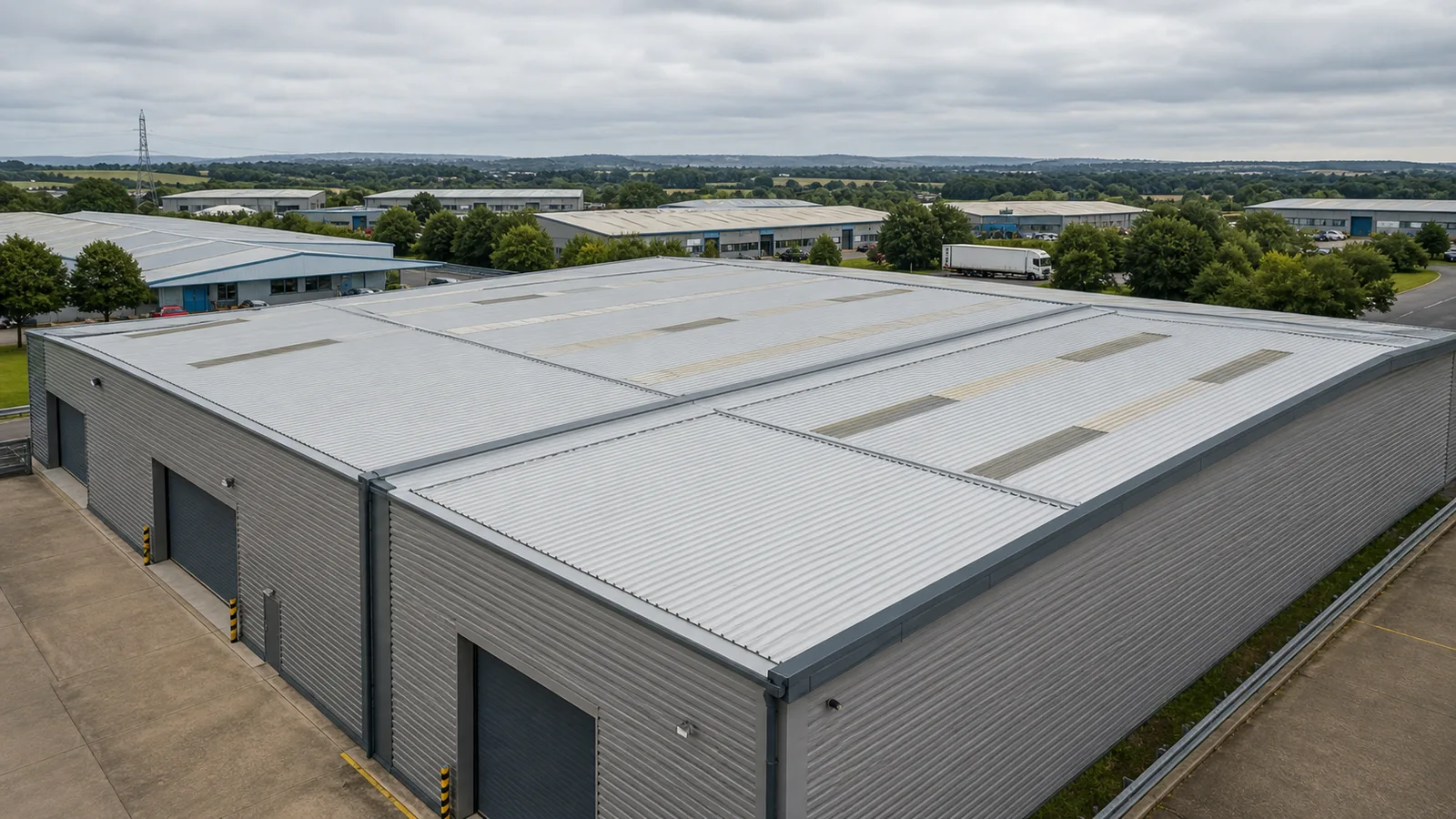
The roof stock around Stockton-on-Tees is shaped by logistics, light industry and the chemical corridor that runs through the Tees Valley. Portrack Lane industrial estate holds warehouse and workshop units with large profiled-metal roofs, plastic rooflights and long gutter runs typical of Teesside shed stock. Preston Farm industrial estate, toward the southern side of the town, carries similar distribution and light-industrial covers: ageing factory-coated steel, composite panels and patched flat systems over stores and plant rooms. Nearby Billingham still anchors a major chemical complex, and that industrial climate, together with the wider Tees Valley distribution sheds, keeps corrosion and edge failure on the agenda for facility managers. Town-centre and riverside stock adds flat roofs over retail, offices and mixed-use buildings where outlets, upstands and plant bases often fail before a clean bay ever shows a drip. Ageing profiled steel and flat membranes are the usual covers we are asked to inspect.
What a roof coating actually does and where it is the wrong answer
A commercial roof coating is a liquid-applied protective film built up over a prepared substrate. On metal roofs it rebuilds weather protection where the factory finish has failed, seals treated laps and cut edges, and can include targeted roof painting of sheets and trims so the whole cover works as one system. On suitable flat roofs it forms a continuous waterproof layer over a sound base, detailing into outlets, upstands and penetrations. What it does not do is repair a roof that has already lost structural integrity. If sheets are perforated, insulation is saturated, the deck has moved, or corrosion has thinned the steel beyond a safe margin, coating is the wrong answer, and we will say so on survey. Coating over active leaks without fixing the cause, or painting over loose finish, only shortens the next failure.
Leaks, fixings, rooflights and gutters: what gets repaired first
Most Stockton-on-Tees commercial roofs fail first at the details, not in the middle of a clean bay. Fixings lose washer seal, bolt heads stain the sheet below, and cut edges rust where the factory film never fully covered the steel. Rooflights crack, craze or lose their seals, and water tracks along the glazing bars. Gutters silt up, joints open, and outlets back up so water sits against the eaves. Before any full coating pass those items need attention: mechanical preparation and corrosion repairs at edges and laps, refixing or resealing where fasteners have failed, rooflight repair or replacement where needed, and gutter cleaning, joint work or relining so drainage works again. Skipping that sequence is how coating jobs fail early. Our survey records the repair order so the specification is honest before the film goes on.
Our survey-led process
Every Stockton-on-Tees roof we take on starts with a free site survey. We inspect the cover at close range, note substrate type, assess practical access, and photograph defects that change the method.
- Condition of profiled metal, composite or flat roof coverings, including chalking, adhesion and visible corrosion
- Cut edges, laps, fixings and flashings where water and rust usually start
- Rooflights, outlets, gutters and known leak paths
- Access, live-site constraints and working zones around the unit
- Whether coating is appropriate, or whether local replacement or a full re-cover must come first
Findings go into a written scope covering preparation, repairs, the coating system and any limits on that stock. You get a clear recommendation before plant is mobilised. If the roof is past sensible recoating, we say so. If it is a good candidate, the survey becomes the baseline for the method and the on-site sequence.
Why the survey comes before any specification
Roof systems vary. A single-skin sheet on an older unit near Portrack does not behave like a newer composite panel on a Preston Farm distribution shed, and neither behaves like a flat roof over a town-centre block. Adhesion, edge detail, preparation and the repair list depend on what is actually underfoot. Specifying a coating from photographs is guesswork. A survey replaces that with measured condition and a method that matches the building. It also stops the wrong job: coating over active cut-edge corrosion, failed gutters or broken rooflights wastes time. First we establish whether commercial roof coating is the right route. Then we specify preparation, repairs and the finish. Only after that does work on site begin. For a roof in Stockton-on-Tees or the surrounding Teesside area, start with the wider commercial roof coating overview or request a free survey and we will inspect the building before any product is named.
Recently — July 2026
Every recommendation we make comes from getting up on the roof and looking, not from a photograph or a phone call.
Dry summer spells are the window for tackling cut-edge corrosion and tired finishes before the autumn rain sets back in.
Common questions about commercial roof coating Stockton-on-Tees
How long will a commercial roof coating keep my Stockton-on-Tees building watertight?
When a coating system is specified through our full survey process and applied under controlled conditions, the waterproofing can remain effective for decades. The actual service life depends on the substrate, the level of ongoing building movement, and adherence to the simple maintenance schedule we set out after completion. We design every specification to cope with the thermal and structural stresses typical of commercial roofs in the region.
Can a liquid roof coating be applied directly over my existing felt or asphalt roof?
In most cases, yes. We first remove loose chippings, repair any blisters, and carry out a thorough clean. A moisture survey tells us whether the substrate is dry enough to receive the coating. Where the existing waterproofing is adequately bonded and structurally sound, a cold-applied coating bonds directly to it after priming, creating an additional waterproofing layer without the need for a strip and replace.
Will the coating application interrupt daily business inside the building?
Our application methods are chosen to minimise disruption. The liquid coatings we use are cold-applied and low-odour, which means work can proceed while the building remains occupied. We phase coating works around your operational calendar, isolating roof zones and keeping access routes clear. Fume and noise levels are low enough that we regularly coat roofs on live retail, education and healthcare buildings.
What telltale signs suggest my commercial roof needs a coating rather than replacement?
Common indicators include widespread blistering of the felt, persistent damp patches on ceilings, minor splits at lap joints, and general surface degradation from UV exposure. If the roof deck and insulation are largely dry and the falls still drain, a coating can arrest decay and extend the roof’s life considerably. Our survey will identify any hidden saturation that would make a coating unsuitable.
How are commercial roof coatings in Stockton-on-Tees affected by the weather?
The North East climate brings frequent rain, wind-driven moisture and occasional freeze-thaw cycles. We monitor weather forecasts meticulously and arrange application during stable, dry periods. Cold-applied coatings are sensitive to low temperatures and substrate moisture; our teams record ambient conditions throughout the day and stop work if conditions fall outside the permitted window. This discipline ensures the cured coating achieves its design waterproofing integrity, regardless of the season in which it is applied.
The survey-led difference in every commercial roof coating we apply
Before any coating is delivered to site, we carry out a forensic-level roof survey that defines the entire specification. The survey is not a visual walkover; it includes a full moisture mapping exercise, core sampling to determine build-up composition, and adhesion pull-off tests across multiple zones. Our findings tell us whether the existing waterproofing can safely receive a new coating, whether isolated wet insulation needs cutting out, and precisely which primers and reinforcement details are required.
Once the survey report is complete, we present a specification that addresses every weak point of the old roof. That means detailing work around upstands, expansion joints, outlet flanges and plant support plinths. We never rely on a single universal coating system; the specification is built around the roof’s condition, its drainage behaviour, and the building’s operational demands.
- Moisture scanning and core-cut analysis govern whether we specify a vapour-permeable coating or a full vapour barrier.
- All chippings, silt and organic matter are removed before priming, to ensure direct adhesion to the substrate.
- Reinforcement fleece is embedded into the liquid coating at all changes of plane and over movement joints.
- Ponding zones receive an additional coat thickness, applied in a contrasting colour to simplify future inspection.
- Perimeter edge trims are stripped back, primed and encapsulated within the coating to eliminate water ingress routes.
The coating itself is applied in successive cold-applied layers, each allowed to cure before the next is laid. Our teams monitor ambient humidity, substrate temperature and dew point throughout the application window. This methodical approach produces a consistently monolithic waterproofing membrane that moves with the building, resists standing water, and remains serviceable for decades, provided the modest periodic maintenance we recommend is carried out.