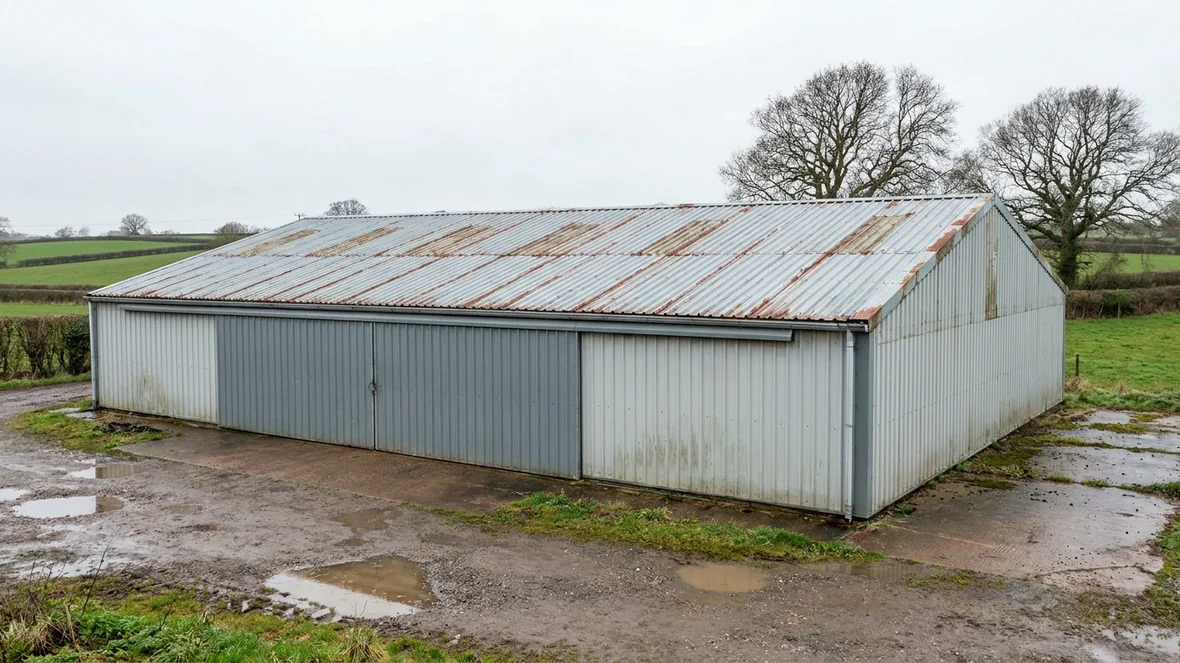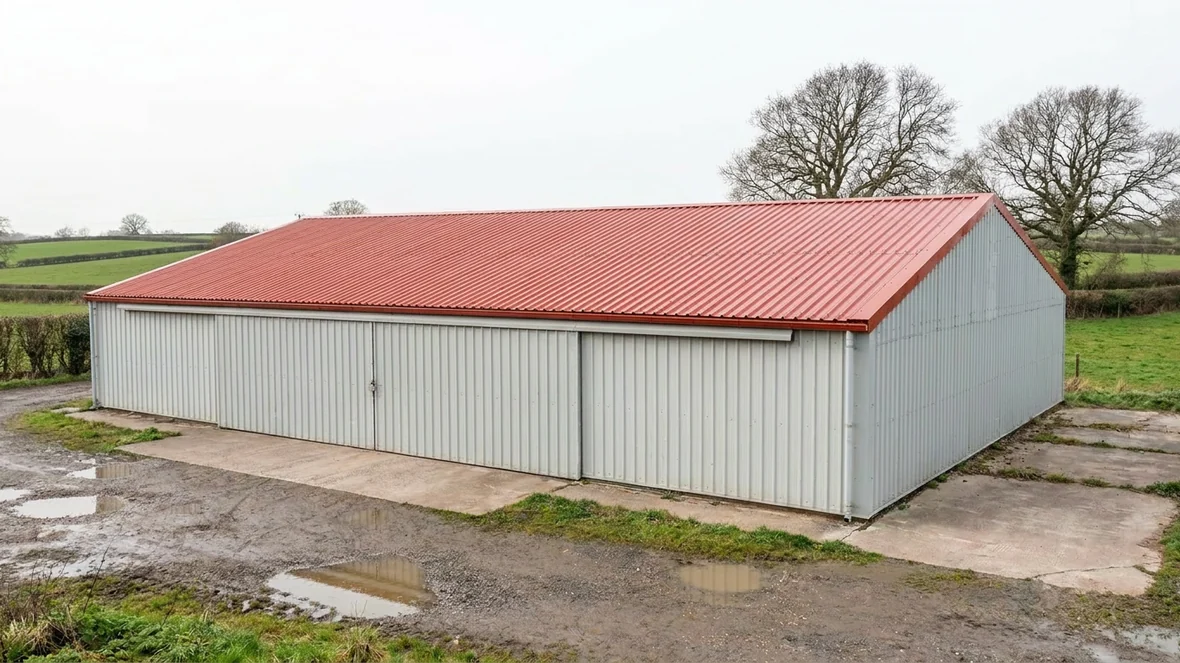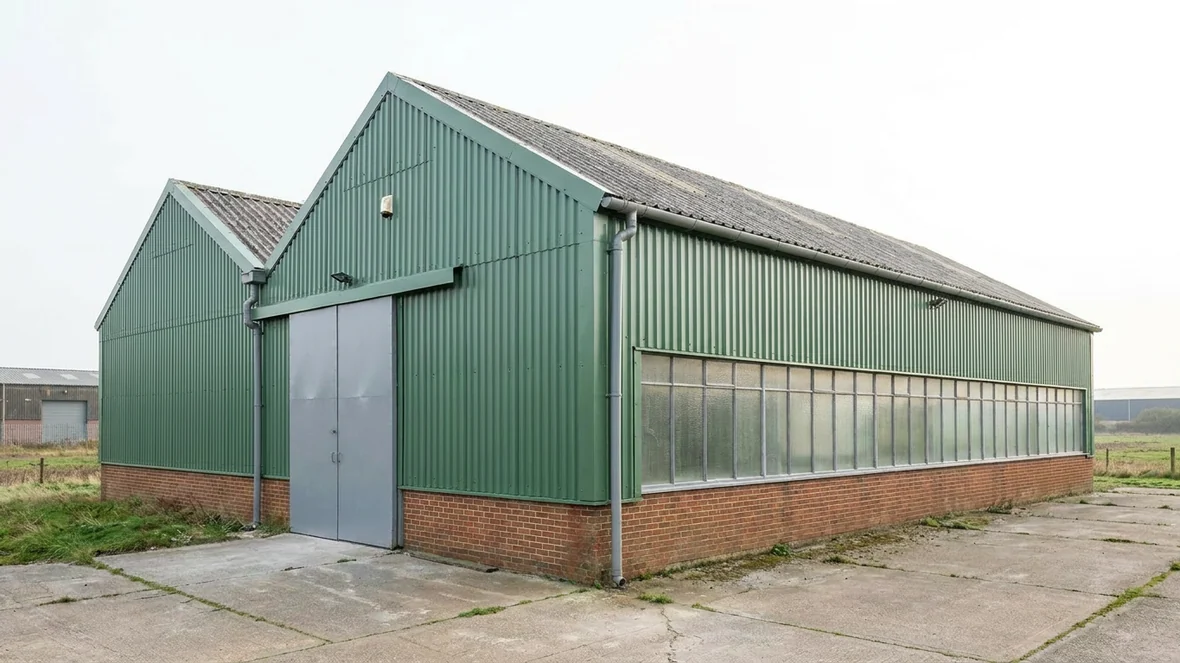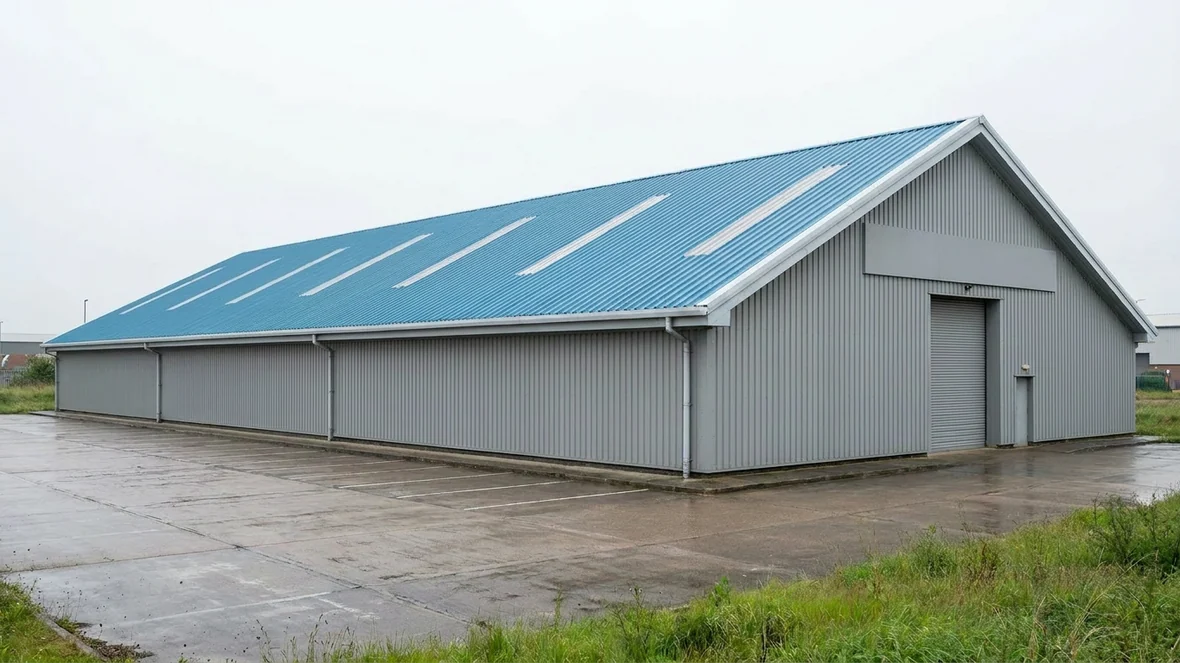




Profiled metal roofs on Stockton-on-Tees industrial units rarely fail first across the middle of a bay. The first trouble shows at sheet ends, side laps and the gutter line, where the factory finish never fully sealed the cut steel. Cut Edge Corrosion Treatment Stockton-on-Tees work is the practical route when that edge rust is still treatable, before water tracks under the coating and the sheet starts to perforate.
National Coating Specialists surveys cut edges on commercial and industrial roofs across Stockton-on-Tees and the wider Teesside area before any repair is specified. We look at the sheet ends, the laps, the fixings and the gutters on site, then set out what corrosion repairs can achieve on that roof and what they cannot.
What cut edge corrosion is and why it shows up on profiled-metal roofs around Stockton-on-Tees
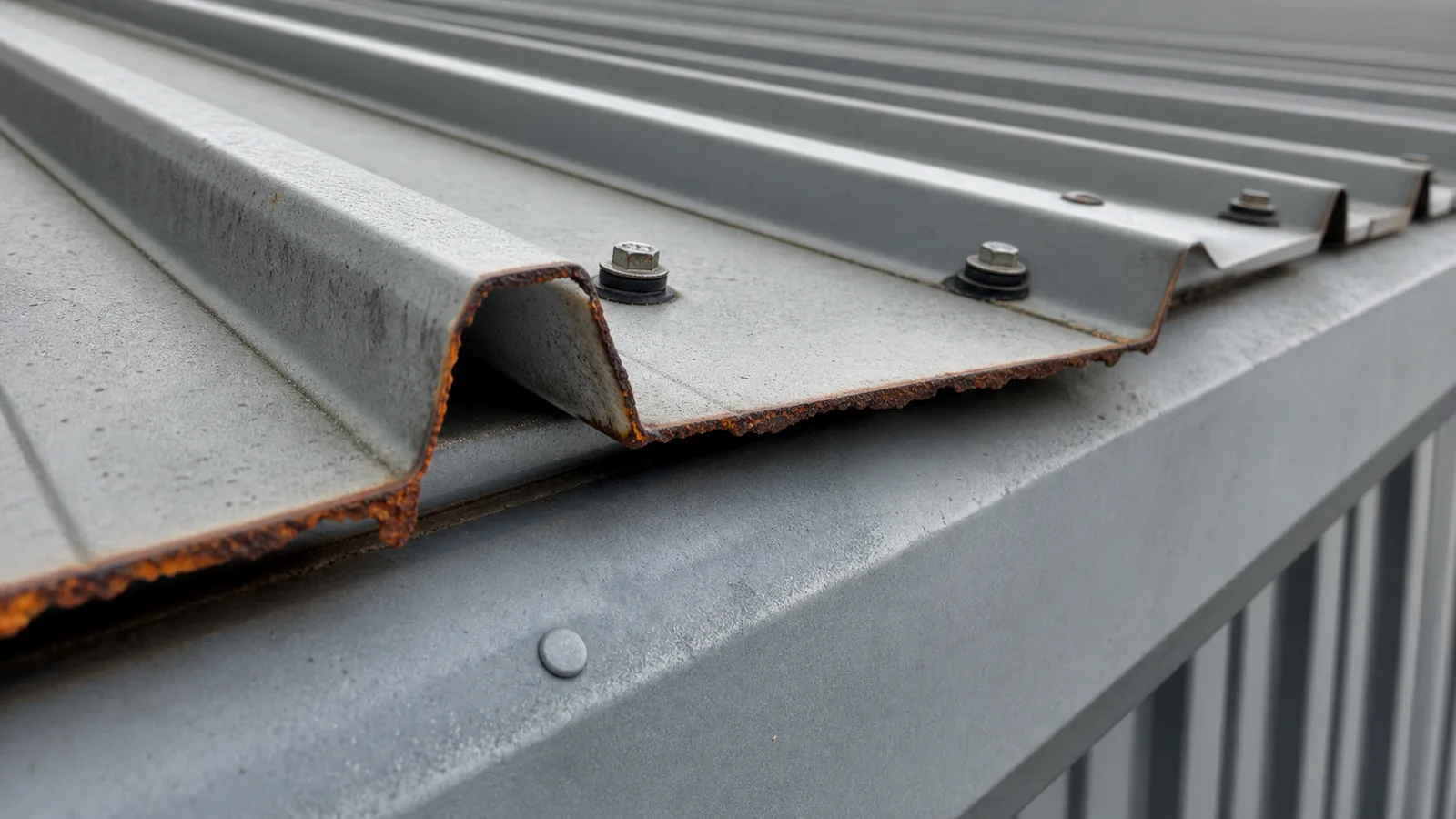
Coated roof sheets leave the mill with a factory finish applied to the coil before the sheet is cut to length. That cutting step is the weak point. Every eaves end and every side lap exposes a thin strip of bare steel. Rainwater is drawn into the overlaps, sits against the raw edge, and rust forms. The rust then creeps back under the plastisol or similar coating, lifting the film from the metal. From the yard you may only see a brown line along the gutter or a stain at a lap, while under the coating the process is already further advanced.
Around Stockton-on-Tees air moving inland along the Tees estuary carries salt and industrial moisture, and freeze and thaw work at any film that has started to lift. On busy estates large profiled-steel roofs and long gutter runs keep the cut edges wet after rain, leaving sound sheet faces and failed edges on units of the vulnerable age.
For Stockton-on-Tees buildings with red staining along the sheet ends, the honest fix is edge treatment and repair now, not a full recoat later.
The roof stock of Stockton-on-Tees
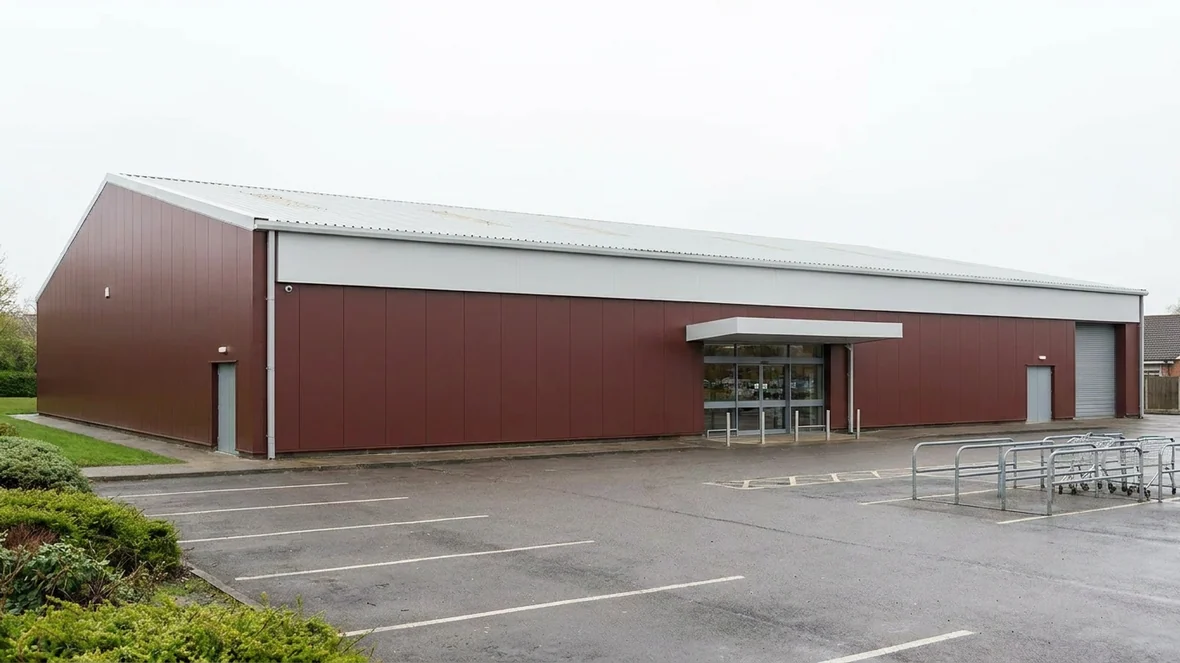
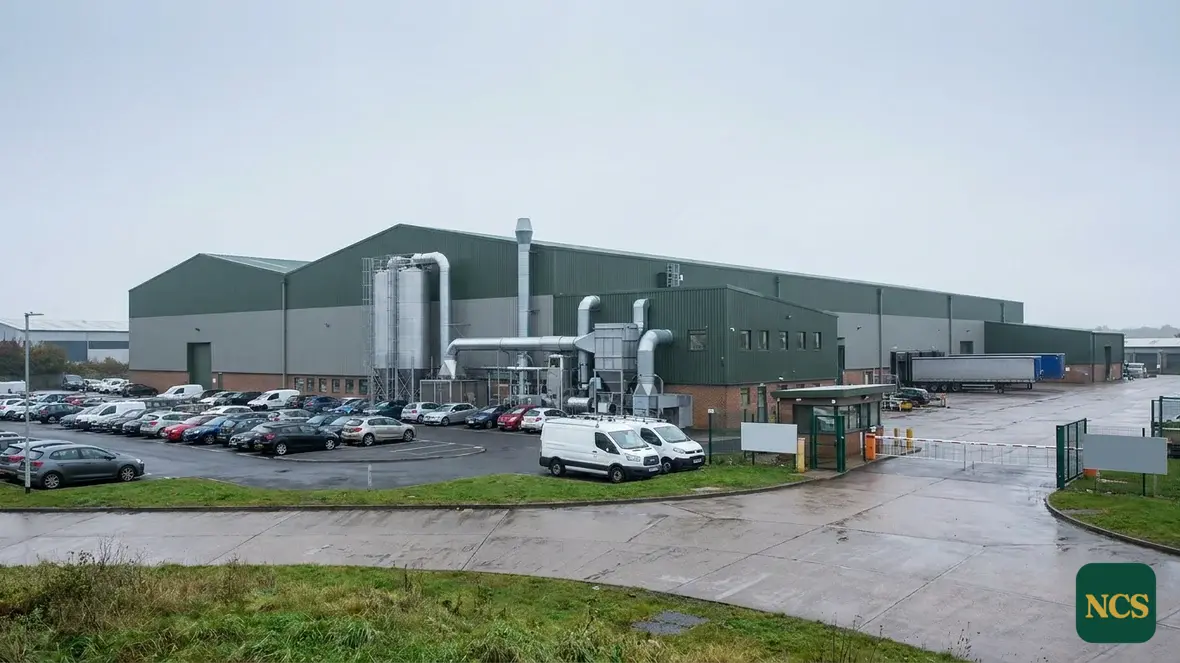
Stockton-on-Tees sits in a corridor of logistics, light industry and process plant that still relies on large metal covers. Portrack Lane holds industrial and warehouse units with profiled-steel roofs and wall cladding typical of Teesside stock. Preston Farm, further out toward the A66, carries distribution sheds and trade units with long roof bays, plastic rooflights and continuous gutters. Nearby, Billingham’s chemical complex and Tees valley distribution parks feed the same type: wide portal-frame sheds under plastisol-coated steel in service for decades.
Trade counters, light workshops and mixed commercial units share the same cut-edge risk once the factory film thins. The stock that most often needs edge work still looks presentable from the car park while the laps and eaves are already staining. Early treatment avoids sheet failure where the steel itself is still sound.
How untreated cut edges turn into leaks and sheet failure
Left alone, cut edge corrosion follows a short path. Staining at the lap is followed by delamination of the factory film. The edge then thins. Perforation arrives at the sheet end or under a side lap, and water finds a path into the building, often after wind-driven rain. By then the job has moved from local corrosion repairs into sheet replacement.
Gutters make the problem worse. Silt, debris and open joints hold water against the eaves line, so the cut edge stays wet long after the weather has cleared. Fixings that have lost their washer seal add secondary staining down the face of the sheet. It becomes urgent when stock or plant sits under a drip that began as a hairline of rust at the gutter.
What proper edge treatment involves
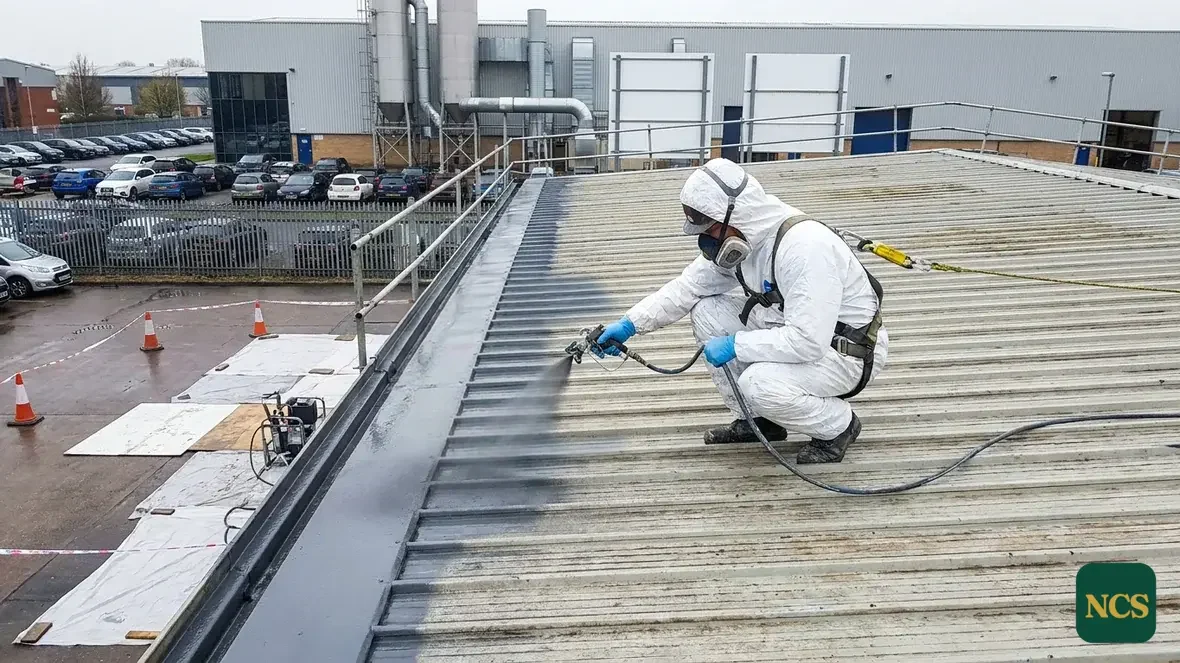
Proper cut edge treatment is not a brush of paint over active rust. The work starts with mechanical preparation: cleaning back loose coating, removing loose corrosion, and defining a sound edge to work from. Stabilising primers and edge seal systems then lock the prepared metal and seal the lap or eaves line so water cannot keep sitting on bare steel. Where the field of the roof is chalking as well, targeted roof painting of the sheet faces and trims can sit with the edge work so the cover performs as one system.
The method only succeeds on steel that still has enough section left. If the sheet is perforated, corrosion has run far beyond the lap, or the metal has thinned past a safe margin, honest advice is replacement of those sheets, not another coat. We will say that on survey. Edge treatment is for roofs where the structure and most of the covering are sound, with failure still at the cut edges and laps.
Our survey-led process
Every Stockton-on-Tees roof we take on starts with a free site survey. We get onto the cover, not just the yard, and record what actually changes the method.
- Condition of sheet ends, side laps, eaves lines and visible cut edges
- How far corrosion has crept under the existing coating, with photographs
- Fixings, gutters, outlets and other details that keep edges wet
- Access, live-site constraints and working zones around the unit
- Whether edge treatment is appropriate, or whether local sheet replacement must come first
Findings go into a written scope covering preparation, corrosion repairs, the edge system and any limits on that stock. You get a clear recommendation before plant is mobilised. If the roof is past sensible treatment, we say so; if it is a good candidate, the survey is the baseline for the on-site sequence.
Why the survey comes before any specification
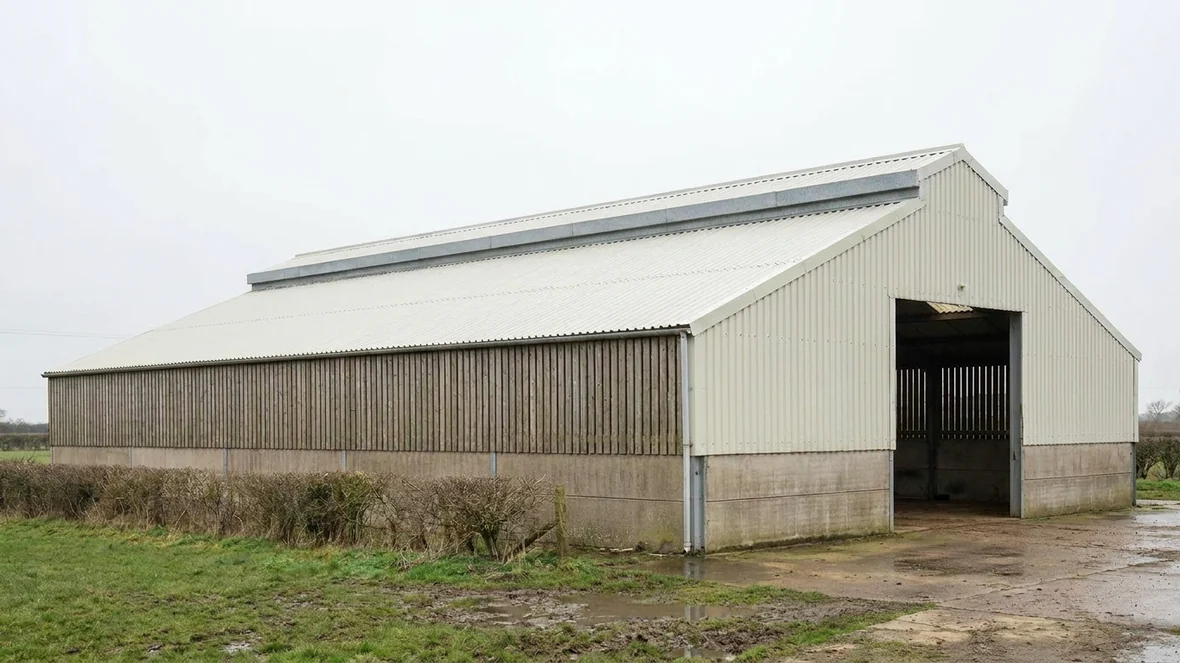
Profiled roofs around Stockton-on-Tees are not all the same. A single-skin bay on an older Portrack unit does not behave like a newer composite panel on a Preston Farm distribution shed, and neither behaves like a patched cover on a smaller trade unit. Adhesion, lap detail and the repair list depend on what is underfoot. Specifying edge products from photographs is guesswork; a survey replaces that with measured condition and a matching method.
It also stops the wrong job. Coating over active cut-edge corrosion without preparation, or painting over loose finish, only shortens the next failure. First we establish whether cut edge treatment is the right route. Then we specify preparation, repairs and the finish. Only after that does work on site begin. For a metal roof in Stockton-on-Tees or the surrounding Teesside area, start with the wider cut edge corrosion treatment overview or request a free survey and we will inspect the building before any product is named.
Recently — July 2026
Surveys remain free and no-obligation, with a written report on condition, the realistic options and the recommended route.
Summer is the steadiest season for exterior coating: longer dry spells mean preparation, application and curing can be programmed with fewer weather delays.
Common questions about cut edge corrosion treatment and repair Stockton-on-Tees
What exactly is cut edge corrosion?
Cut edge corrosion is the deterioration that begins where the factory-applied coating on a profiled metal sheet has been cut during installation. At the cut edge, the metallic substrate is exposed to moisture and oxygen. Over time this leads to rust creep beneath the surrounding coating, causing blistering, delamination and, in advanced cases, perforation of the sheet.
How do we identify whether a building requires cut edge corrosion treatment and repair in Stockton-on-Tees?
We look for visible rust staining along the sheet laps and side laps, blistered or flaking coating immediately behind the cut edge, and any pin-holing or thinning of the metal when probed. In coastal or industrial parts of Stockton-on-Tees the process can accelerate, so even apparently minor discolouration warrants a closer inspection.
Can cut edge corrosion be repaired without replacing the roof sheets?
In most cases we can arrest and treat the corrosion without full replacement. Our treatment strips back the failed coating, mechanically prepares the metal and applies a new protective system designed for this specific detail. Replacement only becomes necessary when the steel has lost so much thickness that it can no longer carry its design load or when perforations are too numerous to seal reliably.
How long does a cut edge corrosion treatment last?
The service life depends on the condition of the substrate at the time of treatment and the environment the building faces. When the corrosion is caught early, a properly executed cut edge corrosion treatment and repair in Stockton-on-Tees can deliver many years of additional service. We advise a routine inspection cycle so that any localised breakdown can be addressed before it escalates.
Will the repair process disrupt our daily operations?
We work exclusively from mobile access platforms or scaffolding, so there is generally no need to halt activities inside the building. Noise is comparable to any exterior maintenance task, and we phase our work around your operational hours. The majority of our clients in Stockton-on-Tees remain fully operational throughout the project.
Cut edge corrosion treatment and repair Stockton-on-Tees: coating versus full sheet replacement
When we survey a metal roof showing cut edge corrosion, the core decision is whether to treat the affected edges or replace the sheets entirely. Both routes have their place, and our recommendation always follows the condition of the steel, not a preset preference for one approach.
Coating treatment is the appropriate solution when the corrosion is in its early to intermediate stages. We remove degraded coating, prepare the metal and apply a liquid-applied system that bonds to the substrate and seals the edge. The method preserves the existing roof structure, keeps disruption to a minimum and leaves the thermal and acoustic performance of the building unchanged. For a building in Stockton-on-Tees with localised rust creep and no significant loss of metal thickness, this is almost always the logical choice.
Replacement wins when the cut edge corrosion has progressed beyond the point where the steel can be reliably saved. If we find widespread perforation, extensive thinning that compromises structural capacity, or corrosion so advanced that the cost of preparation would approach the cost of new sheets, then full or partial replacement becomes the clear answer. In some buildings with ageing roof lights or insulation trapped between the sheets, replacing the affected areas in one operation can resolve several latent defects at once. We will also advise replacement when the existing coating on the bulk of the sheet has reached the end of its aesthetic or functional life and treating only the edges would leave a mismatched appearance the client is unlikely to accept.
There are situations where a hybrid approach makes sense: replacing the worst sheets and treating the remainder. But we only advocate replacement when the steel tells us it can no longer perform. If the substrate is sound, a correctly specified cut edge corrosion treatment and repair in Stockton-on-Tees will be the least invasive and most proportionate course of action.