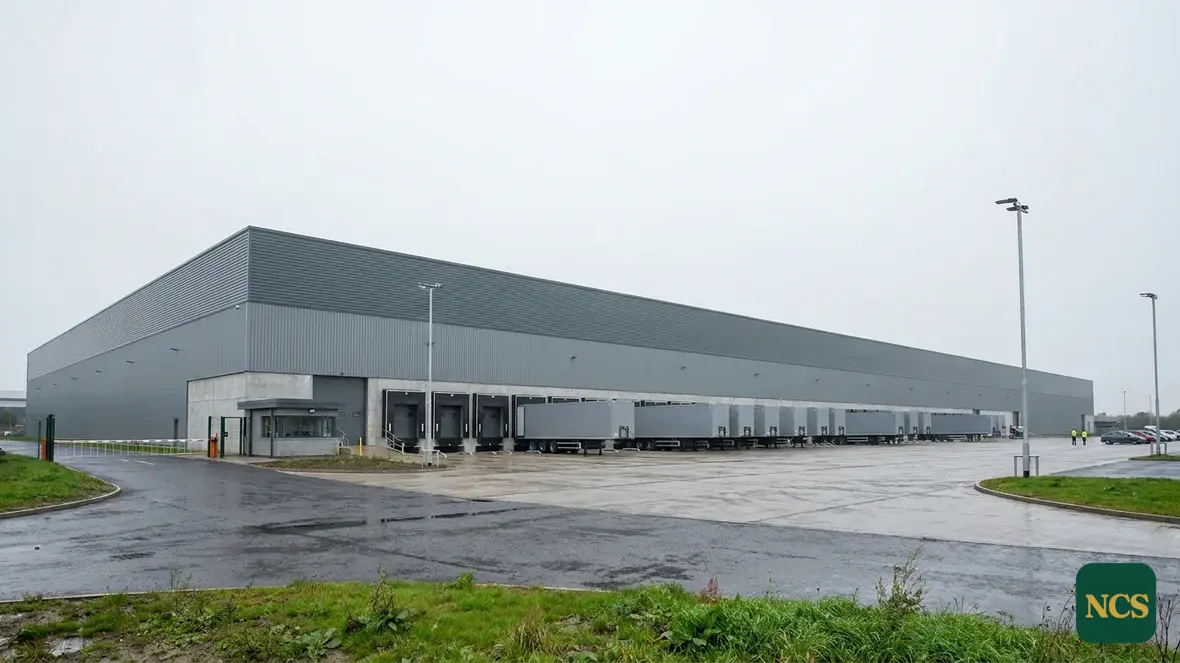
Derby’s commercial buildings, many born of its engineering heritage, often feature steel portal frames and profiled metal roofs that have seen decades of hard graft. We’ve seen these roofs develop a predictable Achilles’ heel: the cut edges of the sheets. That’s where corrosion starts, and it’s the most common reason a perfectly serviceable metal roof in Derby ends up leaking before its time. The good news is it gives you fair warning. Staining and lifting coating at the sheet ends are the tell-tale signs, and at that stage, sorting it costs a fraction of what new sheets would.
Why profiled metal roofs rust from the edges in
Coated sheets, like Plastisol, have a protected face, but the cut edges are left bare. These cuts are everywhere there’s an end lap and along the gutter line. So, the only unprotected steel on your roof spends its life in the wettest spots. Rust starts right there, at the edge, then creeps back under the coating, lifting it as it goes. Inside the laps, it’s even worse because moisture gets trapped and never properly dries out.
This isn’t a knock on how the roof was built. It’s just what happens to cut steel after twenty or thirty years in the weather. A lot of the industrial buildings around Derby are now well into that age bracket.
What early treatment involves
Treating cut edge corrosion at the right time is as much about preparation as it is about coating. We clean the corroded edges right back to sound steel, get rid of any loose or lifted coating, then prime the metal with corrosion-inhibiting products. Finally, we seal the laps, edges, and gutter lines with a flexible coating system. It’s built to cope with a metal roof’s thermal movement. Do it properly, and you stop the corrosion dead in its tracks, putting the roof back into a maintainable state.
The economics really do favour getting this done early. Edge treatment keeps your existing sheets working; leaving it turns the same roof into a replacement job, with all the cost, lead time, and disruption that brings.
Treat or replace: how we decide
We make this call on the roof, not from a brochure. Here’s what settles it:
- Whether the steel at the sheet ends is still solid or has perforated.
- How far the corrosion has worked its way into the laps.
- The condition of the coating across the main faces of the sheets, not just the edges.
- What state the gutters are in and if water is sitting against the edges.
- How many more years the owner actually needs from the building.
That last point is key. A roof that just needs to see a building through its final five years needs a different answer than one expected to last another twenty-five.
The honest limit of edge treatment
Some roofs we survey are simply beyond treatment, and we’ll tell you that straight. Perforated ends, laps that have rusted right through, or sheets thinned enough to be a safety risk can’t be saved by any coating. Quoting for it would be a waste of your money and a stain on our name. In those cases, our report will recommend resheeting or over-roofing instead, with photos showing you exactly why. Our job is to tell you which side of the line your roof sits on, then do the right work, not just the work that suits us.

Edge treatment and full roof coating together
Often, cut edge corrosion is just the first sign that the coating across the whole roof is on its way out. If our survey shows the entire roof chalking, fading, or losing adhesion, it usually makes sense to treat the edges and recoat the full roof in one go. That means one set of access, one weather window, and one finished result. We’re based in the South East and work across the UK. Derby’s industrial parks and engineering estates are familiar ground for this kind of work. Send us the details and we’ll book the survey.