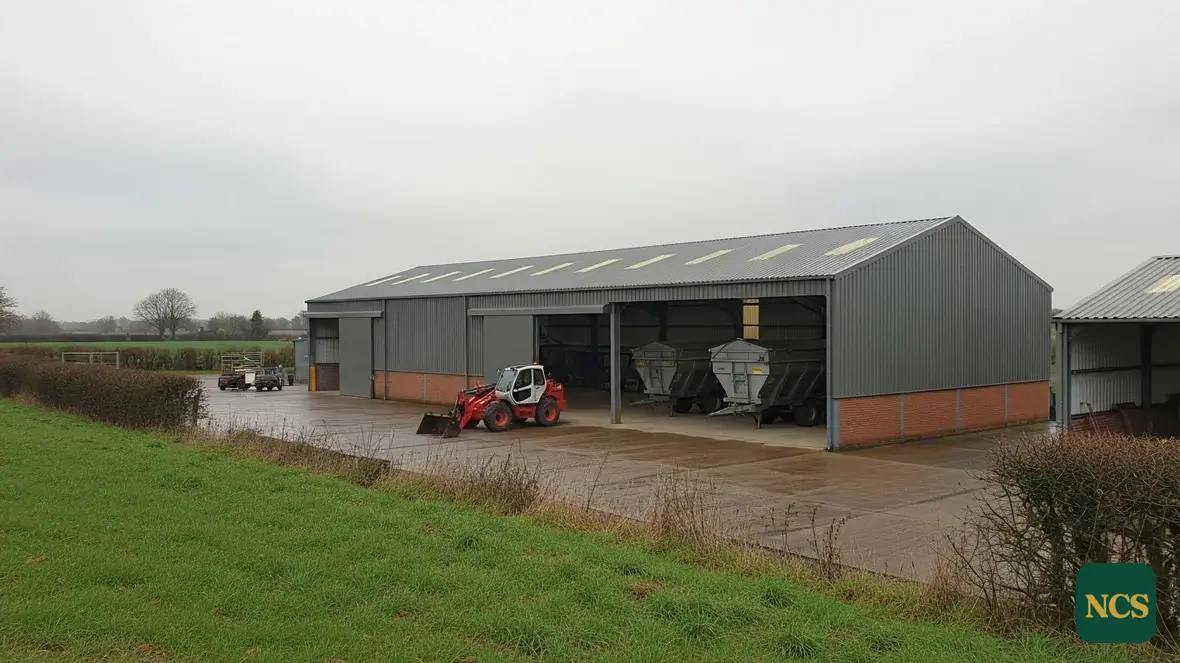
Coating farm buildings around Derby
The country around Derby changes quickly: arable and mixed farms on the Trent valley flats, then livestock holdings climbing towards the Peak fringe to the north and west. The building stock changes with it, and so does the way a coating programme has to be planned. We specialise in agricultural building coatings and are based in the South-East and cover the UK, so a job around Derby is organised as one efficient block: a thorough survey, a clear written report, then a concentrated programme on dates that fit the farm’s year.
From valley grain stores to upland stock sheds
On the Trent valley land near Derby you find large steel portal-frame grain stores, machinery sheds and general-purpose barns. Climb towards the Derbyshire hills and the mix shifts to cattle and sheep housing, silage stores and older stone-and-steel buildings. A good number across both still wear asbestos-cement or later fibre-cement roofs. The valley sites take wind-driven rain across open ground, while the higher buildings face harder, wetter and more exposed weather, and both find the cut edges, laps and fixings on a steel roof before anything else. Fibre-cement turns porous and mossy on the shaded slopes. The frames underneath are usually sound, which is the situation a coating is built for.
Most roofs we survey around Derby fall into one of two camps. Coated steel fails at the details: edges and laps open, fixings corrode and stain the sheets, and the exposed faces chalk and fade while the sheet itself is still serviceable. Asbestos and fibre-cement weather to a soft, water-holding surface that grows brittle with age. Where those cement sheets are intact, a clean and encapsulation system seals the surface and extends the roof’s life without stripping and licensed disposal. Where they are cracked or soft, that is a removal job, not a coating job. The survey says plainly which case your roof is in.
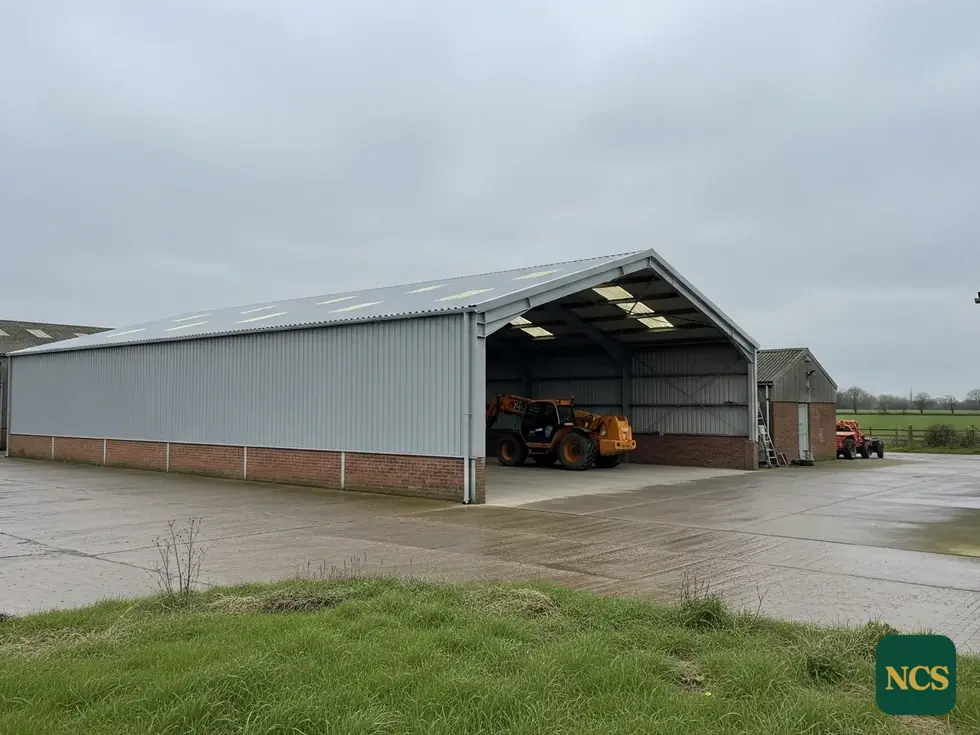
Working with two farm calendars
The valley and the hills run on different clocks, so the programme depends on the building. Arable grain stores have a clear window after the old crop has gone and before harvest fills the floor again, when coating can be completed and cured with the building ventilated ahead of intake. Upland livestock sheds suit turnout, when stock is out at grass and the buildings can be worked safely. The Peak fringe also narrows the weather window, because coatings need dry, settled conditions to cure and the higher ground around Derby offers fewer of them. We plan backwards from when each building has to be back in use and confirm the dates in writing.
A tired barn near Derby rarely needs new cladding. Honest preparation and a sprayed repaint is normally what the survey ends up recommending.
Survey first, then a price
We do not quote a roof from a photograph. Each slope is inspected from proper access, and we record the state of sheets, cut edges, fixings, rooflights and gutters, then check inside for the staining and corrosion that betray leaks the yard view hides. On the higher holdings around Derby we also weigh access and ground carefully, since steep approaches and soft yards decide what plant can safely reach a building. You receive photographs and a written recommendation you can challenge, and where a holding has several buildings in different states, each gets its own verdict rather than a blended figure.
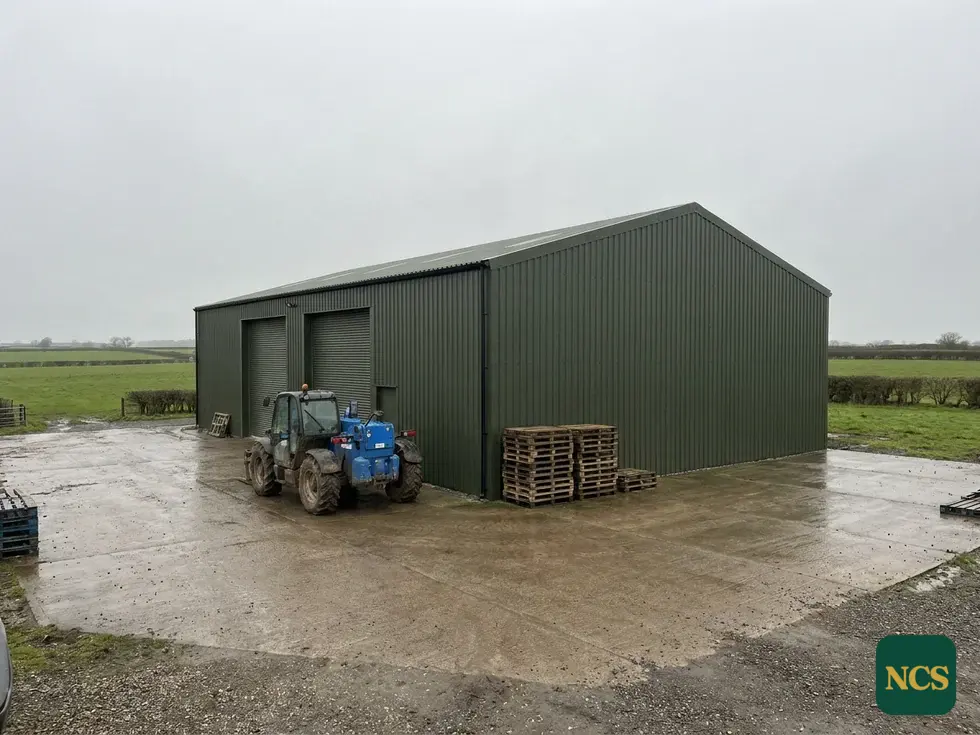
Honest about repair, coat or replace
We will not push a coating onto every roof, because it is not always the right answer. A roof with a few damaged sheets needs repair, and we will say so even though it earns us less. A roof with broad surface failure on sound sheets is the genuine case for coating, and there are plenty of those on the farms around Derby. If your roof is holed, soft underfoot, or the frame itself is failing, a coating won’t fix it. You’re looking at a full replacement there, and we won’t add our bill on top of that one just to delay the inevitable. The verdict, the photographs and the reasoning all come to you, and the decision stays yours.
We carry out agricultural building coatings work in and around Derby. For the full survey-led service and how we assess each building, see our Agricultural Building Coatings service, or request a free site survey.