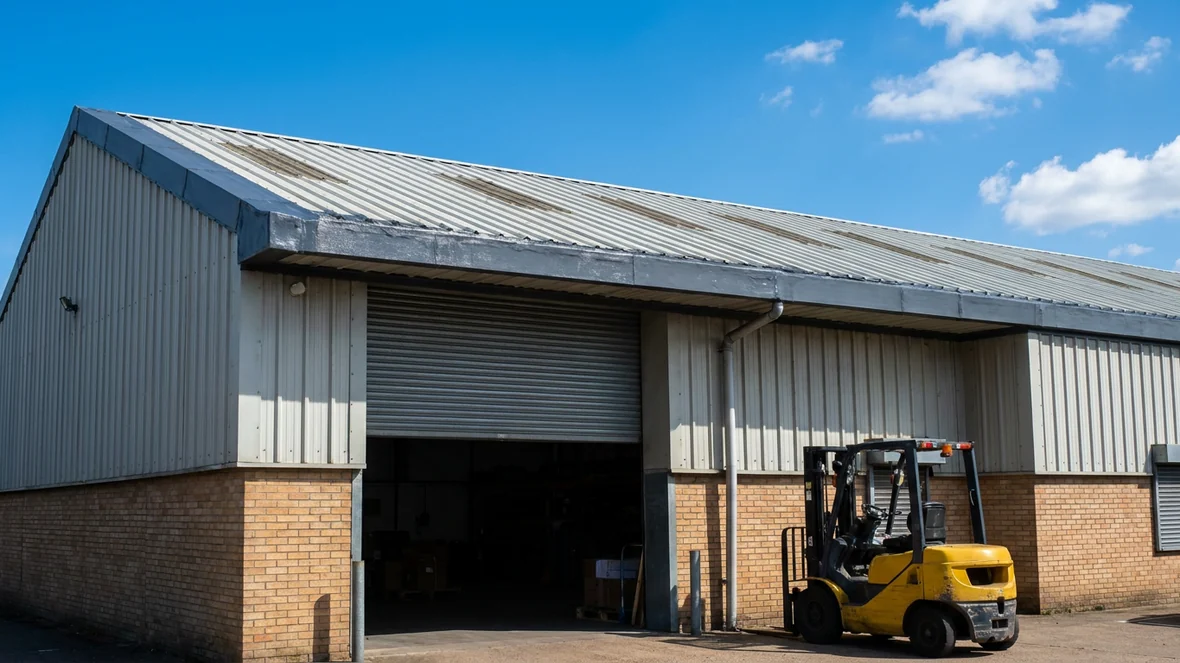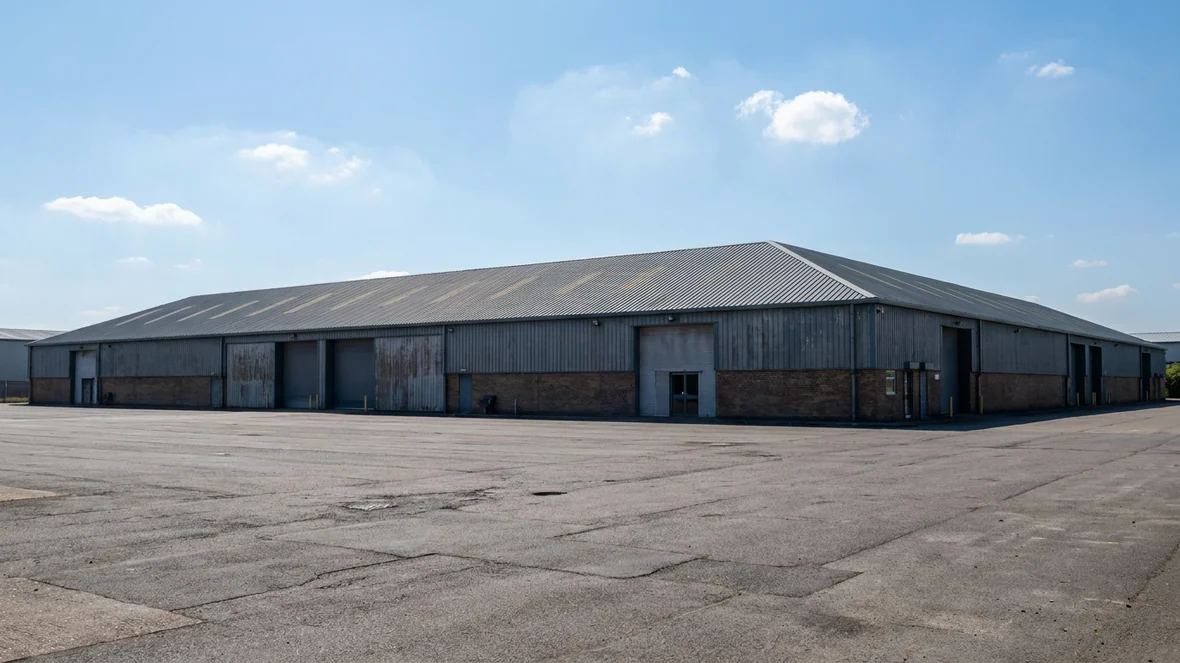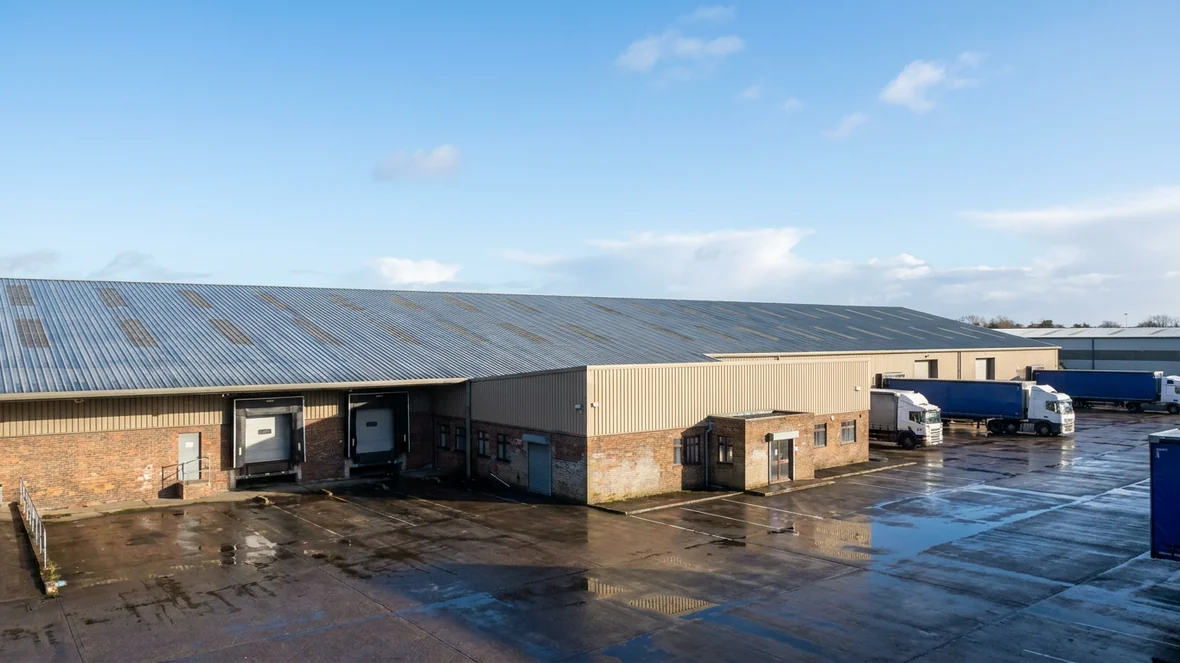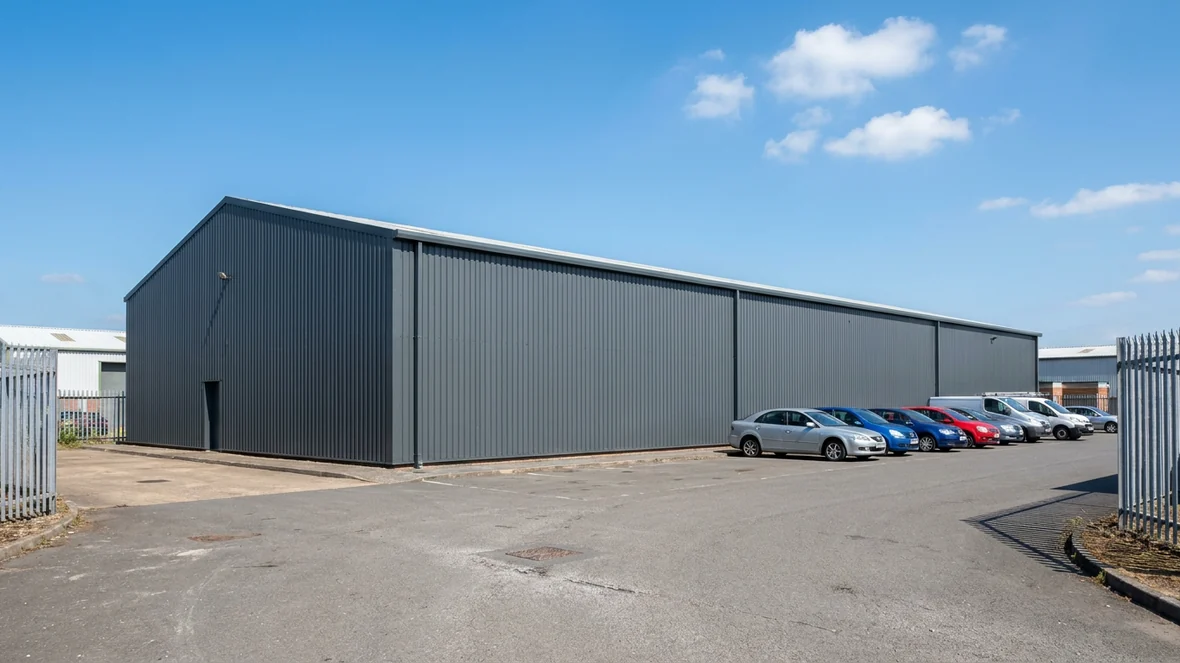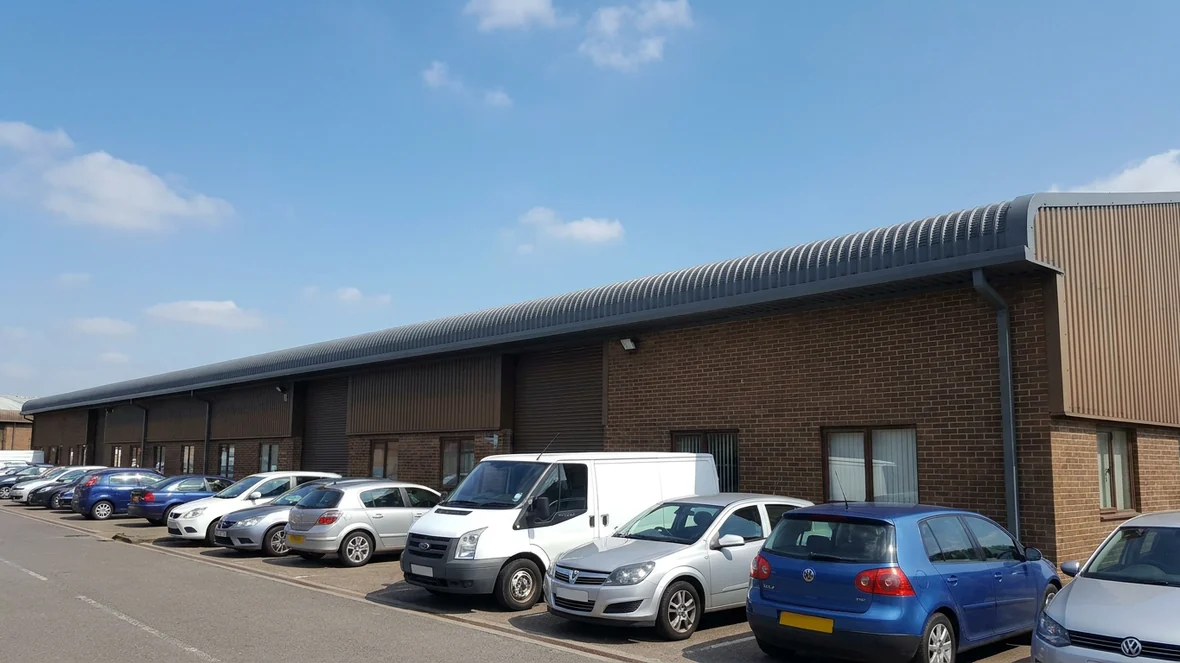










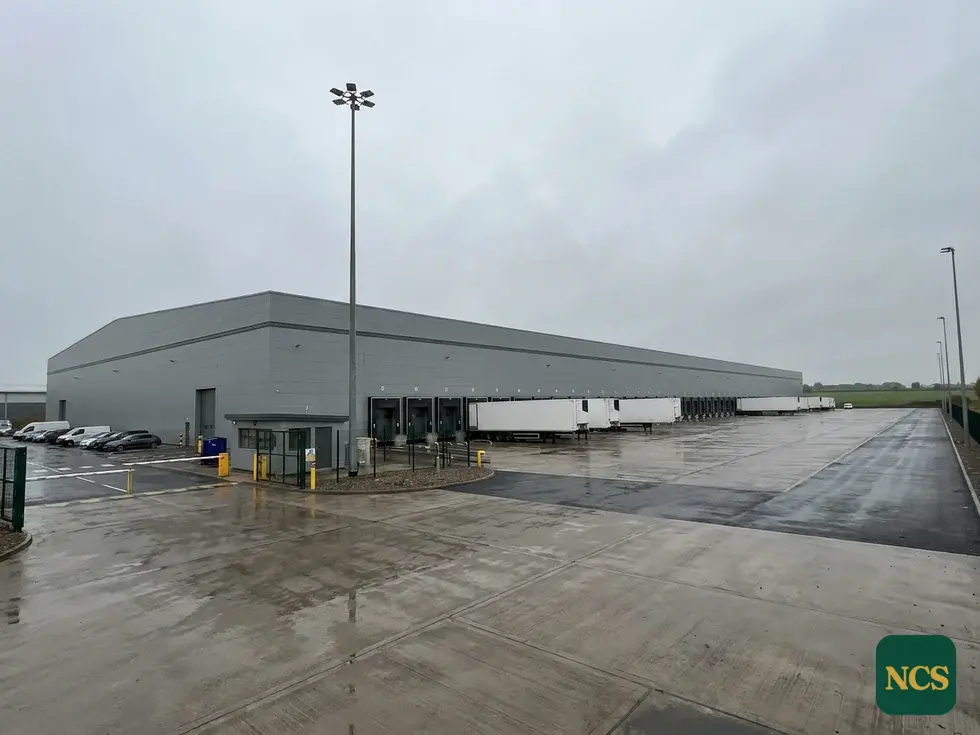
The Thames Estuary gives Southend-on-Sea a roofing climate closer to the open coast than to London. Salt-carrying air, driving rain off the water and long damp spells all reach the trading estates and commercial units across the town, and the first place they show on a profiled steel roof is at the cut edges of the sheets. If your gutters carry rust stains, this page explains what is happening up there and what your realistic options are.
The defect: bare steel where the coating runs out
Every coated steel sheet ends in a cut, and every cut exposes raw metal. At the eaves and in the overlaps those exposed ends sit in held moisture for weeks at a time. Rust forms on the bare edge, then burrows back beneath the factory coating, breaking its adhesion so that it peels and exposes more steel. This is why cut edge corrosion always spreads: the failure creates the conditions for its own growth. Estuary air sharpens the problem, because salt keeps metal damp at lower humidity and speeds the corrosion reaction itself. A roof here can show edge corrosion noticeably earlier in its life than an identical building inland would.
Why early treatment is the financially sane option
While the corrosion is confined to the edge zone, it can be stopped. The process is preparation back to clean steel, a rust-inhibiting primer, then a flexible seal bridging the lap and the sheet end so water can no longer reach bare metal. That work sits in the realm of planned maintenance. Once perforation arrives, the options narrow to sheet replacement, with stripping, extensive access and interruption to the business underneath. Owners who act at the rust-stain stage keep their existing roof; owners who wait generally end up buying parts of a new one. We give exact recommendations only after a survey, because lap condition varies enormously even across a single slope.
Straight answers when the steel is too far gone
Not every roof we survey around Southend-on-Sea is treatable, and we do not pretend otherwise. Where laps have perforated, where the steel flexes or breaks up under preparation, or where corrosion has run far beyond the edge zone under the coating, treatment would mask the problem without fixing it. In those cases our report says so, identifies which sheets need replacing, and confirms which areas remain sound. An honest no at survey stage costs you nothing; a convenient yes costs you the same job twice.
Finishing with a full roof coating
A roof old enough to show edge corrosion almost always shows general coating fatigue too: chalking, colour fade and brittle patches around fixings. Treating the edges and then overcoating the entire roof in the same programme reinstates a continuous weatherproof surface and means the access costs are paid once, not twice. For estuary-exposed buildings that is usually the configuration we recommend wherever the steel is sound. National Coating Specialists works from the South East across England, surveys every roof before pricing anything, and reports what it finds whether or not that leads to a coating job.