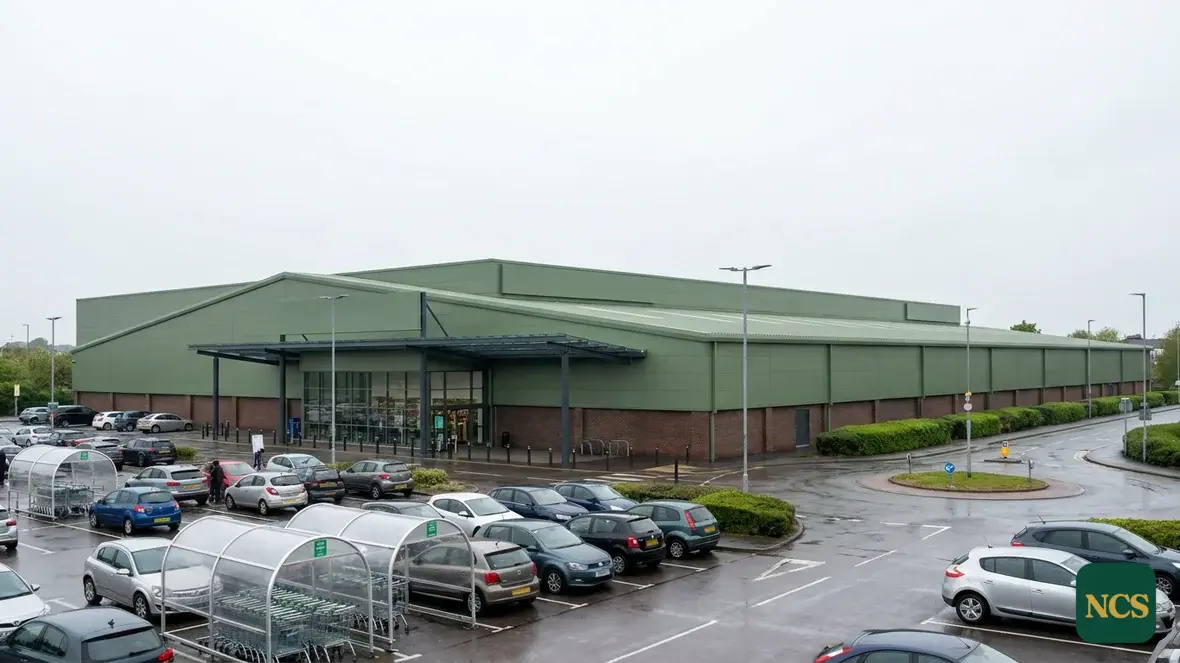




Exeter earns its weather, and commercial coating Exeter projects have to account for it. As the regional hub of the South West, sitting in the south-west of the country, the city takes Atlantic fronts more often than owners further east would credit, and its commercial buildings pay for that position month after month. Driving south-westerlies push up the Exe estuary, wet spells run on for days, and the roofs and elevations stay damp long after the rain has stopped. That is the climate every coating decision here has to survive.
Everything we do starts with a survey, not a postcode. Before we name a system or specify any work, we look at the building itself: what the substrate is, how far it has weathered, and whether a coating is the right answer. Often it is. Sometimes it is not, and when the roof or wall is past saving we put that in writing and step back. That first clear assessment is what separates maintenance you can defend from a gamble on a building you cannot see inside.
Commercial coating Exeter: building stock and how the Devon weather ages it
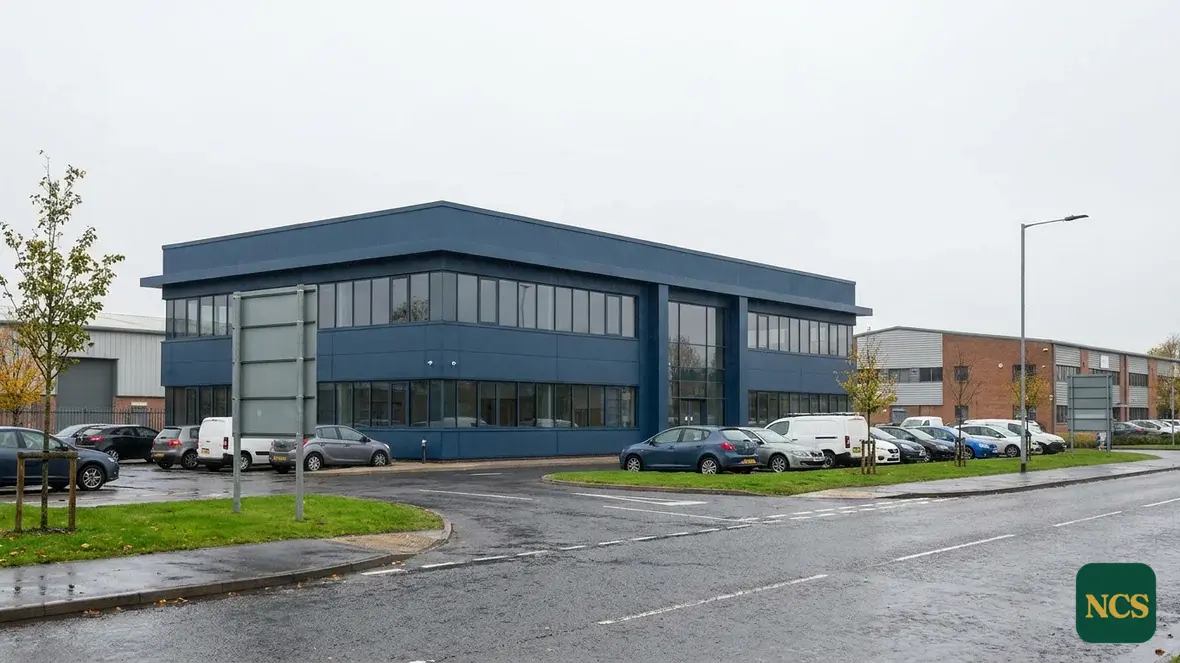
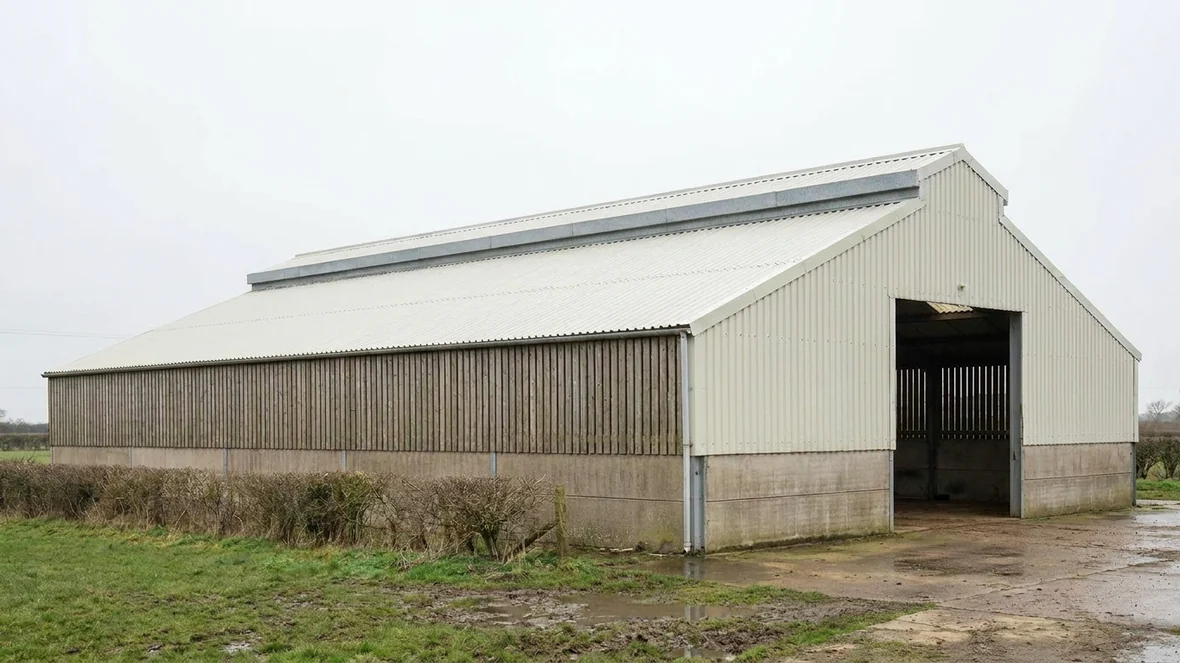
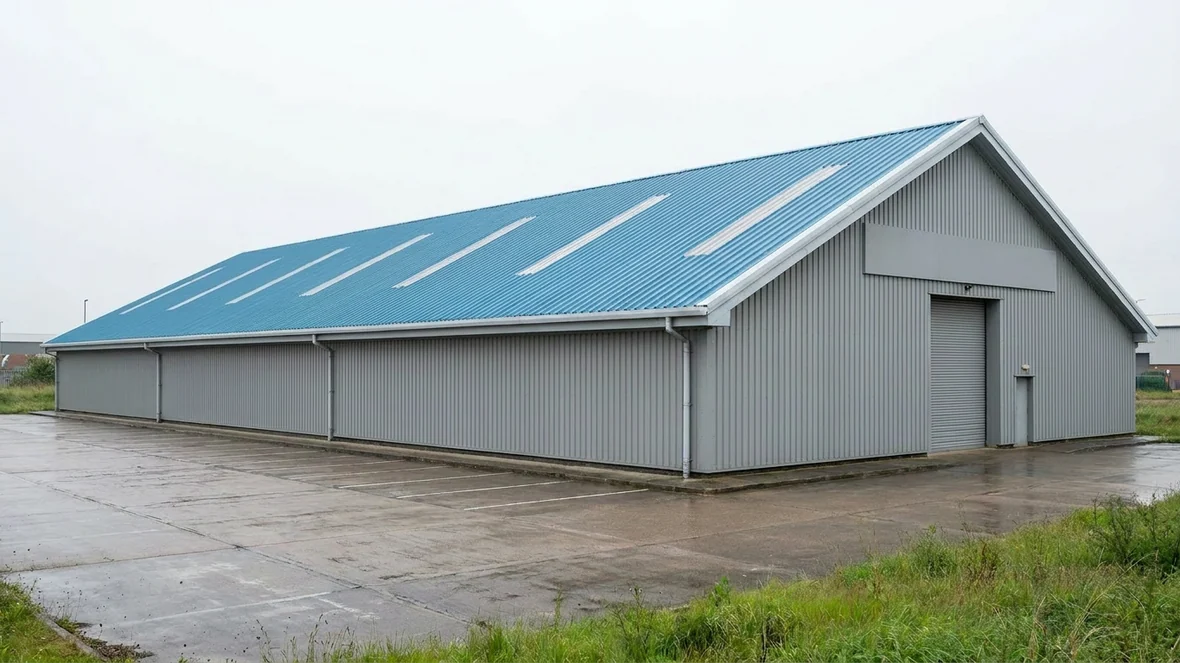
The city’s commercial stock splits roughly three ways. The business parks on Exeter’s edges carry steel portal-frame units with profiled metal roofs and clad elevations, modern and not so modern. Older trading estates, and the farm buildings out in the surrounding county, still lean heavily on fibre cement and asbestos cement sheeting put up generations ago. In the centre, much of it rebuilt after wartime damage, offices, retail and converted premises hide flat roofs in felt, asphalt or single-ply behind their parapets, on top of post-war brick and rendered walls.
A wet climate accelerates every one of the usual defects. Cut edge corrosion eats into metal sheets at the eaves and laps, moss and porosity take hold on cement, render chalks and cracks, and felt seams blister and split. North-facing slopes shaded by hills or trees green over fastest of all. None of this automatically rules out a coating, but each fault demands different preparation and a different system, which is exactly why we identify what is in front of us before recommending anything.
Commercial roof coating in Exeter
On an occupied commercial building, stripping the roof off is the disruption nobody wants, and in a county where dry windows are precious it is rarely necessary. A liquid-applied commercial roof coating renews the weatherproofing on a roof that is still structurally sound, curing into one continuous layer that seals the laps, fixings, flashings and the awkward details where leaks usually begin. The building stays closed and trading throughout, which for most owners matters as much as the finish itself.
For commercial coating Exeter roof enquiries, we only coat roofs that suit it. Where the survey finds saturated insulation, corroded decking or ponding caused by structural deflection, a new membrane simply traps the water underneath, and the report says repair or replace rather than coat. Business park units around the city tend to carry profiled metal, older estates rely on fibre cement, and the centre conceals felt, asphalt and single-ply, so identification always comes before specification. Plenty of enquiries reach us as a search for commercial roof painting, and in practice that is the same survey-led job done properly.
Commercial wall coating in Exeter
For commercial coating Exeter wall enquiries, Devon’s rainfall quietly decides every exterior project in the city, which makes wall coating a moisture-management decision before it is a cosmetic one. Done from a proper survey, a coating keeps wind-driven rain out of the fabric and lengthens the repainting cycle on a tired frontage. If you have been searching for commercial painters in Exeter, an airless-sprayed commercial wall coating system usually outlasts a brush-and-roller repaint on a weathered elevation, provided the wall is repaired and primed first rather than painted over.
Our survey records the substrate type and condition, moisture readings across the affected elevations, the adhesion of any existing render or paint, and the state of the parapets, copings, sills and rainwater goods that drive most leaks. Some faults no film can fix: structural cracking, damp from failed gutters or a bridged damp-proof course, detached or hollow render, and solid historic walls that need to breathe rather than be sealed. Where one of those applies, the exterior painting conversation pauses until the underlying problem is dealt with, because a coating over a wet wall blisters fast and costs more to strip than the original job.
Cladding spraying in Exeter
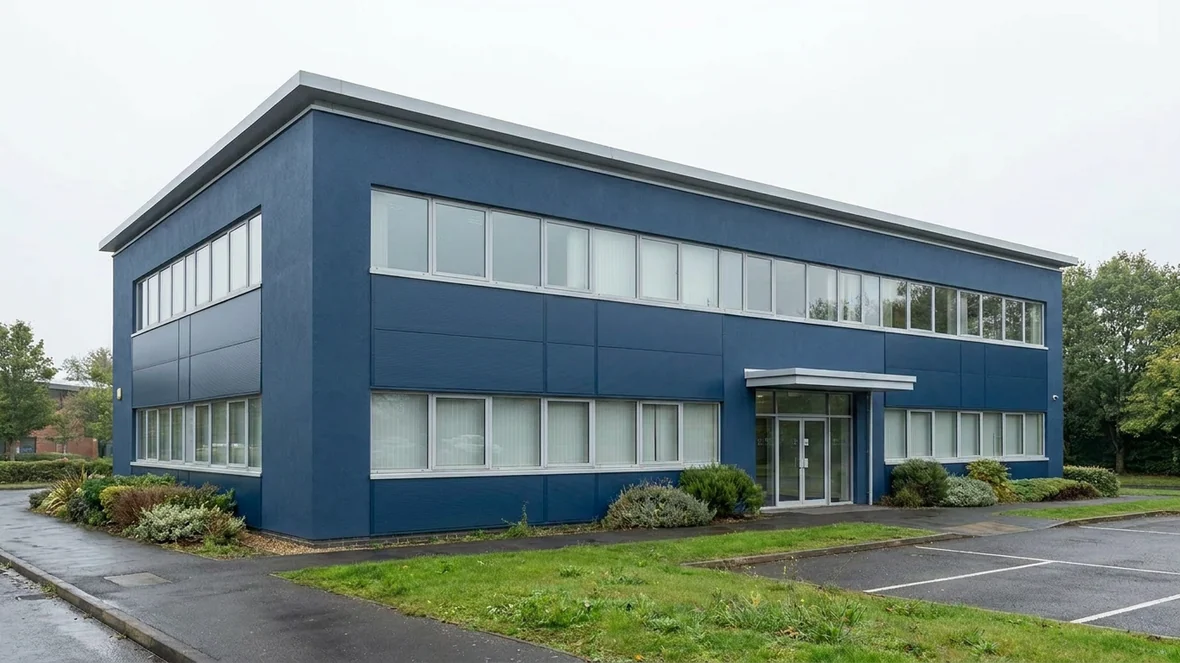
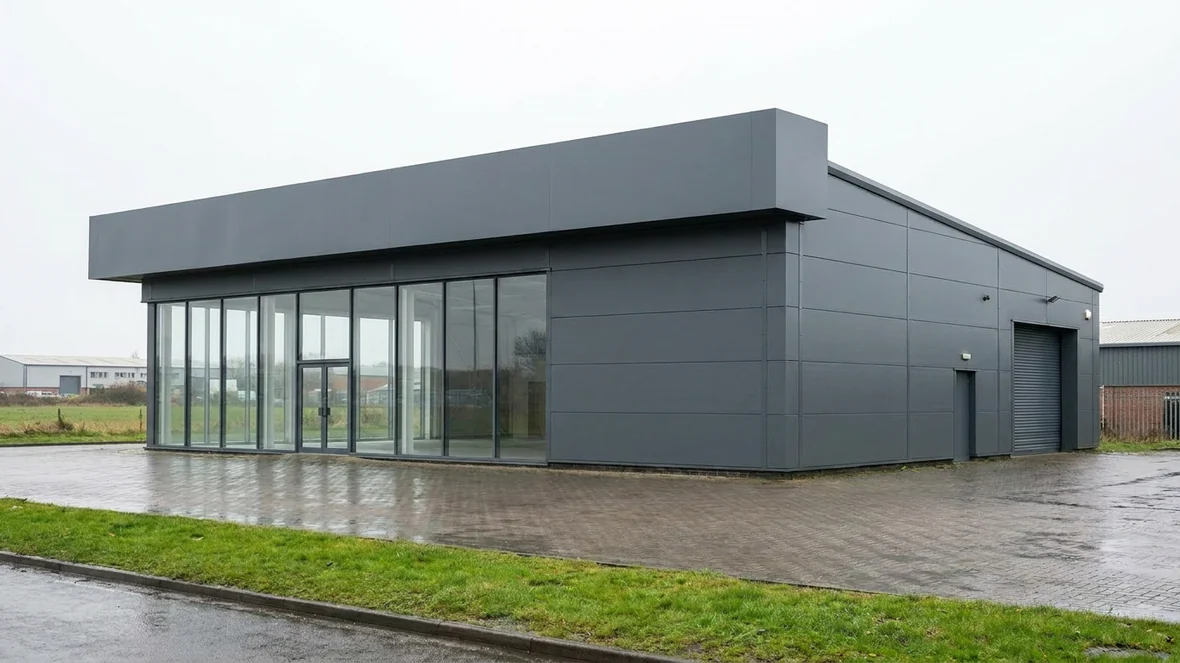
For commercial coating Exeter cladding enquiries, a sprayed refurbishment gives the owners of business park offices, industrial units and retail sheds a way to renew a faded or chalking exterior without replacing panels that are still doing their job. Exeter has grown quickly, and a good deal of its commercial cladding is now old enough to show it. Our cladding spraying covers plastisol and PVDF coated sheet, sandwich panels, fascias and soffits, cleaned, corrosion-treated, primed and sprayed in even controlled coats after the panels have been surveyed close up.
We will not spray a failed substrate, and we say so plainly. If the original finish is delaminating in sheets, if rust has gone through the panel, or if the cladding is loose or hiding active leaks, the clear advice is repair or replacement, and a coating cannot change a panel system’s fire performance whatever anyone tells you. Owners who search for cladding painting are usually after the same outcome we deliver on sound panels: a respray that seals the cut edges and can carry a full colour change after a rebrand, keeping serviceable sheets out of a skip.
Industrial roof coating in Exeter
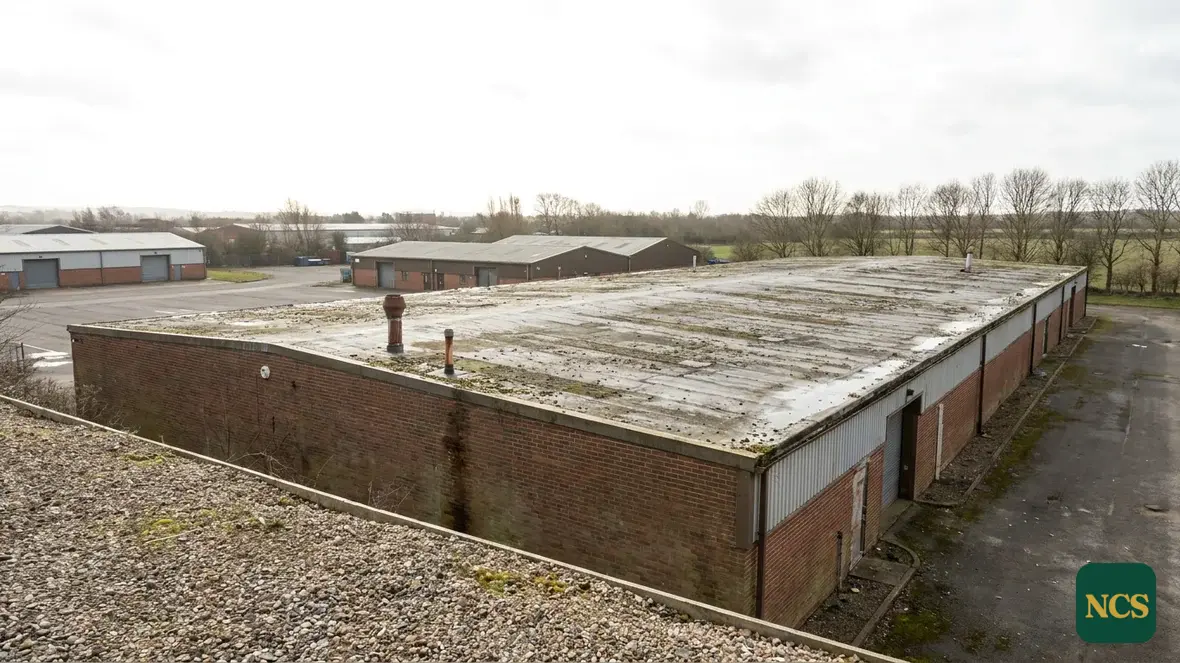
For commercial coating Exeter industrial roof enquiries, the hardest part of any roof project is keeping the operation underneath going. Around the business parks and trading estates lining the M5, taking a building out of service to re-roof is often not an option, and that is the practical case for an industrial roof coating: we never open the envelope, the building stays weathertight, and we sequence the work around your deliveries, shifts and yard movements instead of the other way round.
Profiled steel relies on a factory finish that chalks, fades and thins until bare metal shows, and around Exeter, where roofs spend more of the year wet, that decline runs faster than many maintenance plans allow for. If you have been comparing industrial painting contractors for a unit near the city, the work that lasts starts at the fixings and cut edges, because that is where water gets in first. A coating put on while the substrate is still sound replaces the worn finish with a continuous bonded layer over the whole roof; where corrosion has already weakened the sheets, we recommend replacement rather than sell a system that fails.
Cut edge corrosion treatment in Exeter
When steel roof sheets are cut to size, the cut exposes bare metal along every edge and overlap that the factory finish never protected. Side and end laps pull rainwater in by capillary action and hold it against that bare steel, so the joint stays wet long after the surface has dried. Rust takes hold, then creeps back under the coating and lifts it as it spreads. Our cut edge corrosion treatment mechanically prepares the corroded edges, applies a corrosion-inhibiting primer, seals the laps and lays a flexible coating band over the edge zone, all with the building still open.
Timing is everything with this defect. Caught while it is confined to the edge, it is contained surface work; left too long, the corrosion climbs the sheet until the steel perforates at the eaves or an end lap, and then those sheets need replacing. Rust staining in the gutters, coating curling at the overlaps, rust rings around fixings or damp patches below sheet ends all mean it is time to book a survey rather than wait for a leak. Painting over rusted edges is the repair that fails first, so we treat the steel, seal the laps and then coat, in that order.
Asbestos roof encapsulation in Exeter
The question we hear most about asbestos cement roofs is whether we can just come and coat it. The answer is that nobody should coat an asbestos cement roof until a survey has confirmed the sheets can take it. Our asbestos roof encapsulation is the right route for a weathered but structurally sound roof and a waste of money on a failing one, so the condition survey comes first every time, checking how far the surface has eroded, whether the sheets are still rigid, and the state of the laps, edges and fixings.
The legal duty to manage asbestos in non-domestic premises, working farm buildings included, requires you to know what you have, assess its condition and control the risk. It does not require removal, and sound sheets are usually better managed in place than disturbed. Controlled non-abrasive cleaning, treatment of growth, minor repairs and a purpose-made encapsulant seal the surface and lock down fibre release. Where the survey finds extensive cracking, holing, delamination or friable, softening sheets, we recommend removal instead and step aside for a contractor working under the proper controls, because coating a failing roof seals problems in rather than out.
Agricultural building coating in Exeter
The farms in the country around Exeter work in a wetter world than most of the country, and their buildings show it. This is livestock and dairy territory: cubicle housing, calving sheds, covered yards and machinery stores, often a mix of modern profiled steel and older asbestos cement roofs. Holdings in the Exe, Culm and Creedy valleys sit anywhere from sheltered river ground to exposed high pasture, so the same roof can age very differently a few miles apart, and an agricultural building coating specified for Devon has more weather to fight than the same product further east.
Coatings only work on clean, dry, sound surfaces, and that is harder to achieve here than the brochures admit, with more rain days, higher humidity and slower drying. We plan for the practical drying window rather than promising dates the climate will not honour, and we pause a job when conditions turn instead of trapping moisture under new work.
On a livestock farm the buildings are rarely empty, so we sequence the work around turnout, milking and lambing, take sheds one at a time, and agree which areas are out of bounds and when. A sound barn is brought back properly; a brittle, holed or delaminated one is told to wait for new metal, not sold a system.

Coat, repair or replace across Exeter
Every commercial coating Exeter enquiry is decided early, at the survey, not at the sprayer. Coating extends the life of roofs and walls that still have life to extend. It is the wrong answer for a roof with widespread perforation, corrosion that has weakened the sheets or fixings, waterlogged insulation in a built-up construction, or permanent ponding from structural deflection, and it is the wrong answer for a wall with structural movement, a bridged damp-proof course or render that has parted from the substrate.
Where the survey lands on the repair-or-replace side of that line, the report says so in writing, with photographs, even when it means talking ourselves out of a contract. An accurate condition report is worth more to an estates team, a managing agent or a farm business than a tidy-looking roof that fails again inside a couple of winters. The things that decide the outcome are all settled before the first coat:
- An accurate, photographed survey of the building itself
- A clear verdict on whether coating is justified at all
- Repairs and corrosion treatment carried out before application
- The right system matched to the substrate and its exposure
Recent projects from the same team
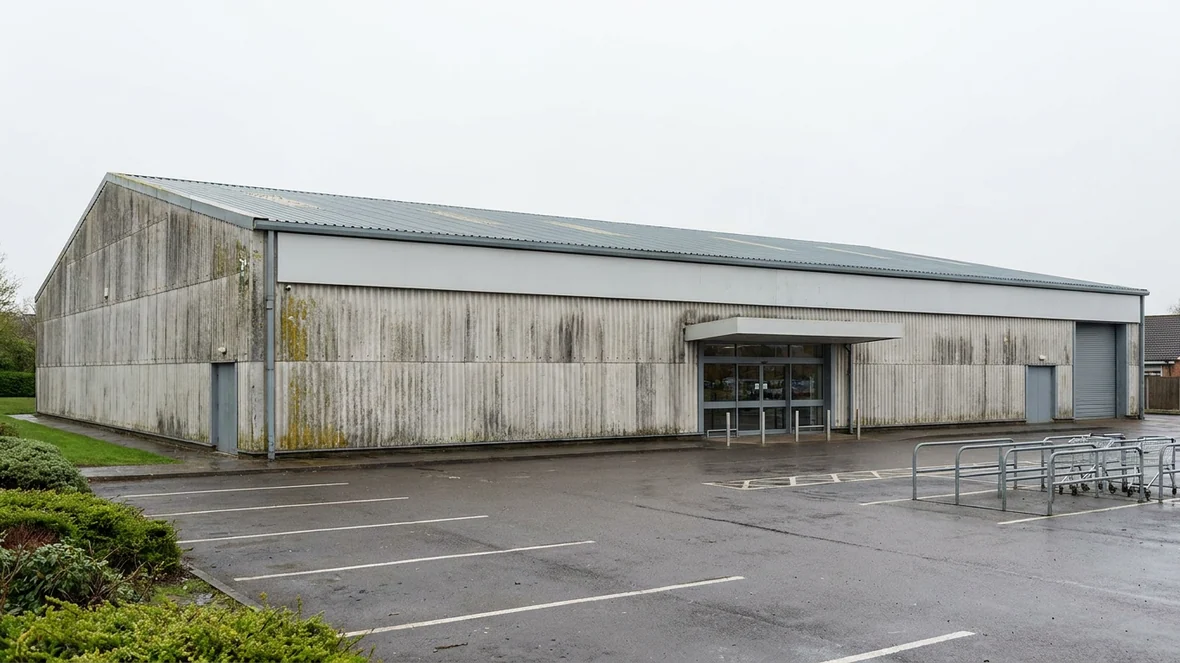
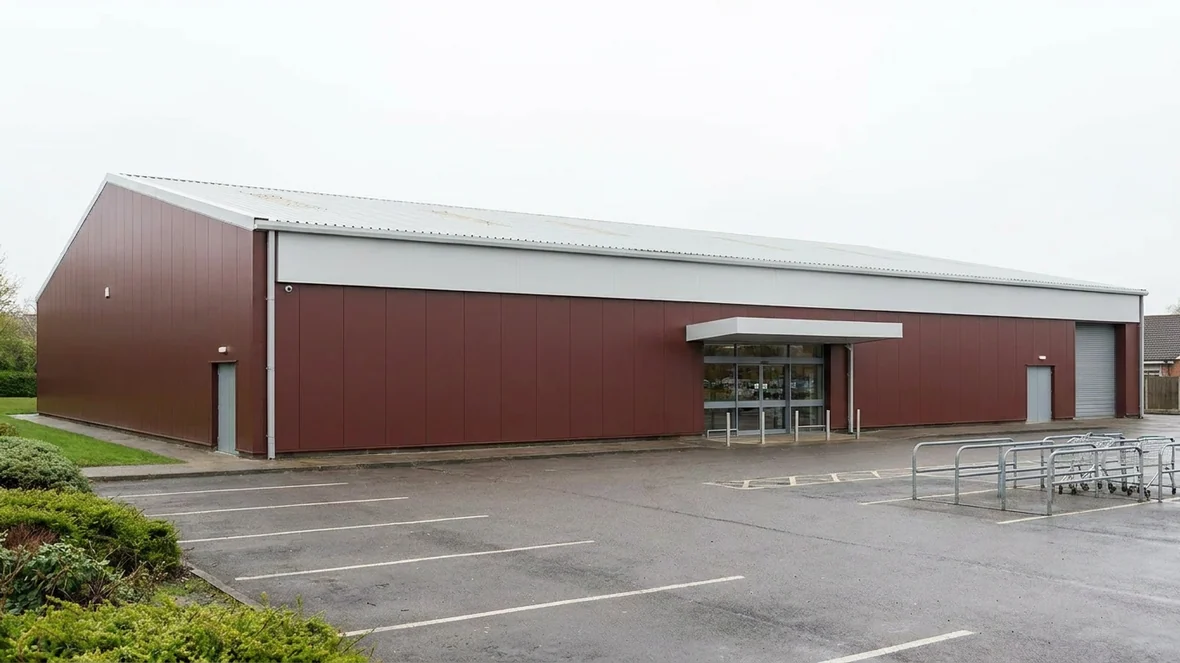
A supermarket near Exeter had its cut edges treated and the whole roof coated moorland green, without losing an hour of trading. Read the full case study to see the same survey-led method these pages describe, worked through from before to after on a building that stayed open the entire time.
Booking a coating survey in Exeter
For commercial coating Exeter enquiries, a survey is where a clear recommendation starts, so we carry it out free and with no obligation to proceed. One of our surveyors comes to the building, inspects the roof or elevation properly, and gives you a written, photographed report that sets out what is sound, what needs work, and whether coating, repair or replacement gives the best value. You can compare that against any other quotation and question anything in it that looks thin.
We survey and coat across Devon and along its borders, so alongside Exeter itself our regular coverage takes in Exmouth, Newton Abbot, Tiverton and Honiton, which suits owners and managing agents with buildings spread around the county. To book a survey or read more about the way we work in this region, start at our Devon coating hub and tell us which building you want us to look at first.
Recently
We plan the work around how your site runs, so the building stays in use while we are on the roof.
A summer survey gives us time to specify and programme the work before the wetter months make access and curing harder.
All access and roof work is planned in line with HSE work-at-height guidance.