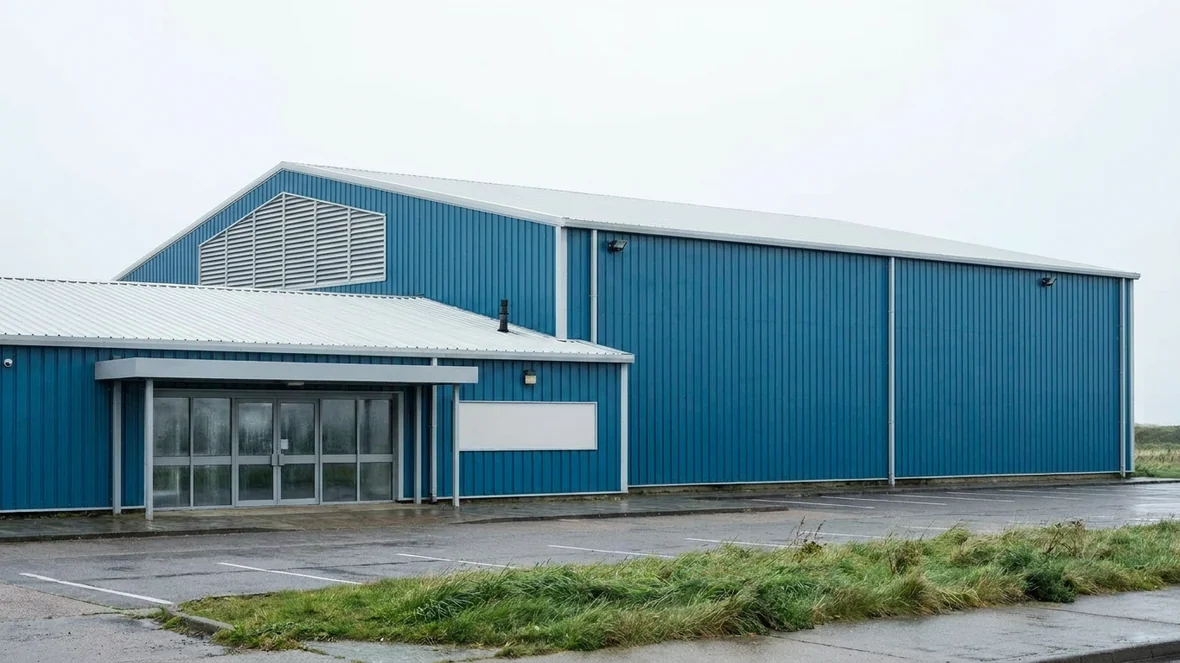
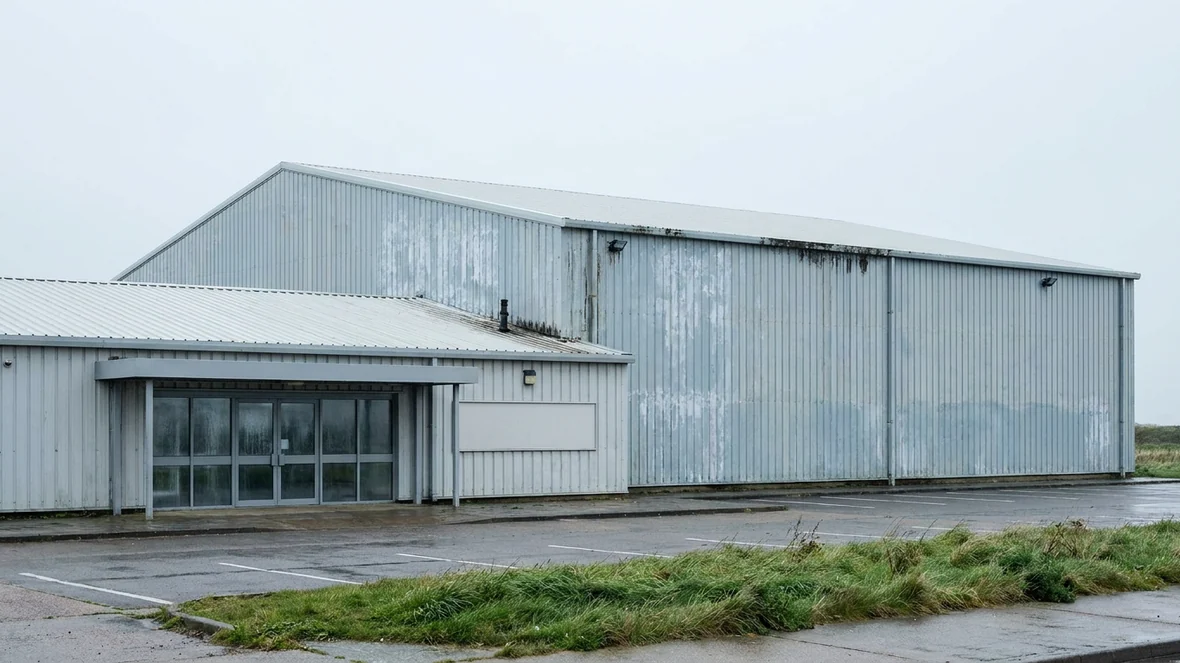
Buildings near the Lancashire coast age on a different clock. Salt rides in on every westerly, rain arrives horizontally for half the year, and a wall finish that would last comfortably inland gives up years early within sight of the sea. The leisure centre in this project, serving a community on the edge of Blackpool, showed all of it: a tall sports hall block whose cladding had faded to a streaky, chalked blue grey, over an entrance block whose render carried the same tired story at eye level. The operator wanted the building to look worth visiting again, and wanted an exterior wall coating specified for coastal exposure rather than a paint job that would fade by the next inspection cycle.
The building and the brief: a leisure centre near Blackpool
The building is a classic UK leisure centre arrangement: a tall, almost windowless sports hall clad in vertically profiled steel sheeting, standing behind a lower single storey entrance block with glazed doors, a modest canopy and rendered walls. High level louvres ventilate the hall, the roofs are shallow pitch grey metal, and the whole composition faces a car park that fills with school runs and swimming lessons from early morning. Hundreds of centres like it went up across the UK on the same pattern, tall profiled steel over a rendered welcome, and on the coast they all weather the same way unless the walls are protected properly.
The operator chose ocean blue from our coating colours range, a clean mid blue that suits a swimming and sports building, reads well against grey coastal skies, and holds its colour under UV far better than the original factory finish. The specification came from our commercial wall coating service, built up for marine exposure: stabilise, prime, then a topcoat engineered to shrug off the salt that killed its predecessor.
What the survey found
Public buildings carry a burden that private ones do not: everyone judges the state of the council’s services by the state of the walls. The original pale blue grey had weathered so unevenly that the hall block read as patchwork, with salt streaking below every fixing and flashing, and chalking so advanced the colour transferred to a glove. Our survey found the story we usually find on coastal Lancashire buildings: the cladding and render were structurally sound, the fixings were tight, and the finish had simply been worn out by the environment it lives in. The repair list was short but coastal, and every line of it went into the report with photographs before the programme was agreed.
The work, stage by stage
The sequence below follows the hall block and entrance through the programme, from salt streaked to finished ocean blue.
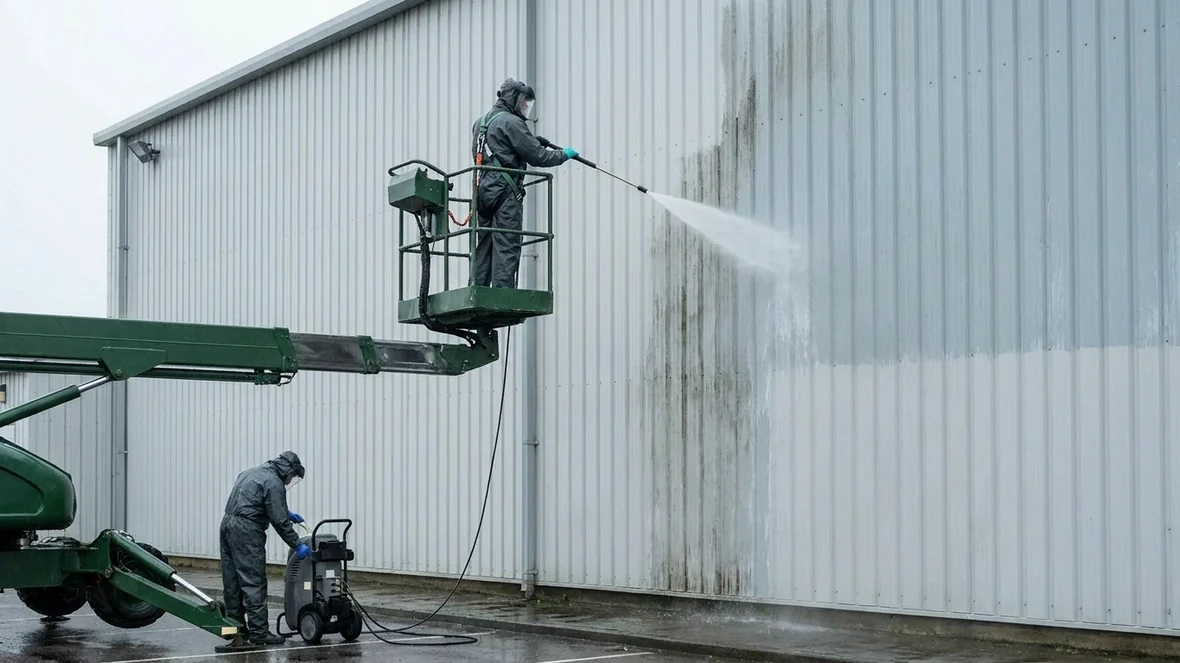
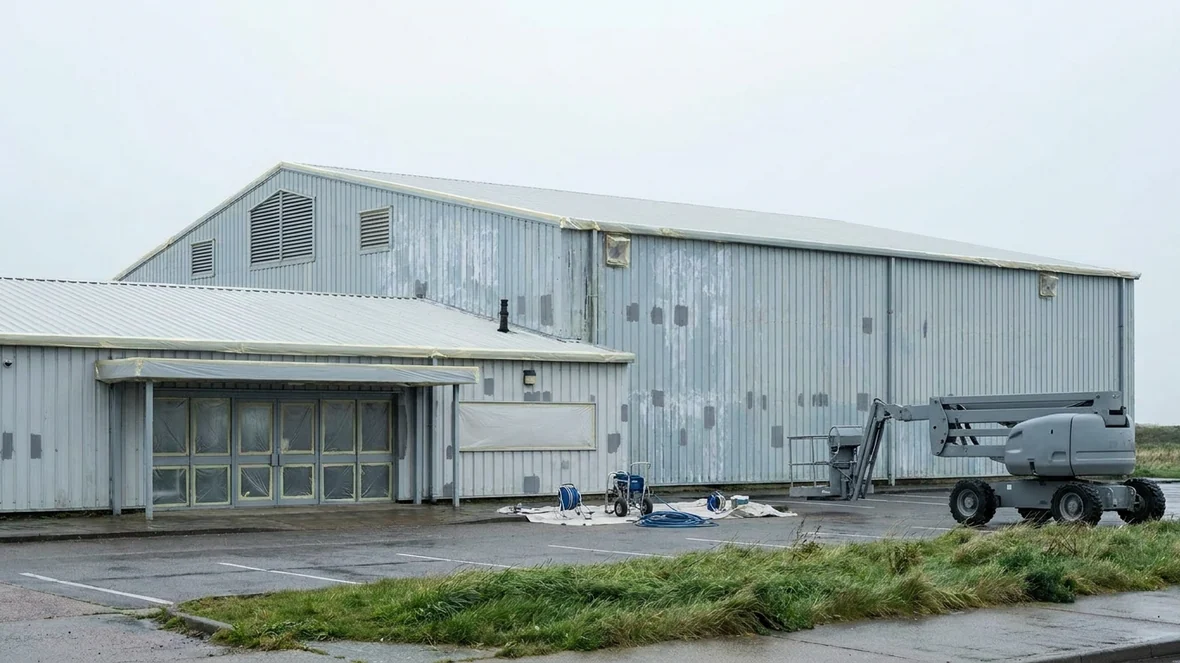
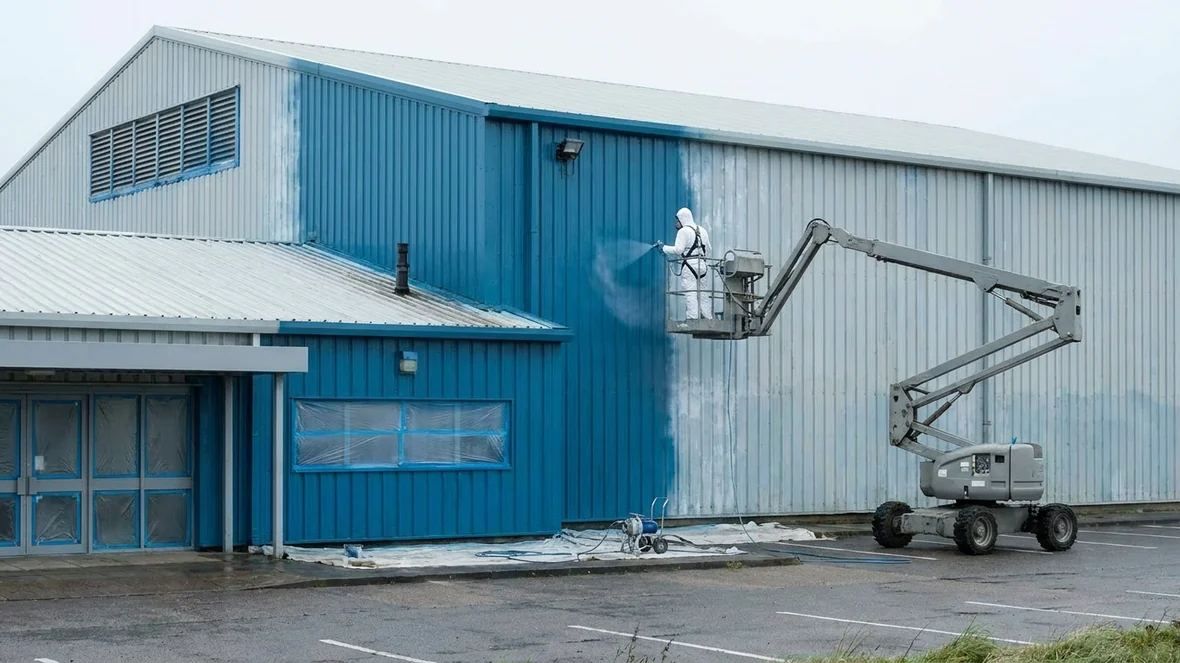

Salt is the enemy of adhesion, so preparation on a coastal building starts and ends with getting it off the walls. The full height of the hall block was pressure washed from a mobile elevated platform, working down the vertical profile in bays, followed by the entrance block render. The wash water carried off the chalked pigment, the salt crust and a surprising quantity of wind blown grime from the leeward faces, and the washed cladding dried to a colour nobody had seen since the building opened. The repair list came next: fixings showing early corrosion bleed were treated and sealed, flashings were checked and re fixed where the wind had worked them loose, hairline cracks in the entrance render were filled with flexible filler, and every repair was spot primed. On the exposed gable, where driving rain had found the sheet laps, the laps were sealed before priming, because on the Lancashire coast any gap you leave becomes a water feature by November.
The masking stage covered the entrance glazing and doors, the canopy edge, the sign panel, the roof edge flashings and every run of high level louvres. Louvres deserve respect on a spray job: they are designed to pull air into the building, which means they will pull overspray in too if they are not sealed properly, and a sports hall full of atomised blue paint is a phone call nobody wants. Each louvre run was filmed, taped and checked before a gun came out, and the hall’s ventilation schedule was agreed with the centre manager around the spraying windows. The centre stayed open for every session on the timetable throughout: swimming lessons, five a side leagues and gym members all came and went on a protected entrance route, and the working zones moved around the building outside its busiest hours. A Lancashire public building has no quiet season, so the programme was built around the timetable rather than the other way round.
The coating system went on in three layers: a stabilising primer over the repaired render, an adhesion primer across the washed cladding, then two full coats of ocean blue applied by airless spray. Vertically profiled sheeting asks for a different gun discipline than flat panel, with passes run up the profile so the film wraps both faces of every rib evenly, and the wet edge kept live for the full height of the hall block so no lap lines dry into the finish. Wind rules everything on the Fylde coast: every morning started with an exposure check, spraying only ran inside our wind limits with screening on the windward side, and on several afternoons the guns stopped early while the crew moved to preparation and detail work instead. Losing an hour to weather is cheap. Chasing a programme into a gusting crosswind next to a public car park is not.
The finished leisure centre
The finished centre looks like a decision instead of an apology. The tall hall block carries its ocean blue evenly from ground to roofline, the ribs of the vertical profile reading as clean shadow lines instead of streak tracks, and the entrance block sits under it in the same colour with its canopy and frames picked out in grey. From the road it reads as a new building. From the car park at swimming lesson time, it reads as somewhere the council spends money, which for a Lancashire leisure operator is half the point of the work.
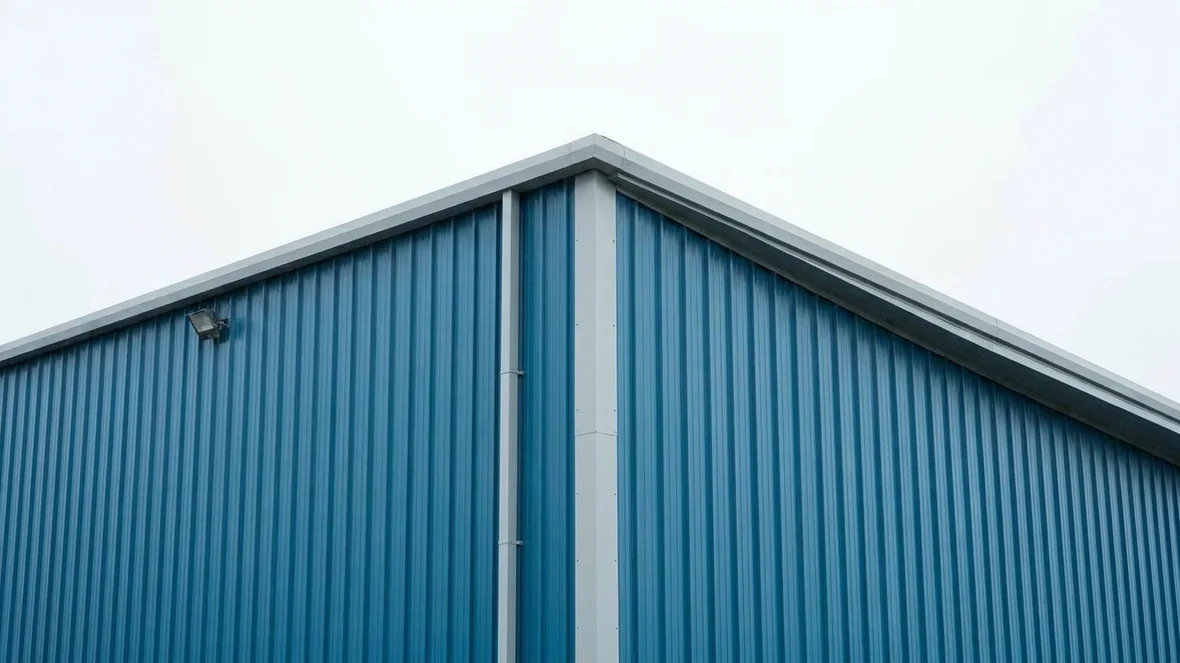
The close up shows the finish the system was specified to deliver: an even satin film wrapping every rib, a dead straight junction against the corner flashing, and no trace of the salt streaking that defined the building before. The coating is now the sacrificial layer between the Irish Sea’s weather and the steel, which is exactly where the operator wants the wear to happen. When this finish eventually dulls, decades of cladding life will still be sitting sound underneath it, and the next recoat will be a wash and a topcoat rather than a rescue.
Commercial wall coating across Lancashire and the UK
The Fylde coast is hard country for building finishes, and Blackpool’s stock of leisure buildings, hotels, retail units and depots all weather the same way this centre did. We carry out commercial wall coating across Lancashire, from commercial wall coating in Preston to Lytham St Annes, Fleetwood and Poulton le Fylde along the coast, and up to Lancaster on the same coastal specification. The crews that coated this building work the whole North West.
Nationally, the same system goes onto public and commercial buildings across the UK. If you run a leisure centre, school or public building in Lancashire whose walls have stopped matching the service inside, book a free site survey: we will inspect the cladding and render, photograph the condition honestly, and set out what a coastal grade recoat would involve. For the same process on a retail building, read our case study of a retail park cladding respray near Reading.
Project completed in early summer 2026.