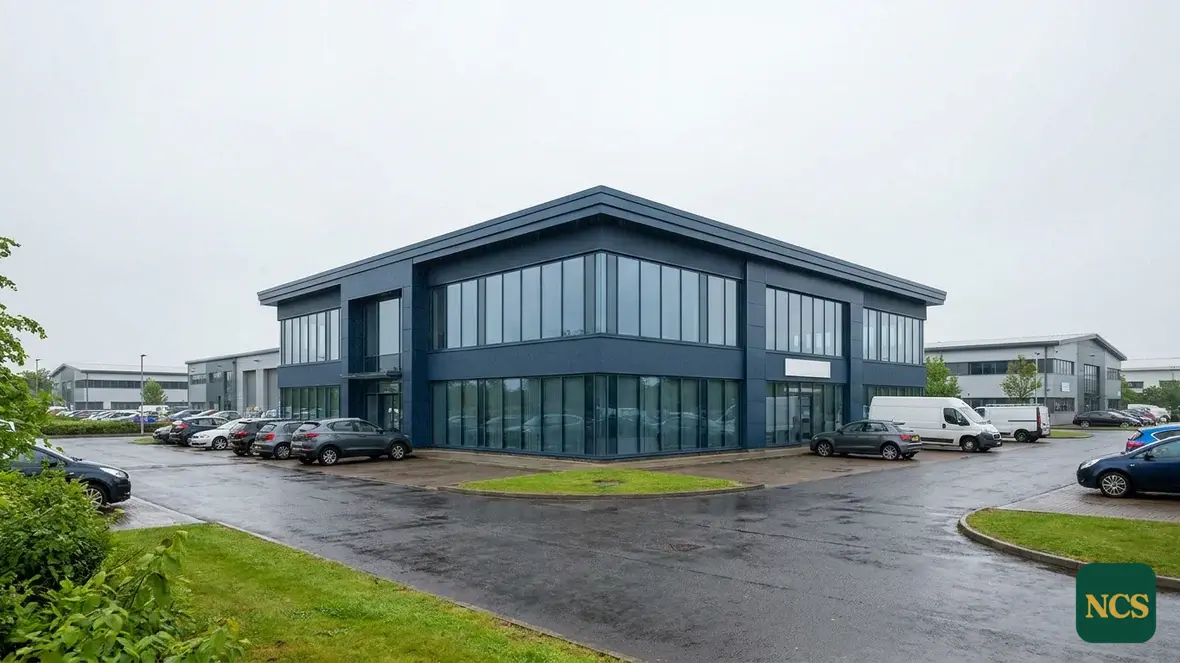
Why retail park cladding fades and stains
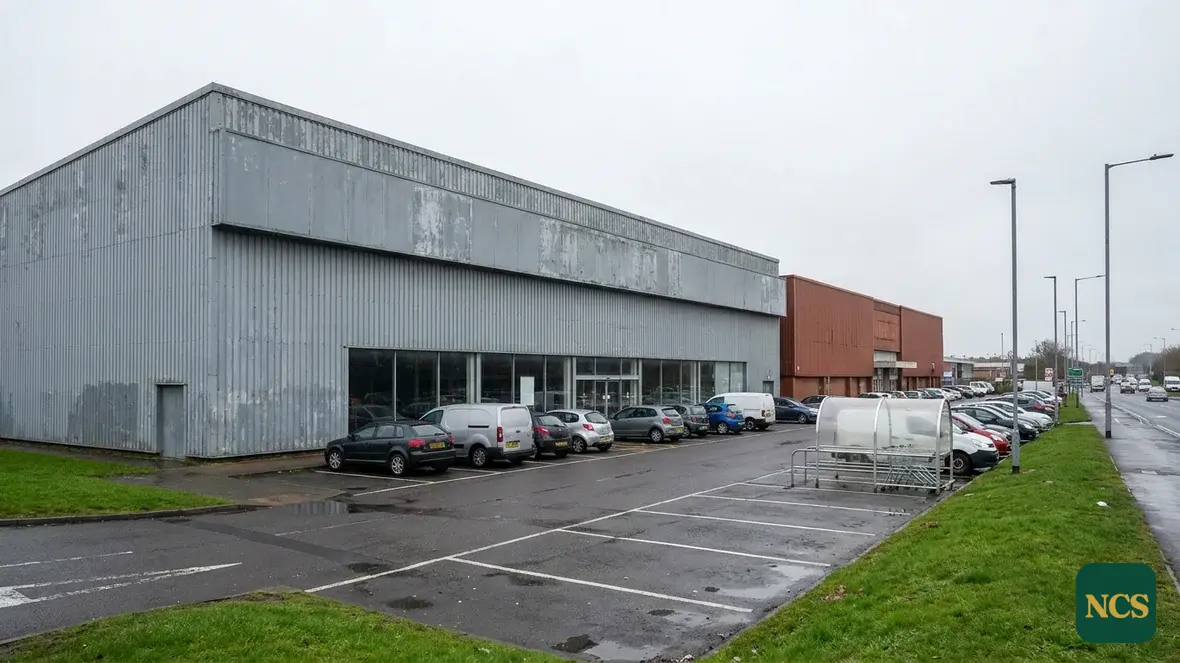
Retail park buildings endure more weathering than most commercial properties. Their large exposed elevations face constant sun, rain and pollution without shelter. Plastisol coated steel panels, the most common retail park cladding, gradually lose pigment and chalk under UV exposure. The horizontal ribs of profiled metal cladding also trap dirt and streaking runoff from fascia panels above.
Drive-thru restaurants and supermarket loading bays suffer additional grease and exhaust staining. Unlike offices or warehouses, retail parks cannot close for maintenance without losing trade. Years of deferred cleaning and recoating leave many retail park buildings with visibly tired, patchy cladding that undermines brand presentation.
The retail park building stock
Most UK retail parks built between the late nineties and early twenties use plastisol coated steel cladding panels. These typically have a twenty five year lifespan but often show advanced fading after fifteen years. Profiled steel sheets with shallow trapezoidal ribs dominate, though some prestige developments use flat composite aluminium panels.
Superstore extensions and newer retail parks increasingly combine large areas of feature cladding with glazed shopfronts. The tallest fascia panels sit above tenant signage, often exceeding six metres in height. This makes full scaffold access essential for proper inspection and recoating work.
On-site cladding spraying for retail parks
Professional cladding spraying renews retail park buildings without removing panels. The process starts with pressure washing to remove chalked coating and surface contaminants. Any rust spots or damaged areas receive spot treatment before the full spray application.
Specialist airless spray equipment applies an even coat of high opacity finish across profiled metal surfaces. The result matches original factory finishes for colour consistency and weather resistance. Retail parks can remain fully operational during spraying by working sectionally outside peak trading hours.
Our sprayers work on retail parks and trade units nationwide, and a respray is only specified after the panels have been surveyed close up.
Cut edges, fixings and panel repairs
The first step in any retail park cladding project is addressing the underlying issues that cause deterioration. Cut edges where panels meet are particularly vulnerable, as the exposed core absorbs moisture over time. Fixings also require close inspection, as loose or corroded brackets compromise the entire system. Damaged panels may need partial replacement, but often the surrounding framework dictates the repair approach.
Our surveys consistently find the same failure patterns across retail parks. The horizontal joints between panels trap dirt and water, accelerating corrosion. The vertical seams where panels abut are prone to movement and cracking. And the fixings behind the fascia panels work loose over years of wind loading. Identifying these specific points allows us to target repairs where they matter most.
- Inspect all cut edges for moisture ingress and corrosion
- Check every fixing point for movement or rust
- Assess panel condition behind the surface coating
- Identify any underlying substrate damage
- Document all defects with photographic evidence
Planning around operational constraints
Retail parks cannot tolerate downtime, so every aspect of the work must accommodate normal trading. This means coordinating with tenants to minimise disruption, often working overnight or in phased sections. The car park remains fully operational throughout, with careful management of access routes and pedestrian flows. Temporary barriers and signage ensure customer safety without obstructing the premises.
The scale of retail park buildings introduces additional logistical challenges. High-level work requires mobile elevated platforms positioned to avoid delivery lorries and customer parking. Weather conditions are closely monitored, as wind speeds can halt operations at short notice. Materials are staged off-site until needed, with strict controls over waste removal and site cleanliness between shifts.
Why the survey comes first
No two retail park cladding systems are identical, even within the same development. Variations in original installation, subsequent repairs and exposure patterns mean each building requires individual assessment. The survey establishes the substrate condition, identifies latent defects and determines the appropriate preparation methods.
Only after thorough examination can we specify the right approach. Some systems need complete removal and replacement of compromised panels. Others require targeted repairs before overcoating. The survey also reveals hidden complications like asbestos-containing materials or structural movement that demand specialist attention. This upfront investment in understanding the building prevents costly surprises during the works.
Where this sits in our work
This work runs under our cladding spraying service, alongside everything else we do for retail & trade units. If one of these buildings is on your list, book a free survey and a surveyor will walk it before anything is specified.
See a recent example of this work in our case study: Cladding Respray on a Retail Park Unit near Reading, Berkshire.