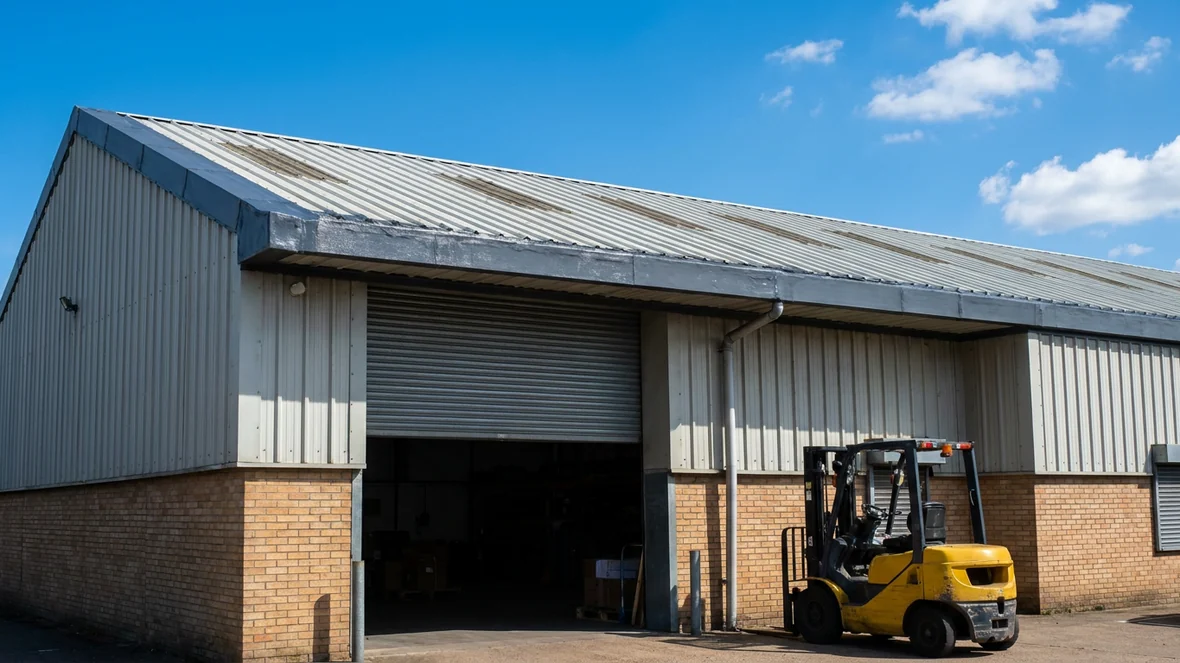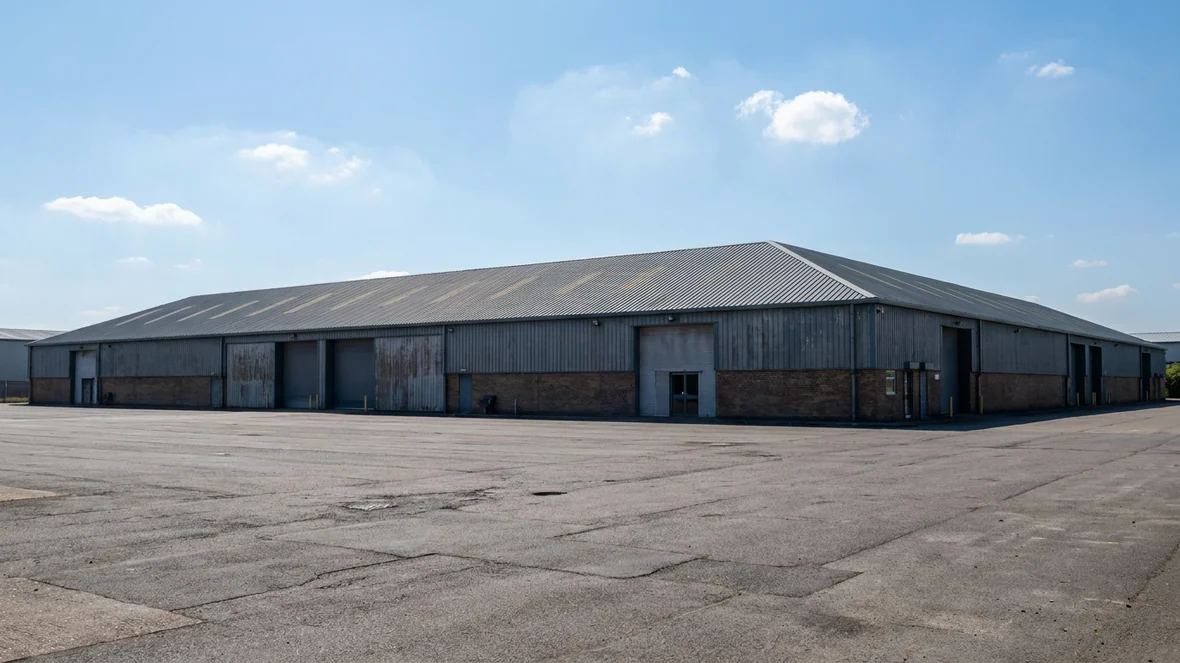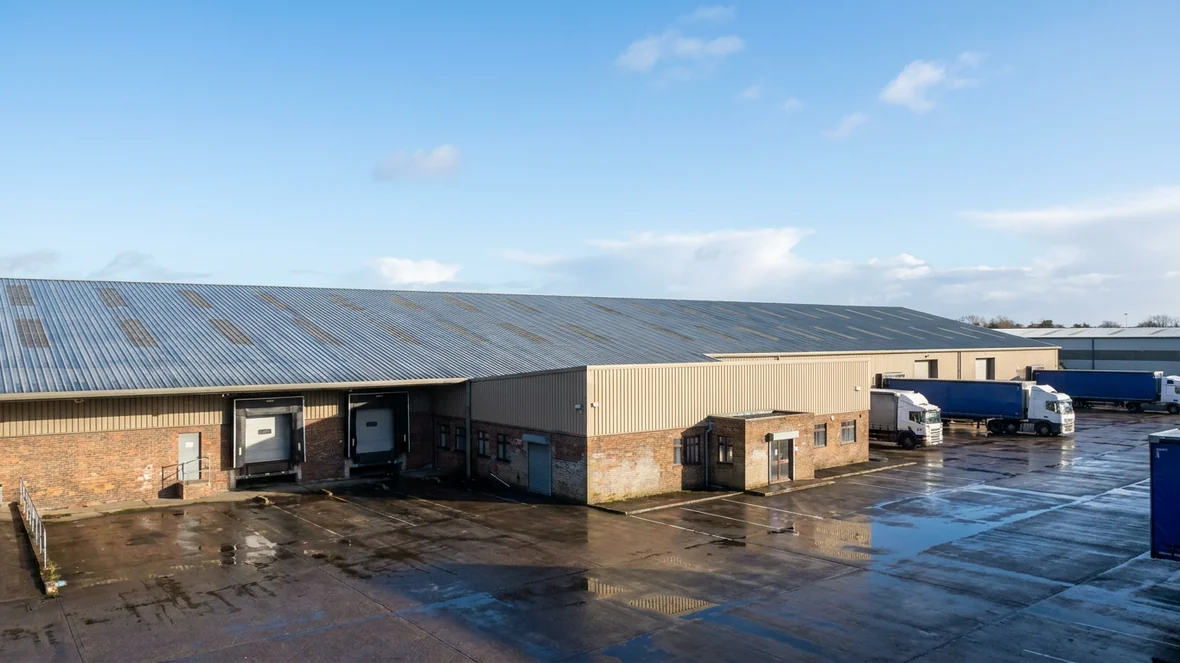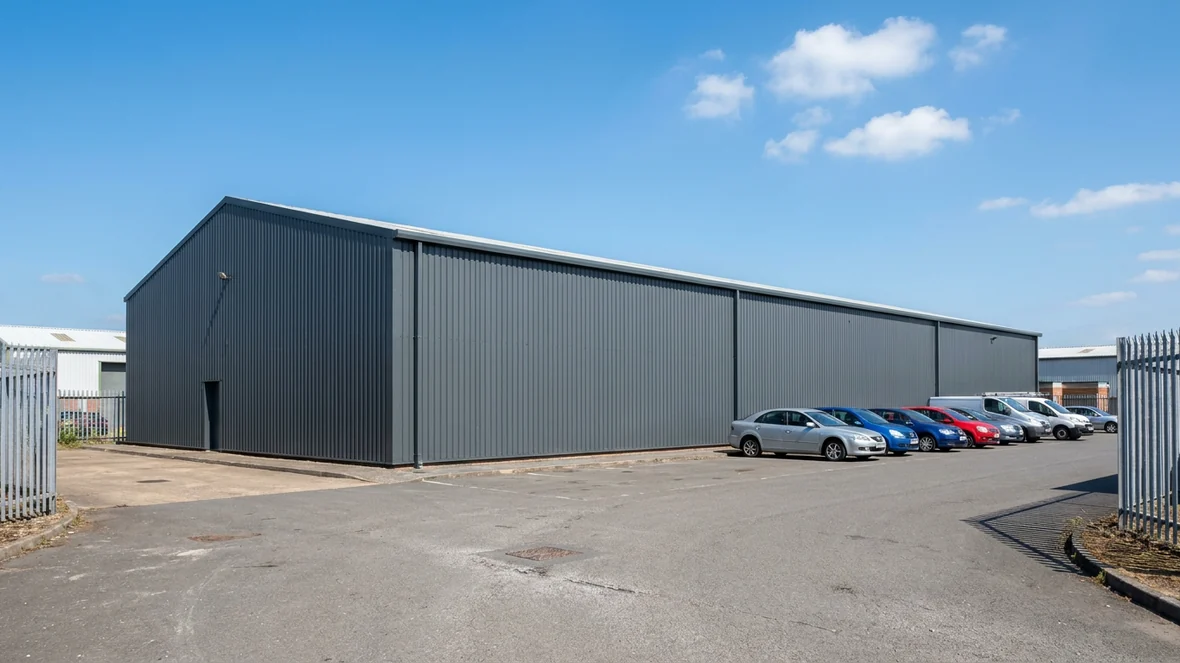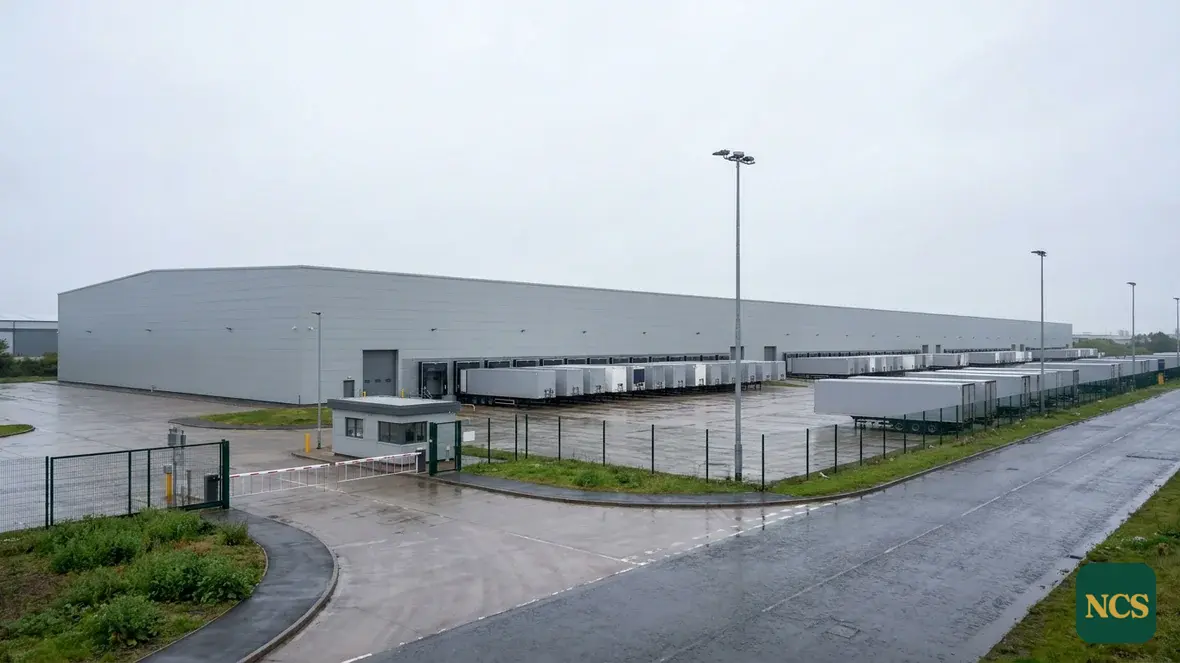










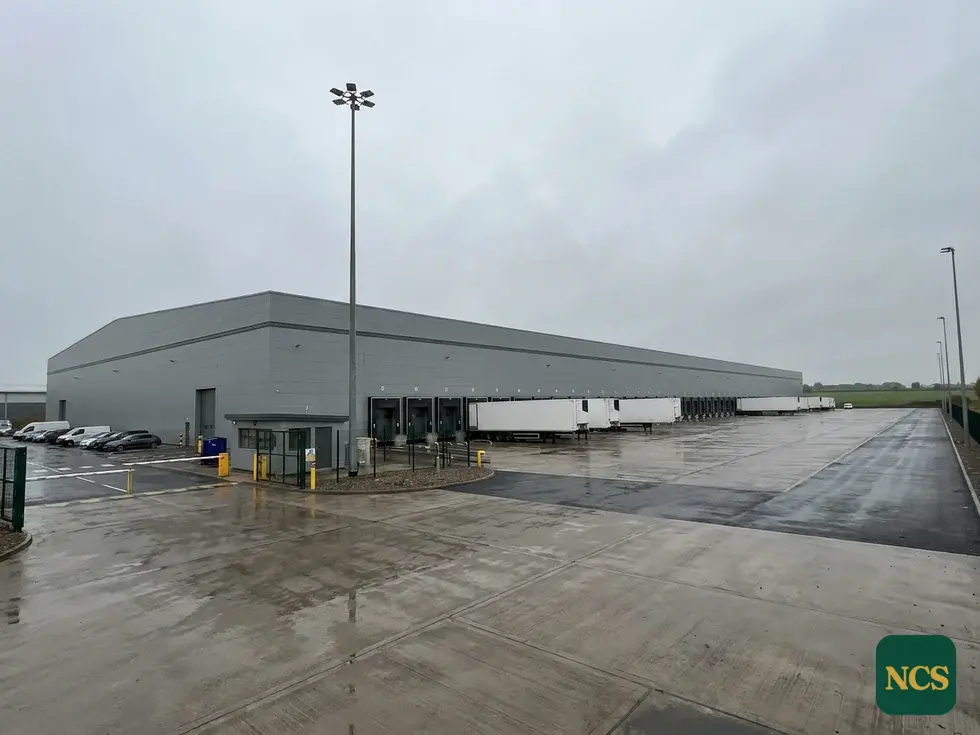
The Wakefield district earns much of its living from logistics. Warehousing and distribution units cluster along the motorway corridors, with older industrial buildings in the towns around the city dating from its manufacturing and mining decades. Nearly all of it sits under profiled coated steel roofing, and nearly all of that roofing shares one inherited weakness: bare metal at every cut edge, waiting for water.
Cut edge corrosion, explained without the jargon
The coloured finish on a steel roof sheet is applied at the factory, to the full coil, before the sheets are cut to size. Cutting exposes raw steel at the sheet ends and along the overlaps. Rain is drawn into those overlaps and held there, the raw edge rusts, and the rust then spreads sideways underneath the finish, lifting it off the metal. The visible symptoms arrive in order: brown staining at the gutter line, peeling at the laps, larger areas of detached coating, then perforation and a leak. Everything before perforation is treatable at sensible cost. Everything after it is not.
A big shed has a lot of sheet ends
On a large distribution unit the numbers work against you quietly. Long elevations mean long gutter lines, and every sheet that meets that gutter presents a cut end to the weather. Hundreds of metres of side laps run up the slopes, and every one of them is a capillary channel. This is why cut edge corrosion on big sheds is rarely a single bad spot; it is a condition of the whole eaves line, at varying stages of development. On roofs around Wakefield we would expect to find it concentrated in predictable places:
- The eaves rows, where sheet ends sit over the gutters
- Side laps on slopes that catch the prevailing rain
- Trimmed edges around rooflights and penetrations
- Fixing lines where washers have aged and let water track
- Valley and boundary gutters holding water against the steel
Catch it early and it stays a maintenance item
Treated at the staining stage, cut edge corrosion is a controlled, methodical repair: clean back the affected edges, stabilise the remaining rust, seal the laps and apply a flexible coating over the vulnerable steel. It sits comfortably inside a planned maintenance budget. Deferred for a few years, the same defect becomes a capital problem, with sheet replacement, access costs, internal repairs and operational disruption all arriving together, usually in winter. The difference between those two outcomes is not luck; it is whether anyone looked at the laps in time.
When treatment is not worth your money
Some roofs are past this work, and you deserve to hear that before spending anything. If sheets have already perforated, if the coating is detaching across the body of the sheets rather than just at the edges, or if rust has reduced the thickness of the steel itself, edge treatment will not return value and we will say so. The honest recommendation in those cases is replacement of the failed areas, which is not a service we provide, so there is no commercial angle in the advice. Because we are survey-led, that judgement is made on the roof, lap by lap, not from the ground. Mixed verdicts are common and the scope should reflect them precisely.
Edge treatment and roof coating in one programme
A roof with corroding edges almost always has a tired finish across the rest of its surface too. Combining edge treatment with a full roof coating deals with the urgent defect and the slow one in a single visit, applies one consistent system across the whole roof, and shares the access costs across both jobs. We are based in the South East and carry out this work throughout England, with Wakefield and the wider West Yorkshire area part of our regular coverage. If rust has appeared at your sheet ends, the next step is a survey, not a guess.