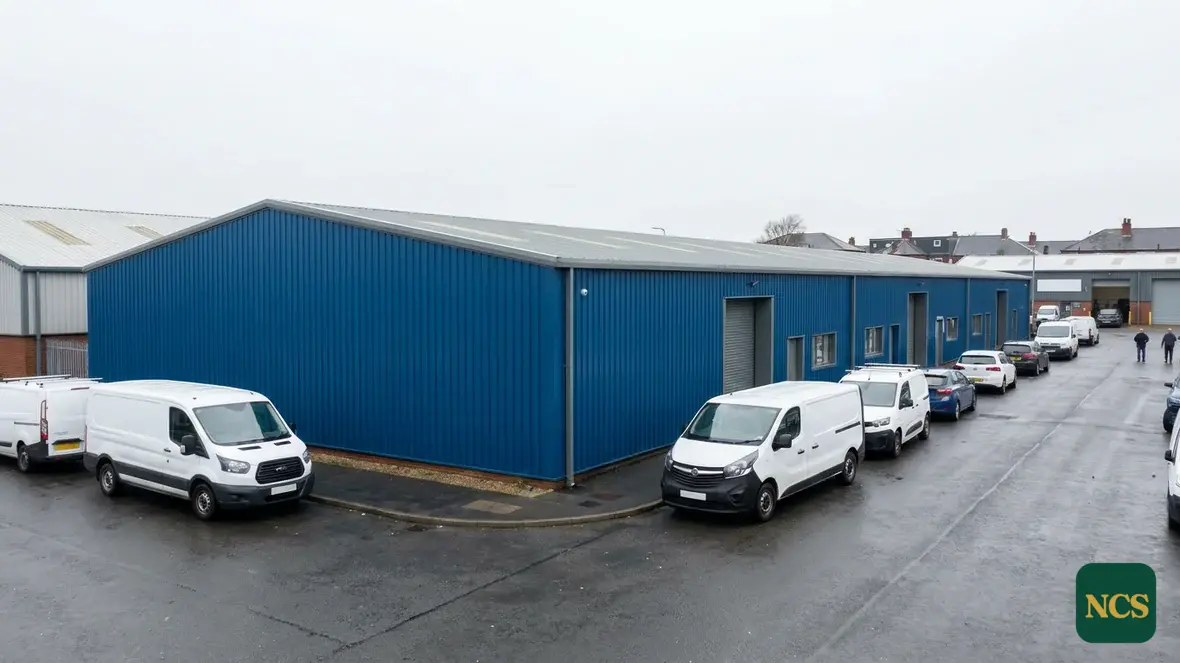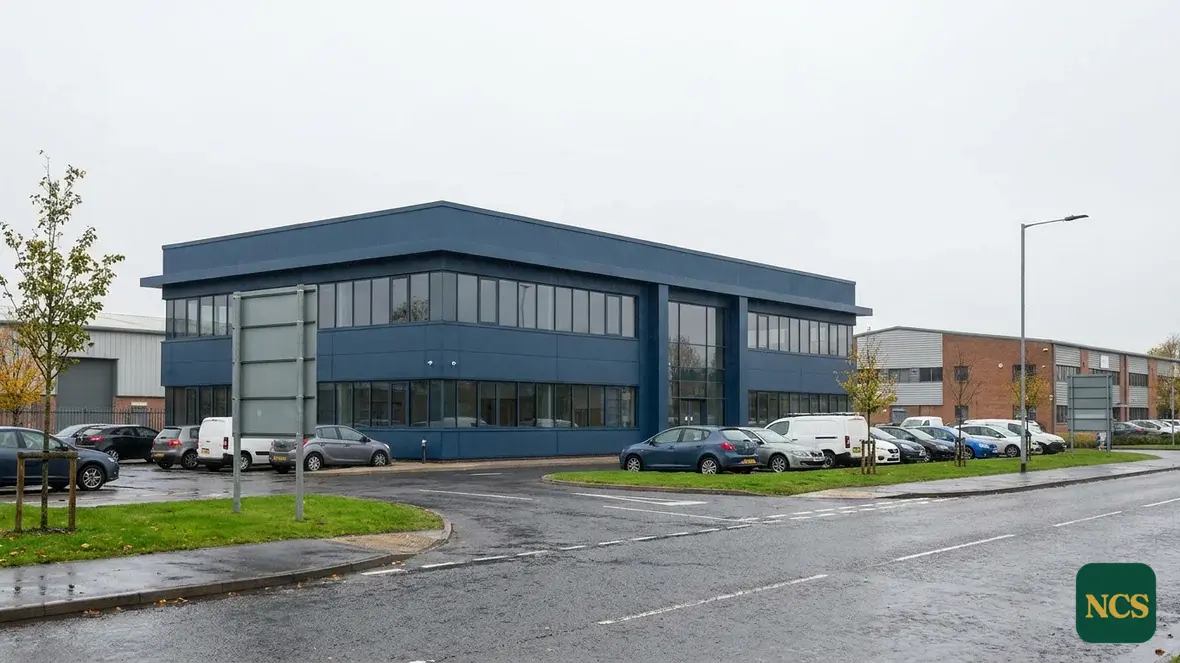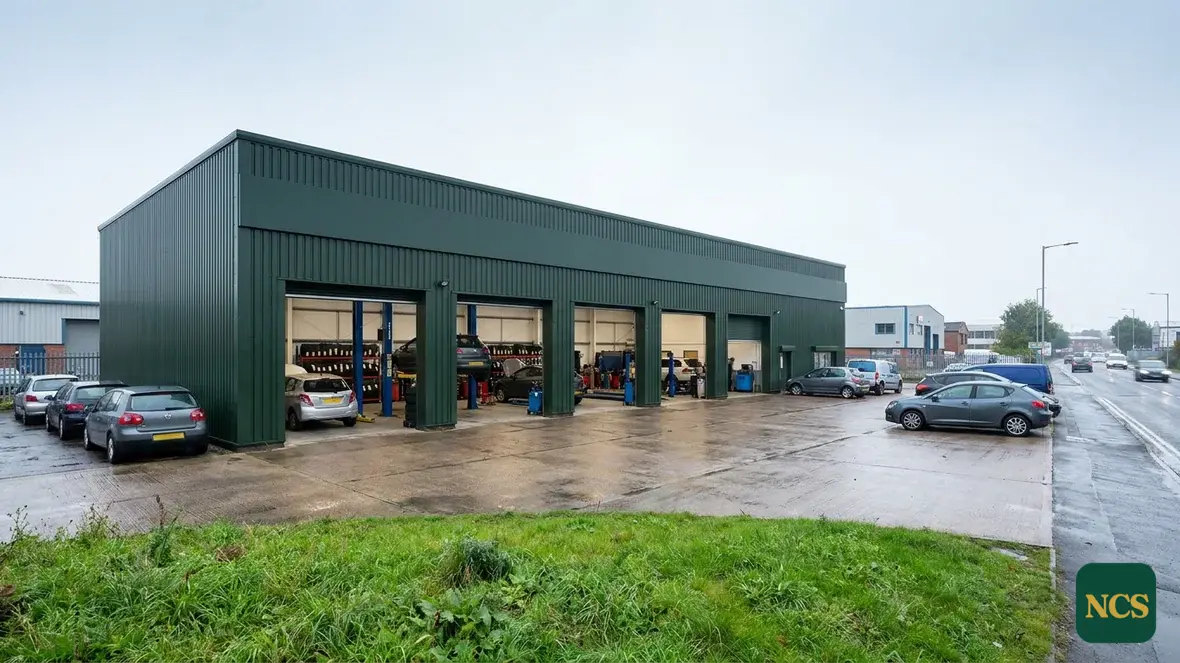
Cladding spraying in Wakefield
Wakefield sits right between the M1 and M62, so you see some of the busiest distribution and industrial buildings in West Yorkshire here. Almost all of them are wrapped in profiled steel or composite panel. Cladding spraying is how we keep those big elevations looking good and protected, without recladding. We prepare and repair the sheets right there on the building, then spray a system chosen specifically for the substrate and its condition.
On buildings this size, guessing costs money. We survey and test before we specify, and we specify before we price. The survey tells us if a respray is even possible, and if it is, exactly what needs doing before any coating goes near the sheets.
Big sheds, big elevations, predictable problems
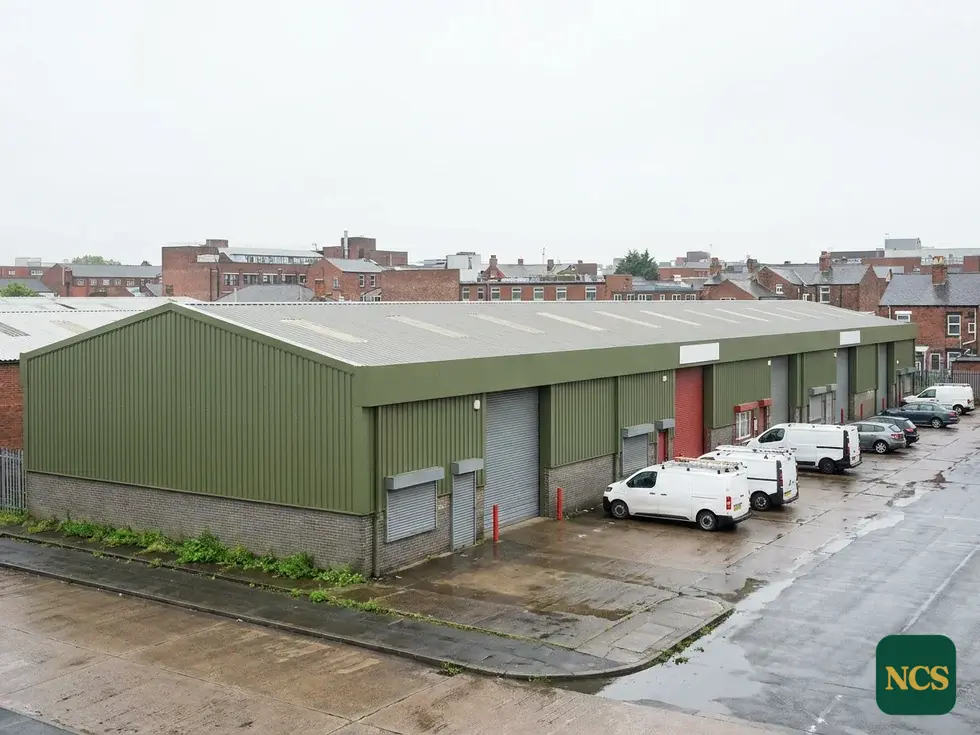
We see the same wear patterns again and again on the estates and logistics parks around Wakefield: plastisol that’s faded and chalked unevenly, tide marks and run-off below the gutters, dents at vehicle level, and cut-edge corrosion creeping along sheet ends, laps and door openings. Offices and trade-counter frontages often add powder-coated framing, fascias and curtain wall details to that list. On their own, these are small defects. But across thousands of square metres of cladding, they decide whether a respray lasts or fails.
Roof areas often come into the same conversation. Gutters, rooflights and roof sheets share the same weather and the same access costs. If their condition allows it, we can bring them into one specification and one programme, instead of running two separate projects.
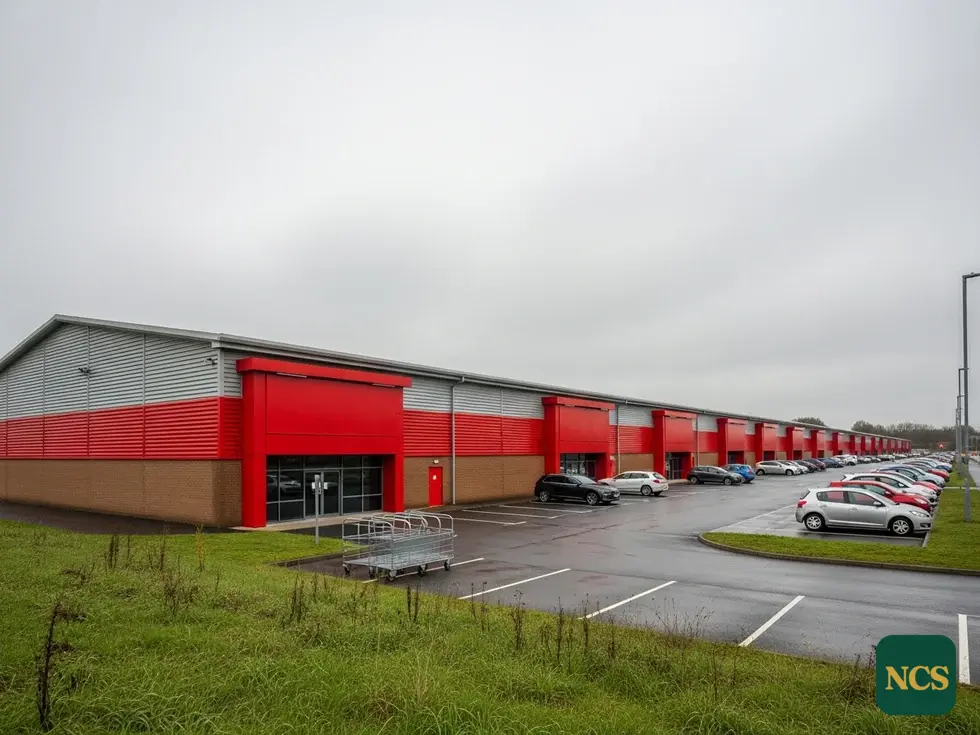
What the survey settles before the price does
Every project starts with a walked survey of the building. We test how well the existing finish is bonded, pinpoint which areas need treatment or sheet repairs instead of just overcoating, and plan the job around how the site actually runs: loading bays, yard movements, shift patterns and the neighbours.
- Adhesion and condition testing across the whole elevation, not just one patch
- Corrosion mapped, with cut edges treated before any colour goes on
- Phasing planned around your loading bays, traffic and operating hours
- Masking and protection for vehicles, stock and neighbouring units
- A written specification that we inspect the finished work against
Our crews work across this region. So buildings in Leeds, Barnsley, Pontefract and Dewsbury get the exact same survey-first sequence as those on the Wakefield estates.
The Wakefield jobs that go wrong are the quick overpaints. A proper respray sequence, wash, treat, repair, spray, is what we quote.
When a respray is the wrong call
We won’t coat a building if our survey says it’s failing. Perforated sheets, delaminating composite panels, fixings that have lost their grip, and edge corrosion that’s eaten right through the sheet end are problems paint can’t fix, only hide. The same goes for buildings needing thermal upgrades or fire-performance remediation that only recladding can provide. In those cases, the survey report will say so directly and set out what we believe is the right course, even if that course doesn’t involve us. Partial solutions are common: replace the worst sheets, treat the rest, coat the lot. The survey is what makes that call defensible.
Why operators insist on survey-led contractors
On industrial buildings, the real cost of a coating project is rarely the paint itself. It’s access, downtime, and the risk of having to do it twice. A survey-led contractor takes most of that risk off the table: we establish the scope of preparation and repair before the price is fixed, the programme is built around your operation, not imposed on it, and there’s a written standard to hold the finished elevations against. For clad buildings in Wakefield and across West Yorkshire, that’s the difference between maintenance spend and money sprayed at a wall. The bigger the elevation, the more a small misjudgement multiplies. That’s exactly why the survey comes first.