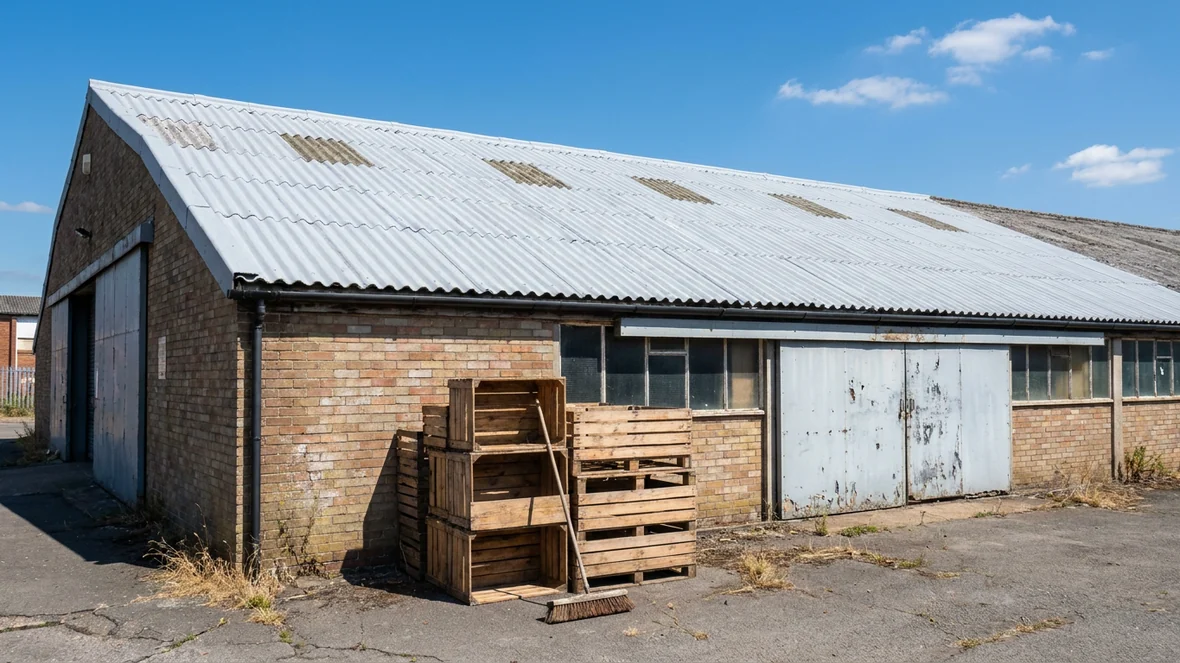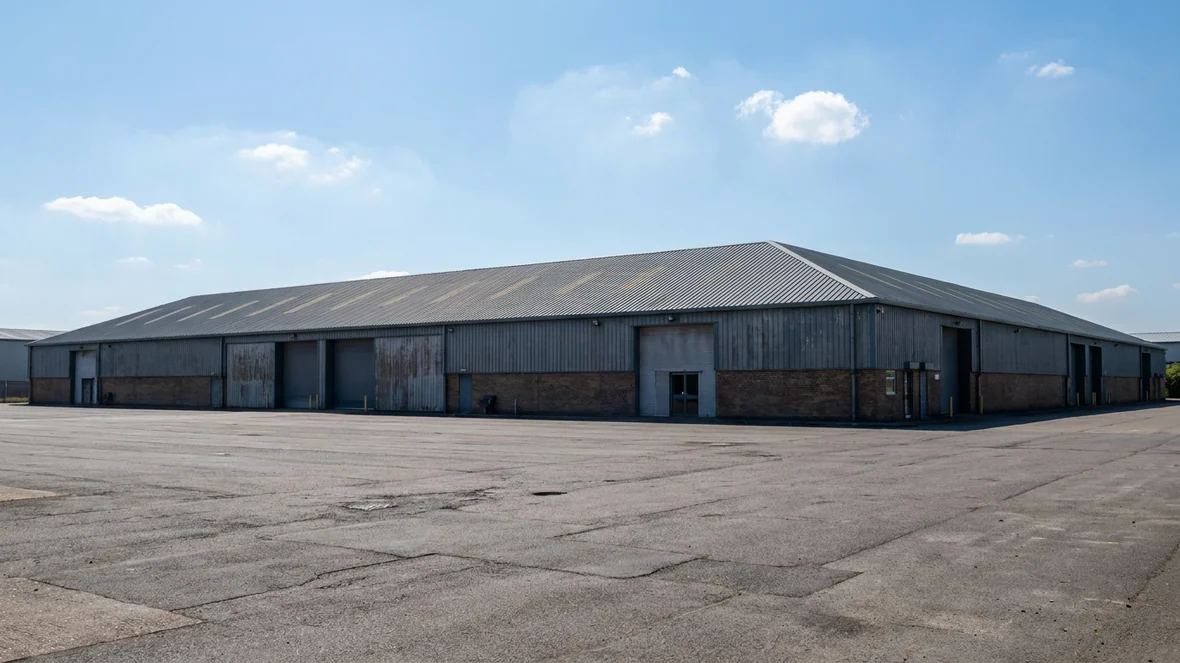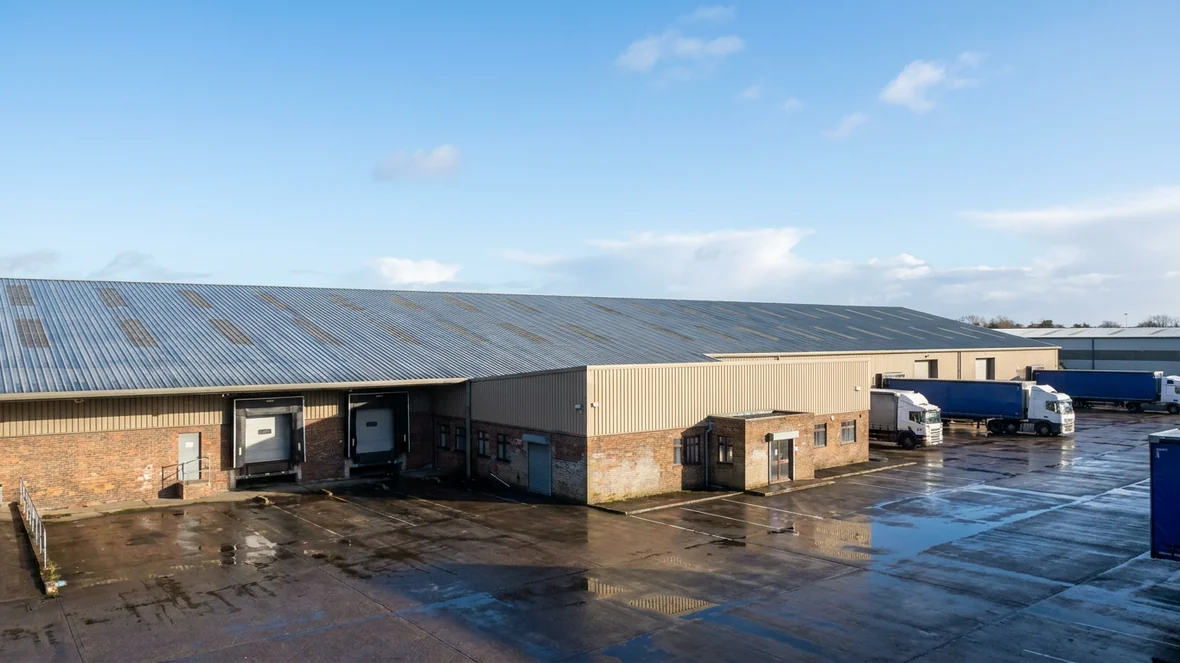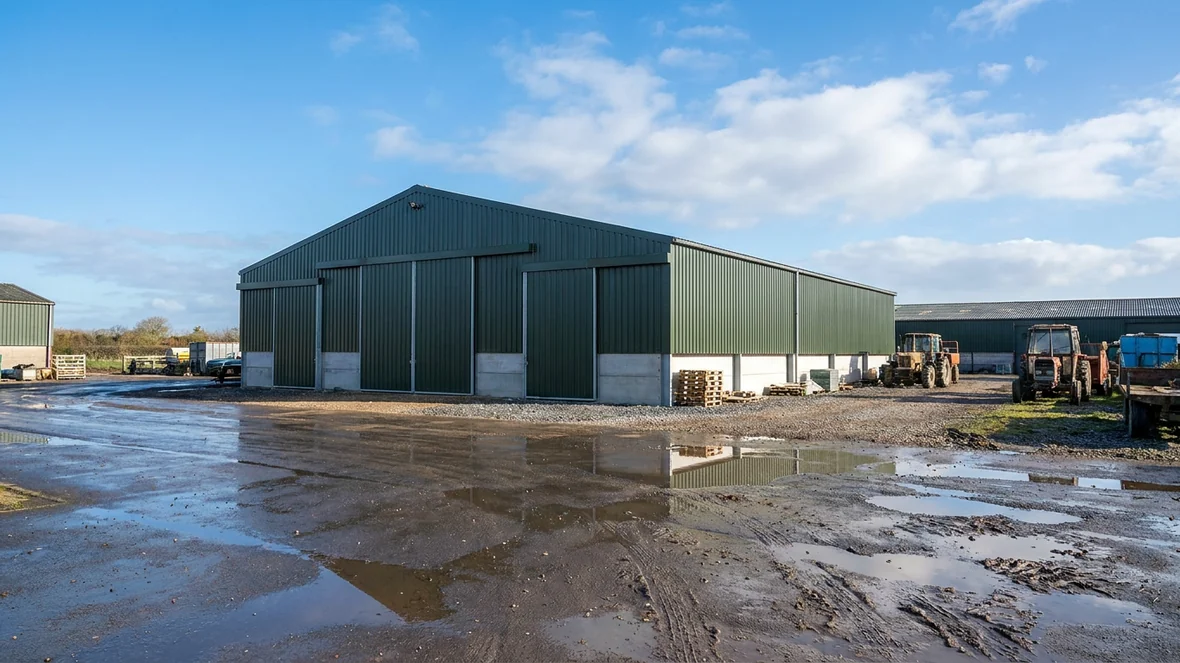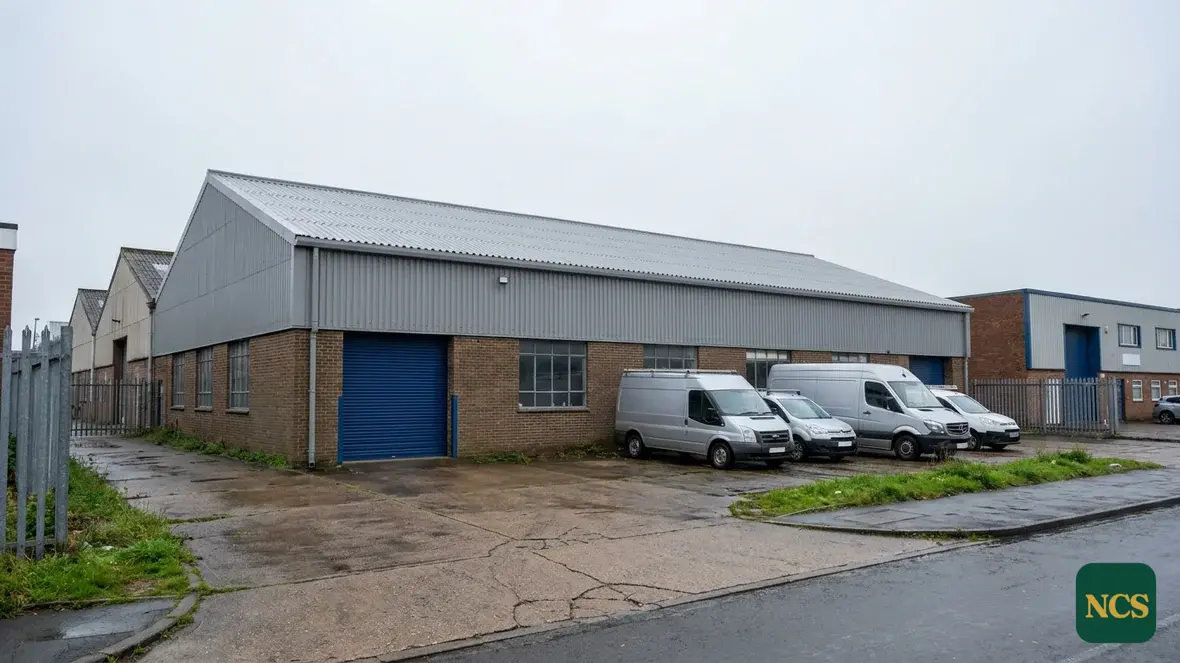










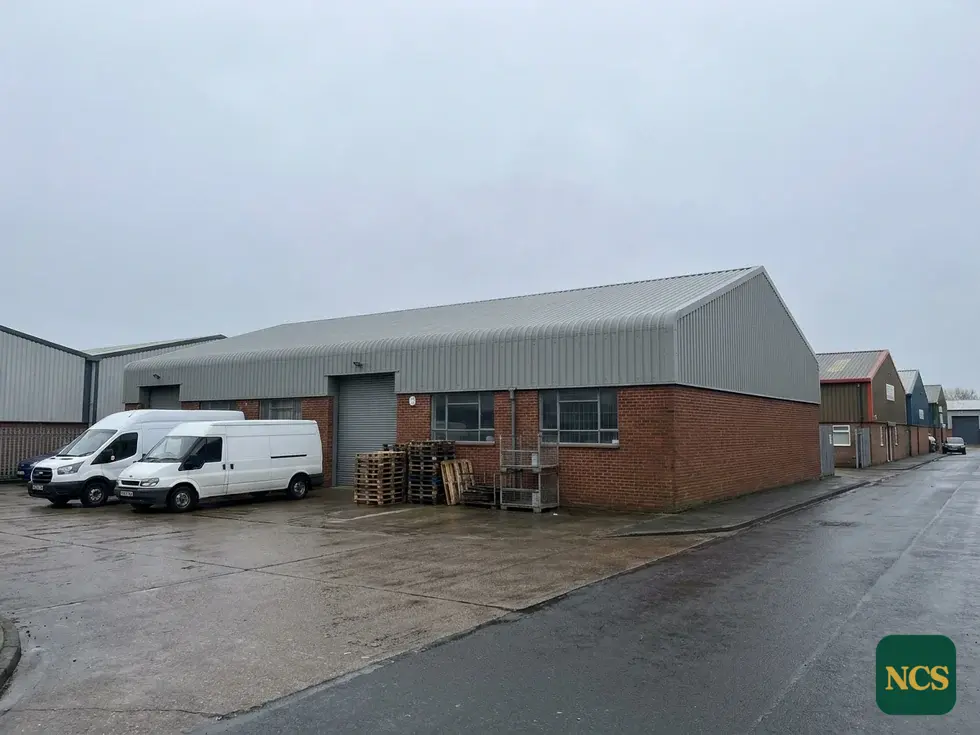
Weathered asbestos cement on Merseyside
Exposed coastal weather is hard on roofing, and the asbestos cement sheets covering many of Liverpool’s post-war industrial units, depots and warehouse buildings have taken decades of it. Wind-driven rain, salt-laden air and constant damp accelerate the surface erosion and moss growth that age these roofs, so building stock around Merseyside often reaches the decision point earlier than the same buildings would inland.
The decision itself is binary: remove the roof and re-sheet, or keep it and encapsulate. Encapsulation, where the existing sheets are cleaned, repaired and sealed under a coating designed for asbestos cement, is the lower-cost, lower-disruption route, but it is only honest on a roof whose sheets are still sound. Condition decides, which is why everything we do starts with a survey.
The case for encapsulation on a sound roof
Intact asbestos cement holds its fibres within the cement matrix; the danger comes from breakage, drilling and advanced weathering of the surface. Encapsulation removes that pathway. After controlled cleaning and repairs, the coating seals the surface so fibres are locked in and the weather can no longer eat at the sheets. Leaks at laps, fixings and rooflights are dealt with in the same programme.
For an occupied building the practical wins are substantial: no strip-out, no full-roof asbestos disposal costs, tenants and operations undisturbed, and a finished roof that is easier to inspect and maintain. For most sound roofs the cost sits well below removal and replacement.
Your legal position as a duty holder
If you control a non-domestic building in Liverpool, the Control of Asbestos Regulations 2012 give you a duty to manage any asbestos in it. In practice that means knowing where the material is, recording its condition, assessing the risk and keeping a written management plan that you actually follow. The Regulations do not force removal of sound material. They do require you to stop it deteriorating to the point of risk, and a documented encapsulation programme is a strong way to demonstrate exactly that. The survey report and completion records feed straight into your asbestos register.
Roofs that need removal, not coating
We turn encapsulation work away when the roof does not justify it, and you should be suspicious of any contractor who never does. Sheets that are friable, soft, delaminating or extensively cracked are beyond sealing; a coating over failing material just hides the problem while it gets worse. Roofs in that state need removal by a licensed asbestos contractor and a replacement covering. Where the damage is genuinely localised, the survey may support swapping individual sheets and encapsulating the remainder, but that judgement is made on the roof with the evidence in front of us, never from a photograph or a postcode.
Booking a survey in Liverpool
We are a survey-led exterior coating contractor, based in the South East and working across England. A visit to your building establishes the points that matter:
- Whether the sheets are sound enough to encapsulate at all
- What cleaning, repairs and sheet replacement the roof needs first
- The condition of rooflights, flashings and gutters
- What the works mean for your asbestos register and management plan
If your Liverpool building carries an ageing asbestos cement roof, get the condition assessed while encapsulation is still an option. The longer the surface weathers, the more likely the honest answer becomes removal.