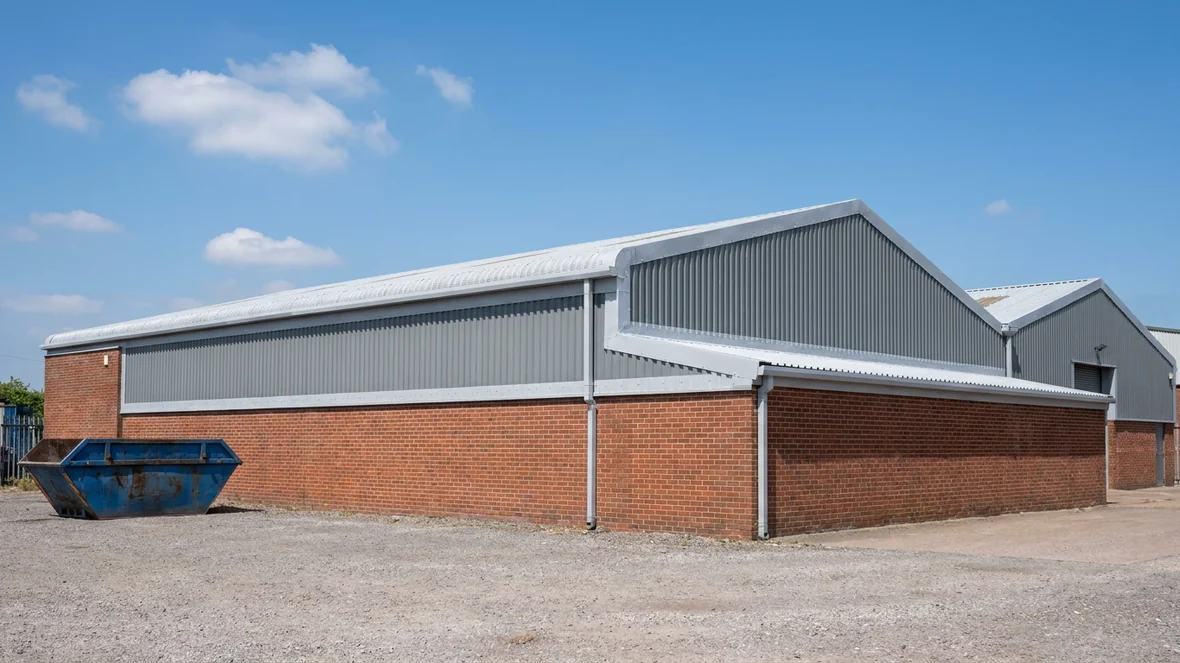
A familiar defect in the Somerset countryside
Drive any direction out of Wells and you pass steel-framed farm buildings: livestock sheds, grain and machinery stores, dairy buildings, many of them roofed in profiled coated steel that has been up for twenty or thirty years. Look along the gutter edge of those roofs and a fair number show the same thing, a rusty brown line where the sheets were cut to length. That is cut edge corrosion, and it is one of the most common failures on coated steel roofs of this age anywhere in Britain.
The cut end of a sheet is bare steel. The factory coating protects the faces, but not the sliver of exposed metal at the edge, so rust takes hold there first and then works backwards underneath the coating, peeling it away as it goes.
Why it never stays where it started
Corrosion at a cut edge feeds on moisture, and the edges sit precisely where moisture concentrates: at the eaves overhang above the gutter, and in the laps where one sheet overlaps the next and capillary action draws water in. Wet Mendip winters keep those areas damp for long stretches, and on livestock buildings condensation attacks the underside of the same sheet ends at the same time.
That is why a roof that showed a faint tidemark two summers ago can show flaking, delaminating edges today. The defect compounds: more exposed steel means more rust, more lifted coating, and a wider band of damage each season it is left alone.
Where we will tell you not to coat
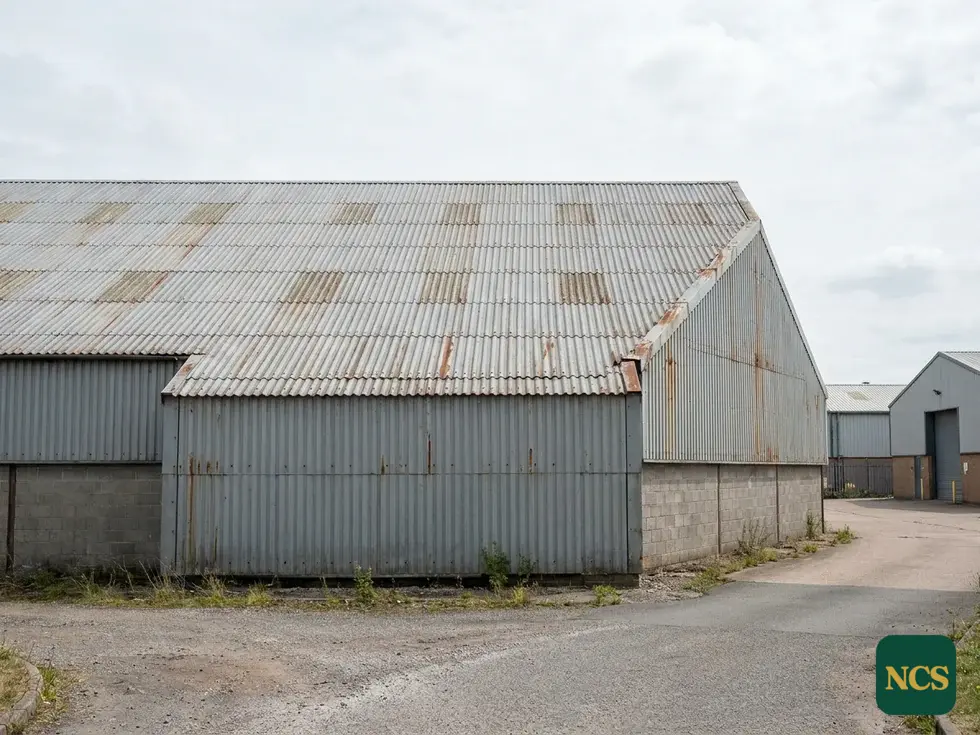
Honesty first, because it shapes everything else. If our survey finds sheet ends rusted through, laps corroded across both sheets, or heavy underside corrosion from years of condensation, then edge treatment and coating would be cosmetic rather than structural. Sheets in that condition need replacing, or the roof needs over-sheeting, and we will say so plainly and show you the photographs that led us there. Coating a roof that is past saving helps nobody, least of all the person paying for it.
The case for acting this side of that line
Most roofs have not crossed that line, and that is the whole argument for moving early. While the corrosion is confined to the edge zone, treatment is contained work: prepare the edges back to sound metal, apply a rust-inhibiting primer, then seal the ends and laps with a flexible reinforced coating. The cost sits well below sheet replacement and the building stays in use throughout, which matters on a working farm or a busy unit. The earlier you catch it, the more of the roof you keep. Worth checking for:
- Rust staining along the eaves or gutter line
- Coating lifting or flaking at sheet overlaps
- Orange streaks running from lap joints after rain
- Drips or damp showing inside along the eaves
- Gutters holding standing water against sheet ends
One visit, whole roof: pairing edge treatment with coating
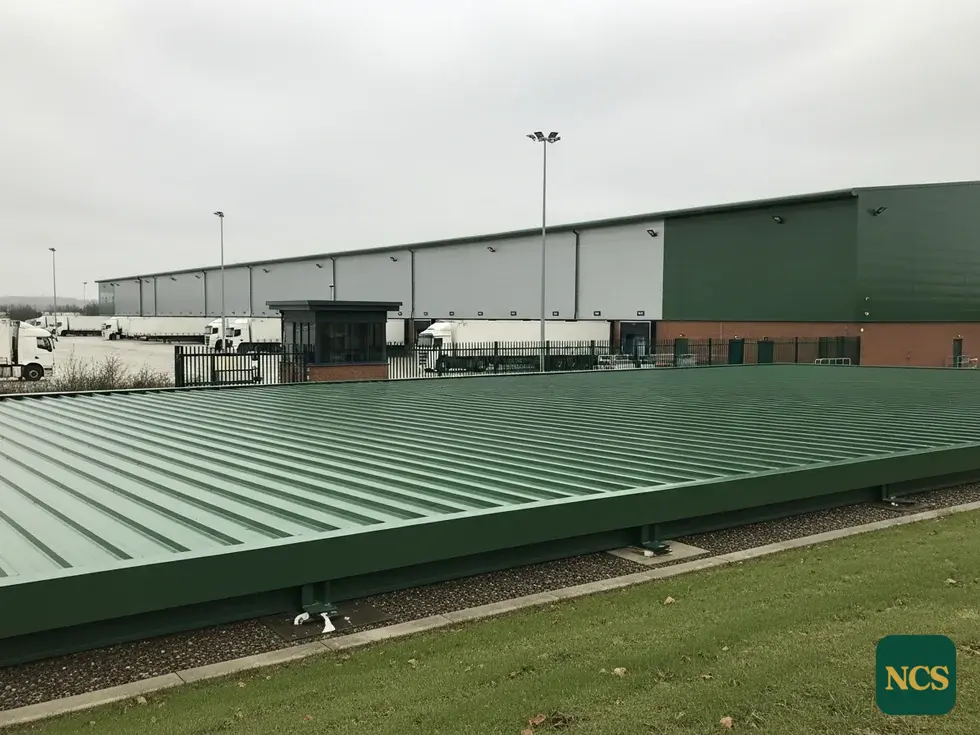
If the sheets are sound but tired, it often makes sense to treat the cut edges and recoat the full roof in the same programme. The whole surface is cleaned, fixings are sealed, and a fresh coating system goes over the lot, so the edges, the laps and the weathered sheet faces are all dealt with once rather than piecemeal. For agricultural and commercial buildings around Wells and the wider Mendip area, that is usually the most economical way to get a long second life out of a structurally sound steel roof.
If you have spotted rust lines on a barn, workshop or unit roof near Wells, send us a photograph or ask for a survey. We will tell you which side of the line your roof sits on, and what it genuinely needs.